





 Portuguese
  English
  Spanish
  5 min of reading
  0 comments


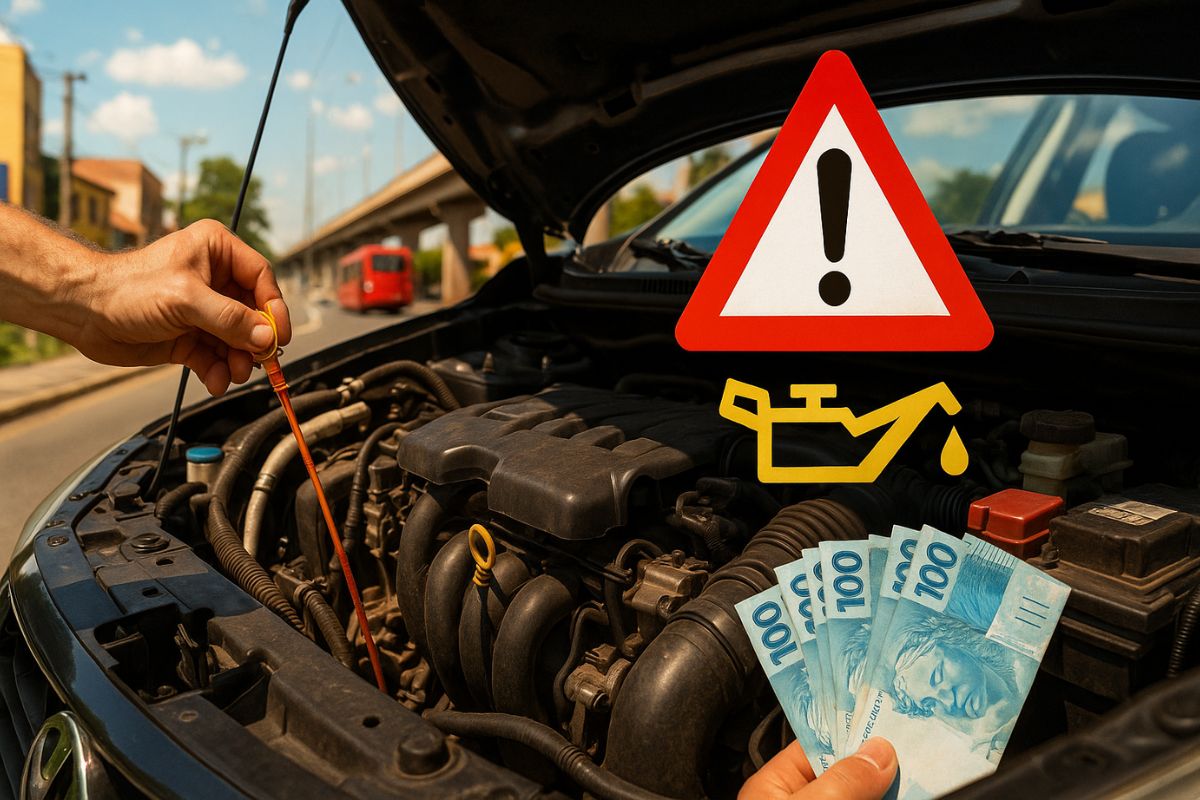
A Simple Mistake Made by Many Drivers Every Week Is What Most Increases Car Maintenance Costs and Accelerates Engine Wear, Even in Well-Cared Vehicles.
Understanding which checks should be done regularly is the shortest way to save money, prevent small issues from turning into bigger problems, and drive safely. Ignoring basic items, such as oil level, cooling system, and tire pressure, is the type of simple mistake that often goes unnoticed in daily life, but can be costly later on.
Preventive maintenance is not a luxury; it’s protection for the engine and the budget. When the driver ignores what the car is signaling or does not follow the manual, the risk of overheating, loss of performance, and breakdown increases directly.
Why The Simple Mistake Is So Expensive
The engine is the most expensive component of the vehicle and also the most sensitive to neglect. When the oil is below the indicated level, when the coolant is not checked, or when the car runs for a long time with worn-out parts, internal friction increases, the temperature rises, and the system operates under stress. This set of factors arises from a simple mistake: failing to check the basics.
-
OMODA & JAECOO grows in Europe in 2026 with an integrated strategy of sales, innovation, local production, and technological advancement in the United Kingdom, Italy, and Spain.

-
OMODA & JAECOO expands after-sales service in Brazil with competitive maintenance, a 7-year warranty, and high availability of parts for technological SUVs.

-
OMODA & JAECOO appoints Alessandra Souza as executive marketing director in Brazil and accelerates brand expansion with a focus on innovation, networking, and hybrid portfolio.

-
Jaecoo 7 with super hybrid SHS system exceeds 1,200 km of combined range with a 1.5 turbo engine, high-density battery, and intelligent energy management.


The logic of preventive maintenance is mathematical. It’s cheaper to change oil on time than to repair a blown engine. It’s cheaper to top up the coolant than to replace a gasket, pump, or radiator that has burned out.
The driver who postpones checks turns a quick adjustment into a bill of thousands of reais.
What to Check Weekly to Avoid Losses
The driver does not need to be a mechanic to perform a quick checklist. In most cases, it just takes a habit. The first check is the engine oil level, always with the car cold and on a flat surface. Driving with low oil is one of the most destructive simple mistakes, because the engine lacks proper lubrication.
The second point is the cooling system. Checking the radiator reservoir level (when the car allows for visibility) or at least watching for abnormal fluid consumption helps to prevent overheating.
Consistently running a hot engine decreases its lifespan and can lead to head gasket burnout.
Tire Pressure Is Also Maintenance
A detail overlooked by many is the weekly tire pressure check. It may seem like just a comfort issue, but it is not. Underinflated tires increase fuel consumption, make the car work harder, and cause uneven wear.
Over time, this means replacing tires prematurely and spending more frequently on alignment and balancing.
Tires at the manufacturer’s indicated pressure also impact safety. Braking is more efficient, stability improves, and the suspension endures less stress.
In other words, a free procedure done in just a few minutes reduces costs and contributes to the overall durability of the vehicle.
Driving Well Also Prevents The Simple Mistake
Another point connected to this simple mistake is the way of driving. Accelerating abruptly, braking hard at signals, and always driving at high RPMs put more stress on the engine and braking system. Aggressive driving is the shortcut to replacing brake pads, discs, and shock absorbers sooner.
When the driver anticipates traffic, slows down in advance, accelerates progressively, and keeps the car at the right RPM, the components operate within the correct parameters. This practice combined with weekly checks forms a package of real savings.
How to Save on Parts and Services Without Risking The Car
It is not always necessary to take the car to the dealership for every intervention, especially when the vehicle is out of warranty. Reputable independent shops work with original parts or recognized manufacturers and provide quality service at a lower cost. The simple mistake here is not researching and accepting the first quote.
Comparing prices, asking for referrals for professionals, and understanding which parts actually need to be replaced helps avoid unnecessary expenses. What cannot be done is to delay a necessary intervention, especially when it involves brakes, cooling, or engine lubrication.
What to Prioritize When the Budget Is Tight
When it’s not possible to do everything at once, the rule is to prioritize what is related to safety and engine operation. Brakes, oil, and cooling system come before aesthetic or comfort items. Driving with a noisy brake, for example, is not saving money; it’s taking a risk.
A practical way to organize maintenance is to divide it by frequency. Items that require weekly attention cannot be postponed. Medium-term items can be scheduled. This way, the driver avoids having everything overdue at once and straining the budget.
Basic Frequency of Preventive Maintenance
Even without mentioning exact values, there are intervals that repeat for most vehicles and help structure care. Oil and coolant levels: check weekly or before trips. Tire pressure: weekly or every fifteen days. Oil and filter change: follow the manual, usually between 5,000 and 10,000 kilometers.
The engine air filter is usually checked along with the oil change. Alignment and balancing are generally done every 10,000 kilometers or sooner if the steering starts to pull.
Brake fluid needs attention every two years. Spark plugs vary widely depending on the model, so they should follow the manufacturer’s recommendation. Consistency in these routines is what prevents the simple mistake from turning into a serious failure.
The car always gives signs before breaking down. Those who develop the habit of checking the oil level, monitoring cooling, calibrating tires, and driving smoothly reduce nearly to zero the chances of facing a breakdown due to negligence.
The simple mistake is not at the workshop; it’s in the driver’s routine. Correcting this takes minutes and results in years of savings.
Have you ever had an expensive car problem that started with a detail that seemed small? Share it in the comments to help other drivers avoid the same mistake.








-

Uma pessoa reagiu a isso.