





 Portuguese
  English
  Spanish
  4 min of reading
  36 comments


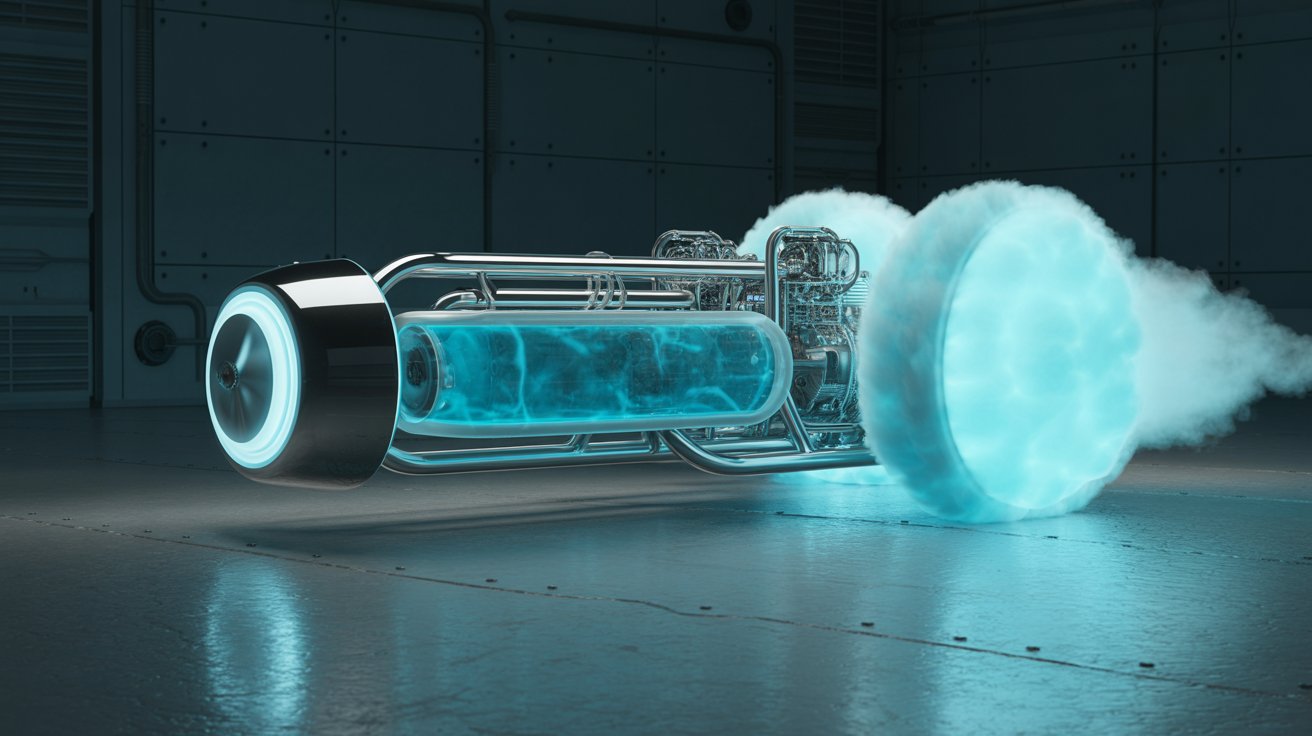


An Innovation That Could Transform Mobility, Replacing Electric and Hydrogen-Powered Motors, Promises More Efficiency and Sustainability with a Simple Yet Highly Powerful Technology.
In a global scenario where sustainable alternatives for the mobility sector are gaining increasing prominence, electric motors and hydrogen technology have been pointed out as the most promising solutions to replace fossil fuel-powered engines.
However, a new technology is gaining traction and promises to revolutionize transportation as we know it.
Basing itself on a simple yet highly effective physical principle, this innovation is attracting the attention of researchers and investors around the world.
-
The largest volcanic event in Earth’s history may have changed everything beneath the Pacific: a study shows that eruptions 110 to 120 million years ago reshaped the oceanic plate of the Ontong Java Plateau, the largest oceanic plateau on the planet.

-
The world’s largest acid geyser awakens in Yellowstone and reaches record heights after years of dormancy.

-
Tiny robots reveal the hidden chemistry of the depths and uncover secrets of low-oxygen dead zones in the ocean.
-
Scientists use a nearly 10-kilometer fiber optic cable to monitor and record the detachment of 56,000 icebergs in real time.

The Challenge of Sustainable Mobility Technologies
Electric vehicles have established themselves as a viable alternative for reducing carbon emissions.
However, these vehicles still face significant challenges.
One of the main problems is the limited range of batteries, which requires frequent recharges, in addition to the prolonged time needed for a full recharge.
To make matters worse, lithium batteries, common in electric cars, have a considerable environmental impact at the time of disposal, with issues associated with material extraction and recycling.
Hydrogen-powered cars, on the other hand, emerge as an interesting option, emitting only water vapor as a byproduct.
However, the production, storage, and distribution of hydrogen are still costly and complex processes, making widespread adoption difficult.
The high cost of the necessary infrastructures and the need to maintain hydrogen at extremely low temperatures further complicate the viability of this model.
The Game-Changing Innovation: Liquid Nitrogen Engines
A recent innovation promises to change this scenario.
Instead of relying on batteries or complex chemical reactions, a British company is developing an engine powered by liquid nitrogen.
This new concept is based on a fascinating physical phenomenon: when liquid nitrogen is exposed to room temperature, it expands rapidly, increasing its volume exponentially.
This expansion is about 700 times greater than the original volume of nitrogen, generating an impressive force capable of moving pistons and, consequently, the vehicles.
Unlike conventional engines, which rely on internal combustion, or electric motors, which depend on batteries, this system does not emit polluting gases and does not use fossil fuels.
The power generated by the expansion of nitrogen is incredible and could be the key to solving some of the problems faced by current technologies.
The Advantages of Liquid Nitrogen as Fuel
The use of liquid nitrogen offers a range of advantages that could make it a very appealing option for the future of sustainable mobility.
- Abundance and Accessibility: Nitrogen is the main component of the air we breathe, making it widely available and extremely cheap.
It can be extracted directly from the atmosphere, without the need to extract natural resources, as is the case with oil or minerals for batteries.
- Safety: Nitrogen is a harmless and non-flammable gas, meaning that its transport and storage present much lower risks compared to fuels such as hydrogen or gasoline.
This makes the infrastructure required for the use of liquid nitrogen simpler and cheaper.
- Sustainability: Unlike combustion engines, which release carbon dioxide (CO₂) and other greenhouse gases, the liquid nitrogen engine does not emit polluting gases during its operation, significantly contributing to the reduction of the carbon footprint.
- Efficiency: The rapid expansion of liquid nitrogen generates an immediate engine response, similar to traditional engines.
Furthermore, the expansion process is extremely efficient, ensuring performance without the environmental impacts typical of other alternatives.
Challenges for Large-Scale Adoption
Although promising, the liquid nitrogen engine technology is not without challenges.
The production and distribution of liquid nitrogen on a large scale still require considerable investments in infrastructure.
Currently, the process of cooling and storing liquid nitrogen at extremely low temperatures is a limiting factor.
Additionally, the adaptation of vehicles to this new propulsion system will require adjustments in engine design and transmission systems, which may take time and resources to implement efficiently.
However, initial tests conducted in commercial fleets show promising results, with a significant reduction in CO₂ emissions compared to fossil fuel-powered vehicles and even electric ones.
This indicates that, over time, the technology has the potential to further reduce costs and facilitate mass adoption.
The Future of Sustainable Mobility
The field of sustainable mobility is in constant evolution, and the search for alternatives that can efficiently and ecologically replace fossil fuels is more urgent than ever.
The liquid nitrogen engine represents an intriguing alternative that has the potential to transform the automotive industry and the way we move.
With ongoing investments in research and development, it is possible that, in the coming years, the liquid nitrogen engine will become a viable and competitive solution in the market.
If this technology continues to develop in the way that experts predict, it could become a fundamental part of sustainable mobility, replacing not only combustion engines but also electric models and hydrogen.
The rise of this technology could redefine the standards of efficiency and sustainability in the sector, bringing faster and less polluting solutions to the challenges faced by current alternatives.
Adapting infrastructures and overcoming technical challenges are issues that, if successfully resolved, could place the liquid nitrogen engine at the center of discussions about the future of mobility.
Do you believe that the liquid nitrogen engine can surpass already established alternatives like electric and hydrogen engines? Share your opinion in the comments!




How much energy is required to make N2 liquid????
I would gamble my entire life’s savings on this technology.
Hydrogen is not difficult to transport or expensive when transported in the form of Ammonia. It takes one Ammonia tanker to transport the same amount of Hydrogen as three Hydrogen tankers.
Another important point is , there is already a worldwide Ammonia infrastructure in place as Ammonia is the second most produced chemical on earth. Companies are well versed in transporting Ammonia around safely & cheaply.
Companies such as Hyamtec Ltd a subsidiary of AFC Energy’ Plc, have already developed portable Ammonia to Hydrogen cracker units that can produce 500kg of Hydrogen per day, Scalable to 3000kg per day.
This technology can also be integrated into chemical, Power plants, cement & steel manufacturers etc. The Ammonia cracker units can be integrated into natural gas pipelines, instantly reducing companies carbon emissions ( eventually upto 100% Hydrogen.)
Companies also save vast amounts of capital not having to replace their existing plants. They also save vast amounts of capital not having to upgrade their electrical systems, because they don’t need it.
info@afcenergy.com