Portuguese
  Spanish


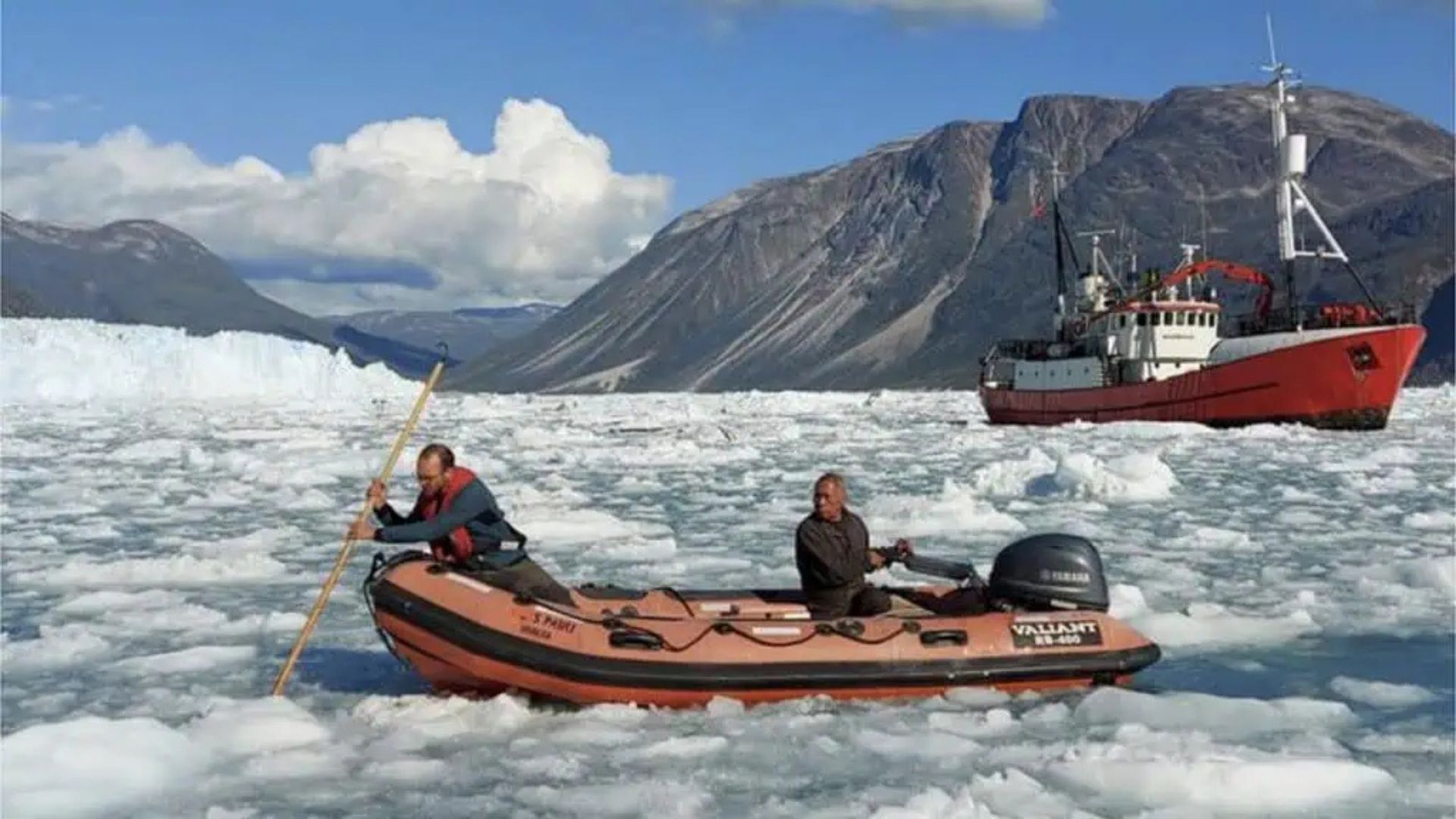


The installation of an optical fiber cable with acoustic sensing technology allowed researchers to capture precise vibrations and quantify ice loss continuously and in detail.
Scientists achieved an unprecedented feat in environmental monitoring by installing a 9.6-kilometer optical fiber cable in front of a glacier, recording the detachment of 56,000 icebergs.
The research utilized Distributed Acoustic Sensing (DAS) technology, which transforms the cable into a network of thousands of highly sensitive sensors. This innovation allowed for the capture of detailed vibrations and acoustic signals from the glacier, revealing the magnitude and frequency of rupture events with a precision never before achieved by traditional methods.
Optical fiber technology and acoustic precision
The system works by sending laser pulses along the optical fiber cable, detecting minute deformations caused by sound waves and tremors in the ice. By continuously monitoring the front of the glacier, researchers were able to identify detachment events that would be invisible to satellites or imperceptible to distant seismographs.
-
Brazilian Researcher Develops Protein Supplement from Tilapia Waste, Combining Innovation and Sustainability with Economic Potential

-
Women in São Paulo Unknowingly Tracked by Coin-Sized Tags Hidden in Cars and Belongings, Raising Stalking Concerns
-
Near a $750 million AI data center in Brazil, a resident’s well runs dry, leaving her unable to afford the $25,000 needed for repairs.

-
16-Year-Old from Brazil’s Sertão Wins Young Scientist Award for AI Predicting Rainfall with 94.5% Accuracy to Aid Farmers


The cable’s ability to act as an uninterrupted line of underwater microphones allowed for the exact location of each ice fall in the ocean.
The collection of this data is crucial for understanding the dynamics of polar ice melt in the context of global climate change. With the optical fiber cable, it was possible to differentiate various types of detachments, from small fragments to massive blocks of ice that generate significant shock waves.
This differentiation helps glaciologists model the mass loss of glaciers more accurately and its direct contribution to sea level rise.
Continuous monitoring and data analysis
During the project’s operational period, the sensor network detected an impressive average of events, totaling the 56,000 records mentioned in the study. The use of the optical fiber cable eliminated the limitations imposed by adverse weather conditions, such as fog or polar darkness, which often interrupt visual observations. The installed infrastructure proved resilient enough to operate in extreme environments, maintaining a constant flow of information to the laboratories.
The automated analysis of the signals allowed for the processing of the vast amount of information generated by the 9.6 kilometers of the device.
The algorithms developed by the scientists were able to filter out the background noise of the ocean, focusing exclusively on the acoustic signatures of ice detachment. This level of detail transforms the optical fiber cable into a high-fidelity environmental monitoring tool, capable of monitoring the health of glaciers in real time.
Implications for glaciology and geology
The successful implementation of this technology opens new possibilities for the study of other geological and cryospheric phenomena around the world. The use of existing optical fiber cables on the ocean floor could, in the future, be adapted to create a global glacier monitoring network without the need for new complex installations.
The study reinforces that sound is one of the most powerful indicators for understanding physical processes occurring in areas of difficult human access.
The results obtained from the 56,000 recorded icebergs provide a solid foundation for more accurate predictions about the future of polar regions. The integration of the optical fiber cable into conservation and research strategies allows governments and institutions to make decisions based on detailed evidence.
The advancement represents a qualitative leap in modern geology, uniting telecommunications and environmental science to unveil the rhythms of a changing nature.
Click here to access the study.