





 Portuguese
  English
  Spanish
  5 min of reading
  4 comments


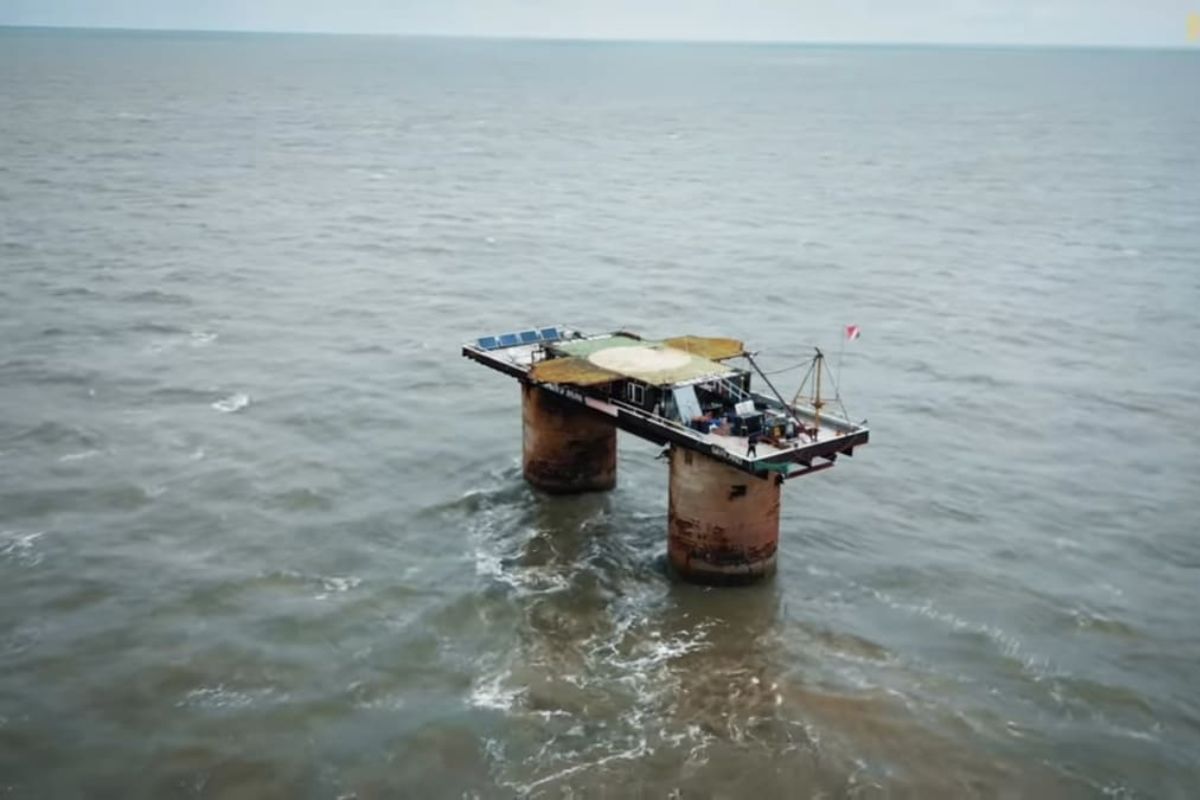


On the East Coast of England, the Tiny Country in the Middle of the Sea Occupies an Abandoned British Military Platform After the Second World War. With Only 4 Thousand Square Meters, the Bates Family Maintains Its Own Laws, Visa, Passport, and Flag, Despite No International Recognition and Attacks, Kidnapping, and Armed Invasions
The tiny country in the middle of the sea, called Sealand, is located off the coast of England and is regarded as the smallest country in the world, built on an old British anti-aircraft platform from World War II. The journey to reach it requires departing from London, taking a train through the eastern region, and crossing the North Sea, described as dangerous and unpredictable.
The team from Domingo Espetacular went to the location, heard that access is difficult, and found a principality that claims to be independent, with a prince, titles, laws, and its own documents. Although it is not officially recognized by the international community, the group claims to meet the requirements of a micronation and insists on existing to this day.
From War Platform to “Territory in the Sea”

The origin of the tiny country in the middle of the sea is linked to a British military structure used to prevent aerial attacks during World War II.
-
These living root bridges and ladders are over 700 years old and help indigenous people survive in one of the rainiest regions in the world.

-
From sertanejo star to international investor: Ana Castela invests millions in a mansion in the USA, creates a themed accommodation in Orlando, and shows that the “boiadeira” also wants to grow away from the stage.

-
The 10 most stunning motorhomes in the world: a $3 million trailer with a rooftop nightclub and garage for a Ferrari, “palaces on wheels” with Italian marble, private cinema, and five-star hotel luxury for billionaires.

-
Trump wanted to spend $400 million on the White House, but the courts prohibited the million-dollar construction.


After the conflict, the platform was supposed to be demolished, but it ended up occupied and transformed into what the family calls the Principality of Sealand, also referred to as “Cilene,” translated as “territory in the sea.”
According to the narrative presented at the site, former British Army Major Roy Bates took control in 1967 and declared himself the sovereign leader.
His wife was then treated as princess, and the titles were passed to their son, Prince Michael, and their grandchildren, named James, Lilian, and Charlotte.
Journey to the Coast and Crossing the North Sea

The journey begins in London, at Liverpool Street station, with a train trip towards the east coast of England.
The route mentioned is 140 km, passing through villages and inland towns until reaching a port city where the sea is described as work and leisure.
From there, the tiny country in the middle of the sea requires navigation across the North Sea.
The indicated route is 12 km, with a point where the vessel would leave British territory and proceed into international waters.
Before boarding, it was mentioned that one must sign a visa request, which is already part of the entry ritual.
Arrival at the Platform and the High-Risk Disembarkation
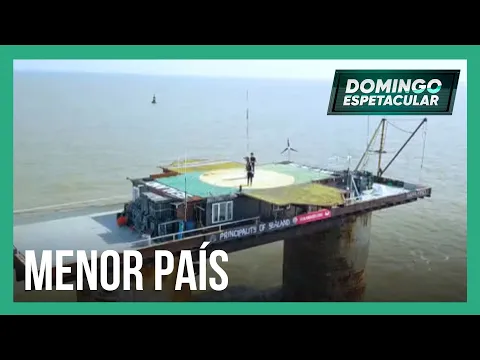

The approach reveals a surprise for those expecting a castle or palace.
The destination is a military platform, with columns and concrete exposed to the elements.
To reach the structure, the operation is described as delicate, requiring agility, balance, and care, as a fall would be fatal.
Upon disembarking, the team reports the relief of arriving safely and receives a stamped passport, regarded as one of the most symbolic mementos of the visit.
The tiny country in the middle of the sea, in practice, operates this type of ritual as a reinforcement of its own institutional identity.
Prince Liam, Minimal Formality and State Symbols
The host mentioned is Prince Liam, introduced as the grandson of Roy Bates. The reception is described as kind and unpretentious.
When asked about formal treatment, the guidance was simple: “just Liam.”
Even without official recognition, the tiny country in the middle of the sea maintains typical state symbols, citing a flag, constitution, and passports.
There is also a reference to the Montevideo Convention, with the claim that the structure encompasses territory, government, the capacity for relations with other states, and a population.
Attacks, Invasions, and the Kidnapping of 1978
The stability of the tiny country in the middle of the sea is narrated as a result of constant disputes.
The principality speaks of dozens of attacks and invasion attempts over the years.
One account mentions a summer with more than 15 attempts, attributed to pirates and various groups.
The most serious incident mentioned occurred in 1978, when Prince Michael was reportedly held hostage for three days following an action by Germans attempting to seize the location.
He was released three days later, and the space visited includes the room where the kidnapping allegedly occurred, treated as a permanent mark of that phase.
What It’s Like to Live There: Rooms, Kitchen, Energy, and Depth
Despite the hostile appearance, the platform once housed up to 50 residents in the 1970s, seen by many as a symbol of freedom.
The interior includes a living room, kitchen, office, bathrooms, bedrooms, as well as a gym and recreation room.
Electricity is described as sustained by solar panels and wind turbines.
Part of the structure is located within the supporting columns, and the visit mentions a depth of about 30 meters, with four floors in total.
It is also noted that more than 300 members of the British Navy stayed there during World War II, and there is a preserved cell as a remnant of military use.
Security, Maintenance, and the Claim of Existing “Until Today”
With about 80 years of history, the tiny country in the middle of the sea is presented as a still secure structure, with constant maintenance carried out with its own resources.
The narrative maintains that despite the concrete and iron battered by time, the platform remains functional and habitable within practical limits.
At the end of the visit, the feeling described is one of fascination and curiosity in front of people who dedicated their lives to turning an improbable project into a political and administrative routine.
It is also recorded that the principality would be among the few countries with no cases of COVID, reinforcing the image of isolation and internal control.
Would you recognize the tiny country in the middle of the sea as a real nation, or do you think this should be regarded merely as a historical curiosity off the coast of England?









Eu viveria até como empregada deles o resto da vida, parabéns!!
A alguns anos atrás, eu li sobre esse país, eles vivem praticamente de vendas de títulos, conde, barão, duque, vc ganha certificado, um documento oficial com sua foto, as normas do país, hino nacional, e tudo mais, achei muito legal na época, quase comprei um título…..kkkk
Viveria feliz neste país!