





 Portuguese
  English
  Spanish
  9 min of reading
  0 comments


In Antarctica, The McMurdo Station Houses Up to 1,200 People at −50 °C, with Desalination, FM Radio, Firefighters, and Even ATMs in the World’s Most Isolated Place.
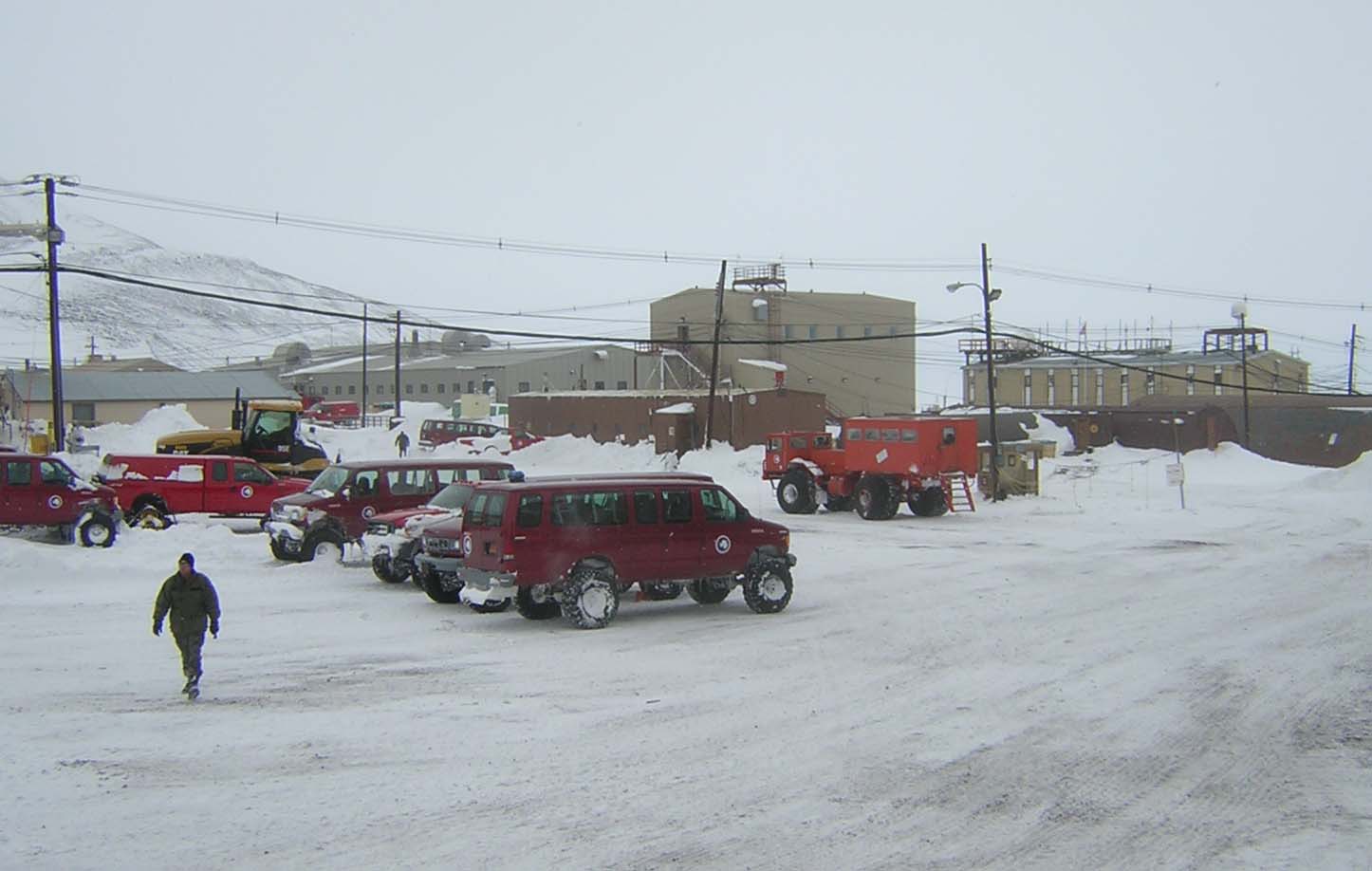
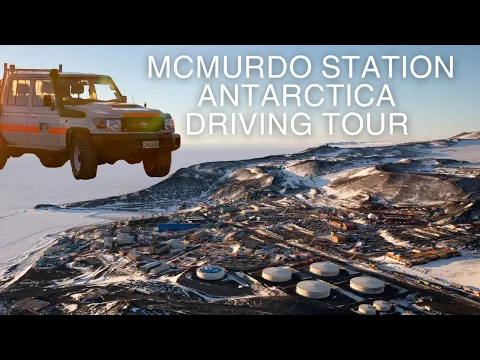
The McMurdo Station wasn’t built — it was camped. In December 1955, the United States Navy landed on Hut Point Peninsula, on Ross Island, and set up the first tents in what would become the largest community in Antarctica. Seventy years later, McMurdo is a complete town. It has a postal address. It has a professional fire department. It has two banks. It has three airports. It has a police station. It has a hospital. It has a chapel. It has FM radio. It has a music festival. It has mail service. It has trash recycling. And it has 146 buildings spread over 2.6 square kilometers of volcanic rock at the furthest navigable point south on the planet.
The difference? Outside, the temperature can drop to -50°C. The wind blows at 100 km/h. The sun disappears for four consecutive months. And the nearest airport is 3,864 kilometers away, in Christchurch, New Zealand.
From 1,200 People in Summer to 150 in Polar Winter
McMurdo lives two distinct calendars. From October to February, during the austral summer, the population explodes to 1,200 to 1,400 residents. Scientists, technicians, cooks, mechanics, firefighters, radio operators, doctors, electricians. The station buzzes. In February, the last flights leave. The temperature plummets. The first darkness arrives. And the population shrinks to 150 to 200 people — those who stay to spend the polar winter.
-
A collector bought a black stone in Morocco in 2011 without knowing that he had in his hands a Martian meteorite 4.45 billion years old with ten times more water than any other fragment of Mars ever found on Earth.
-
European cities are building public climate refuges to cope with extreme heat.

-
Excavations for a highway uncovered an intact Celtic city with gold, jewelry, and ancient production structures.
-
Every pineapple you eat is actually up to 200 different fruits fused into one: discover the fascinating process in which each flower opens for just one day and produces the pieces that form the whole fruit over the course of 3 weeks.


These 150 do not hibernate. They keep the city running. They operate the power plant. They treat the water. They monitor the diesel generators. They remove snow. They fix equipment. They ensure that, when the sun returns in August and the scientists come back in October, everything is ready.
The station operates on New Zealand time (UTC+12) because all flights depart from Christchurch. During the polar night — from April to August — there are practically no flights. No planes land. No ships arrive. McMurdo is isolated from the world.
170 Thousand Liters of Desalinated Water Per Day — from the Ocean to the Tap
Antarctica is the driest continent on the planet. It is technically a desert. It does not snow as much as one would think. And melting snow would consume too much energy. The solution? The ocean. McMurdo pumps seawater from McMurdo Sound, about 800 meters from the station, and transforms it into drinking water using reverse osmosis. The process works 24 hours a day, seven days a week.
First, the seawater — which is at -2°C — is heated to 3°C using waste heat from the power plant. Then, it passes through sand filters to remove sediments. Next, it is pressurized to over 700 pounds per square inch and forced through microscopic membranes. The salt is retained. The clean water passes.
The result? About 170 thousand liters of drinking water per day — enough for 1,200 people. Each person consumes an average of 227 liters daily. It seems like a lot, but it includes cooking, laundry, scientific laboratories, hospitals, equipment cleaning, and firefighting.
The water is stored in four tanks of 190 thousand liters each and distributed through pipes suspended above ground — burying pipes would freeze everything. In winter, when the population drops to 150 people, consumption drops to 30 to 45 thousand liters per day. Only one of the three desalination machines operates.
Professional Firefighters — The Only Full-Time Fire Department in Antarctica
McMurdo has the only professional full-time fire department in all of Antarctica. There are about 55 firefighters during the summer, operating at two stations: Station 1 in the center of McMurdo and Station 2 at the international airport.
Station 1 has two fire trucks, a water tanker, an ambulance, a rescue vehicle, and a SCAT (self-contained autonomous truck). Station 2, which serves the three airports of the station, has seven ARFF (Aircraft Rescue and Firefighting) vehicles, all equipped with tracks for deep snow.
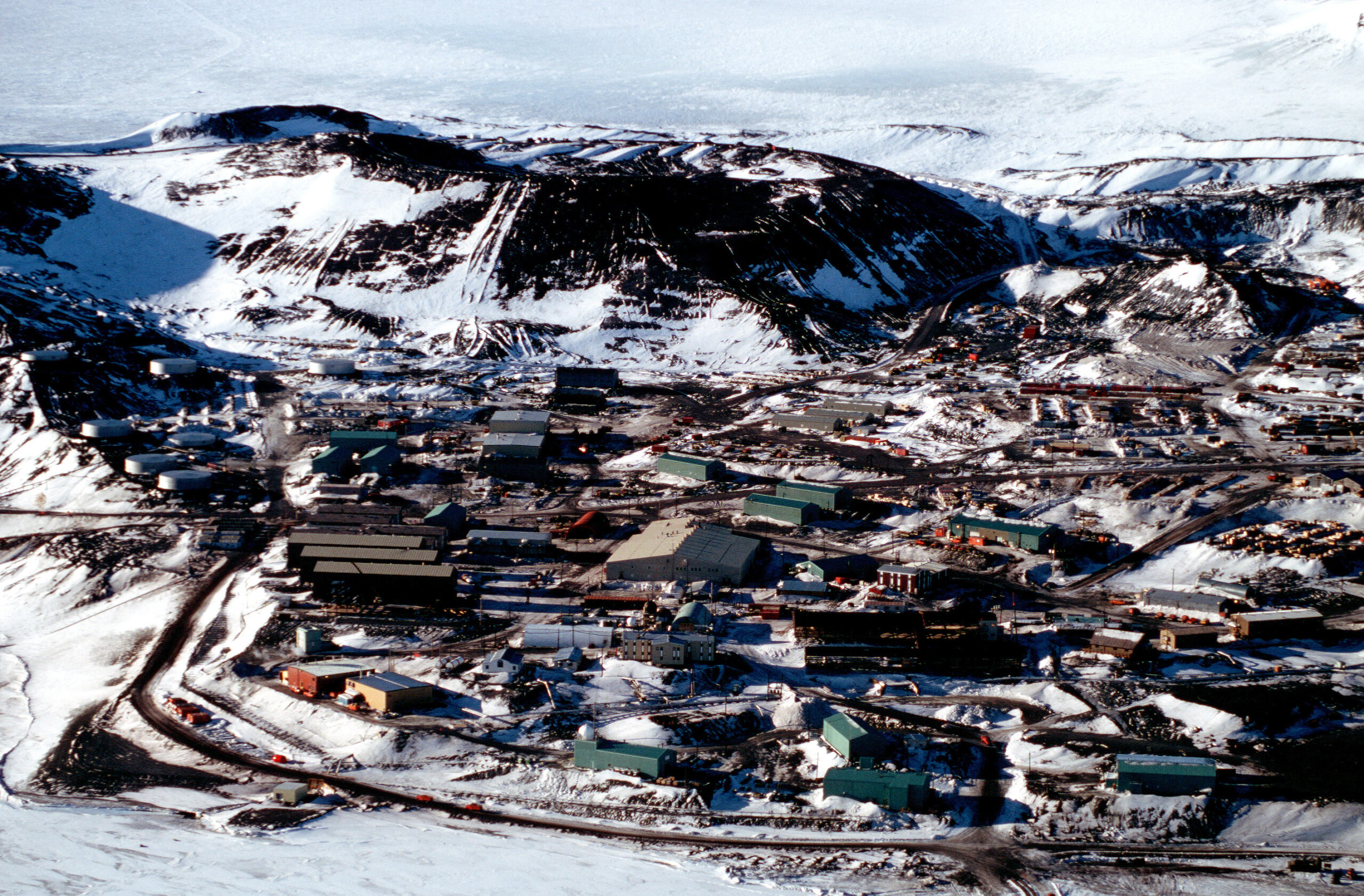
Why are firefighters so critical in Antarctica? Because a fire can kill everyone. Shelter is survival. Losing a building can mean losing heating, power, water, or food capacity. And there is no external help arriving quickly — especially in winter.
The fire department also responds to medical emergencies, hazardous material spills, suspicious odor investigations, diving emergencies, and — yes — the removal of seals and penguins from the runways when airplanes are arriving. Response time required: two minutes for any incident anywhere in the station.
Two ATMs — The Only Ones in Antarctica
McMurdo has two ATMs, operated by Wells Fargo. They are the only ATMs on the entire Antarctic continent. There are no physical banks. There are no agencies. Just the two ATMs, which operate 24 hours a day and allow withdrawals in US dollars. The cash comes on resupply flights.
Why have ATMs in Antarctica? Because McMurdo has stores, bars, a post office, and paid services. And because it is technically US soil under the jurisdiction of the US Antarctic Program — so US banking systems work.
FM Radio, Cable TV, and 20 Thousand Vinyl Records
McMurdo has three FM radio stations and several cable TV channels. The main one is Ice Radio 104.5 FM, operated entirely by station volunteers. It broadcasts at 50 watts — enough to cover 10 kilometers. The programming is live, done by locals who take turns as DJs.
The second station, 93.9 FM, rebroadcasts the American Forces Network (AFN) programming via satellite. The third, 88.7 FM, is a low-power pirate station that only reaches McMurdo. The radio station houses one of the largest collections of vinyl records still supervised by the US government: between 12,000 and 20,000 LPs. Part of the collection came from the former AFRTS station in Saigon, Vietnam, and includes rock, pop, rap, jazz, classical — everything.
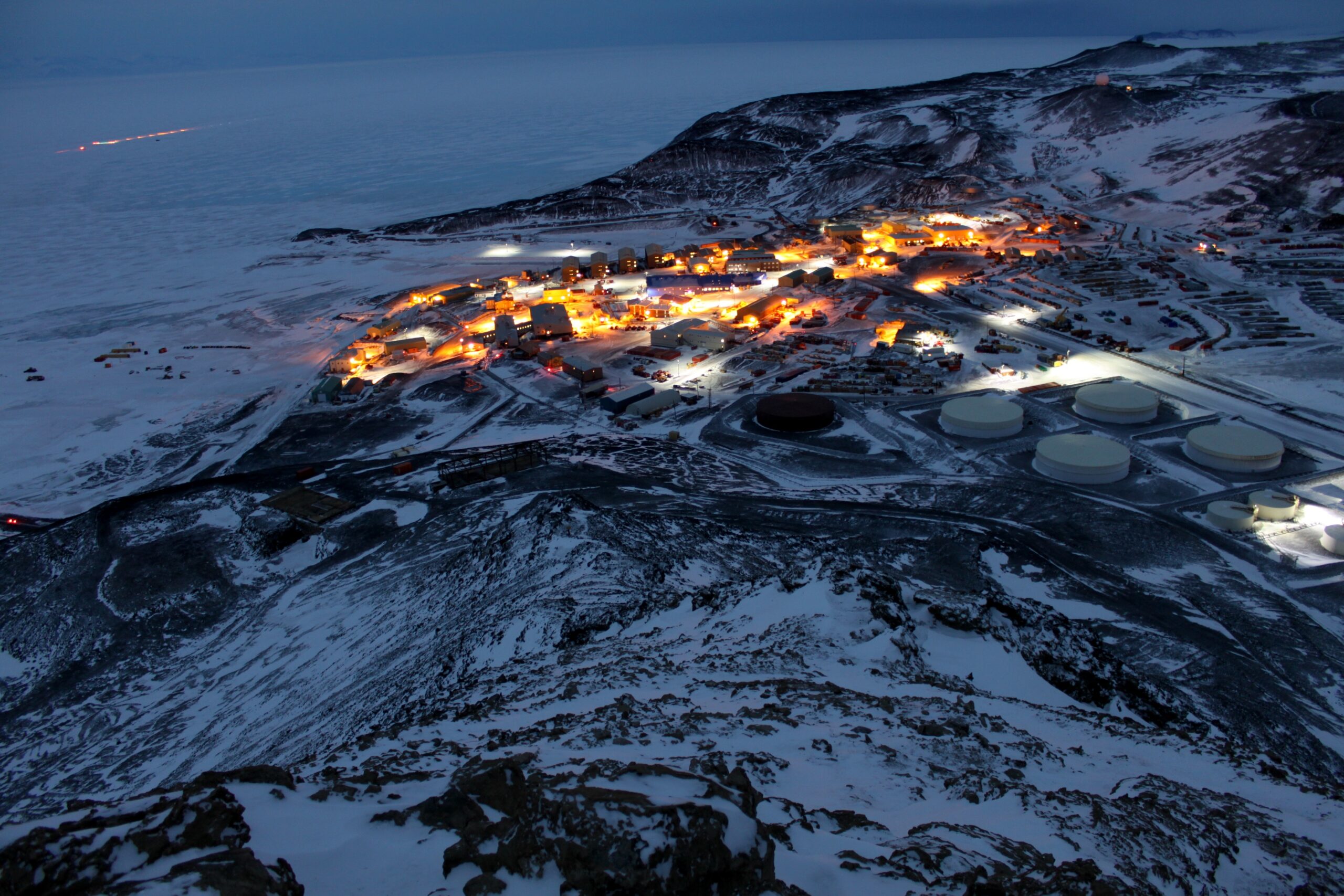
Every year, at Christmas, the McMurdo and South Pole stations sing Christmas carols live via HF radio on the frequency 7.995 kHz, transmitting to remote camps spread across the continent. Cable TV has channels from AFN and the Navy Motion Picture Service, as well as informational channels with emergency alerts, real-time weather, flight information, and cafeteria menu.
Chapel, Post Office, Gyms, and Even a Music Festival
The Chapel of the Snows is an interfaith chapel that offers Protestant, Catholic, and secular events. The current chapel was inaugurated in 1989, after the previous one burned down in 1978. A temporary chapel set up in a Quonset also burned down in 1991.
The McMurdo post office, located in Building 140 (Movement Control Center), provides all regular services: stamps, sending letters and packages. It accepts only credit and debit cards. Mail for the South Pole Station also passes through McMurdo.
The station has three gyms: one for basketball, one for weightlifting, and one for aerobics. It has a library. It has a general store. It has two bars. It has a coffee house. It has an old-fashioned bowling alley with manually set pins. And every year, around New Year’s, McMurdo hosts Icestock — the southernmost music festival in the world — with performances from station residents and the nearby Scott Base from New Zealand, just 3 km away.
Three Airports Operating on Ice, Snow, and Ice Shelf
McMurdo has three airports, all built on solid ice or packed snow. Together they form the largest and busiest airport complex in Antarctica. The Sea Ice Runway operates from September to November over the seasonal sea ice of McMurdo Sound. It accommodates all types of aircraft, including the C-17 Globemaster, but the weight capacity depends on the thickness of the ice.
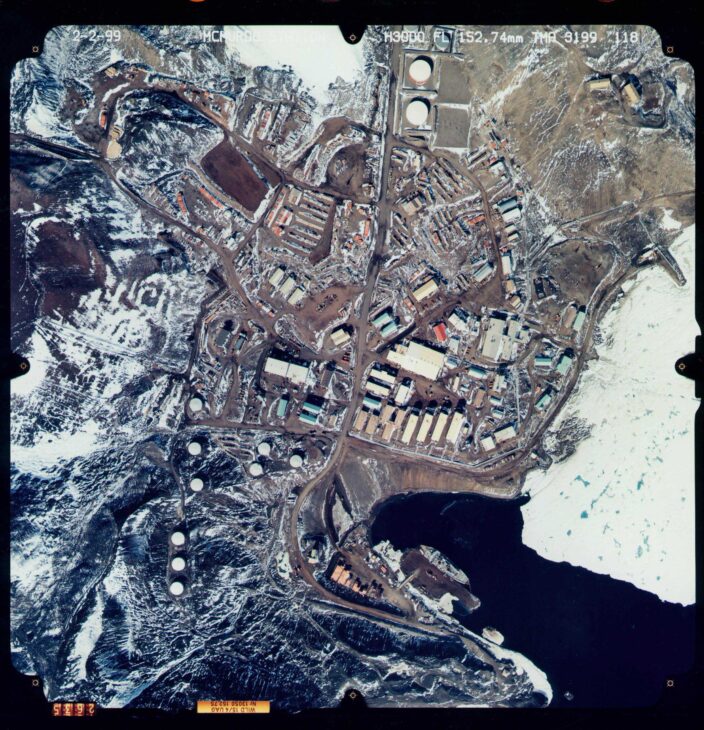
Williams Field operates from November to February and accepts only aircraft equipped with skis, such as the US Air Force LC-130 Hercules. The Pegasus Ice Runway, built on the McMurdo ice shelf, can operate year-round but typically works from December to March. It accepts all types of aircraft. The station also has a helicopter pad on rocky ground at the edge of the town.
Diesel Power Plant and Wind Turbines Shared with New Zealand
McMurdo is powered by six diesel generators that can produce 900 kilowatts each, but the number of generators operational varies with the station’s population. From 1961 to 1972, McMurdo was powered by a PM-3A nuclear reactor that generated 1.8 megawatts and also produced steam for the desalination plant — about 53,000 liters of water per day.
The reactor was decommissioned in 1972 due to safety issues (cracks and leaks). It was replaced by conventional diesel generators, which are more reliable and cheaper to operate. In 2010, three Enercon E-33 wind turbines (330 kW each) were installed on Crater Hill, about 1 km from McMurdo. The turbines generate about 990 kW in total and are shared with New Zealand’s Scott Base.
Together, they save 463,000 liters of diesel per year — an 11% reduction in fuel consumption. Waste heat from the generators heats the buildings in McMurdo and provides energy for the desalination plant.
Complete Sewage Treatment — Nothing Goes to the Ocean Untreated
Until the 1980s, McMurdo dumped raw sewage directly into the ocean. That has changed. Today, all wastewater — from toilets, sinks, showers, laundry, laboratories — goes to the sewage treatment station. The system processes about 170,000 liters of sewage per day in summer and 30 to 45 thousand liters in winter.
The treatment uses bacteria and microorganisms to decompose organic matter. The solids are removed, pressed into “cakes,” and packed in plastic-coated boxes. Everything is sent back to the United States for disposal. The treated water — now clean — is discharged into the ocean. Researchers constantly monitor water quality to ensure that there is no contamination.
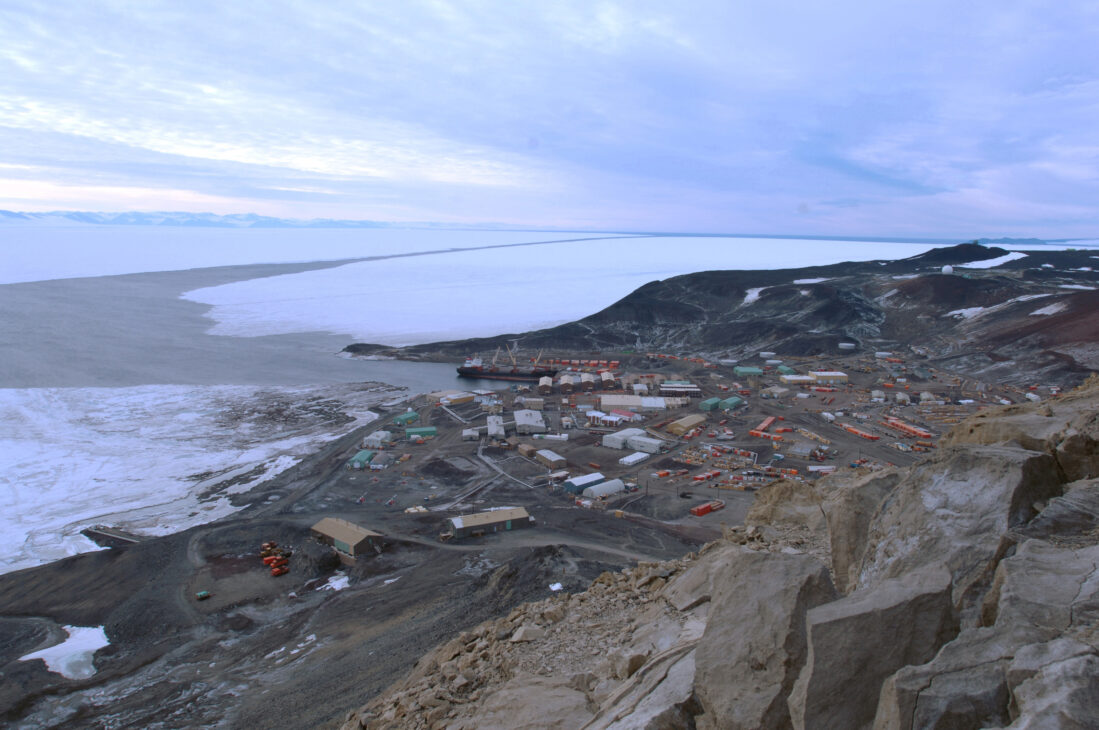
McMurdo recycles up to 70% of all waste generated on the continent. There is sorting for plastic, aluminum, paper, cardboard, glass, light metal, heavy metal, unusable clothing, food scraps, and wood. Everything that cannot be recycled locally is sent back to the USA.
Hydroponic Greenhouse — Fresh Vegetables Grown Under Artificial Light
From 1989 to 2011, McMurdo operated the largest greenhouse in Antarctica. It started with 50 square meters and expanded to 66 square meters in 1994. Plants were grown hydroponically — using water instead of soil. The greenhouse produced about 100 kg of vegetables per month at peak production: lettuce, spinach, arugula, Swiss chard, tomatoes, peppers, cucumbers, and herbs.
That was enough to provide one salad per week for the winter team, but limited for the summer population. The greenhouse initially had glass panels, but was moved indoors because it was more energy-efficient in winter. People loved being near the plants. Many brought a bottle of wine and dinner to eat inside.
11 Million Pounds of Supplies Arrive Once a Year
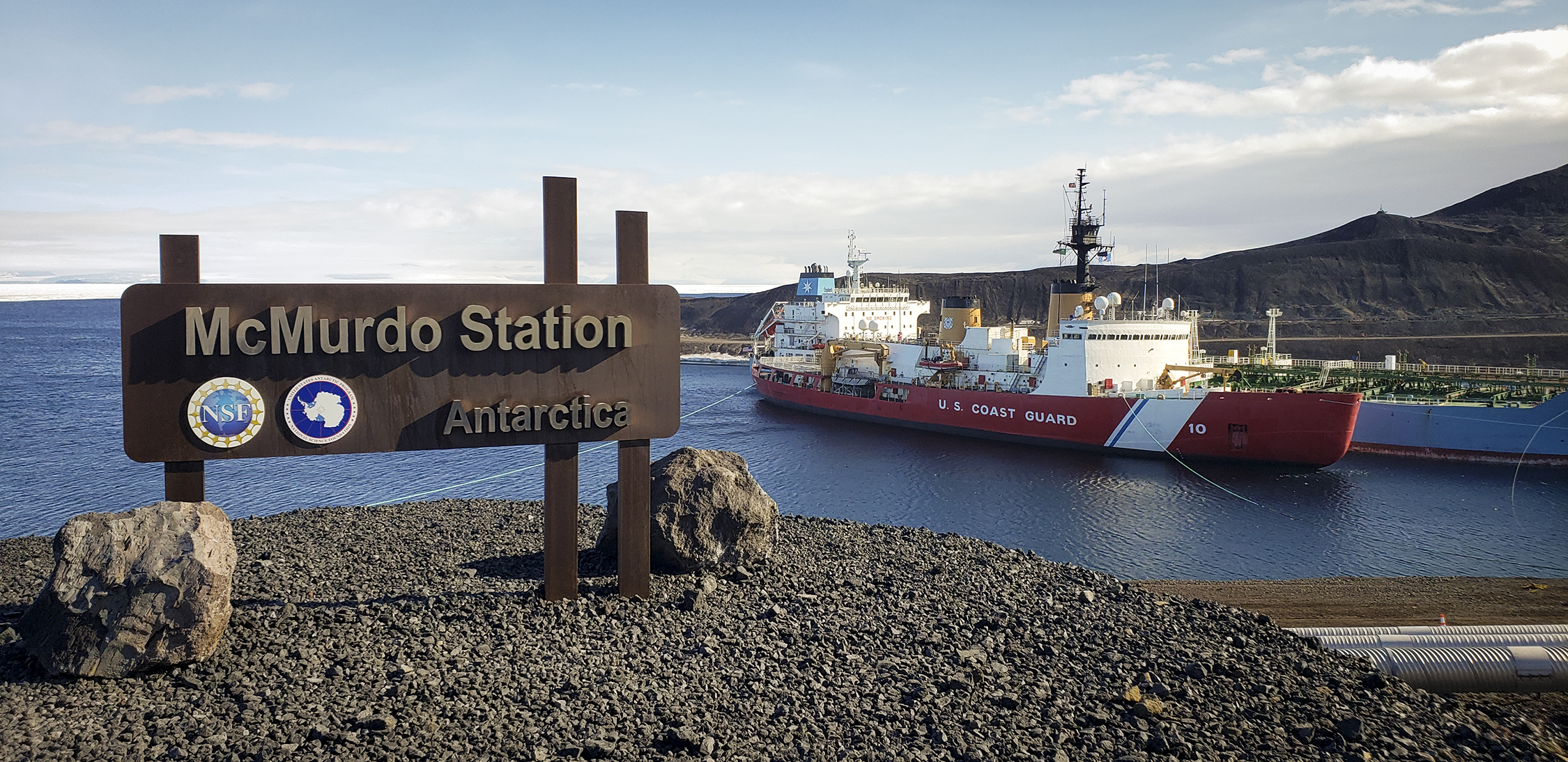
Every year, as part of Operation Deep Freeze, cargo ships deliver 8 million gallons (30 million liters) of fuel and 11 million pounds (5 million kg) of supplies and equipment to McMurdo. The ships are operated by the US Military Sealift Command but crewed by civilian sailors. The cargo varies: mail, construction materials, trucks, tractors, dry and frozen food, scientific instruments.


The US Coast Guard icebreakers open a channel through the sea ice of McMurdo Sound so that supply ships can reach Winter Quarters Bay, McMurdo’s port. Additional supplies and personnel arrive via flights from Christchurch, New Zealand, when weather permits.
World-Class Scientific Center — The Real Reason for It All to Exist
The station does not exist to be a town. It exists to be science. The Albert P. Crary Science and Engineering Center is at the heart of the operation. Laboratories for biology, geology, glaciology, oceanography, astrophysics. Saltwater aquarium. State-of-the-art equipment.
Researchers study climate change through ice cores. They monitor active volcanoes like Mount Erebus, 40 km away. They investigate marine ecosystems under extreme conditions. They collect meteorites — easier to find against the white ice. They study atmospheric physics and cosmic rays.
McMurdo also functions as a logistical base for the Amundsen-Scott Station at the South Pole, 1,360 km to the south. Everything that goes to the South Pole passes through McMurdo first — by plane or via the McMurdo-South Pole Traverse, a snow and ice road that needs to be cleared every year.
The Most Isolated Place Where Humans Live Permanently
McMurdo is 3,864 km from Christchurch, New Zealand — approximately the same distance as between New York and Los Angeles, or between Los Angeles and Hawaii. In winter, when the sun disappears from April to September, there are no flights. No ships. No quick medical evacuation. If something goes wrong, you are alone with 150 people until August.
The average annual temperature is -18°C. It has recorded -50°C in winter and +8°C in summer. Snow accumulates up to 1.5 meters a year. The wind can exceed 100 km/h. There are no polar bears. There are no land predators. The local wildlife includes Adelie penguins, Weddell seals, and skuas — seabirds that patrol the sky stealing food.
And yet, McMurdo functions. It desalinizers water. It generates power. It treats sewage. It recycles waste. It puts out fires. It broadcasts FM radio. It offers ATMs. It celebrates Christmas. It conducts world-class science. It is proof that, if you build enough infrastructure, humans can live anywhere — even at the end of the world.





-

-

2 pessoas reagiram a isso.