





 Portuguese
  English
  Spanish
  5 min of reading
  0 comments


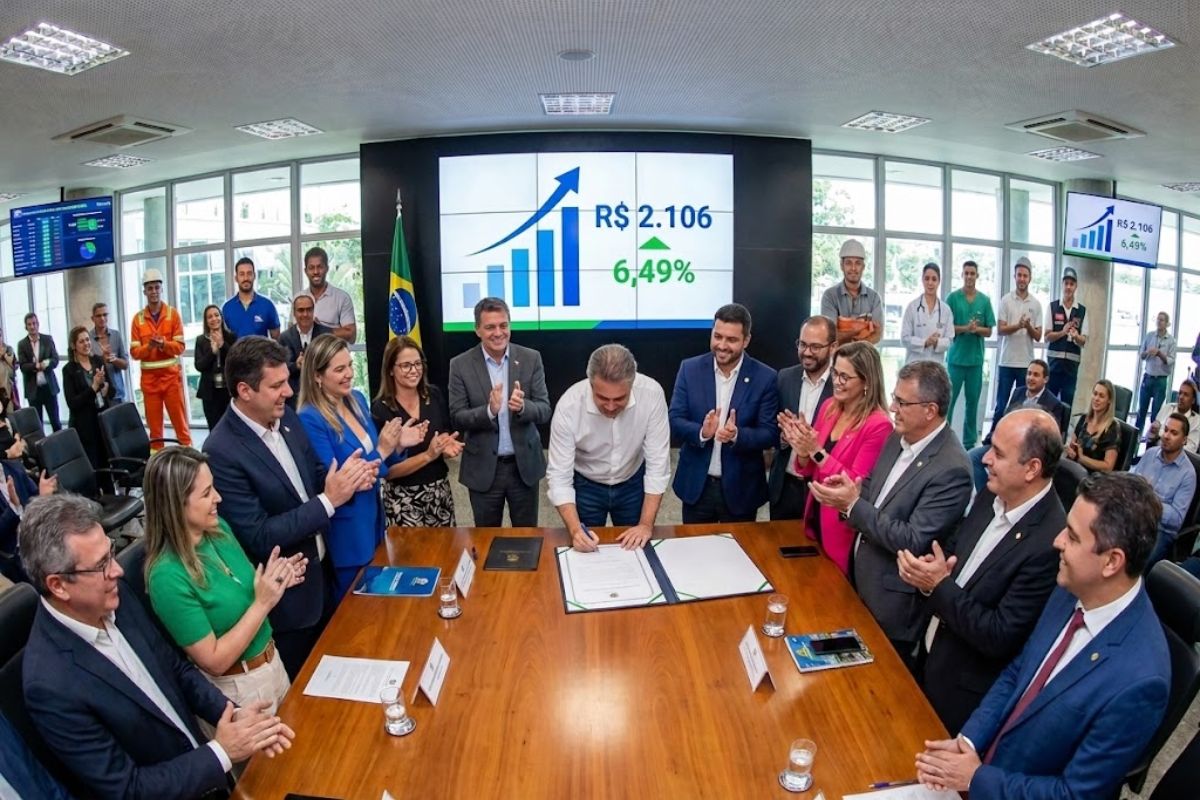
The New Catarinense Regional Minimum Wage Was Adjusted by 6.49% and Now Ranges from R$ 1,842 to R$ 2,106, After Negotiation Between Employers and Workers, with Proposal Sent by the Government to Alesc to Increase Income, Organize Sectoral Floors and Give Predictability to the Local Market in 2026 Already in the Next Few Weeks
The new minimum wage of Santa Catarina Entered a New Phase After the State Government Sent to the Legislative Assembly the Project That Updates the Regional Floors for 2026. The Proposal, Presented by Governor Jorginho Mello, Provides for an Adjustment of 6.49% and Raises the Values to a Range Between R$ 1,842 and R$ 2,106, Depending on the Economic Sector Involved.
The Move Has Weight That Goes Beyond the Paycheck. Since Santa Catarina Has Maintained a System of Direct Negotiation Between Employers and Employees Since 2009, the Regional Adjustment Works as a Reference for Various Segments and Helps to Fill the Absence of a Minimum Wage Established by Federal Law or by Specific Collective Agreement. It Is a Decision That Affects Income, Business Costs, and Consumption Pace at the Same Time.
How the Agreement Was Reached and Why the State Resumed Discussing Regional Floors
The Structure of the Adjustment Came from a Negotiation Between Representatives of Workers and Employers, Preserving a Model that Santa Catarina Has Been Using for Years to Define Its Regional Floors.
-
Oil surged to $115 a barrel due to the war in the Middle East, and diesel in Brazil has already risen to R$ 7.45 per liter, while the United States…

-
Brazilian city bets on the business environment to generate jobs and attract investments in the energy sector — secretary reveals strategy at Macaé Energy 2026.

-
50 viaducts, 4 tunnels, 28 bridges, and 40 kilometers of bike paths: BR-262 in Espírito Santo will receive 8.6 billion reais for the largest engineering project in the state’s history, inspired by the Immigrant Highway in São Paulo.

-
Brazil produces too much clean energy and doesn’t know what to do with it: over 20% of solar and wind capacity was wasted in 2025 while investors flee and 509 renewable generation projects were abandoned in the last year.


This Consensus Format Has Become a Local Trademark Because It Prevents Salary Updates from Coming Solely from One Side of the Table and Tries to Accommodate, As Much As Possible, the Pressure for Income Restoration and the Companies’ Concerns About Costs.
In This Context, the new minimum wage was Sent by the Executive to Alesc Already with the Four Maintained Ranges.
The Choice Shows That the State Did Not Want to Dismantle the Current Structure, But to Recalibrate It Based on the Negotiated Index.
The Logic Was to Correct Values Without Altering the Architecture of the System, Preserving the Division by Economic Activities and the Sectoral Reach Already Consolidated.
Where the Adjustment Applies and Which Categories Can Reach R$ 2,106
The First Range of the new minimum wage Was Set at R$ 1,842 and Covers Activities Such as Agriculture, Livestock, Construction, and Domestic Work.
It Is the Foundation of the Regional System and Affects Areas Where the Minimum Wage Usually Serves as a Direct Reference for Lower Initial Earnings, Especially Outside Major Urban Centers.
The Second Range Goes Up to R$ 1,908 and Includes Segments Such as Clothing, Weaving, and Footwear. The Third Goes to R$ 2,022, Covering Chemical, Food, and Pharmaceutical Industries.
The Fourth Range, the Highest, Reaches R$ 2,106 and Covers Sectors Such as Metallurgy, Electrical Materials, Transport, and Health.
It Is in This Last Layer That the Adjustment Gains Greater Visibility, Because It Concentrates Areas with Strong Industrial Weight and More Complex Services Within the Catarinense Economy.
Why the New Minimum Wage Affects Much More Than the Payroll
When a Regional Minimum Wage Rises, the Immediate Effect Appears in the Income of Workers Covered by These Ranges. But the Real Impact Is Usually Broader.
The new minimum wage Expands the Purchasing Power of Thousands of Employees, and This Tends to Reverberate in Trade, Services, and Everyday Consumption, Especially in Cities Where Salary Circulation Has Significant Weight in the Local Economy.
At the Same Time, the Adjustment Pressures Companies to Reorganize Costs, Especially in Labor-Intensive Sectors.
This Does Not Necessarily Mean a Loss of Competitiveness, but It Imposes Adaptation.
Every Relevant Salary Correction Shifts the Balance Between Revenue, Margin, and Price Transfer, and This Adjustment Is Usually More Sensitive in Chains Such as Tourism, Industry, Transport, and Health, All Mentioned in the Scope of the Proposal.
What the Regional Minimum Wage Solves and What It Does Not Solve on Its Own
The Catarinense System Exists Precisely to Address a Gap.
In Areas Without a Minimum Wage Set by Specific Federal Legislation or Without a Collective Agreement Able to Define Its Own Values, the Regional Minimum Wage Acts as a Practical Reference.
In This Sense, the new minimum wage Helps to Provide a Clearer Parameter for Hiring, Negotiations, and Labor Inspection.
But It Does Not Solve Everything on Its Own. The Regional Minimum Wage Organizes the Base, Not the Entire Structure of the Labor Market.
Issues Such as Productivity, Formalization, Turnover, and Cost of Living Continue to Influence the Real Earnings of Workers and the Ability of Companies to Absorb Increases.
The Adjustment Improves the Legal Reference and Strengthens the Minimum Compensation, But Continues to Depend on Legislative Approval and Economic Conditions to Produce a More Lasting Effect.
What Is Needed for the Measure to Take Effect and What Is the Next Step
At This Moment, the Project Is Under Review by the Legislative Assembly of Santa Catarina. The Expectation Presented Is for Approval Soon, and If That Happens, the Adjustment Will Have Immediate Effect.
This Detail Matters Because It Shortens the Interval Between Political Negotiation and the Real Impact on the Pockets of Workers Covered by the Four Ranges.
Until Then, the new minimum wage Remains as a Formal Proposal with Strong Economic and Symbolic Weight.
It Signals That Santa Catarina Wants to Maintain Its Own Model of Regional Update and, at the Same Time, Respond to the Pressure for Income in 2026.
The Outcome Now Depends on the Processing in Alesc, Which Will Define When the Negotiation Made Between Workers and Employers Actually Becomes a Valid Minimum for the State.
The Adjustment of 6.49% Is Not Just an Administrative Number.
It Redefines Minimums, Places Entire Sectors in a New Pay Range and Helps Measure How Santa Catarina Plans to Balance Labor Market, Competitiveness, and Consumption in 2026.
In Your Assessment, Does This New Regional Minimum Wage Really Strengthen the Catarinense Economy, or Does the Gain Still Fall Short of the Impact That the Cost of Living Already Imposes on Workers?









-

2 pessoas reagiram a isso.