





 English
  Francês
  Alemão
  Italiano
  Japonês
  Norueguês
  Portuguese
  Spanish
  2 min of reading


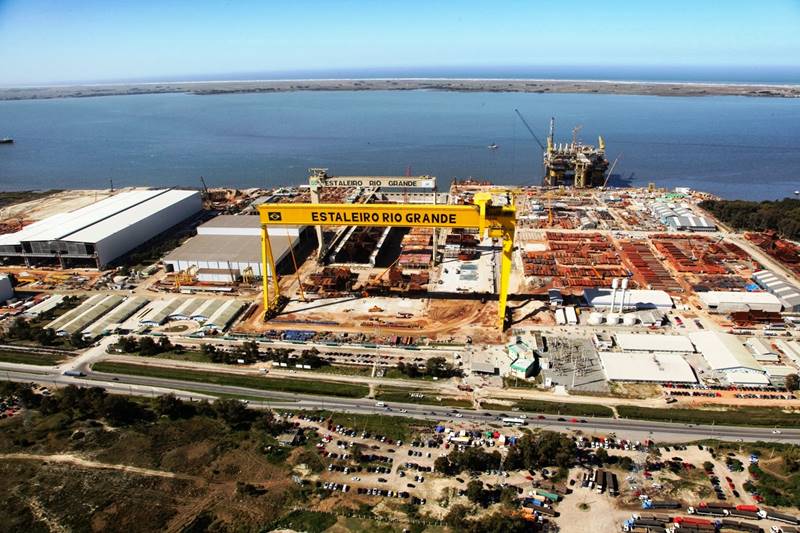
In The Fight For Survival, The Rio Grande Shipyard That Had Already Obtained Permission To Operate As A Port Terminal Is Now Involved In Loading Large Ships
In January of this year, the Rio Grande shipyard, which diversified its activities without orders, having been authorized by the Gaúcha Assembly to operate as a Port Terminal, is now already operating in supporting the loading operations of large ships.
The choice of the shipyard for this purpose was due to its privileged location near the ports of Rio Grande and Santa Catarina.
Large ships often left the port of Rio Grande without maximum cargo due to the channel’s draft, as they faced the risk of running aground.
As the shipyard had its channel dredged to increase the depth, loading of the vessels can now be done entirely, thus avoiding costs of stopping at the Port of Santa Catarina to supplement the cargo.
-
Government unlocks R$ 554 million for a highway that has been requested for decades and accelerates the duplication of BR.
-
Without bricks, without cement, and without endless construction: the cardboard house that is assembled in modules and can be moved.

-
Billions of barrels on the equatorial margin could lead Amapá to double its oil production in Brazil — the state aims to enter the route of companies in the Campos Basin, attract investments, and boost jobs and businesses in the oil and gas sector.
-
Without bricks, without cement, and without endless construction: the cardboard house that is assembled in modules and can be moved.

The National Agency for Waterway Transportation (ANTT) has already authorized three operations of this type, and the Superintendency of Ports of Rio Grande do Sul seeks authorization from regulatory agencies for the operation to become more frequent.
The Fight For Survival
The Shipyard Was Surviving From The Sale Of Scrap From Platforms P-71 And P-72, which were initiated in its manufacturing park but had their works transferred to China by Petrobras after the cancellation of contracts due to the discovery of signs of corruption in the contracts by the Lava Jato operation.
Ecovix, the shipyard’s administrator, has been in judicial recovery since then and is battling hard to maintain its survival.
The company was contracted to manufacture eight hulls of platforms, known as Replicating FPSOs, due to their nearly identical shape, but saw the project of nearly R$ 10 billion canceled by Petrobras in 2016, and had to lay off its three thousand two hundred workers.









Seja o primeiro a reagir!