





 Portuguese
  English
  Spanish
  5 min of reading
  0 comments



In The Midst Of The Country’s Population Decline, Some Regions Surprise: The Cities Are Growing At Record Speed, Attracting Residents Back From The Southeast And Transforming Into Poles Of Quality Of Life, Employment And Infrastructure That Are Expected To Explode In 2026.
Brazil is undergoing a silent, yet profound change. The population growth rate has fallen to 0.52% per year, the lowest in history recorded by IBGE. With fewer young people and an aging population, the country is experiencing a movement of return to medium-sized and rural cities. The Cities Are Growing Where There Is Quality Of Life And Affordable Housing Costs, and not just in the capitals.
This phenomenon marks the beginning of a new urban geography, where medium-sized centers near economic hubs stand out as modern refuges. What was once a destination for retirees now attracts entire families, qualified professionals, and entrepreneurs looking for space, security, and new opportunities.
Palhoça, Santa Catarina
The city of Palhoça is one of the great surprises of the South of the country. Tied to the capital Florianópolis, it grew 61.2% between the last two censuses, jumping from 137,000 to 222,000 inhabitants.
-
The Federal Revenue Service now automatically cross-references everything you declare with data from banks, credit cards, brokerage firms, and insurance companies, and any discrepancy between your income and your expenses triggers an alert in seconds.

-
Amid global tensions, Brazil blocks the United States’ proposal at the WTO and paves the way for a trade crisis and possible retaliations.

-
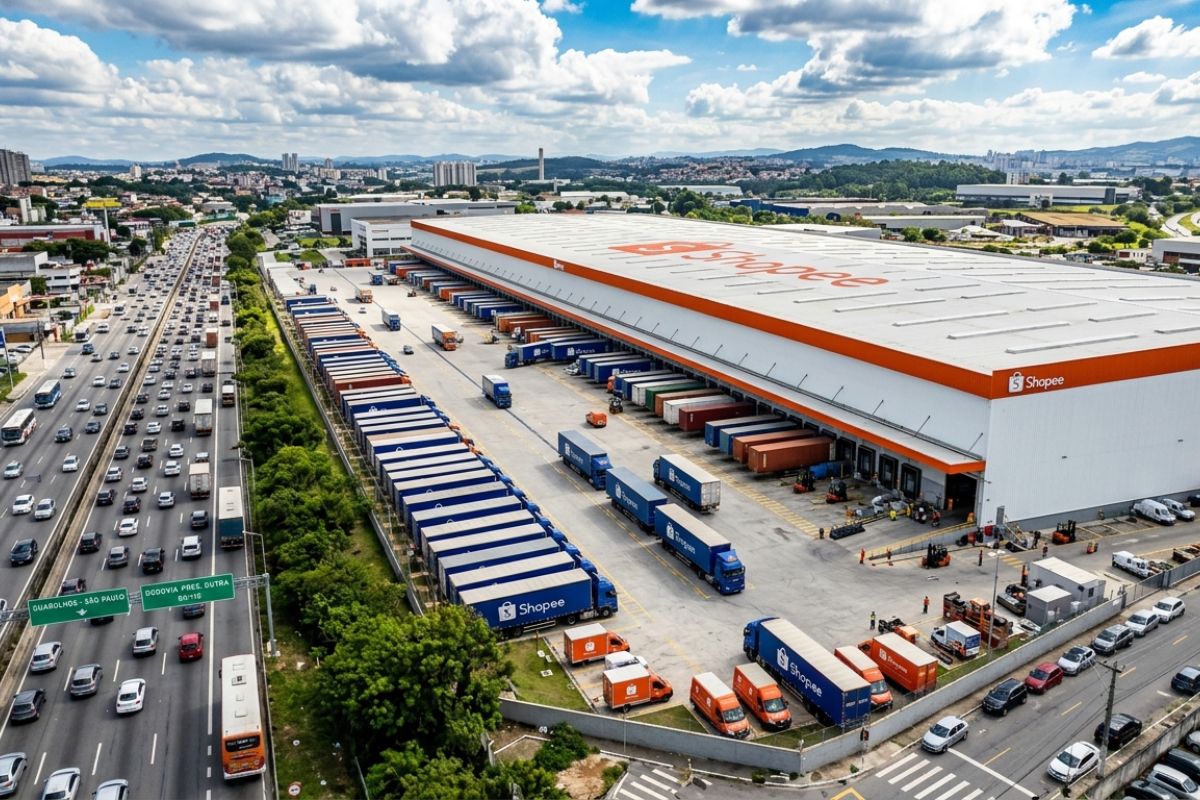
Shopee opens the largest logistics warehouse in Brazil in Guarulhos: 220,000 m² on Dutra, contract signed before construction, pays R$ 45/m² and accelerates deliveries at scale, putting pressure on Mercado Livre and Amazon.
-
After mistakenly transferring R$ 50,000 via Pix, a man will receive the amount back along with R$ 10,000 for moral damages from the recipient.


The secret lies in the strategic location and competitive cost of living compared to the capital of Santa Catarina.
Palhoça combines planned neighborhoods, new condominiums, and modern infrastructure, catering to those who work in Floripa but prefer to live in a quieter environment.
It is the classic example of a satellite city that has become a protagonist in the state scenario.
Camboriú, Santa Catarina
Unlike its famous neighbor Balneário Camboriú, the city of Camboriú is building its own identity.
The growth of 63.3% in just over a decade demonstrates the strength of coastal urbanization in Santa Catarina.
The proximity to the beach and the availability of more affordable housing have transformed the municipality into a destination for families and investors.
The city is betting on urban infrastructure and quality services, with schools, commerce, and healthcare keeping pace with the expansion.
It is an example of how the coast can grow without losing the balance between urban life and the natural environment.
Sorriso, Mato Grosso
In the heart of the Midwest, Sorriso is known as the national capital of agribusiness.
The growth of 66.3% is directly linked to the strength of grain production, especially soybeans and corn.
The city has created an economic environment that boosts everyone from machine operators and truck drivers to engineers and agricultural technology specialists.
In addition to agribusiness, Sorriso invests in urban infrastructure, health, and education, creating a development model that combines countryside and city.
It is a true reflection of how economic interiorization has transformed the state of Mato Grosso into a national powerhouse.
Parauapebas, Pará
In the Amazon region, Parauapebas stands out as one of the cities that have grown the most in Brazil, with 73.1% population growth.
Located in the Serra dos Carajás, it is one of the world’s major mining hubs, hosting extraction and processing operations for iron that attract thousands of workers.
But the growth is not limited to mining.
The service, commerce, and education sectors are also keeping pace with the expansion, transforming Parauapebas into a new dynamic urban center in the heart of the Amazon, with a growing economic diversification.
Sinop, Mato Grosso
Known as the capital of Nortão, Sinop experienced growth of 73.4% and has solidified its position as a logistics, agricultural, and educational hub of the state.
The advancement of high-scale agribusiness has driven the local economy and attracted investments in universities, hospitals, and commercial centers.
Sinop is an example of urban planning combined with productive expansion, maintaining quality of life, organized streets, and a services offering that rivals regional capitals.
The city’s future indicates consolidation as a reference in the urbanization model of the Midwest.
Luís Eduardo Magalhães, Bahia
In the west of Bahia, Luís Eduardo Magalhães is a symbol of modern agribusiness.
The growth of 79.5% reflects the strength of precision agriculture, particularly in soybeans, corn, and cotton produced on a large scale.
The city attracts professionals from all over the country and has become a laboratory for agricultural innovation, with universities and research centers.
Beyond the countryside, the municipality is experiencing an accelerated urbanization cycle, with planned neighborhoods and expanding public services, showing that the northeastern interior is also gaining economic prominence.
Fazenda Rio Grande, Paraná
Located in the metropolitan region of Curitiba, Fazenda Rio Grande grew 82.3% and became a residential alternative for those who work in the capital.
The municipality offers a lower cost of living, safety, and new planned subdivisions, attracting mainly young families.
The city invests in road infrastructure and local commerce, consolidating a dynamic independent of the capital, but with all the benefits of metropolitan proximity.
It is one of the clearest examples of how the cities are growing in the wake of urban decentralization.
Senador Canedo, Goiás
At the top of the list is Senador Canedo, in the metropolitan region of Goiânia, with a growth of 84.3%, the highest in Brazil.
The city stands out for the presence of the petrochemical industry and the logistics sector, generating thousands of direct jobs.
The proximity to Goiânia, combined with more affordable housing costs, has made the municipality a strategic destination for those seeking quality of life and opportunities.
Senador Canedo represents the new urban profile of the country: medium-sized cities transforming into poles of high population expansion.
The eight cities on this list show that the future of Brazilian growth is far from traditional capitals.
The Cities Are Growing Where There Is Infrastructure, Employment, And A Balanced Cost Of Living. They Are Poles That Combine Active Economy, Quality Of Life, And Potential For Expansion.
Which Of These Cities Would You Choose To Start A New Life In 2026?








-

-

-

-

-

9 pessoas reagiram a isso.