





 Portuguese
  English
  Spanish
  4 min of reading
  0 comments


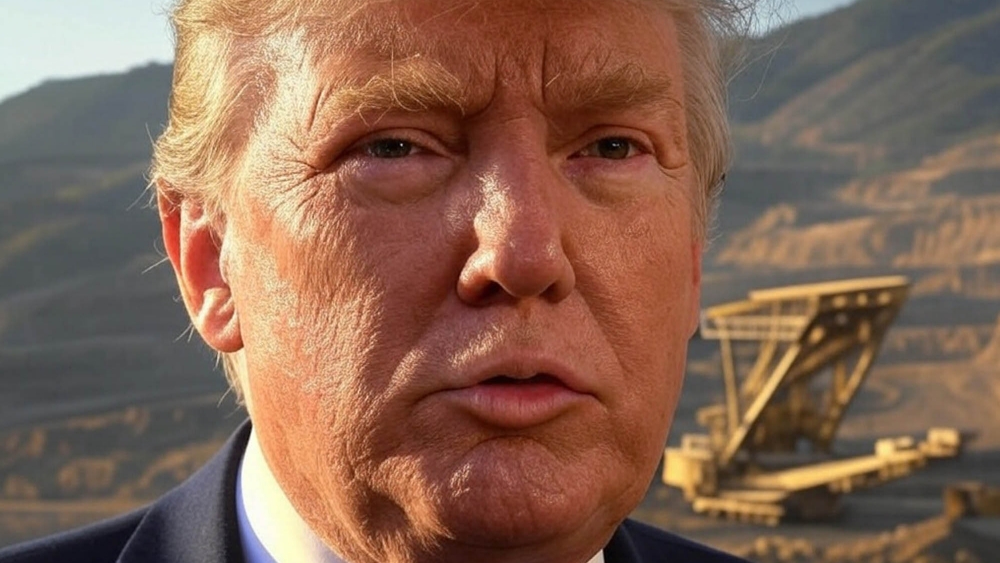
Rare Earths and Essential Minerals from Ukraine Attract Donald Trump’s Attention, Highlighting the Strategic Relevance of These Resources for Global Industry and Technology.
Ukraine and the United States are very close to concluding an agreement that will allow the United States access to Ukraine’s vast rare earth deposits. These minerals are fundamental for emerging technologies and play a crucial role in the electric vehicle industry, as they are used in the production of motors and essential components.
According to Ukrainian Deputy Prime Minister for European and Euro-Atlantic Integration, Olga Stefanishyna, the negotiations have been constructive and nearly all important details have been agreed upon.
The Ukrainian leadership stated that both parties are committed to finalizing the agreement quickly so it can be signed as soon as possible. Despite the progress, it is still unclear whether Kyiv will have direct benefits from the formalization of this pact.
-
The Federal Revenue Service now automatically cross-references everything you declare with data from banks, credit cards, brokerage firms, and insurance companies, and any discrepancy between your income and your expenses triggers an alert in seconds.

-
Amid global tensions, Brazil blocks the United States’ proposal at the WTO and paves the way for a trade crisis and possible retaliations.

-
Shopee opens the largest logistics warehouse in Brazil in Guarulhos: 220,000 m² on Dutra, contract signed before construction, pays R$ 45/m² and accelerates deliveries at scale, putting pressure on Mercado Livre and Amazon.

-
After mistakenly transferring R$ 50,000 via Pix, a man will receive the amount back along with R$ 10,000 for moral damages from the recipient.


The Importance of Rare Earths
The so-called rare earths encompass 17 chemical elements, including neodymium, lanthanum, and cerium. They are not “rare” due to scarcity, but because they are rarely found in pure form.
The extraction of these elements is complex, as they usually come mixed with radioactive substances, requiring the use of toxic chemicals for separation. This process makes their exploitation more expensive and difficult.
The European Union recognizes that Ukraine has 21 of the 30 substances considered critical for the energy transition.
These minerals are essential for clean technologies and electric vehicles. Data from the UN news service, released in 2022, indicates that Ukraine’s reserves of these 21 elements represent about 5% of global reserves, despite occupying only 0.4% of the Earth’s surface.
Strategic Location and Challenges
Most Ukrainian reserves are located south of the Ukrainian Shield, primarily under the Sea of Azov. However, many of these territories are under Russian occupation, adding a geopolitical component to the scenario.
Promising areas such as Central Buzh and regions in Kyiv, Vinnytsia, and Zhytomyr also have economic potential under study.
Adam Webb, a raw materials specialist for batteries at Benchmark Mineral Intelligence, warns that despite identifying hundreds of potential geological sites, significant efforts are still needed to prove the economic viability of these deposits.
Another challenge is related to the concentration of approximately 70% of other important mineral resources in the regions of Donetsk, Dnipropetrovsk, and Luhansk, currently under Russian occupation. These minerals, including lithium, are vital for the electric vehicle industry and the development of clean energy.
More Than Rare Earths: The Role of Lithium and Other Minerals
In addition to rare earths, Ukraine hosts significant reserves of lithium, cobalt, scandium, graphite, tantalum, and niobium. These minerals are fundamental for the production of batteries and motors that drive electric and sustainable mobility.
In 2022, Ukraine’s Deputy Minister of Environmental Protection and Natural Resources, Svetlana Grinchuk, highlighted that the country has about 500,000 tons of lithium, according to the National Academy of Sciences of Ukraine. The most relevant deposits are located in Shevchenkivske (Donetsk) and Kruta Balka (Zaporiyia), both in conflict areas.
Grinchuk also emphasized that future collaborations for the cleanup of Ukrainian lands will facilitate access to these raw materials, which could benefit not only Ukraine but also its international partners.
The Interest of the U.S. and the Relationship with China
The interest of the United States, especially under Donald Trump’s administration, in securing access to Ukrainian minerals is directly related to the attempt to reduce dependence on China. Currently, China dominates the global market, controlling between 60% and 70% of rare earth production and nearly 90% of processing capacity.
This dependence raises concerns for the U.S., which sees risks to its national security and economic stability, as these minerals are essential for the development of advanced technologies and military applications.
The search for alternative sources, such as Ukrainian reserves, emerges as a strategy to mitigate these vulnerabilities.
Demand Growth and Global Impact
The global demand for essential materials, such as graphite, nickel, copper, cobalt, and lithium, is rapidly increasing. The World Meteorological Organization (WMO) predicts that investment in renewable energy will need to triple by 2050 to achieve net-zero emissions.
Additionally, a panel of experts convened by António Guterres in 2024 warned that the transition to clean technologies will triple the need for these resources by 2030. In the next two decades, the demand for copper and rare earths is expected to grow by more than 40%, while the demand for nickel and cobalt could increase by up to 70%. The need for lithium, in turn, could rise by nearly 90%.
These figures highlight Ukraine’s strategic importance in supplying essential materials for electric vehicle production and promoting a more sustainable energy matrix.
Strategic Closing
The agreement between Kyiv and Washington, if formalized, could reposition Ukraine as a leading supplier of essential minerals for green technologies.
However, uncertainties regarding direct benefits for Kyiv and the geopolitical challenges in the exploration regions remain points of concern.
If realized, U.S. access to Ukrainian minerals will not only reduce its dependence on China but also have a significant impact on the future of electric mobility and the establishment of a cleaner, more sustainable global economy.
The relevance of these resources in the international arena, especially in the context of the energy transition, places Ukraine in a strategic position for the coming years.
With information from hibridosyelectricos.









Seja o primeiro a reagir!