





 Portuguese
  English
  Spanish
  3 min of reading
  0 comments


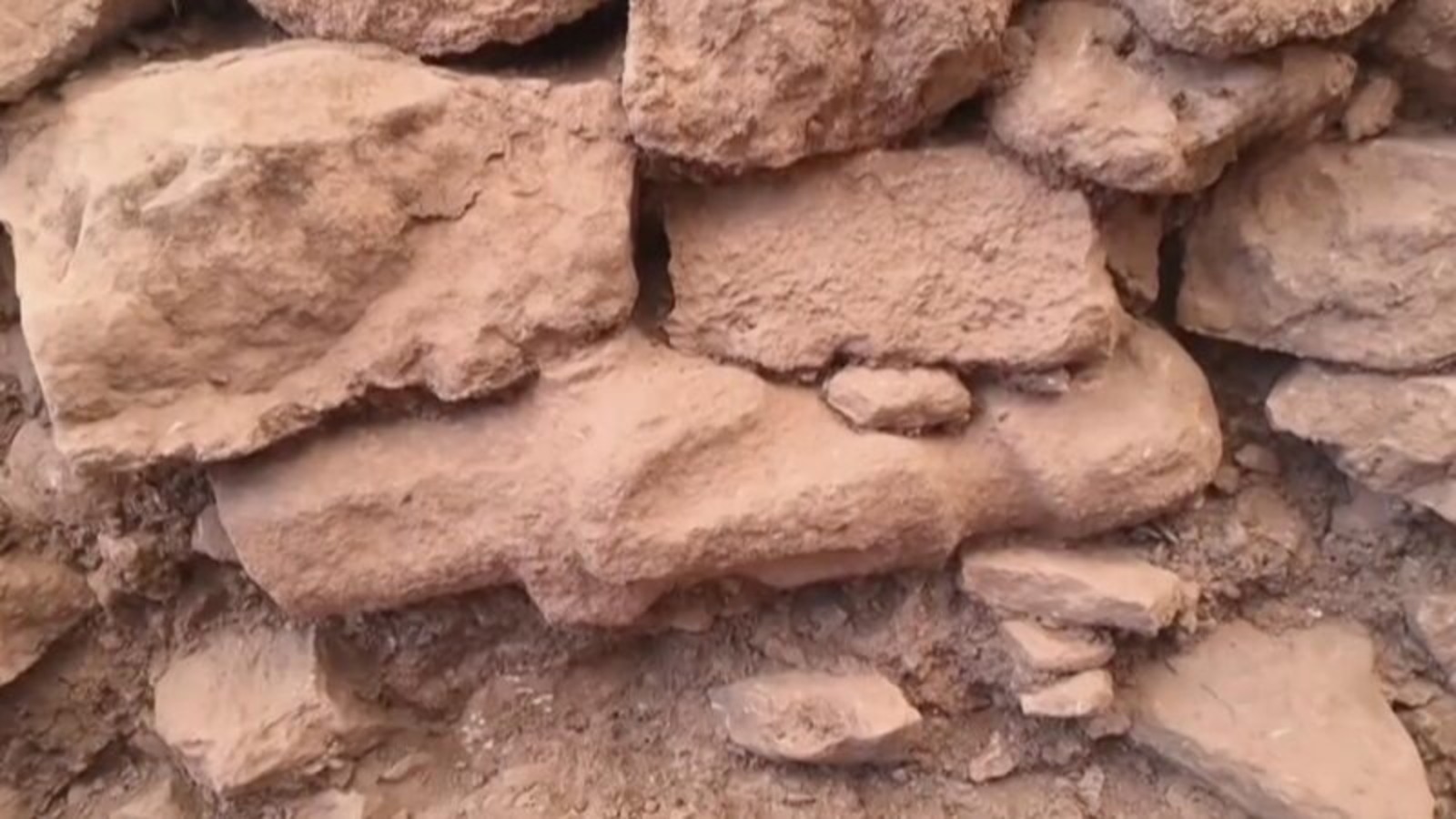
Discovery of Rare Statue in Gobeklitepe, Turkey, Reinforces Sacred Nature of Site and Expands Understanding of Neolithic Era Rituals
Archaeologists working at Gobeklitepe, Turkey, revealed an impressive discovery: a life-sized human statue, carefully embedded in a stone wall. The announcement was made by the Minister of Culture and Tourism, Mehmet Nuri Ersoy, during a visit accompanied by Princess Akiko Mikasa of Japan.
The sculpture was identified between structures B and D of the archaeological site, positioned horizontally. Researchers believe it was intentionally placed as a ritual offering.
This interpretation reinforces the idea that spiritual practices were central to the daily lives of early Neolithic communities.
-
The humanoid robot from China that runs, does flips, and costs less than an economy car has just launched a global version, and the R1 from Unitree will be sold for $4,900 in the United States, Europe, and Asia, making a machine with 26 joints accessible to any small laboratory or enthusiast with the budget of a high-end iPhone.

-
NASA is building a space telescope to find killer asteroids before they hit us, and the unofficial mission emblem features a T-Rex screaming at the sky with two words: never again.

-
Ten undergraduate students received an astronomy homework assignment, began sifting through data on the university’s computer, and ended up discovering the oldest star ever recorded in the universe, a cosmic immigrant that formed shortly after the Big Bang and was wandering alone towards the Milky Way.

-
Scientists reveal that Saturn’s rings may have formed after the destruction of a moon, and a study indicates that the planet’s bright structure is only 100 million years old.

Context of the Discovery
Similar cases had been reported in Karahantepe, but the presence of this new statue in Gobeklitepe enhances the understanding of the rituals performed at the site.
For Ersoy, the revelation adds new pieces to the puzzle regarding the belief systems that marked the period.
With over 12,000 years of history, Gobeklitepe is considered the oldest monumental sanctuary on the planet. It predates iconic constructions like Stonehenge and even the pyramids of Egypt by millennia.
Located near Sanliurfa in southeastern Turkey, the archaeological complex consists of circular enclosures and T-shaped pillars, richly decorated with figures of animals.
Carvings of snakes, foxes, and birds of prey are spread throughout the space, reinforcing the sacred nature of the structures.
Spiritual Significance of the Statue
The new piece is viewed as a rare example of a human offering directly incorporated into the architecture.
As a result, experts believe the discovery strengthens the view of Gobeklitepe as a center of significant religious relevance, rather than merely a community gathering point.
Furthermore, scholars suggest that spiritual rituals may have preceded agriculture as a factor in sedentism.
That is, early human groups may have gathered for religious ceremonies even before developing permanent agricultural techniques.
Human Statue: Heritage Preservation
The revelation of the statue comes amid the “Legacy for the Future” project led by the Turkish government.
The initiative combines new excavations, architectural preservation measures, and the creation of tourism infrastructure.
In Structure C, the largest on-site, a structural reinforcement process is underway. Traditional techniques, such as using mortar mixed with goat hair, are being applied to preserve the authenticity of the construction.
Additionally, the project plans for environmental integration. According to Archaeology Magazine, one thousand olive trees have been transplanted to protect the region’s ecosystem.
A visitor center, parking, and access trails are also under construction, set to open by the end of 2025.
Global Recognition
With increasing international attention, Gobeklitepe is poised to gain even more prominence. In February 2026, the exhibition “Myths in Stone: Gobeklitepe and the World of the Last Hunters” will open at the James-Simon Gallery in Berlin.
The exhibition will feature 96 pieces from the Sanliurfa Museum and follows an exhibition held at the Colosseum in Rome, which attracted over six million visitors.
Common Heritage
During the announcement, Minister Ersoy highlighted Japanese support for the excavations and reinforced the significance of Gobeklitepe as a heritage site of humanity.
According to him, the mission is to ensure that the site remains preserved without losing its ability to welcome a global audience.
“Protecting and passing on Gobeklitepe to future generations is a responsibility we all share,” the minister stated.
The discovery of the statue once again confirms the uniqueness of the site and strengthens its image as one of the most important landmarks in human history.
With information from Adventures in History.








-

Uma pessoa reagiu a isso.