





 Portuguese
  English
  Spanish
  4 min of reading
  0 comments


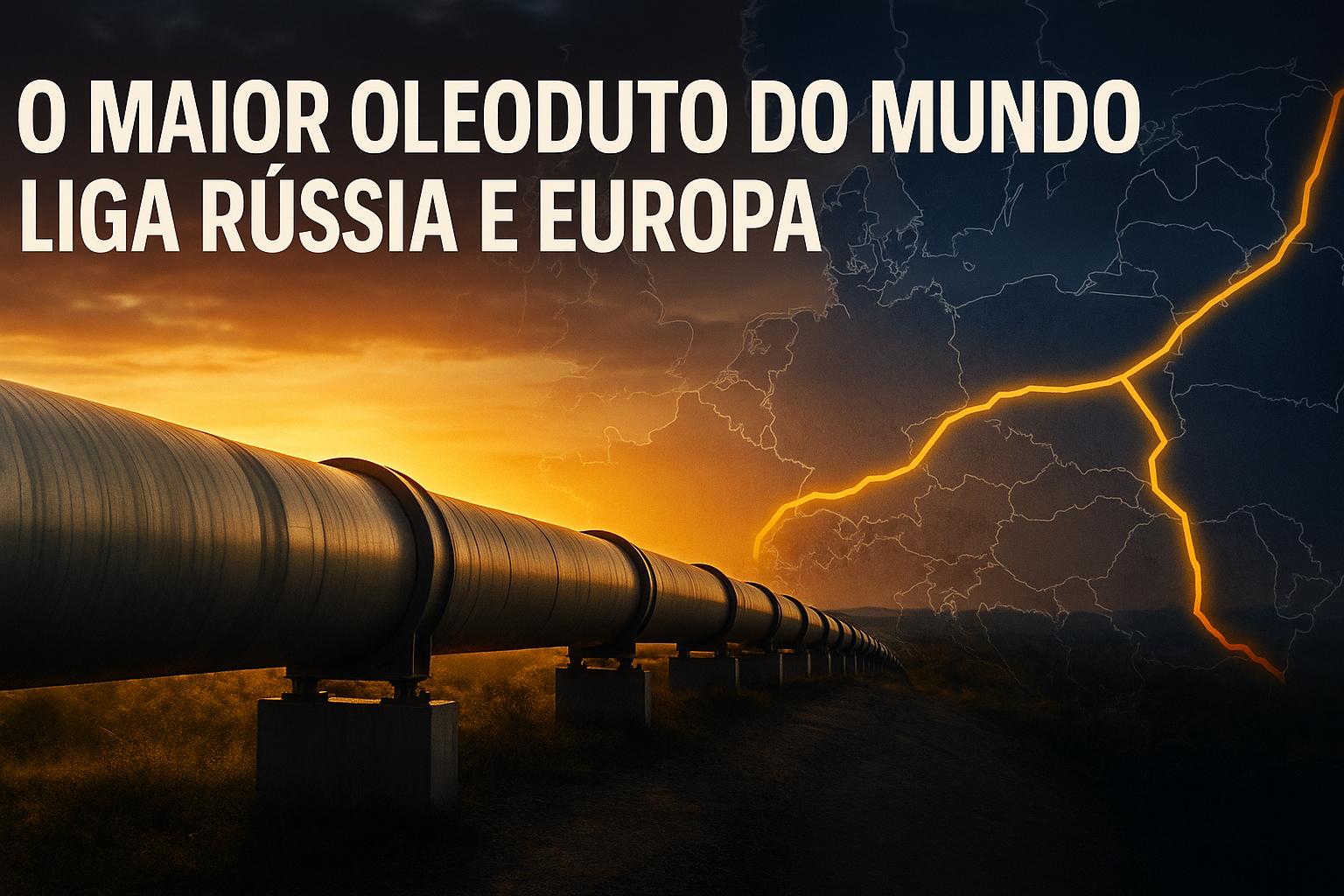
With 5,500 km and 1.4 million barrels per day, the Druzhba Pipeline is the largest pipeline in the world and a symbol of Russia’s energy and political influence in Europe.
Underneath the soil of Eastern Europe runs one of the largest and most strategically significant structures ever built by human engineering. This is the Druzhba Pipeline, a monumental system of oil pipelines connecting Russia to countries like Germany, Poland, Hungary, Slovakia, and the Czech Republic. With over 5,500 kilometers of total length, it forms an underground network that crosses borders, forests, rivers, and mountain ranges, transporting 1.4 million barrels of crude oil daily, enough to supply dozens of entire nations.
The Birth of an Energy Colossus
The story of Druzhba, which means “friendship” in Russian, begins in the 1960s during the Cold War. In a context of geopolitical competition and post-war reconstruction, the Soviet Union conceived an unprecedented project: to create an energy integration channel connecting the reserves of Western Siberia to the European allies of the Warsaw Pact.
Construction officially began in 1962, and in just two years, the first phase of the pipeline was completed, covering over 4,000 kilometers between Almetyevsk (Russia) and Schwedt (East Germany). The project involved thousands of engineers and workers and relied on technical cooperation from companies in seven socialist countries.
-
ANP halts LPG reform, and Sindigás sees technical caution as a decisive point for safety, investments, and the future of the cylinder in Brazil.

-
Oil spill in the Caribbean raises environmental alert and increases tension between Venezuela and Trinidad and Tobago

-
More than 40 Petrobras platforms enter the decommissioning queue and open up a billion-dollar industry in Brazil for cranes, special ships, underwater cutting, and offshore recycling.

-
ANP schedules oil auctions in October and reinforces regulatory predictability for concessions, sharing, and investments in the oil and gas sector



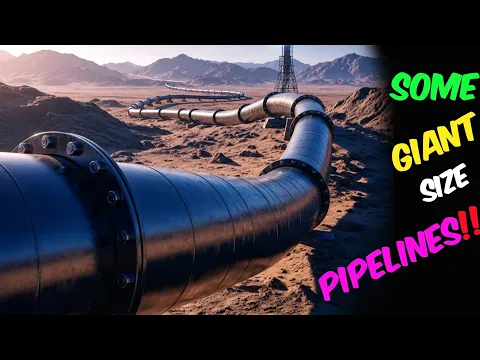

Over the following decades, new extensions were added, creating a branched network of over 20,000 kilometers of secondary pipelines, pumping stations, storage tanks, and automated control systems. Today, Druzhba remains the largest pipeline in the world in continuous operational length.
Impressive Engineering and Capacity
The main structure of Druzhba consists of two main trunks:
- Druzhba North, which passes through Belarus and Poland to reach Germany.
- Druzhba South, which crosses Ukraine, Slovakia, Hungary, and reaches Croatia.
Each line is formed by steel pipes with a mean diameter of 1,220 millimeters, designed to withstand pressures exceeding 70 atmospheres.
The system is maintained by 38 pumping stations, which operate 24 hours a day, moving oil at average speeds of 5 km/h under temperatures ranging from -40 °C to 40 °C.
It is estimated that at full capacity, Druzhba can transport up to 65 million tons of oil per year — equivalent to about 480 million barrels. In addition to supplying refineries in Germany and Poland, it also feeds smaller pipelines that branch out across Central Europe.
Geopolitical and Energy Importance
More than an engineering feat, Druzhba is a geopolitical instrument of immense power. For decades, it has solidified Russia’s position as the main energy supplier to Europe, making the continent dependent on Russian oil and gas.
Even after the collapse of the Soviet Union in 1991, the pipeline retained its relevance. It has become one of the most studied and monitored routes in the world, especially after the sanctions imposed on Russia in 2022, when the conflict in Ukraine profoundly altered the global energy map.
While some European countries have reduced their dependence, others still hold active contracts. According to 2024 data from the International Energy Agency (IEA), about 15% of refined oil in Central Europe still arrives via Druzhba.
A Living System of High Complexity
The operation of Druzhba is coordinated by Transneft, the Russian state-owned company responsible for over 50,000 km of pipelines in the country. Flow control is done in real time by automated centers that monitor pressure, flow rate, and structural integrity.
Each pumping station operates like a small industrial complex, equipped with gigantic electric motors, valve systems, and leak detection sensors. In case of emergency, the flow can be interrupted in less than 30 seconds, isolating specific sections of the pipeline for maintenance or inspection.
In recent years, Russia has invested in modernizing the infrastructure, installing digital sensors and satellite monitoring systems. This allows for the prediction of failures and the reduction of environmental risks, a critical point for a system that traverses sensitive forest and agricultural regions.
Challenges and the Future of the “Friendly Giant”
Although it is a symbol of energy integration, Druzhba faces an uncertain future. The growing adoption of renewable energy, coupled with political tensions between Moscow and the European Union, jeopardizes its long-term operation.
Even so, it remains a vital axis for the Russian economy, responsible for a significant fraction of the country’s oil exports.
As new maritime routes and alternative gas pipelines are developed, Druzhba stands firm, witnessing six decades of political changes, technological revolutions, and economic transformations.
In the midst of sanctions, crises, and transitions, this subterranean colossus continues to transport the energy that powers industries, airplanes, cars, and entire cities — a legacy of steel, oil, and power that still defines part of global geopolitics.






Be the first to react!