





 Portuguese
  English
  Spanish
  8 min of reading
  0 comments


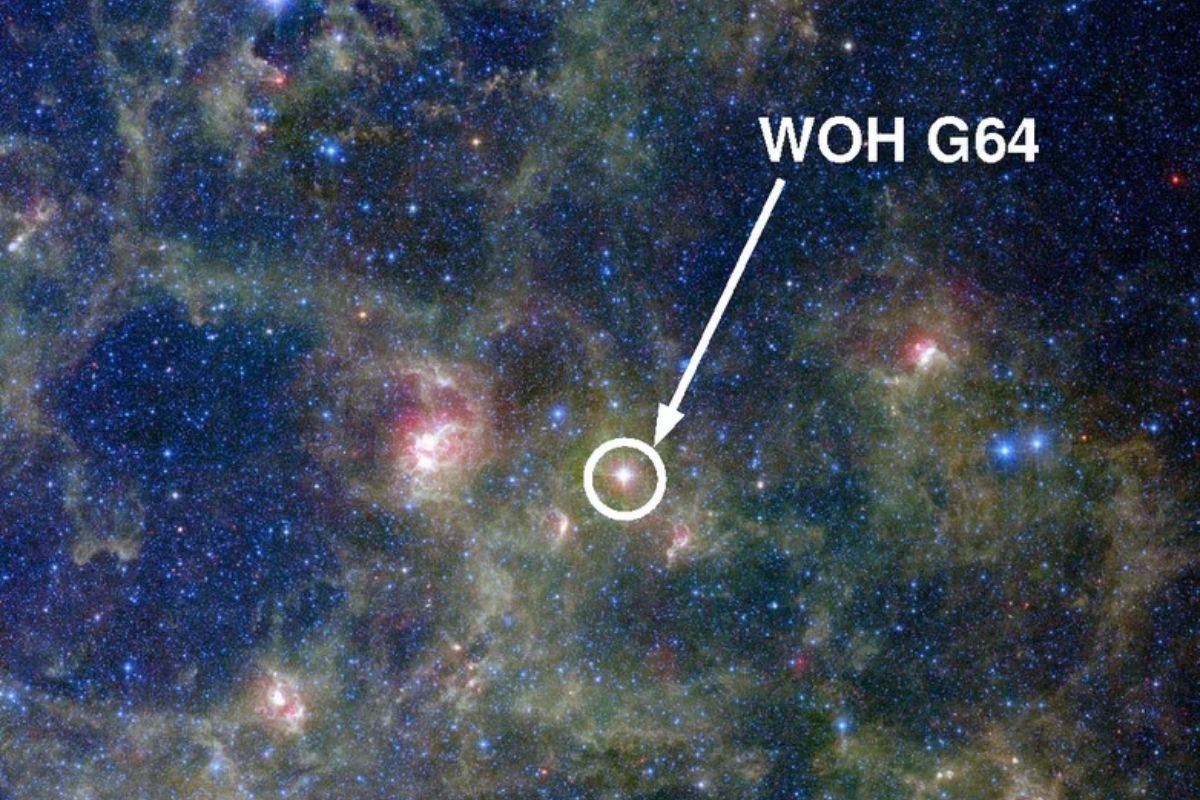
The Star WOH G64, One of The Largest Ever Studied, Surprised Astronomers by Changing Its Appearance from Red to Yellow in a Short Cosmic Time Without Clear Signs of Explosion, Exposing a Gap in the Models That Try to Explain How Massive Stars Age, Change, and End at The Edges of Stellar Physics.*
The star WOH G64 has ceased to be merely a colossal rarity of the Large Magellanic Cloud and has become a theoretical problem for astrophysics. Observations accumulated over more than three decades indicate that it transitioned from a phase classified as an extreme red supergiant to being read as a yellow hypergiant in a time too short for current models.
The most perplexing point is that the transition occurred without evidence of eruption or explosion, the kind of abrupt event that is usually perceived on a human scale. Instead of confirming what was expected about the life of the largest stars, WOH G64 opened a flaw in the understanding of how these stars evolve as they near the end.
A Star Too Large to Go Unnoticed

WOH G64 is not an ordinary object even among extreme stars. The star has 28 times the mass of the Sun, luminosity about 300,000 times greater, and an approximate diameter of 1,500 times that of the Sun.
-
Something is happening around the Earth: Inside the huge explosion of fireballs in 2026

-
A hot air bubble coming from Argentina expands over Brazil, causing thermometers to exceed 38 degrees with a thermal sensation of 40 degrees in late March, affecting 6 states at once.

-
The radish leaf that almost everyone throws away has more polyphenols, flavonoids, and fiber than the consumed root, and a 2025 study showed that the leaf contains compounds that protect the intestine, combat inflammation, and may inhibit the growth of cancer cells.

-
A planet that seemed to defy the laws of physics has intrigued scientists for decades, until the James Webb revealed what is really affecting Saturn’s rotation.
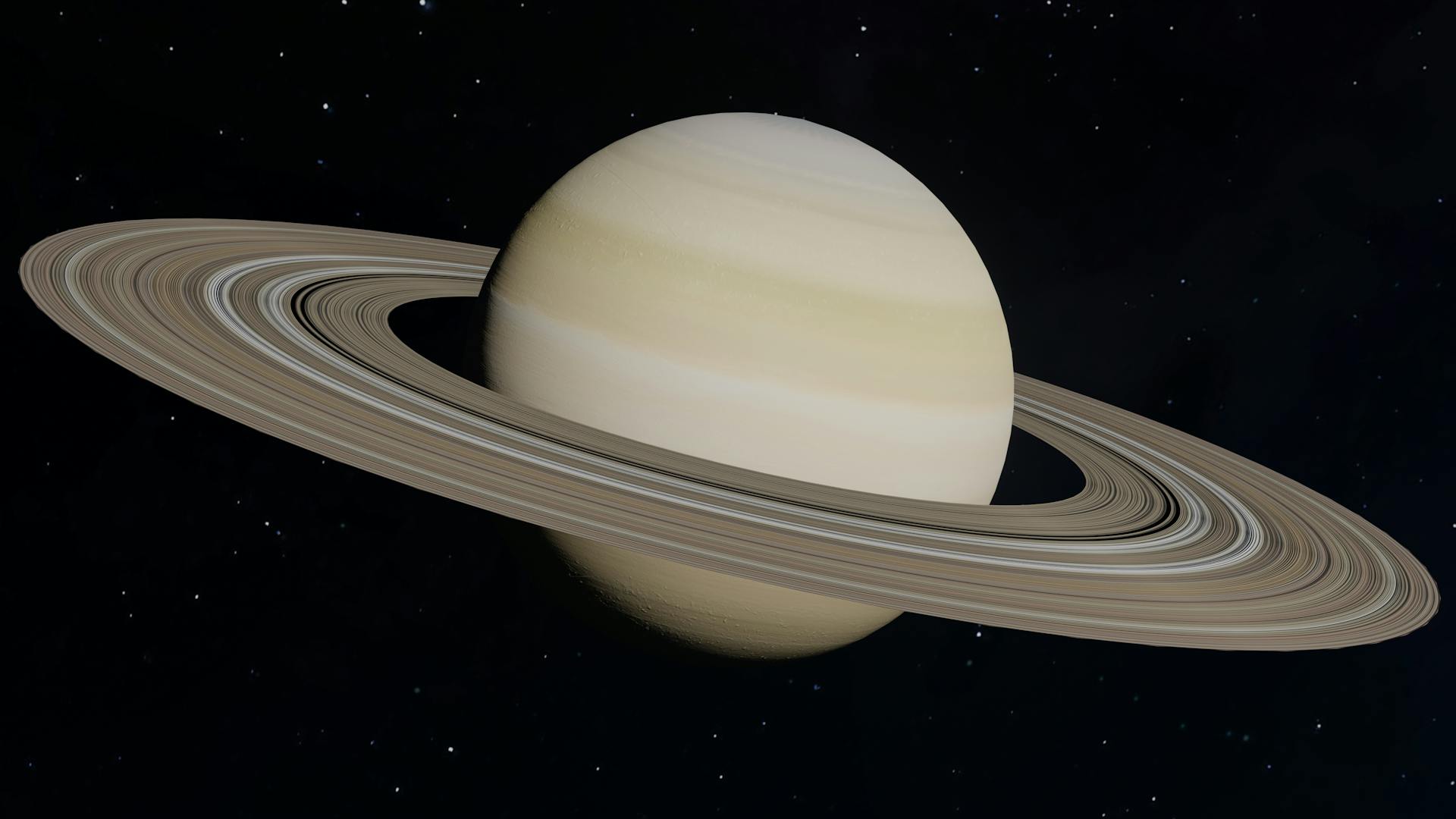

If it occupied the place of the Sun, its surface would stretch to a range between the orbits of Jupiter and Saturn, the fifth and sixth planets of the Solar System.
The scale is impressive even when converted into time. Traveling at the speed of light, it would take about six hours to circle its surface.
This is not just a large star, but a body so colossal that any rapid change in its appearance is enough to immediately attract the attention of astronomers.
Besides size, its position and age reinforce the uniqueness of the case. WOH G64 is located in the Milky Way’s satellite galaxy called the Large Magellanic Cloud, about 160,000 light-years from Earth, and is approximately 10 million years old. By stellar standards, this places it very close to the end of its life.
This comparison becomes even clearer when looking at the Sun. While the Sun is about 4.5 billion years old and is expected to remain active for another 5 billion, this massive star lives a much shorter and more intense trajectory.
The largest stars burn fuel quickly, age early, and typically die violently, but WOH G64 has chosen to complicate that script.
Red Turned Yellow Too Quickly for the Manual

The crucial change was noticed in 2014 when researchers recorded a color shift associated with an increase in surface temperature.
The star, previously treated as an extreme red supergiant, began to be interpreted as a yellow hypergiant. This leap, in cosmic terms, was considered too rapid.
The bewilderment comes from the contrast between what models typically predict and what was actually seen.
The evolution of a star is usually described in scales of billions of years, while humans typically only observe more abrupt events, like eruptions, stellar mergers, or explosive deaths. Here, however, the turnaround occurred without clear marks of explosion.
This makes WOH G64 a particularly difficult case to fit.
The transition does not seem to have obeyed either the expected pace of stellar evolution models or the pattern of violence that typically makes a rapid change more comprehensible. The star simply changed appearance faster than it should have.
This is precisely where the admission of astronomers gains weight. Current models cannot fully explain this transformation.
This does not mean the absence of hypotheses, but shows that the star is operating in a zone where observation has advanced faster than the available theory.
The Mass Range Where Everything Becomes More Uncertain
Part of the problem lies in the type of object observed. Stars with masses between eight and 23 times that of the Sun tend to follow a more predictable path: they become red supergiants and then explode as supernovae.
But WOH G64 is above that range, with its 28 solar masses, precisely in a range where the outcome is less clear.
For bodies between 23 and 30 solar masses, uncertainty grows significantly.
The star could explode as a supernova, collapse directly to form a black hole, or go through a stage of transition between red supergiant and yellow hypergiant before the end. It is in this poorly resolved territory that WOH G64 fits.
That is why the case holds much more value than just the curiosity of a color change.
If this star is indeed showing a real passage between phases that models still cannot describe well, it could help resolve one of the most troubling questions of current stellar astrophysics.
It is not just about understanding an exotic object, but about testing the validity of the proposed evolutionary paths for the most massive stars.
The consequence is direct: each new observation of WOH G64 is no longer routine tracking but becomes strategic data.
The star is positioned on a frontier where a single relevant exception could force broader revisions on how large stars are born, change, and die.
The Blue Companion May Be Hiding Part of The Answer
The situation would already be complex even if WOH G64 was alone. But observations indicate that the star is gravitationally linked to a blue companion, forming a binary system.
Researchers have not yet managed to determine precisely the size or characteristics of this second star.
This information significantly changes the scenario because a nearby companion can interfere with the observed appearance of the system.
One of the hypotheses raised is that the interaction between WOH G64 and this blue star may have temporarily mimicked the appearance of a red supergiant, creating a misleading reading before the current yellow phase.
There is also the possibility that the two stars could merge at some point. This adds an extra dynamic factor to a case that was already difficult to explain through isolated evolution.
When a binary system comes to the forefront of analysis, distinguishing what is intrinsic change in the main star and what is an interaction effect becomes one of the most delicate steps of the investigation.
In other words, the star may have truly changed state faster than expected, but part of the puzzle might be getting scrambled by the presence of the companion.
This helps explain why astronomers speak with caution: there are clear signs of transformation, but the exact mechanics of the process remain open.
Hypotheses Exist, But None Close The Case
One line of interpretation suggests that WOH G64 may have undergone a violent episode before the period covered by observational data.
This previous event may have left the star with a more extreme red appearance, and what is currently seen may actually be a return to a more habitual quiescent yellow state. In this scenario, the surprise would not lie only in the present, but in a previous phase that was not directly observed.
Another hypothesis stems precisely from the influence of the binary companion. The interaction between the two stars may have temporarily altered the visual and physical reading of the system, making the star appear redder than it really was in evolutionary terms.
If this is correct, the change seen in 2014 would not be a simple metamorphosis, but a correction of a previous appearance distorted by system effects.
None of these explanations, however, resolves everything. What makes WOH G64 so perplexing is the fact that each hypothesis answers part of the problem and leaves other gaps open.
The star continues to be a case where observation is solid enough to challenge the models but still insufficient to produce a closed narrative.
This type of impasse is valuable for science precisely because it forces a revision of assumptions.
The star is not only interesting because of its exoticism, but because it pressures theory to deal with behavior that does not comfortably fit into already established categories.
Why WOH G64 May Change the Understanding of Massive Stars
The largest known stars live shortly and intensely, making it difficult to construct a complete history of their final stages.
When a star like WOH G64 starts to behave differently from any other observed, it ceases to be just an exception and begins to function as a natural laboratory to study the limits of stellar evolution.
The case also shows how decades of observation can produce a revelation that seemed unlikely. It took over thirty years of monitoring the system until the change became evident and gained enough weight to be treated as a challenge to the models.
This helps explain why astrophysics relies so much on observational patience: some answers only appear when the universe decides to change before our eyes.
If WOH G64 is indeed about to reshape the understanding of the most massive stars, the impact goes beyond the color of a single star.
It may affect the way we think about the transition between red and yellow phases, the role of binary systems, and even the paths that lead a star to its final collapse or explosion as a supernova.
That is why astronomers continue to treat the system as one of the most notable at the moment.
When a well-studied star breaks the expected script without offering a clean explanation, it not only intrigues: it forces science to work again on what it thought was relatively settled.
WOH G64 encompasses nearly everything that makes an astronomical object scientifically decisive: extreme mass, colossal brightness, advanced age for its type, a possible binary companion, and a change too rapid for the comfort of models.
The star changed from red to yellow without clear signs of eruption or explosion and, with that, pushed astronomers into a terrain where observation and theory do not yet align properly.
In the end, the case is valuable precisely because it remains open. If the explanation lies in a previously unobserved phase, in a binary interaction, or in an evolutionary path still poorly described, WOH G64 may end up becoming a central piece for understanding the fate of the most massive stars.
In your view, what stands out the most in this story: the rapid color change, the failure of current models, or the possibility of a second star distorting the entire reading of the system?







-

-

7 pessoas reagiram a isso.