





 Portuguese
  English
  Spanish
  3 min of reading
  0 comments


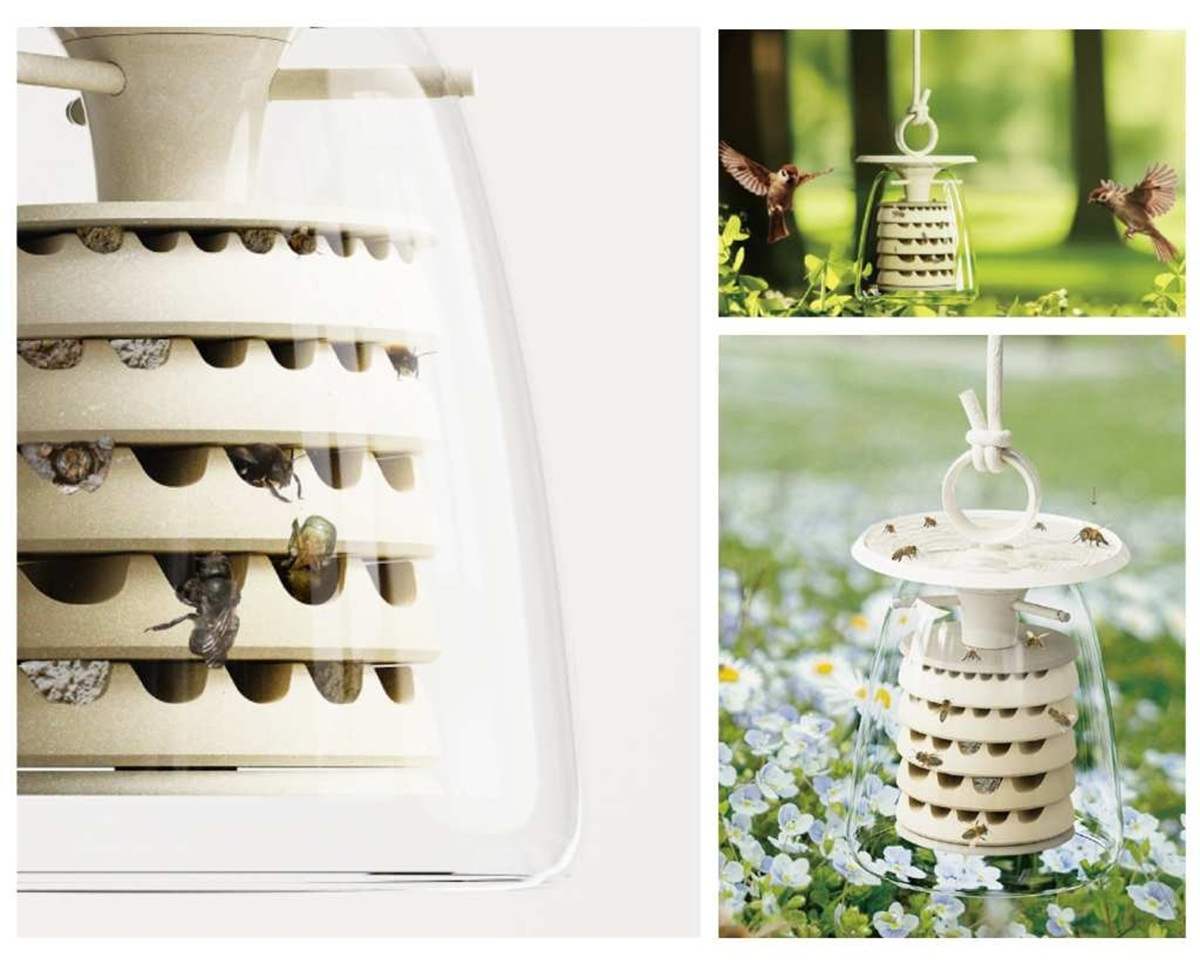
CityBee Project Creates Modular Shelters That Bring Residents Closer to Solitary Bees and Help Restore Biodiversity in Degraded Urban Areas.
The CityBee emerges as a direct response to the silent crisis affecting urban pollinators. It is a modular shelter created for solitary bees, designed to be installed in urban environments and encourage the return of these essential insects. The proposal is simple yet powerful: reconnect isolated pieces of nature within cities.
Unlike honeybees, solitary bees live alone and often go unnoticed, even though they are responsible for a large part of the pollination of wild and agricultural plants.
However, unchecked urbanization, pollution, and habitat loss have put many of these species at risk of extinction.
-
With a cost per shot close to zero, the DragonFire laser could change naval warfare in 2027 and provide British ships with nearly unlimited defense against drones.

-
A British startup creates tires that generate electricity in electric vehicles when passing over potholes, speed bumps, and cracks.

-
Scientists have created robots made with living cells that have their own nervous system, swim on their own, explore the environment, and self-organize without any genetic engineering, and now they want to do the same with human cells.

-
Students create a solar-powered ambulance that operates without a plug, without fuel, and still keeps medical equipment running in remote areas.


While public debate often focuses on honey production, CityBee aims to shift this focus by creating an educational shelter that is easy to assemble and adapted to local species.
A Practical and Accessible Conservation Tool
The CityBee system is modular, lightweight, and requires no tools for assembly. Each module contains holes of varying sizes and depths, adjusted to attract different species of solitary bees. This customization increases the chances of occupation and ensures efficient use of urban space.
Additionally, the translucent outer structure protects against predators and allows people to observe the interior, creating an emotional connection with the insects. This direct observation encourages curiosity and transforms conservation into something close and everyday.
The modules can be placed on facades, balconies, rooftops, or park fences, forming small ecological spots that help bees circulate safely through the city.
This strategy reduces fragmentation caused by human infrastructure and creates a network of interconnected micro-habitats, strengthening urban biodiversity.
Anyone can participate without needing technical knowledge, which broadens the project’s reach.
Research and Testing in Real Environments
The development of CityBee brought together experts from various fields, such as ecology, urban design, and environmental planning. Interviews were conducted with entomologists and urban planners to understand the specific needs of solitary bees.
Based on this information, the creators tested materials, shapes, and orientations in various prototypes.
During the tests, they evaluated which materials were more attractive, which direction favored colonization, and how the modules held up against the weather. The final versions underwent trials on elevated balconies and tree branches in parks.
The results showed good occupation by bees and high interaction with residents, confirming the project’s potential.
A New Type of Shelter for Pollinators
Unlike traditional wooden hotels, which are usually fixed and generic, CityBee offers flexibility and scalability. It can be adapted for different species and locations, enhancing its efficiency and sustainability.
Moreover, it has a design intended to visually integrate into the city, functioning as an urban object rather than just environmental equipment.
The transparency of the material allows people to observe internal activity without interference, reinforcing environmental learning. Thus, CityBee combines conservation and education into a single element.
Next Steps for the Project
The creators are now planning to take CityBee to schools, community centers, and public green spaces, evaluating its ecological and educational impacts.
They also aim to improve materials, making them more durable, recyclable, and accessible to enable large-scale production.
Another goal is to establish partnerships with city governments, NGOs, and local communities to include CityBee in urban renaturalization programs.
The idea is to use it in workshops, campaigns, and school activities, forming a more conscious generation willing to coexist with pollinators in cities.








Seja o primeiro a reagir!