





 Portuguese
  English
  Spanish
  5 min of reading
  0 comments


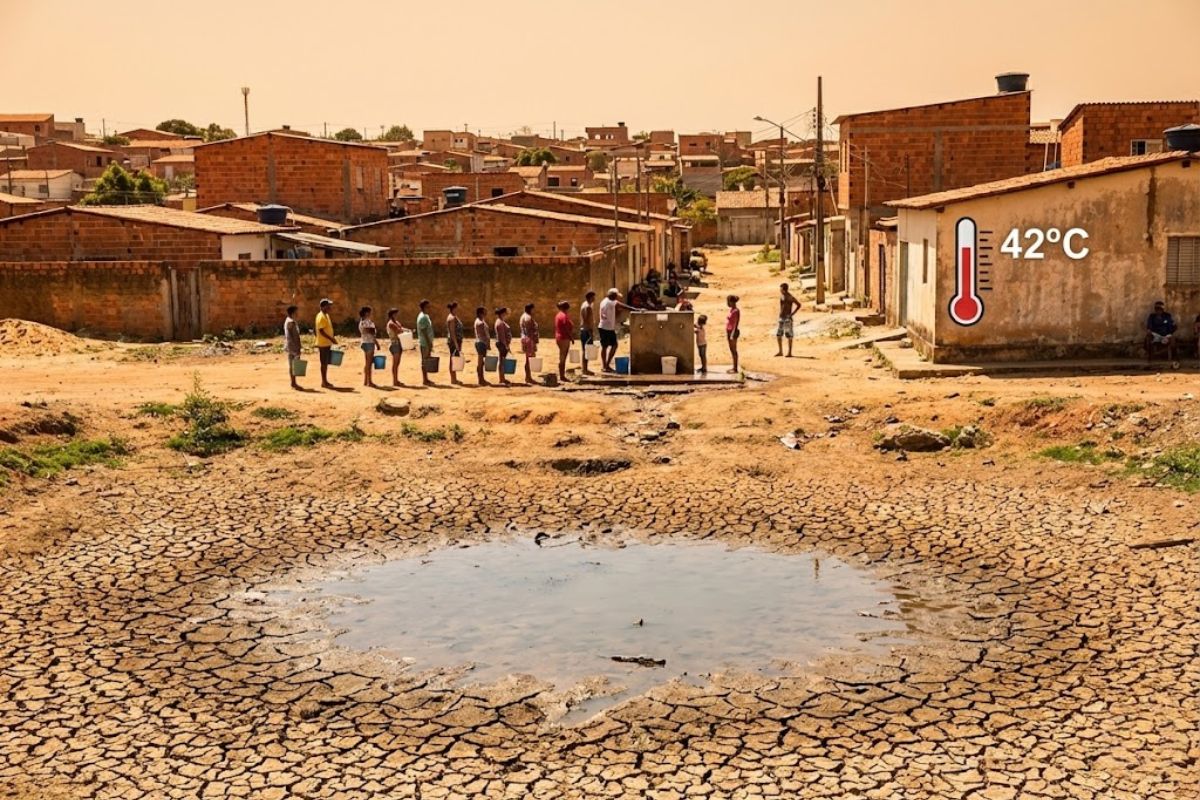
Projection of the Institute Treats Brazil Indicates That Brazilian Cities Will Have Longer and More Frequent Rationing Until 2050, with Water Losses of 40 Percent, Rivers Under Pressure and Northeast and Center West May Pass 30 Consecutive Days with Dry Taps in Extreme Heat Scenarios for Millions of People
In December 2025, a study from the Institute Treats Brazil in partnership with the consulting firm Exante raised a warning sign for brazilian cities. The report indicates that if no actions are taken to reduce losses, enhance efficiency, and adapt supply systems to climate change, the country could reach 2050 with an average of 12 days of water rationing per year, affecting residences, commerce, industry, and essential services.
Released with the title “Future Water Demand in 2050: Challenges of Efficiency and Climate Change”, the material shows that the situation is even more alarming in regions like Northeast and Center West. In these areas, brazilian cities could accumulate up to 30 consecutive days with dry taps in scenarios of accelerated population growth, intense urbanization, and rising global average temperatures, combined with inefficient distribution networks.
Study Projects Days of Rationing for 2050 Across the Country

The survey from the Institute Treats Brazil and Exante assesses the behavior of water demand across all regions of Brazil until 2050, crossing projections of population, consumption, and water availability.
-
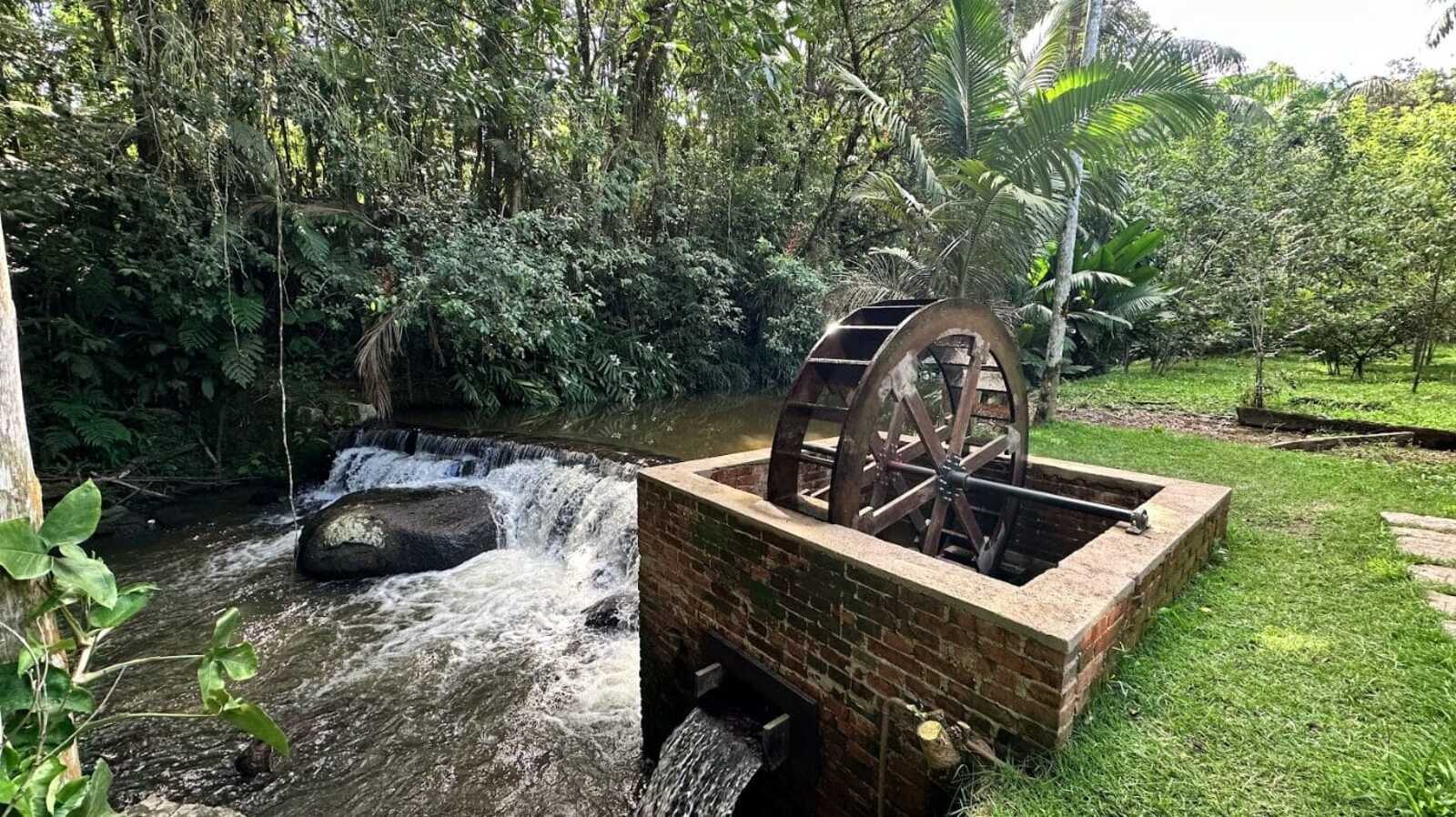
While restoring a historic mansion from 1910, a brick structure with an old turbine that generated energy from the Rio do Testo emerged, along with a hidden door and a rare floor concealed under layers of wax.
-
Italian researchers have detected what appears to be a second Sphinx buried under the sands of Egypt, and satellite scans reveal a gigantic underground megastructure hidden beneath the Giza Plateau for over 3,000 years.

-
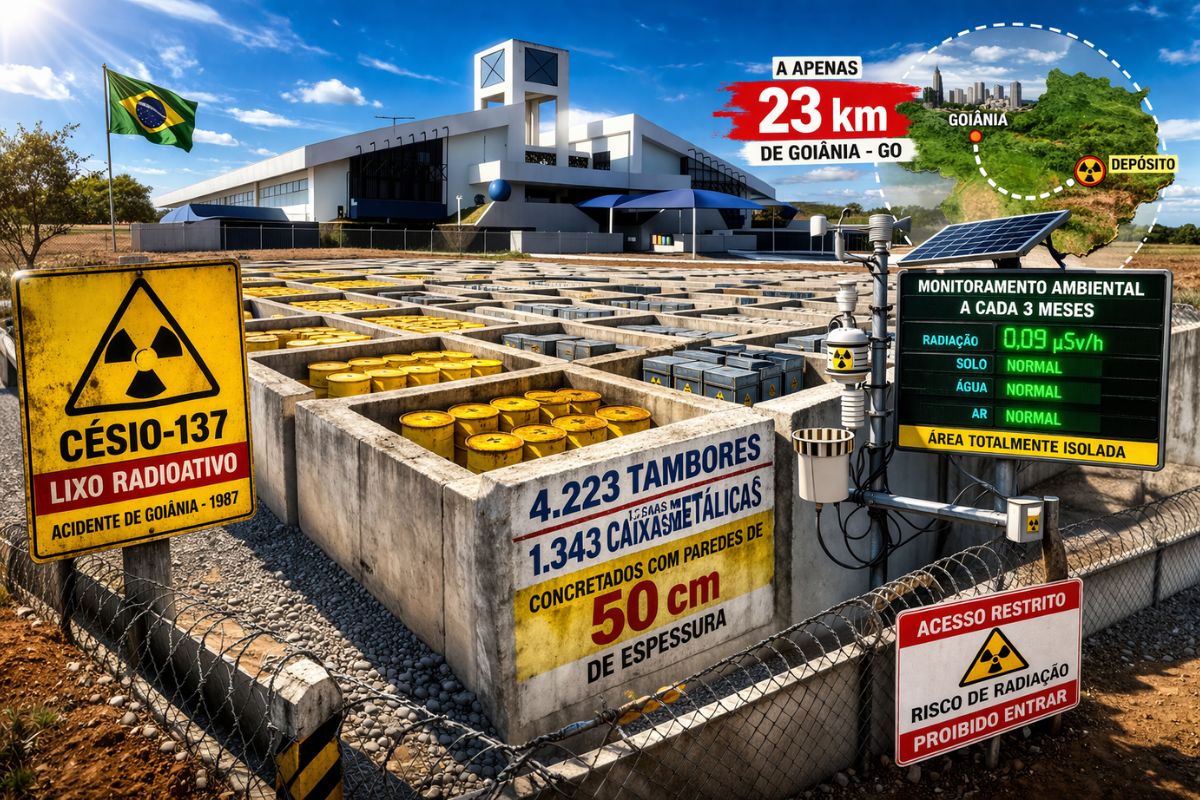
There are 4,223 drums and 1,343 metal boxes concreted with 50-centimeter walls that store the radioactive waste from Cesium-137 in the worst radiological accident in Brazil, just 23 kilometers from Goiânia, with environmental monitoring every three months.
-
Giant Roman treasure found at the bottom of Lake Neuchâtel in Switzerland reveals an advanced trade system, circulation of goods, and armed escort in the Roman Empire about two thousand years ago.


The central conclusion is straightforward: on average, brazilian cities would face 12 days of water rationing per year by 2050, if current trends continue.
According to the study, this scenario is not limited to municipalities already accustomed to rationing.
The combination of population growth, urbanization advance, high losses in distribution, and rising average global temperatures creates a scenario where pressure on supply systems spreads across cities of varying sizes, from rural areas to capitals.
Northeast and Center West Concentrate Greater Risk of Dry Taps
Although the average projection is 12 days per year, the study emphasizes that Northeast and Center West appear as the most vulnerable regions.
In these areas, the lower availability of treated water for the population increases the likelihood of prolonged interruptions in supply.
The report indicates that in critical scenarios, brazilian cities in these two regions could reach 30 days of lack of water supply in 2050, especially if losses remain high and if there is economic and population growth without compatible investments in infrastructure.
The document reminds that many localities already face drying wells and restrictions on access to treated water.
In the case of the Northeast, the study highlights that only 75 percent of the population has access to treated water and that the region loses 46.2 percent of all the volume of water produced before it reaches homes.
For northeastern brazilian cities, this means operating with a system that wastes almost half of the resource even before it reaches the tap, raising the chance of prolonged rationing.
Losses in Distribution Drain 40 Percent of the Water Produced
One of the most critical points of the diagnosis is the level of losses in the distribution stage.
On average, 40 percent of all drinking water produced in the country is lost between the exit of treatment systems and the arrival at taps, whether due to leaks, illegal connections, or operational inefficiencies of the networks.
In some areas, especially in the North Region, this rate approaches 50 percent, meaning that half of the treated water does not reach the final consumer.
For brazilian cities, this represents a double cost: energy, chemicals, and infrastructure are spent to treat a volume that will not be effectively consumed, while the population faces an increasing risk of rationing.
The document from the Institute Treats Brazil warns that if no structural measures are adopted, it will be necessary to extract 60 percent more water from rivers by 2050 to meet the projected demand.
As many watercourses are already under strong pressure, this strategy increases the risk of environmental degradation and conflicts over the use of water in different productive sectors.
Greater Heat, Greater Consumption and Rivers with Less Volume
The Executive President of the Institute Treats Brazil, Luana Pretto, emphasizes that the increase in the planet’s maximum temperature by 2050 is directly linked to the risk of water scarcity in brazilian cities.
According to her, the study considers a trend of rising 1 °C in maximum temperature and shows how this simultaneously alters both demand and supply.
On one side, more heat means increased consumption, with greater water use in residences, services, urban irrigation, and productive activities.
On the other hand, the report highlights a trend of reduction in the volume of rivers by about 3.4 percent per year, compromising the capacity of water sources to supply urban systems already pressured by losses and the expansion of networks.
In this context, brazilian cities that today do not experience frequent rationing may begin to deal with seasonal interruptions, especially during more severe heat waves.
The combination of rising demand, less voluminous rivers, and inefficient networks makes the system more fragile in the face of climatic variations and prolonged droughts.
Challenges for Brazilian Cities and for Water Policy
The study from the Institute Treats Brazil serves as a roadmap of risks, but also as a map of priorities for public managers.
The diagnosis makes it clear that reducing losses in distribution is one of the most immediate and effective measures to alleviate pressure on supply systems.
For brazilian cities, this means investing in network monitoring, pipeline maintenance, leak detection, and modernization of measurement and control systems, preventing 40 percent or more of the treated water from being lost along the way.
In parallel, the report suggests that efficiency policies in consumption and adaptation to climate change need to be incorporated into urban planning.
The underlying message is that it is not enough to extract 60 percent more water from rivers.
Without reducing waste, enhancing access to treated water in the most vulnerable regions, and strengthening governance over the resource, the country may reach 2050 with brazilian cities hotter, with more people, and with supply systems subject to recurring rationing.
In light of this scenario, in your opinion, should the priority of brazilian cities be to invest first in reducing water losses in networks or in building new extraction structures in rivers and reservoirs?








-

2 pessoas reagiram a isso.