





 Portuguese
  English
  Spanish
  5 min of reading
  0 comments


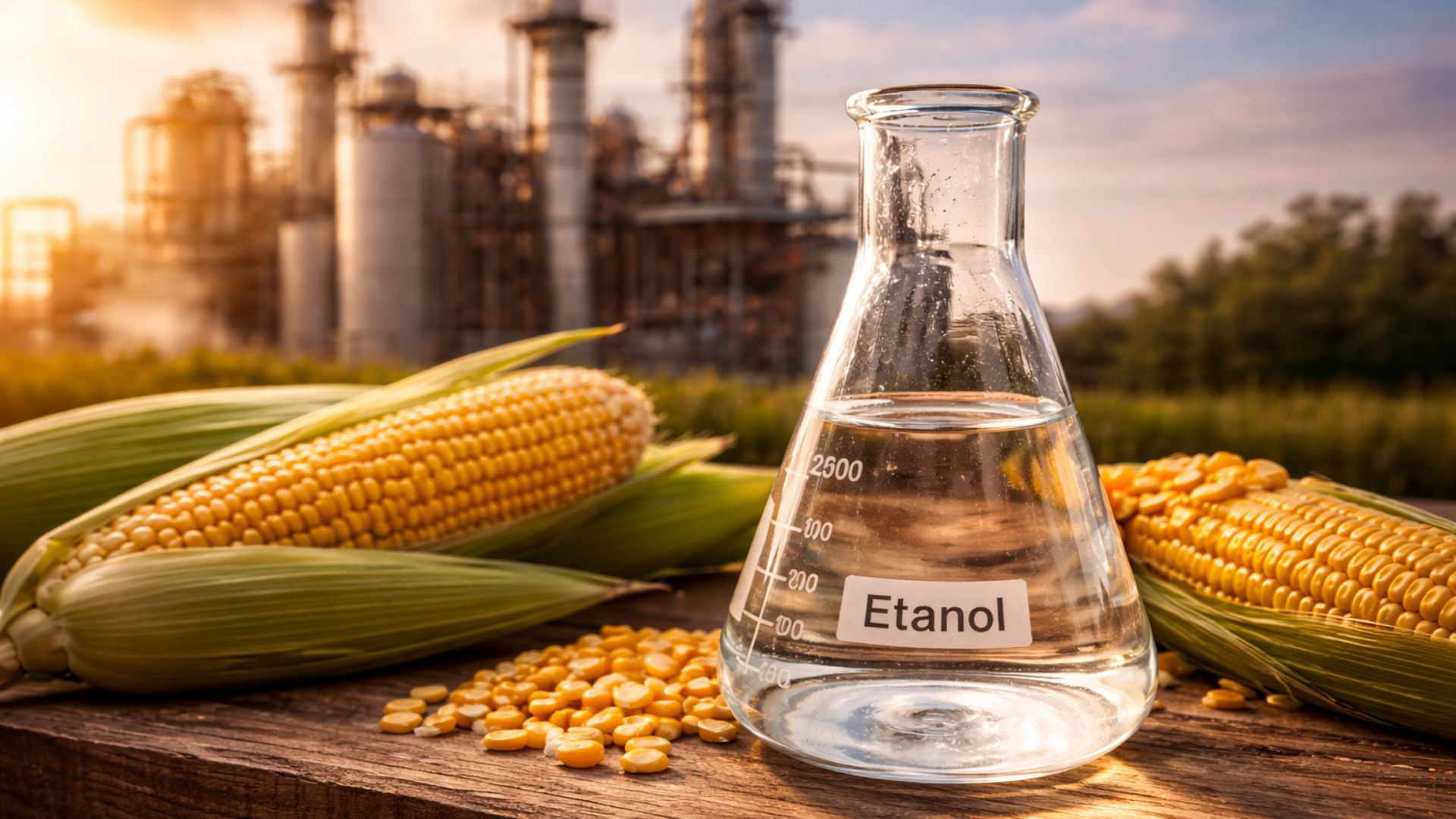
Corn Ethanol Production Advances Rapidly in Brazil, Gains Ground in the Biofuels Matrix and Attracts New Investments. Understand How Bioenergy Grows, Which Regions Lead the 2025/26 Crop and Why the Sustainable Sector Strengthens.
Corn ethanol gained prominence in the Brazilian biofuels matrix in 2025. Data released by the Sugarcane Industry Union (Unica) indicates that, in the second half of December, this production route accounted for 77.2% of the total ethanol production in the country, an unprecedented level until then. According to a report published by the Agribusiness Portal and other outlets this Monday (26), the result reflects the progress of the 2025/26 harvest, the expansion of industrial capacity, and the consistent increase in investments in bioenergy, strengthening the sustainable sector and national energy security.
Corn Ethanol Assumes a Central Role in the Biofuels Matrix
The growth of ethanol produced from corn could mark a structural change in the sugar-energy sector. Production has ceased to be complementary and has begun to take on an increasing role, driven by operational predictability, integration between agriculture and energy, and the growing demand for renewable fuels in the domestic market.
The advance of corn ethanol represents a significant inflection in the profile of national biofuels production. Historically dominated by sugarcane, the sector now has an alternative capable of operating year-round, reducing dependence on agricultural seasonality.
-
CNPE strengthens policy and prevents imported biodiesel from being mixed with diesel, aiming to strengthen the Brazilian industry and protect jobs by reducing external dependence amid tensions in the global market.

-
Revolution in public transport: Goiânia puts into circulation the first articulated buses powered by biomethane in Brazil and promises to drastically reduce pollution on the Anhanguera Corridor.

-
From the field to the pipelines: Mato Grosso do Sul accelerates the energy transition and consolidates a new axis in renewable energy with the arrival of a giant biogas plant.

-
The Economist states that Brazil has a “secret weapon” against expensive oil and highlights how the country can reduce economic impacts even in international scenarios of high volatility.

According to Unica, corn’s share in total ethanol production reached 77.2% in the second half of December 2025. This percentage highlights the industrial maturity of the segment, in addition to signaling greater stability in fuel supply to the Brazilian market.
The possibility of grain storage and continuous operation of the plants confer greater efficiency to the production process, a decisive factor for the sustained growth observed throughout the 2025/26 harvest.
2025/26 Harvest Records Significant Growth in Production
In total for the 2025/26 harvest, the production of corn ethanol reached 6.86 billion liters, an increase of 13.98% compared to the same period of the previous harvest, according to official data from Unica. The nearly 14% leap confirms the consistent expansion of the segment, supported by operational gains and the expansion of installed capacity.
This performance reflects not only the increase in the number of industrial plants dedicated to corn but also the technological evolution of existing units. More efficient processes, better energy utilization, and integration with coproduct production have contributed to elevating the competitiveness of corn ethanol compared to other production routes.
Bioenergy Strengthens Energy Security and Reduces Risks
The growth of corn ethanol reinforces the strategic role of bioenergy in the Brazilian energy matrix. By increasing the supply of renewable fuels, the country reduces its exposure to fluctuations in the international oil market and strengthens energy security.
Diversification of sources is one of the main gains of this movement, especially in a global context marked by geopolitical uncertainties and volatility in fossil fuel prices. Additionally, ethanol contributes to the reduction of greenhouse gas emissions, aligning Brazil with climate goals and decarbonization commitments.
The advancement of bioenergy also enhances the resilience of the transport sector, ensuring greater predictability in supply and price stability for consumers.
Investments Drive Expansion of Corn Ethanol
The growth trajectory of corn ethanol is directly associated with increased investments in the sector. Companies in the sugar-energy and agroindustrial segments have directed resources towards the construction of new plants, expansion of existing units, and modernization of processes.
These investments are favored by the operational predictability of corn, which allows continuous production throughout the year. Regularity in supply reduces financial risks and improves long-term planning, making the segment more attractive for private capital.
Moreover, the integration between ethanol production, electricity generation, and coproduct manufacturing enhances the profitability of projects and strengthens the positioning of the Brazilian sustainable sector in the global scenario.


Biofuels Drive Regional Development
The consolidation of corn ethanol has direct effects on the biofuels market and regional economic development. The main plants are located in the Central-West and Southern regions of the country, areas with high grain production and favorable logistics infrastructure.
The impact goes beyond the energy industry, creating direct and indirect jobs, stimulating the local economy, and strengthening production chains associated with agribusiness. Municipalities hosting these industrial plants report increased revenue and economic activity stimulation.
Another highlight is the production of DDG (dry distillers grains), a coproduct widely used in animal nutrition. This input adds value to processed corn and creates synergies between the agricultural, livestock, and energy sectors.
Corn Ethanol and the Advancement of the Sustainable Sector
The growth of corn ethanol reinforces the prominence of the sustainable sector in the Brazilian energy transition. The combination of productive efficiency, lower environmental impact, and economic value generation positions this route as one of the most promising in the country.
Sustainability now becomes a competitive differential, capable of attracting investments, technological innovation, and new markets. The intensive use of biofuels contributes to the reduction of the carbon footprint and strengthens Brazil’s image as a global reference in renewable energy.
With public policies focused on decarbonization and the expansion of renewable fuel use, the sustainable sector is expected to gain even more relevance in the coming years.
Perspectives for Bioenergy in the Coming Years
Perspectives for corn ethanol remain positive. The expectation is for continued investments, expansion of industrial capacity, and greater integration between agricultural and energy chains. The demand for bioenergy is expected to grow, driven by environmental goals, internal consumption, and export potential.
The performance observed in 2025 signals a structural transformation, and not a one-off movement. The consolidation of corn ethanol as a pillar of the biofuels matrix strengthens energy security, stimulates regional development, and enhances Brazil’s competitiveness in the international scenario.
Based on data from Unica and the recent trajectory of the sector, corn ethanol confirms itself as one of the main drivers of economic growth, innovation, and sustainability in the country, reinforcing the strategic role of biofuels and bioenergy in the future of the Brazilian energy matrix.









-

-

-

-

6 pessoas reagiram a isso.