





 Portuguese
  English
  Spanish
  5 min of reading
  0 comments


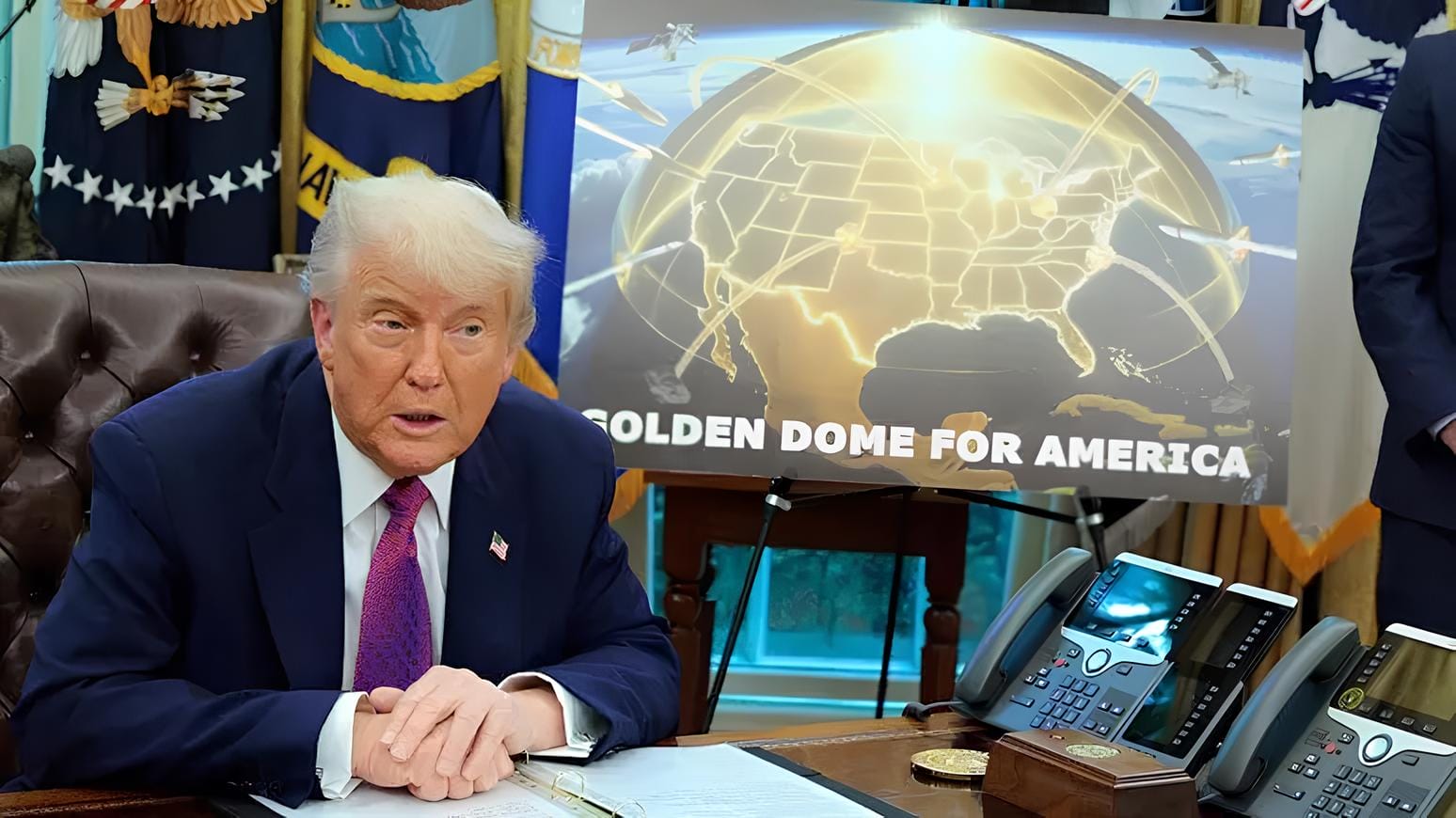
Inspired by Ronald Reagan’s Old “Star Wars,” the “Gold Dome” Announced by Donald Trump Aims to Protect the United States from Hypersonic, Ballistic, and Space Threats. But Is It Really Possible to Create a Functional Missile Shield Over a Territory of Continental Dimensions?
On May 20, former President Donald Trump — now in his second term — officially announced from the Oval Office the creation of the “Gold Dome,” a continental-sized missile shield, with an estimated budget of US$ 175 billion. According to Trump, the US “Gold Dome” will have the capability to intercept missiles launched from Earth or space, including those from the other side of the world, such as hypersonic missiles capable of reaching speeds over 9,600 km/h.
The proposal is ambitious: to protect the entire territorial extent of the United States, which is about 400 times larger than Israel, a country that currently uses the famous Iron Dome for its air defense. Trump compared the projects, stating that the “Gold Dome” will be ““much more advanced in terms of technology”.
Missile Shield Announced by Trump: What Are Its Goals?


The missile shield announced by Trump has the mission to:
-
USA and China compete for Brazil over resources that could be worth trillions — rare earths put the country at the center of a global dispute

-
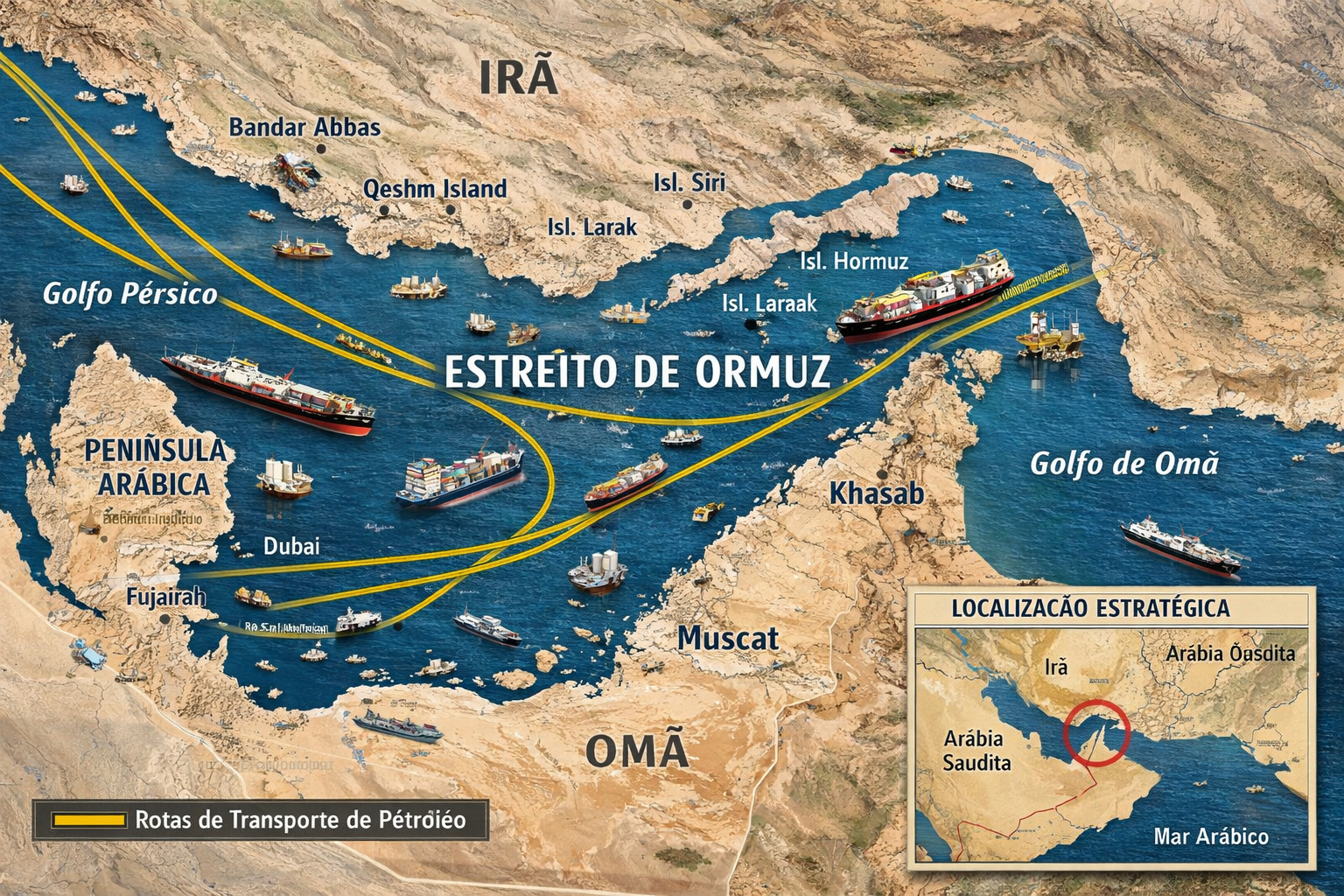
Global summit with over 40 countries pressures Iran for a blockade in the Strait of Hormuz and warns of direct impact on oil, food, and the global economy.
-
Russia has broken the U.S. maritime blockade to send oil to Cuba and is now loading a second ship while Trump says that “Cuba is next” in a possible military action against the island.

-
Spain challenges the USA and closes its airspace for operations against Iran, raising global tension and provoking the threat of a trade rupture.


- Detect, track, and destroy aerial and space threats, such as intercontinental ballistic missiles (ICBMs), cruise missiles, and hypersonic missiles;
- Protect the country from attacks by armed drones, including versions with nuclear warheads;
- Cover American territory with a mesh of radars, satellites, sensors, and ground and space interceptors;
- Reinforce the geopolitical role of the US in a scenario of increasing military tension with Russia, China, North Korea, and Iran.
The coordination of the project will be under the responsibility of the Pentagon, particularly the Vice Chief of Space Operations, General Michael Guetlein, who stated:
“The Gold Dome is a bold and aggressive approach to quickly protect our territory from our adversaries.”
Why Was the “Gold Dome” Proposed Now?
The proposal for the US “Gold Dome” arises in a context of rapid growth in the military capabilities of major rival powers of the United States:
- Russia and China have modernized their nuclear arsenals, developing new types of long-range missiles and maneuverable warheads;
- China is already testing hypersonic missiles with intercontinental range;
- North Korea continues with ballistic tests and advances in nuclear technology.

The Department of Defense recognized, through a briefing from the Defense Intelligence Agency, that these threats “will increase in scale and sophistication” in the coming years and that the US needs to act urgently to avoid being outpaced.
Reagan’s Legacy: The Return of “Star Wars”
The concept of a total defensive shield is not new. In the 1980s, President Ronald Reagan presented the so-called Strategic Defense Initiative (SDI), which became known as “Star Wars.”
The goal at the time was to use satellites armed with lasers and orbiting interceptors to block Soviet missiles before they hit the US. Despite billions in investment, the project was abandoned due to technological limitations and high costs.
Trump revived this idea, stating:
“Ronald Reagan wanted this many years ago, but they didn’t have the technology. Now, we will. And it will be at the highest level.”
How Much Will the US Missile Shield Cost?
According to Trump, the government has already allocated US$ 25 billion in initial funding in its new budget — currently under discussion in Congress. The expectation is to reach a total value of US$ 175 billion by 2029, when his second term ends.
However, the Congressional Budget Office (CBO) — the official Congressional agency that analyzes budget viability — estimates that just the construction of the space components of the system could cost up to US$ 542 billion over 20 years.
This cost considers:
- Launch and operation of hundreds of defensive satellites;
- Installation of global tracking systems;
- Land, sea, and air-based interceptors;
- Development of a command and control system that integrates all elements in real-time.
How Would the “Gold Dome” Function?
According to military experts, the “Gold Dome” will not be a single system, but rather a set of over 100 interconnected systems that together would form a complete protection network over American territory.
Among the Planned Components:
- Low and geostationary orbit surveillance satellites;
- Ground interceptors, such as THAAD (Terminal High Altitude Area Defense) missiles;
- Ship-based missile defense systems, such as Aegis destroyers;
- Armed drones and automatic interception fighters;
- Radar systems and artificial intelligence to detect, track, and predict attack routes;
- Command centers integrated with NORAD, the agency responsible for North America’s air defense.
Canada Wants to Participate in the US “Gold Dome”
According to Trump, Canada has expressed interest in joining the project. Bilateral cooperation would occur through the joint command of NORAD (North American Aerospace Defense Command), a military alliance between the two countries since 1958.
The idea is to expand the coverage of the shield to also protect Canadian territory, especially the Arctic, a strategic region against Russia’s military ambitions in the polar area.
What Are the Criticisms of the Project?
Despite the enthusiasm of the Trump administration, experts point out significant challenges for the US “Gold Dome”:
- Astronomical and unpredictable costs;
- Technological limitations, especially in detecting and intercepting hypersonic missiles;
- High risk of systemic failures, with minimal margins of error;
- Dependence on artificial intelligence for decision-making in seconds, which could raise ethical and reliability issues;
- Military escalation, as the system may be seen as provocation by China and Russia.
Security analyst W.J. Hennigan from the New York Times wrote:
“The most interesting parts of the program are still unclear: how the system would work, who would build it, and how it would reliably protect Americans against evolving missile threats.”
Is the Missile Shield Technically Viable?
Hypersonic missiles can reach speeds over Mach 10 (12,000 km/h) and maneuver during flight, making them difficult to intercept. Detecting them and reacting in a timely manner requires advanced artificial intelligence, ultra-precise radars, and ultrafast interceptors.
While current defense systems, such as Israel’s Iron Dome, work well against short-range missiles, protecting a country the size of the US requires a completely new architecture not seen in modern warfare history.
When Will the “Gold Dome” Be Ready?
According to Trump, the system is expected to be operational before the end of his second term, by 2029. However, independent analysts doubt this timeline, considering that just the development of prototypes could take more than five years.
Additionally, even if the technologies are developed on time, the deployment of military infrastructure across US territory would require Congressional approval, contracts with suppliers, testing, and certifications.








Seja o primeiro a reagir!