





 Portuguese
  English
  Spanish
  5 min of reading
  0 comments


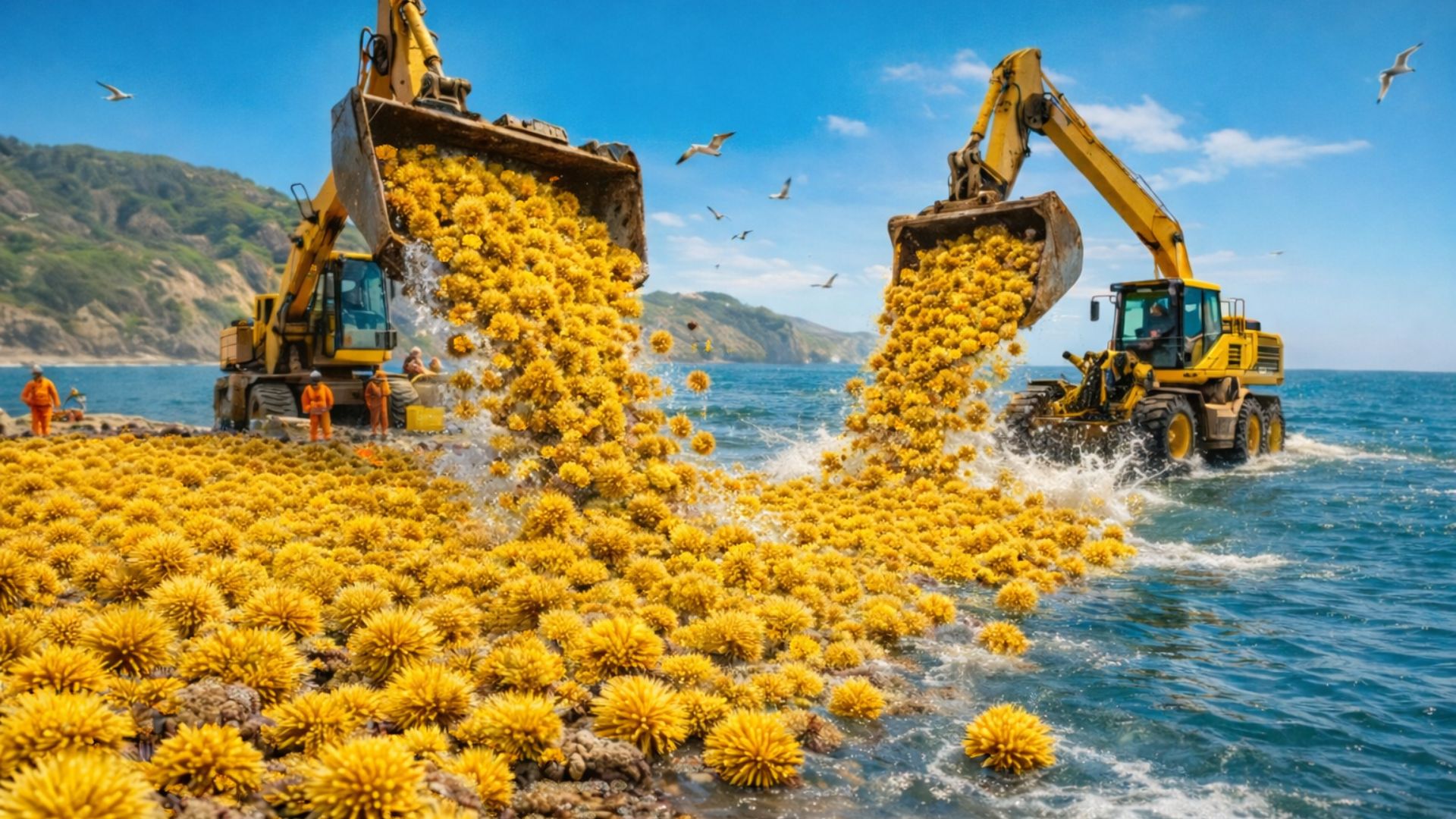
Ecological Collapse At The Bottom Of The Pacific Led Divers To Remove Millions Of Sea Urchins To Try To Save Kelp Forests In California, Triggering Rapid Marine Habitat Recovery And Reigniting The Scientific Debate About Human Intervention To Restore Ocean Ecosystems.
The mass removal of sea urchins in Southern California has become one of the main marine restoration cases in the United States after decades of degradation transformed areas once covered by kelp into nearly barren rocky expanses.
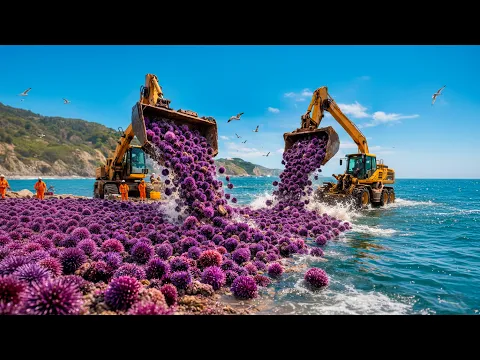
In the Palos Verdes Peninsula, teams linked to The Bay Foundation reduced the density of purple sea urchins from about 30 per square meter to nearly 2 per square meter, a level considered compatible with the recovery of the underwater forest.
Crisis In The California Kelp Forests
The most repeated data about the operation also requires correction.
-
How 5,000 Indian dabbawalas manage to deliver around 200,000 lunchboxes a day in Mumbai for over 130 years using bicycles, crowded trains, and a manual system that continues to operate with impressive accuracy.

-
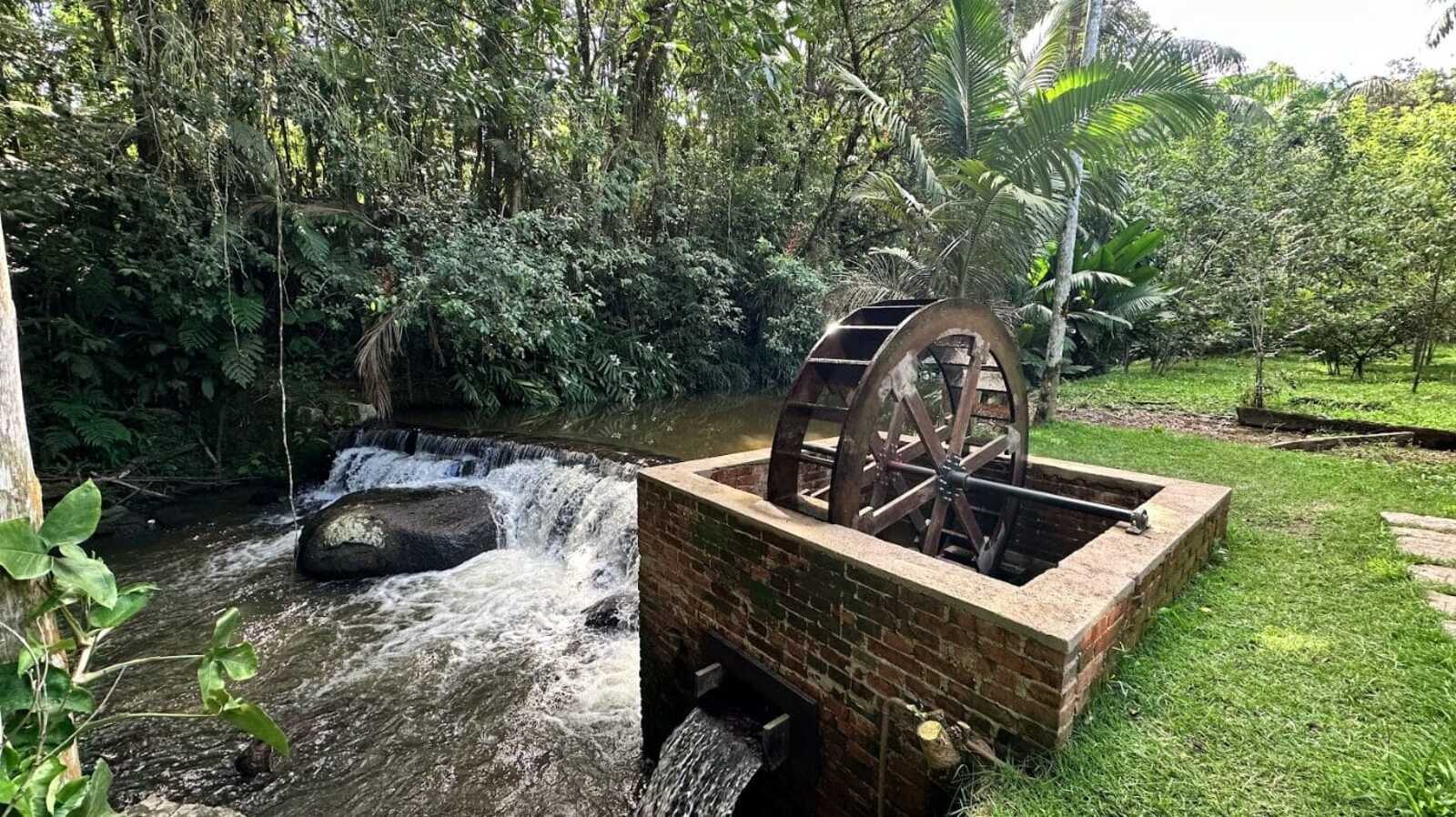
While restoring a historic mansion from 1910, a brick structure with an old turbine that generated energy from the Rio do Testo emerged, along with a hidden door and a rare floor concealed under layers of wax.
-
Italian researchers have detected what appears to be a second Sphinx buried under the sands of Egypt, and satellite scans reveal a gigantic underground megastructure hidden beneath the Giza Plateau for over 3,000 years.

-
There are 4,223 drums and 1,343 metal boxes concreted with 50-centimeter walls that store the radioactive waste from Cesium-137 in the worst radiological accident in Brazil, just 23 kilometers from Goiânia, with environmental monitoring every three months.


The consolidated reference in technical and institutional sources is millions of sea urchins killed, not millions of tons.
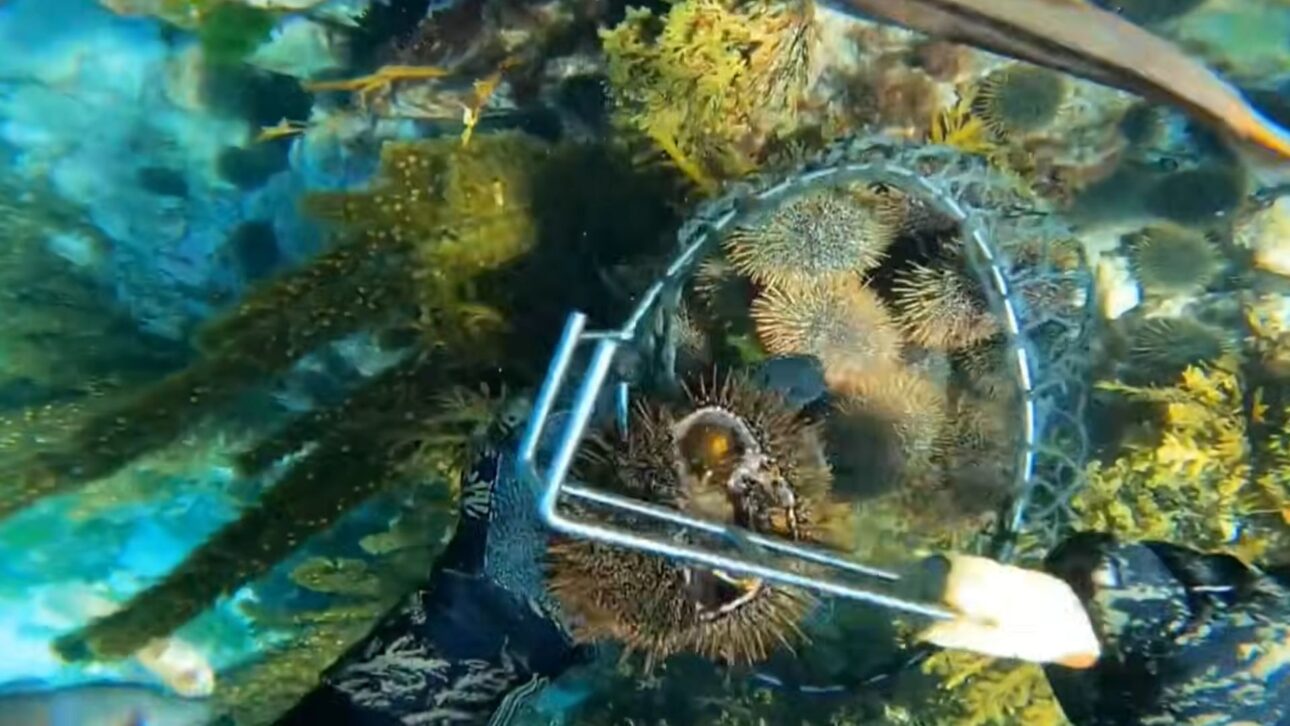
The initiative itself reports the restoration of around 80 acres of kelp forest in Palos Verdes, with over 13,000 hours of underwater work and participation from commercial fishermen and trained volunteers.
Kelp forests form one of the most productive environments along the Pacific coast, supporting a wide variety of fish, invertebrates, birds, and marine mammals.
Under favorable conditions, giant kelp can grow about 60 centimeters per day, creating plant columns that reorganize light, shelter, and food availability throughout the ecological chain.
In Palos Verdes, the cumulative loss reached about 80% of the canopy cover, resulting from sedimentation, coastal urbanization, urban runoff, storms, and changes in the ecological balance of the reef.
In other parts of California, especially in the northern part of the state, the crisis has been even more severe after marine heatwaves and population explosions of sea urchins, with losses reaching over 90% in some areas.
Why Sea Urchins Multiplied
Purple sea urchins have always been part of this ecosystem, but they have lost control by predators and started occupying the reef at abnormal densities.
One of the most relevant triggers was the collapse of sunflower sea stars, affected by a wasting syndrome that eliminated more than 90% of the species between 2013 and 2017.
At the same time, fishing pressure on predatory species and environmental changes reduced the system’s natural regulatory capacity.
Recent research highlights that predators like the California sheephead help control herbivores and make kelp forests more resilient to heatwaves, reinforcing that the crisis was caused by a combination of environmental disturbances.
Sea otters also play a role in this equation, although their presence today is mostly concentrated along the central California coast and San Nicolas Island.

These areas are distant from some of the most affected regions in the southern part of the state, where the decline of kelp has become more intense.
Human Intervention At The Bottom Of The Sea
The response found in Palos Verdes was straightforward: remove sea urchins from critical areas before any sprout of kelp could be consumed again.
Since the beginning of the project, divers and fishermen have been working on selected reefs to reduce the species’ density to the target level of approximately 2 individuals per square meter.
This limit is described by the project leaders as a necessary condition for giant kelp to reoccupy the rocky substrate.
The method may seem rudimentary, but it was designed as precision intervention, not as indiscriminate eradication.
The long-term goal is to restore up to 150 acres of kelp forest, while the project expands protected areas and monitors the recovery of reef fish.
The strategy also aims to gradually reactivate the natural mechanisms of ecological balance so that the system can function without a permanent dependence on manual removals.
Rapid Recovery Of Marine Life
The most consistent results appeared a few months after the most intense density reductions, when the rocky bottom began to show new frond fixation and growth.
In Palos Verdes, the restoration has already reached about 80 acres, with improvements in the structural complexity of the reef and a progressive return of species associated with kelp forests.
Another observed effect was the improvement in the condition of red sea urchins, a species of high commercial value.
In the restored areas, the weight of the gonads of these sea urchins increased by about 168%, indicating a recovery of the biological productivity of the environment.
This result helps explain why management has ceased to be seen merely as an environmental action and has also come to be regarded as a tool for fishery recovery and coastal resilience.
Why Kelp Is So Important For The Ocean
The return of kelp produces effects that go beyond the underwater landscape.
These forests help reduce coastal erosion, buffer wave energy, and provide shelter for hundreds of marine species.
The accelerated growth of the algae also influences local chemical processes and can contribute to mitigating impacts related to ocean acidification on a regional scale.
The experience in Palos Verdes does not end the crisis of kelp forests in California, especially since ocean warming remains one of the main threats to these ecosystems.
Nonetheless, the case has established one of the most well-known examples of marine restoration based on direct intervention, showing that reducing herbivores can create space for entire habitats to rebuild.
When kelp returns, the change is not just reflected in the color of the seafloor.
What emerges again is the entire network of ecological relationships that depend on these underwater forests to survive.






-

-

-

3 pessoas reagiram a isso.