





 Portuguese
  English
  Spanish
  6 min of reading
  0 comments


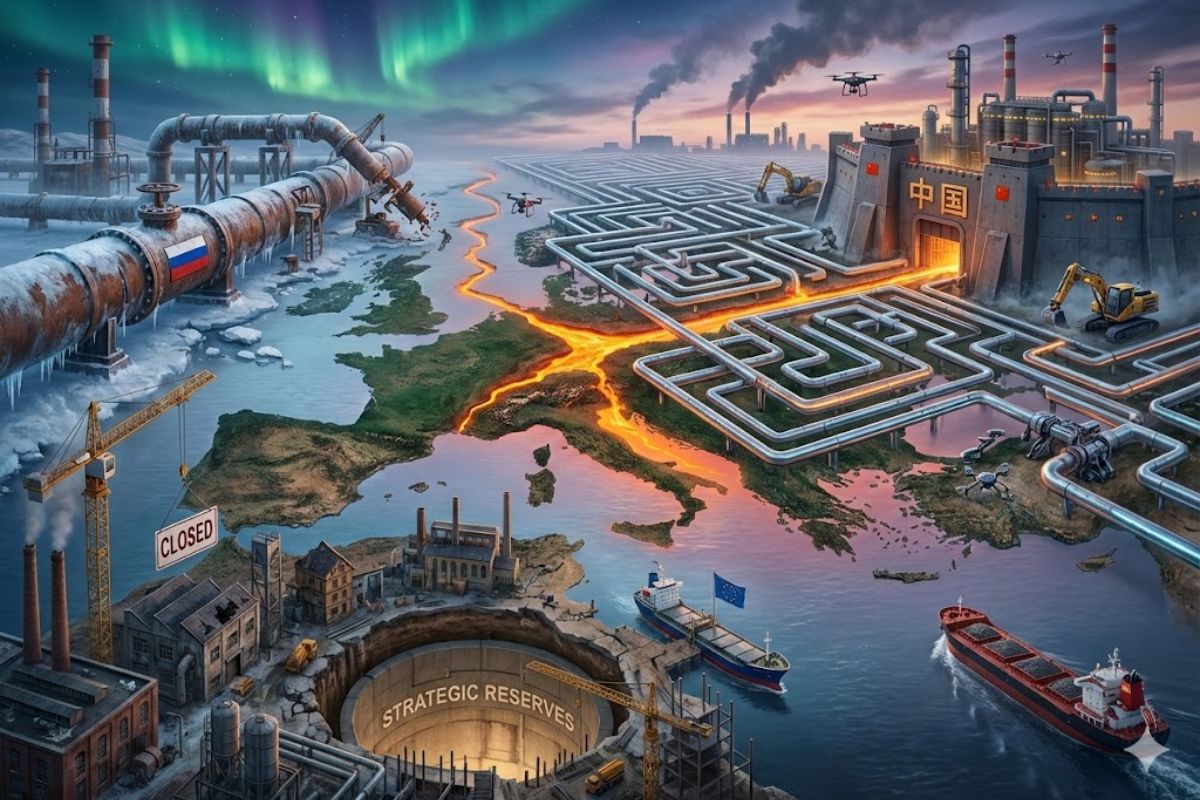
Escaping Russian Gas After 2022, Europe Discovers Deeper Vulnerability in Critical Metals, Increases Dependence on China, Drives European Deindustrialization, and Attempts to Build Strategic Autonomy with Strategic Reserves and New Mining Projects Before Political Time Runs Out Definitively on the Continent.
On December 6, 2025, the debate over energy and industrial security returned to the center of the agenda in Brussels. After cutting ties with Russian gas through REPowerEU, Europe discovers that it has swapped one dependency for another, even more structural, anchored in critical metals that sustain semiconductors, renewables, defense, and artificial intelligence.
As the demand for minerals is expected to multiply six to fifteen times by 2050 with electrification, renewable energies, and digitalization, the European Union faces a profound dependence on China for refining, with increasing signs of European deindustrialization and a belated effort to design some form of strategic autonomy before losing industrial mass irreversibly.
From Russian Gas to the Maze of Critical Metals
The first phase of the crisis was energy-related.
-
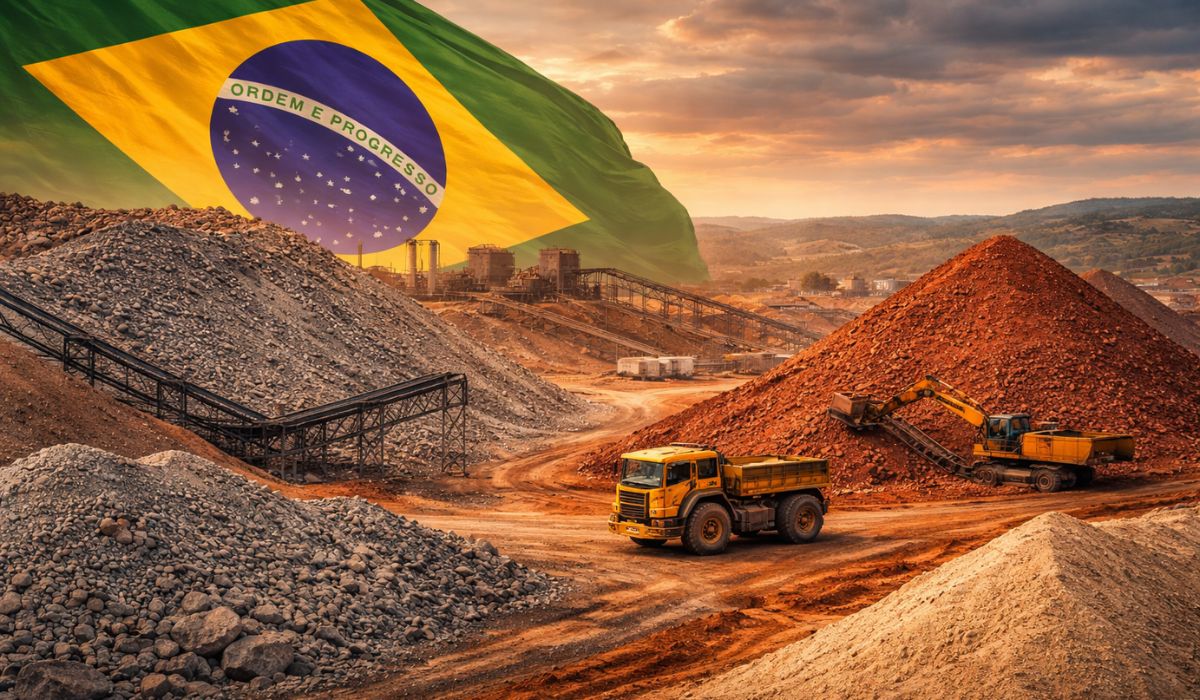
Brazil extracts 26.3 million tons of ore from what was previously treated as waste, transforming residues into wealth, producing over 3 million tons of sand, and demonstrating how national mining is relearning to generate value.
-
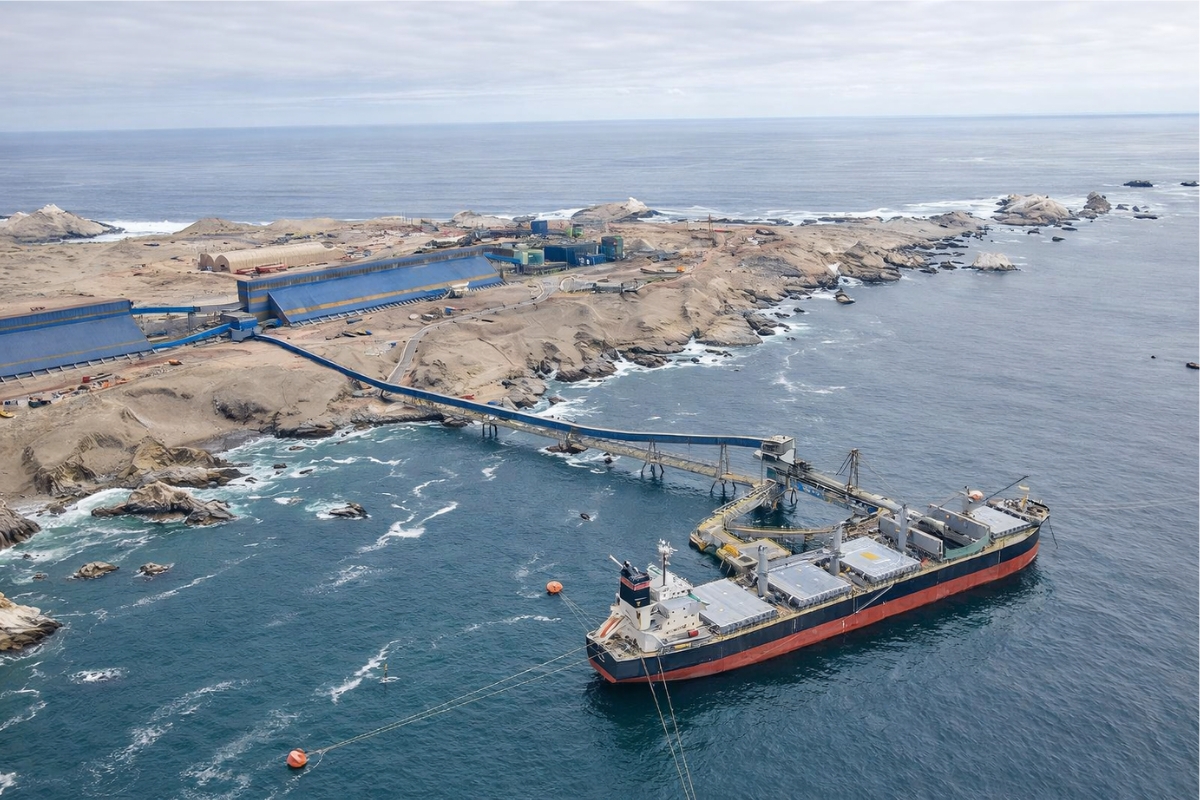
A $3.5 billion megaproject in Latin America pumps desalinated seawater at 1,050 liters per second over 194 km to keep a copper supermine in the Andes operational for another 20 years.
-
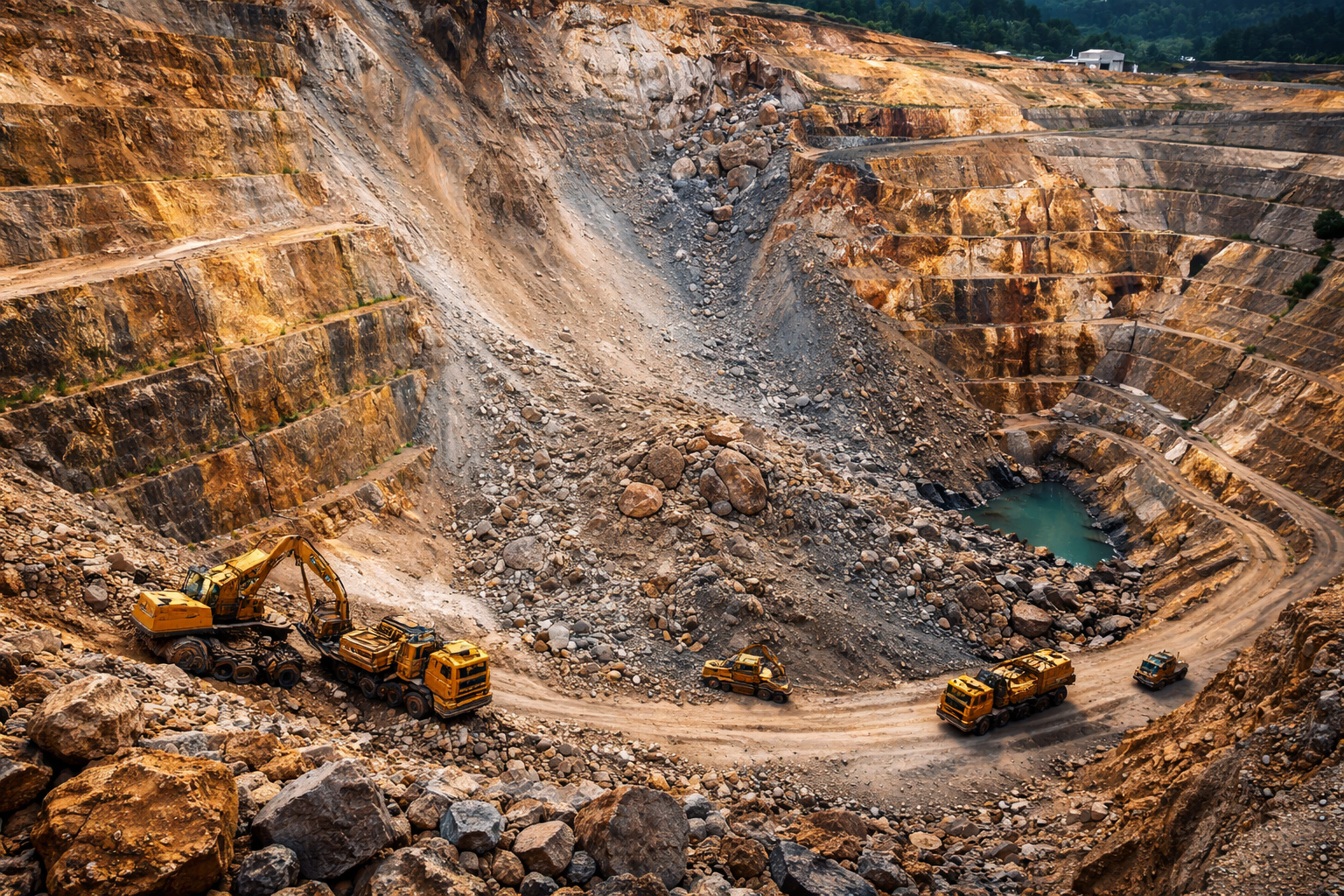
A hidden mine in the Andes valued at nearly R$ 1 trillion is starting to attract global attention, containing copper, gold, and silver, and raises an intriguing question: why do Argentina and Chile need to act together to exploit this gigantic wealth?
-
A silent discovery in the interior of Bahia could change the future of energy in Brazil: a uranium reserve in Lagoa Real has an estimated capacity to produce 400 tons per year and is already attracting the attention of energy sector specialists.
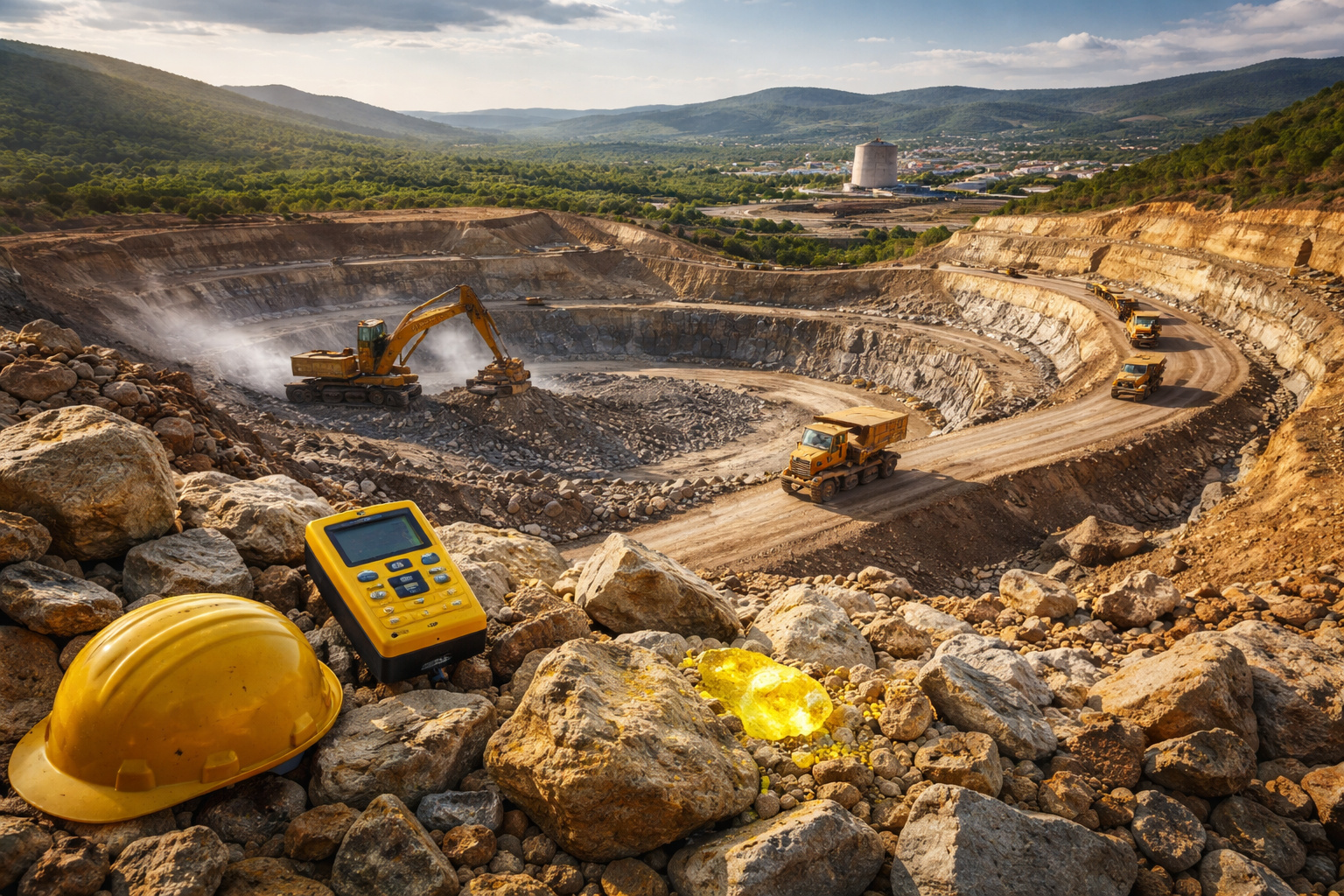

After the Russian invasion of Ukraine, Europe mobilized liquefied natural gas infrastructure, redesigned routes, secured new contracts, and imposed painful consumption adjustments.
REPowerEU symbolized this urgent movement to rapidly reduce exposure to Russian gas.
The new problem is deeper. As Richard Holtum of Trafigura summarized, Europe has stopped depending on one molecule to depend on complex chains of critical metals.
Without these metals, there are no chips, batteries, wind turbines, solar panels, military equipment, or much of the digital infrastructure required by the energy transition itself.
In practice, the continent has moved from a trap to a maze: critical metals have become Europe’s new bottleneck, with decisions made decades ago now returning as strategic vulnerabilities.
Refining Capacity in Decline and Dependence on China
The root of the problem lies in two simultaneous fronts.
On one side, a silent erosion of Europe’s industrial capacity to produce and process the minerals it uses. On the other, a concentration of global refining in Asia, particularly in China.
According to Holtum, the European Union has not built a new smelter since the 1990s, and in the last decade, it has closed or reduced about one third of its refining capacity.
Meanwhile, dependence on China has increased, as Beijing has devised a deliberate strategy to dominate the most sensitive link in the chain.
Today, Europe practically produces no gallium, germanium, vanadium, or rare earths it consumes, and accounts for only residual fractions of lithium, cobalt, nickel, and natural graphite.
The political goal of supplying 10% of critical raw material needs by 2030 is deemed “unrealistic” by European studies for most metals.
In this context, dependence on China is not temporary; it is structural.
Factories at Risk and European Deindustrialization
The impact of this global architecture is already visible within borders.
According to Euronews, the European steel industry openly speaks of “survival” in the face of subsidized Chinese steel and punitive tariffs imposed by the United States.
The chemical industry, another pillar of the industrial fabric of Europe, is facing a much graver situation, with factories closing and investments evaporating.
Analysts are beginning to treat European deindustrialization not just as a risk, but as an ongoing reality.
When access to critical metals is expensive, unstable, or conditioned by third parties, production lines shift to where raw material is available with less uncertainty.
The result is a loss of competitiveness, delays in projects, and the migration of industrial jobs to other blocs.
The irony is clear: Europe wants to electrify transport, expand renewables, and digitize the economy, but it does not control the basic inputs of these very agendas.
The green transition that should reinforce energy autonomy ends up exposing deep vulnerabilities in metallurgical and chemical chains, accelerating European deindustrialization.
Chinese Controls, Surgical Coercion, and Information Asymmetry
The friction with Beijing has ceased to be merely commercial.
In the past year, China has intensified export controls on various critical metals, including rare earths, gallium, germanium, and antimony.
These measures have raised prices, forced shutdowns in European factories, and created a climate of permanent uncertainty in entire sectors.
The example of Germany is illustrative.
To obtain import licenses, German companies have become obligated to deliver to the Chinese government production diagrams, photographs indicating where rare earths enter, detailed customer lists, inventories, production data for three years, and future forecasts.
At the same time, the German state itself admits it does not have this level of detail about its companies.
In practice, dependence on China gains an additional layer: Beijing knows more about the European industrial anatomy than many governments in Europe itself, which facilitates a form of surgical coercion.
Small delays in customs releases, sudden license reviews, or specific regulatory changes can paralyze entire segments.
This process is already described in Brussels as a “second China shock.”
Strategic Autonomy, Reserves, and Internal Limits
In light of this situation, Europe’s response is in construction and is arriving late.
The European Commission is preparing the RESourceEU plan to ensure supply, create strategic reserves, strengthen agreements with producing countries, and attempt to revive mining and refining within the bloc.
In parallel, the creation of a European Center for Critical Raw Materials is planned to coordinate purchases, monitor risks, and generate industrial intelligence.
The Commission’s work program for 2026, under the slogan “The Moment of Europe’s Independence,” places access to resources at the center of strategic autonomy.
Together with defense, protection of critical infrastructures, and innovation, Brussels admits for the first time that, without critical metals, no serious industrial sovereignty project is viable.
This then raises the debate about reserves. Europe has maintained oil stocks for decades but has never stored critical metals at scale.
Now it is discussing which metals to stockpile, in what volumes, and how to finance purchases. There are technical obstacles: lithium hydroxide with a shelf life of about six months, oxides that require strict control of temperature and humidity, and the risk of obsolescence of stored materials.
And there is a political paradox: to create reserves of gallium or germanium, Europe would have to buy even more from those who already control refining, deepening dependence on China.
Furthermore, strategic autonomy itself encounters internal barriers.
Studies indicate relevant reserves of various minerals in European territory, but mining licenses take decades, bureaucracy is slow, local opposition is strong, and regulatory uncertainty drives away capital.
Without mines, smelting, and refining at scale, plans for strategic autonomy risk remaining on paper.
United States Ahead and Narrow Window of Opportunity
Another critical variable is the movement of the United States. Washington is, according to European diplomats, at least two years ahead in this race. The United States and Australia have signed an agreement with the potential to mobilize billions of dollars in critical minerals projects, including new gallium refineries.
The Pentagon has already allocated hundreds of millions to contracts for antimony and other metals considered strategic.
The so-called American “mineral diplomacy” is materializing in investments in Ukraine, rail projects in Angola, alliances with Japan, South Korea, and Canada, and pressure to form supply chains aligned with Washington.
If this strategy succeeds, Europe risks finding major alternative suppliers to China already committed to the United States and its partners.
In other words, Europe is looking to escape from dependence on China just as other actors advance on the same available reserves.
This makes European strategic autonomy more difficult and shortens the time for investment decisions, regulatory changes, and the construction of new industrial capacity.
Metals as Instruments of Power
In escaping Russian gas, Europe avoided one type of vulnerability but entered a more complex one.
Now, each wind turbine, each battery, each chip is a reminder that chains of critical metals can be used as a political and economic lever.
Whoever controls mines, smelters, and export routes also partially controls the pace of the energy transition and technological innovation.
European strategic autonomy, whether industrial, energy, military, or digital, relies on resources that the bloc does not currently control.
Critical metals cease to be merely raw materials to become instruments of power in a competition landscape between great powers, where European deindustrialization is no longer a distant hypothesis, but a present risk.
In light of this scenario, in your opinion, should Europe prioritize internal mining, agreements with allies, or strategic reserves of critical metals to reduce dependence on China and contain European deindustrialization?









Seja o primeiro a reagir!