





 Portuguese
  English
  Spanish
  11 min of reading
  0 comments


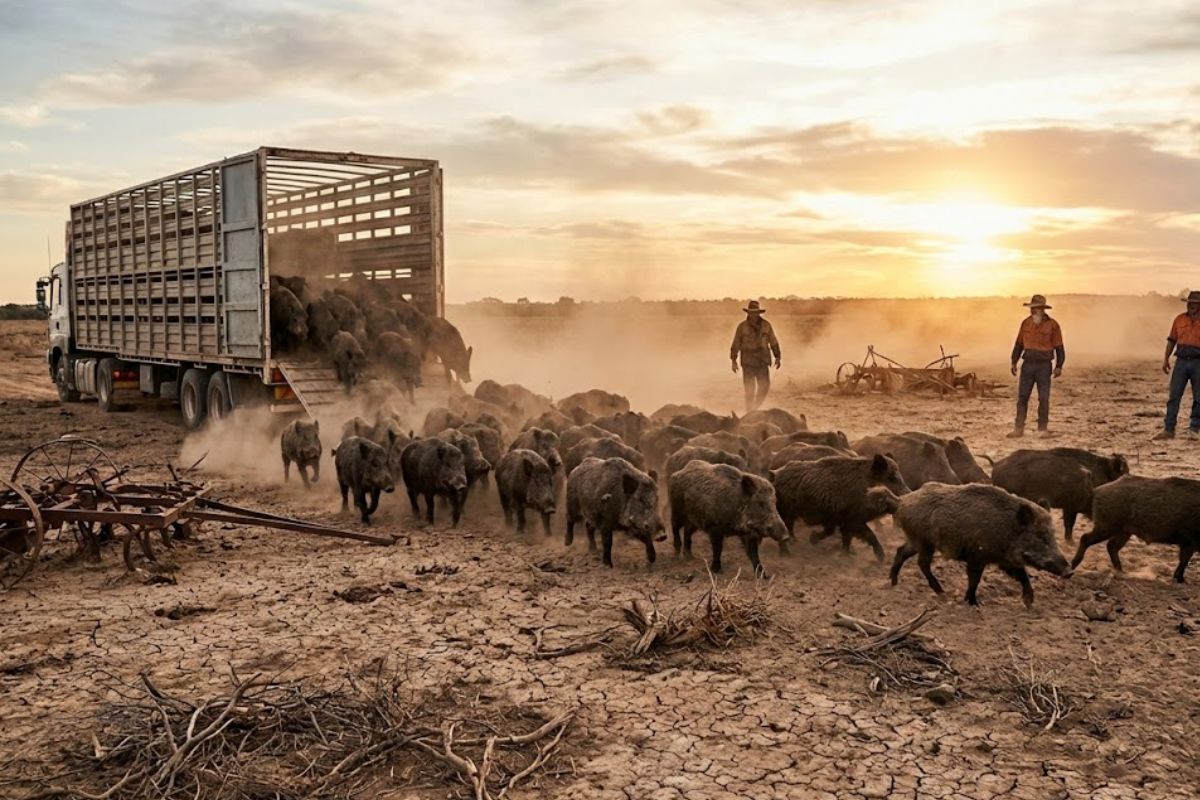
Controlled Reintroductions of Wild Boars in the United Kingdom, Italy, Germany, Poland, and Spain Are Accelerating the Recovery of Forests and Pastures: The Soil Is Starting to Breathe, Seeds Are Awakening, Bees and Butterflies Are Reappearing, and Birds Are Returning. At the Same Time, Diseases, Accidents, and Population Explosions Require Strict Management to Prevent New Damage.
Wild boars were classified in a study published in 2024 as one of the most dangerous invasive species in the world, and examples of destruction abound. In Germany, security cameras have recorded boars opening a shed door and destroying everything; in the United States, damages amount to about US$ 2.5 billion per year; in Portugal, in just one harvest, there were € 8 million in losses in corn crops; in Italy, agriculture loses nearly € 19 million per year. Still, what seemed unthinkable began to happen: Europe started to intentionally reintroduce wild boars in areas considered degraded, with initial signs of revitalization that surprised researchers.
The backdrop for this turnaround is a silent crisis: behind the green appearance, ecosystems are collapsing. A recent environmental report on the continent indicates that 81% of ecosystems are in poor or insufficient condition and only 15% are still healthy, a scenario compared to a body that looks well on the outside but has four out of five organs failing. In forests that remain green, silence has become an alert, with no cicadas, no bees, and no birdsong. In pastures, the decline of traditional grazing has favored tall grasses and shrubs that block light and suffocate open area species, while typical pasture butterflies have fallen 50% to 60% in 30 years and 168 common bird species experienced an average reduction of 14%, with open area birds suffering a decline of over 40% since 1990.
Why Europe Decided to Reintroduce Wild Boars in Degraded Areas

The reintroduction of wild boars was not born from a romantic gesture of reconnection with nature. It arises as a pragmatic response to a continent that has lost some of its basic ecological processes and seeks tools capable of reactivating life in degraded forests and pastures.
-
With a cost per shot close to zero, the DragonFire laser could change naval warfare in 2027 and provide British ships with nearly unlimited defense against drones.

-
A British startup creates tires that generate electricity in electric vehicles when passing over potholes, speed bumps, and cracks.

-
Scientists have created robots made with living cells that have their own nervous system, swim on their own, explore the environment, and self-organize without any genetic engineering, and now they want to do the same with human cells.

-
Students create a solar-powered ambulance that operates without a plug, without fuel, and still keeps medical equipment running in remote areas.


The logic behind the decision is controversial because the wild boar is both a major cause of damage and an animal with potential to act as a natural restoration agent, especially in ecosystems that have been undisturbed for too long.
It is exactly this contradiction that turns the projects into a high-risk, high-impact experiment: using a species known for destruction to try to rebuild.
Europe Green on the Outside and the Phenomenon of Silent Forests
The idea of “green and silent forest” has gained traction to describe areas that look healthy from a distance but are ecologically impoverished.
The absence of insects, the decline of birds, and the weakening of diversity in the understory form a chain that, when broken, changes everything: without insects, birds disappear; with fewer birds, the dynamics of the ecosystem change; with less life on the forest floor, regeneration slows down.
Outside the forests, pastures have also deteriorated. With the decline of traditional grazing, tall grasses and shrubs advanced, blocking light and harming species that depend on open areas.
In this context, the impact on butterflies has been particularly severe, with declines of 50% to 60% in 30 years, an indicator that the base of the system, the insects, are failing.
The crisis worsens when fires enter the equation. With the end of controlled burns in many regions, dead wood and dry branches have accumulated, forming a blanket of fuel. Between 2000 and 2009, fires burned about 1,000 to 500,000 hectares per year.
In 2017, that number surged to approximately 988,000 hectares, with an economic impact of around € 2 billion in damages each year, in addition to unmeasurable losses: soil burned to the root, animals disappeared, and ecosystems collapsing.
The Return of an Ancient Species and the Reconnection with the European Landscape
Historically, the wild boar once occupied a vast range from North Africa to Eurasia, appearing in paintings from the Paleolithic period and in Greco-Roman mythology. For centuries, it was considered the royal game of European nobility. But this bond was broken in several regions.
In England, for example, wild boars were driven to extinction as early as the 11th century, and the continent began to treat their absence as permanent.
This perception changed in the late 20th century. In 1999, in the Forest of Dean area, a small group of boars escaped from farms or was intentionally released and returned to live in forested areas. Similar cases arose in Kent, Sussex, and Dorset.
The return, however, came with panic. Boars overturned golf courses, knocked over trash bins, and caused traffic blockages.
There were reports of attacks and even proposals to build anti-boar walls around residential areas.
At the same time, ecologists argued that it would not be possible to “build walls” to prevent a natural process that had been suppressed for hundreds of years, and that the presence of the animals could reactivate forgotten ecological functions.
What Surprised Scientists in the Forest of Dean
The first positive signs associated with wild boars were described as subtle at first and then hard to ignore.
When teams returned to monitor the Forest of Dean, areas considered dormant for decades began to show young shoots of oak, chestnut, and beech.
A forest manager, David Slater, summed up the astonishment by observing that nothing had been planted, but areas that were previously empty were now full of seedlings, as if the forest had “woken up.” And the change was not limited to the trees.
Wildflowers returned, the ground vegetation became more diverse, bees and butterflies reappeared, and even the sound of the forest changed, with insectivorous birds, once rare, becoming noticeably more present.
This type of transformation touches on a sensitive point of restoration: in many degraded areas, regeneration exists, but it is stalled. What surprises here is the idea of a “natural nudge,” created by an animal often treated as a threat.
How Wild Boars Disturb the Soil and Unlock Forest Regeneration
To an outsider, the turned-up ground may seem like just a mess. For ecologists, it can be the sign of an ecological reconstruction machine working nonstop. In search of roots, tubers, insects, and fungi, wild boars break what has been called “ecological cement” accumulated over decades.
There is an important physical detail: an adult boar can turn over 5 to 20 cm of soil in a few seconds, creating holes of 30 to 50 cm. This disturbance has cascading effects.
First, sunlight finally reaches the forest floor after decades, activating dormant seeds of oak, chestnut, beech, and wildflowers. Second, the deeper soil becomes more aerated, allowing roots to “breathe” again. Third, it improves water infiltration and reduces surface runoff, creating a more humid and resilient environment.
Additionally, the feces of wild boars are described as rich in nitrogen, phosphorus, and potassium, acting as a natural fertilizer, something valuable in soils impoverished by extreme weather and the reduction of traditional grazing in Europe.
Seed Dispersal, Ecological Corridors, and the Invisible Role of Fungi
Wild boars also act as seed dispersers. Seeds cling to their fur, snout, and mud on their paws, being transported for miles.
With spatial memory, they travel repeated routes and end up creating ecological corridors, as if establishing fixed trails that connect areas of the environment.
Another crucial mechanism involves mycorrhizal fungi, which connect roots and distribute water and nutrients. By consuming fungi, boars spread spores throughout the environment. In one example, in Slovenia, 18 rare species of fungi reappeared a few months after boars passed through burned forests.
When fungi return, the forest regenerates with greater vigor, because the underground network starts functioning again.
Even the wallowing behavior comes into play. In 2020, in Austria, it was observed that puddles formed by boars transformed into micro-wetlands after rain, used by dozens of species of aquatic insects, frogs, and salamanders for breeding.
Results in Other Countries: Poland, Italy, Catalonia, and Signs of Recovery
The effects attributed to wild boars were not limited to England. In Poland, scientists monitored forest areas with the presence of boars for 3 years and recorded a result described as impressive: more than 10,000 seedlings of 38 different species, along with an increase in the biological diversity index Shannon Winner, from 0.95 to 1.24, considered a significant leap for temperate forests.
One researcher concluded that they had never seen a natural agent accelerate forest recovery as much.
In Italy, the presence of boars favored the growth of the plant Aristolochia clusi, essential for the rare butterfly Zerynthia Cassandra, allowing the species to begin recovering after years of decline.
In Catalonia, holes left by boars formed small puddles that last two to three weeks, a detail that reinforces how “disturbance” can create micro-habitats in degraded environments.
A time frame also stands out: there is indication that, in 3 to 6 months, turned-up areas show plant growth that is two to three times greater, with the return of bees, butterflies, and insectivorous birds. A silent forest can become active in a single season, when essential processes start operating again.
The Role in the Food Chain: Wild Boars Sustaining Predators

In ecosystems with predators, the presence of wild boars goes beyond the soil. They also sustain wolves and lynxes, representing 20% to 45% of the diet of these predators in countries like Italy, Romania, and Slovakia.
This dimension is important because restoration is not just about “planting trees” or “having flowers again.” It is about recomposing ecological relationships, and the diet of predators serves as an indicator that energy is circulating in the food web.
Why the United States Experiences the Worst Case Scenario with Wild Hogs
The same restoration logic did not repeat on the other side of the Atlantic. In the United States, the country cited as suffering the greatest destruction caused by wild boars and feral hogs in the world, the estimate is between 6 and 9 million animals, with damages of around US$ 2.5 billion per year. The numbers include US$ 1.5 billion in agricultural losses and US$ 2.5 billion in total annual damages.
In Texas, a state described as the most affected, farmers lose about US$ 871 million per year due to overturned pastures.
Wild hogs advance even into suburban areas of Dallas and Houston. In a city cited as Irvin, just 10 animals destroyed gardens, flipped garbage cans, and led the municipality to spend US$ 250,000 on control and recovery.
In Alabama, there are losses of at least US$ 50 million per year, with farms transformed into real battlefields.
Beyond the economic impact, there are serious incidents involving people.
In 2025, in a location referred to as Piedmon, police found a man’s body near a destroyed fence, with injuries attributed to wild hogs; weeks later, two more people were reportedly attacked on the same farm, in a case that local media treated as “Feral Hog Rampage,” reflecting the panic.
The explanation presented for such contrasting results revolves around three factors. First, genetics: American feral pigs are not the original European wild boar, but hybrids resulting from the cross-breeding between European boars and domestic pigs, described as larger, more aggressive, and with very rapid reproduction.
Second, unlimited food: vast crops of corn, soy, and wheat would create a permanent buffet that accelerates multiplication.
Third, lack of predators: with the gray wolf practically eliminated in the 20th century and other large predators at low density, the natural balance is disrupted. Add to this an animal that can run up to 50 km/h and has sharp tusks, and control becomes a constant race.
The Risks in Europe: Disease, Population Explosion, and Conflicts with Humans
Even in European countries, the reintroduction of wild boars is not treated as “release and forget.”
A central risk is African Swine Fever, ASF, a virus with a mortality rate close to 100% in domestic pigs and wild boars, associated with billions in losses in countries such as Poland, Germany, and the Baltic region.
There is also a warning that boars can carry the virus without symptoms and spread it through mud, feces, and even the boots of those entering the forest. The highlighted information is that the disease does not affect humans but can destroy livestock in a matter of months.
Another risk is uncontrolled population growth. Boars reproduce so rapidly that, without management, they can transform recovering forests into battlefields in 5 to 7 years.
This scenario has already occurred in Hungary and Slovakia, where excessive increases have led to the disappearance of young trees in just a few winters.
There is also a risk to safety. Cases of invasions and panic have been reported in different places, with an example cited in 2022, in a location written as Brachov, Romania, when a group of boars invaded a cemetery during a ceremony and injured around 20 people.
An adult male weighing around 120 kg can run at 50 km/h, making unexpected encounters dangerous.
How Europe Tries to Keep Wild Boars Within a Safe Zone
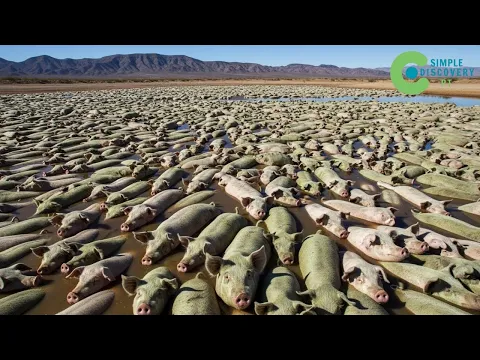

The European response described depends on a strict management system, with the premise that natural restoration is not abandonment but balance.
The first axis is density control through scientific hunting, with ecological limits defined by forest.
When the population exceeds the point considered safe, teams immediately reduce the number to prevent population explosions.
The second axis is technological surveillance. Thermal drones count groups at night, cameras monitor routes, and some individuals are equipped with GPS.
In one example, Slovenia even used artificial intelligence to alert when boars approach farms, critical areas for ASF outbreaks.
The third axis is reducing conflict with cities. In parts of Italy and Spain, there is planting of species that boars reject due to smell, pushing them back to forest environments, forming buffer zones between urban areas and woods.
The fourth axis is management of access and hygiene in disease risk areas. There is mention of safety belts around affected areas and strict control of human access to forests.
Finally, public awareness is seen as essential: not feeding the animals, not leaving exposed waste, and notifying authorities when detecting out-of-pattern groups.
This concept appears as shared management, in which society participates in keeping wild boars within the safe zone.
What This Reintroduction Reveals About Forest and Pasture Restoration
The story of wild boars embodies a paradox: a species seen as a disaster can, when placed in the right place and role, help resurrect forests that seem green on the outside but dead on the inside.
The lesson proposed is not that the boar is “good” or “bad,” but that the outcome depends on the ecological context and management.
At the same time, the comparison with the United States serves as a warning. Without control, without predators, and with genetics and food supply favoring population explosions, the impact can be devastating.
This is why Europe, even betting on reintroduction, maintains a focus on density control, technology, natural barriers, public education, and health monitoring.
And you, if the decision were in your hands, would you reintroduce wild boars to recover forests and pastures, or would you choose to avoid the risk and seek another solution?







-

-

-

-

-

-

139 pessoas reagiram a isso.