Portuguese


Brenner Base Tunnel Already Has 221 km Excavated Under the Alps and Will Feature a 64 km Underground Link Between Austria and Italy, with Trains Traveling at Up to 250 km/h.
A 2,700-ton boring machine broke through the last meters of rock on August 25, 2026, opening a continuous passage of 55 kilometers under the Alps, connecting Innsbruck in Austria and Fortezza in Italy. For the first time, one of the two tunnels where trains will run has been fully excavated from end to end.
According to the company responsible for the Brenner Base Tunnel, about 221 of the 230 kilometers of tunnels planned in the entire system have already been excavated, equivalent to approximately 96%. Once the new section is connected to the existing railway tunnel south of Innsbruck, passengers will be able to travel 64 kilometers underground, creating the largest planned continuous underground railway link in the world.
A 55 km Passage is Being Opened Within the Alps
The core of the project links Innsbruck in Austria to Fortezza in northern Italy. The main tunnel measures approximately 55 kilometers and runs beneath the Alpine mountain range.
-
Tajikistan Builds 335-Meter Dam in the Mountains, Prepares Six Turbines of 3,780 MW, and Transforms Valley into a 13.3 Billion Cubic Meter Reservoir; Project Expected to Create Over 30,000 Jobs

-
Dubai Allocates US$ 35 Billion for Airport Designed to Handle 260 Million Passengers Annually, Begins Construction with 17,000 Piles and Five Runways to Create the World’s Largest Aviation Hub
-
Beach in Santa Catarina nearly swallowed by the sea receives over 156,000 native plants after Brazil’s largest expansion restores 8.8 km of coastline; project aims for 280,000 plants to stabilize dunes and enhance coastal erosion protection
-
Roadworks on São Paulo Highways Enter New Week of Closures, Viaduct Closed on Washington Luís, Continuing Until Saturday


The difference from the current railway lies in the elevation. Today, trains have to climb towards the Brenner Pass. The new line will tunnel far below the mountain, avoiding much of that ascent.
The highest point within the new tunnel will be about 790 meters above sea level, which is approximately 580 meters below the Brenner Pass, located at about 1,370 meters elevation.
With Existing Connection, Underground Route Will Reach 64 km
The 55 kilometers of the Brenner Base Tunnel do not tell the whole story. To the north, the project will connect to a railway passage that already exists near Innsbruck.
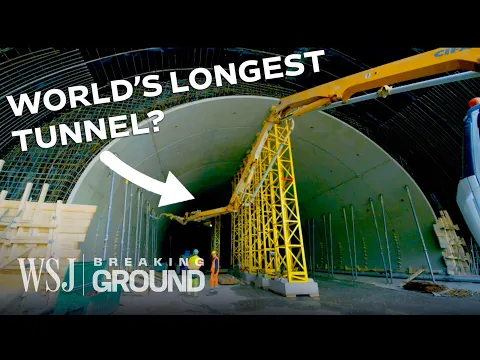

The so-called Inn Valley Tunnel was opened in 1994 and measures 12.7 kilometers. Future trains will use about nine kilometers of it along with the 55 kilometers of the Brenner.
This combination will produce an underground journey of approximately 64 kilometers. BBT SE claims that this will form the longest underground railway connection in the world when it becomes operational.
The Entire Project Features About 230 km of Tunnels
Those who only look at the 55 kilometers of the railway route may not understand why the construction speaks of 230 kilometers excavated. The reason is that there are several parallel and auxiliary galleries beneath the mountain.
The two large railway tunnels are only part of the network. The project also includes an exploration gallery, side accesses, rescue tunnels, emergency connections, and other passages used during construction.
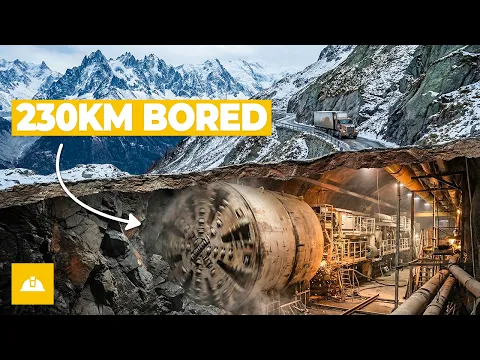
As of September 2026, 221 kilometers of the approximately 230 kilometers planned have already been excavated. Of this total, about 115 km correspond to the railway tunnels, 57 km to the exploration gallery, and 49 km to access, rescue, and logistics.
First 55 km Railway Gallery Fully Opened in August
One of the major milestones occurred on August 25, 2026. The tunnel boring machine Wilma reached its endpoint after working for 706 days inside the mountain.
As a result, different segments excavated from various points formed a single continuous gallery of approximately 55 kilometers, connecting Innsbruck to Fortezza.
Wilma alone drilled nearly 7.5 kilometers of rock in this final phase. Along the way, the machine installed thousands of concrete pieces to form the tunnel’s definitive wall.
The Wilma Machine Weighs 2,700 Tons
The scale of the tunnel boring machine illustrates the size of the project. Wilma is approximately 180 meters long when including its rear structure and weighs around 2,700 tons.
The front cutting head measures 10.37 meters in diameter and weighs about 260 tons. Its installed power reaches 9,928 kW.
During excavation, the machine itself advances, cuts the rock, removes the material, and assists in installing the concrete rings that support the newly opened passage.
More than 23,000 Concrete Pieces Installed Behind the Machine
Wilma didn’t simply leave a hole open. As it advanced, prefabricated concrete pieces were placed to form the tunnel’s circular wall.
A total of 3,720 rings, made up of over 22,000 individual concrete segments, were installed along its route. BBT SE also reported that the machine had to traverse areas of rock with difficult geological conditions.
The material extracted from the mountain was moved via conveyor belts to prepared areas for receiving the rock. This avoided dependence solely on trucks traveling long distances within the tunnel.
Austria and Italy Have Already Met Beneath the Mountain
Before the completion of the first entire gallery, another significant moment occurred on July 28, 2026. Teams working from different sides met at the same point beneath the Austria-Italy border.
The last rock layers were removed almost simultaneously from both main galleries. Austrian and Italian workers managed to break through and meet inside the mountain.
A smaller exploratory gallery had already managed to connect the two countries in September 2025. The opening in July 2026 marked the international link in the two major galleries intended for future trains.
Passenger Trains Could Travel Up to 250 km/h
The new route is designed for speeds far superior to those used by heavy trains on the old mountain route. The design speed reaches 250 km/h for passenger trains.
For freight trains, the design speed reaches 160 km/h. However, the main goal is not just to run faster. The significant gain comes from the reduction of climbs and curves.
The tunnel will have a very slight incline, between 4 and 7 per thousand. In simple terms, trains will be able to cross the Alps using a much flatter route than the current line through the mountain pass.
Passenger travel time is expected to drop from 1 hour and 20 minutes to 25 minutes
Currently, the crossing via the existing railway takes approximately 1 hour and 20 minutes for a passenger train. With the Brenner Base Tunnel, the official estimate drops to about 25 minutes.
For freight trains, the difference is also significant. The estimated time is expected to decrease from approximately 1 hour and 45 minutes to about 35 minutes.
This reduction occurs because the train will not need to tackle the mountain in the same way. Instead of climbing to the pass and then descending, it will cut through the base of the Alps.
Freight trains can reach 740 meters
The old railway also limits the size and weight of the trains. Currently, the maximum length cited by BBT SE is approximately 450 meters in that section.
In the new tunnel, freight trains of up to 740 meters in length will be able to operate. The lower incline also reduces the power needed to pull all that weight.

On the current line, certain heavy trains require two or even three locomotives. On the new route, a single locomotive should suffice in situations where several engines are currently needed.
The two tunnels are separated by up to 70 meters
The Brenner will not be a single large hole containing two train lines. The design uses two independent tunnels, one for each direction.
They will be spaced approximately 40 to 70 meters apart. Each will have only one railway line.
Every 333 meters, small passages connect the two tunnels. In case of emergency, passengers can exit one troubled passageway and reach the other.
The system will also have three areas prepared for emergency stops, located in Innsbruck, St. Jodok, and Trens.
A third tunnel runs beneath the main tracks
There is also another tunnel that will be hidden below the two railway tunnels. It was excavated first so that engineers could discover what types of rock they would encounter during the larger excavation.
This exploratory passage runs between the two main tunnels and is approximately 12 meters below them. During construction, it provided advance knowledge of the mountain’s geology.
Once trains begin operating, it will continue to be used for maintenance and water drainage. Thus, the tunnel that helped build the railway will continue to be functional even after the inauguration.
Up to 1,720 meters of mountain sits above some sections
In some places, workers are excavating far below the alpine peaks. The maximum rock cover over the construction reaches approximately 1,720 meters.
This means that more than a mile and a half of mountain can exist between a worker inside the tunnel and the surface. This is one of the reasons why the construction requires lateral access, ventilation systems, and emergency routes.
Four large lateral tunnels connect different underground sections to the outside. They were essential for bringing in machines and materials without starting all excavations just from the ends.
About 21.5 million m³ of rock need to be removed from the mountain
The complete excavation is expected to generate approximately 21.5 million cubic meters of material. This consists of the rock removed to open the railway galleries and the entire supporting system.
Part of this material is reused during construction itself. Suitable rock can be crushed and transformed into material used in concrete production or other parts of the project.
The excavation also does not rely on a single technique. Some areas were opened using large tunnel boring machines, while others required rock drilling, placement of explosives, and removal of material after each blast.
Project estimated at €10.5 billion
BBT SE currently estimates that the total cost of the project will be approximately €10.5 billion. This amount includes construction, railway equipment, services, administration, risks, and inflation-related adjustments.
The European Union is directly participating in the funding because the corridor connects transport networks across several countries. So far, approximately €2.3 billion in European funding has been made available for the project.
The remaining costs are shared between Austria and Italy according to the financing models defined for the project. The tunnel is part of a larger railway link between northern and southern Europe.
The current railway through Brenner is already operating near its limit
The Brenner Pass is one of the most important land connections between Italy and central Europe. Trucks, cars, and trains cross the Alpine valleys of the region daily.
BBT SE states that the existing railway line is already working close to its capacity and has significant limitations for modern freight transport. Curves and steep gradients hinder the use of longer and heavier trains.
The new tunnel aims to transfer a larger share of freight from roads to rails. The expectation is to reduce the number of trucks in some of the region’s busiest valleys.
Commercial opening is scheduled for early 2032
Even with 96% of the excavations complete, much work remains before a passenger train can enter the tunnel. After opening the rock, teams need to install tracks, power, signaling, safety systems, and all the railway equipment.
The current forecast is to have the Brenner Base Tunnel operational in early 2032. This timeline was reaffirmed when the latest large tunnel boring machines began work on the Austrian side.
The completion of excavation, therefore, represents just one of the major stages. Transforming the empty tunnels into an international railway requires several additional years of installation and testing.
A 64 km passage will change the way to cross the Alps
By August 2026, 221 of the 230 kilometers planned for the underground system had already been opened. One of the railway galleries measuring 55 kilometers was completely continuous, while work continued on the remaining sections and internal structures.
When everything is ready, passenger trains designed for speeds of up to 250 km/h will be able to enter Austria, disappear beneath the Alps, and reach Italy about 25 minutes later. Freight trains of up to 740 meters will be able to traverse the same route with a much lower gradient than what exists today.
What appears on the surface as a sequence of construction sites scattered among valleys conceals a much larger project. There are approximately 230 kilometers of galleries drilled inside the mountain to create a 64-kilometer underground rail link between two countries.
After decades of planning, blasting, and giant machines cutting through the Alps, most of the rock has been cleared. Now, Europe begins preparing these dark kilometers to accommodate tracks, power, and the first trains.