








European Central Bank presents ten projects to renew banknotes and allows the public to participate in choosing the future designs of the European currency.
The European Central Bank presented ten proposals to renew euro banknotes, opening a public vote that could change the appearance of the money used by millions of people.
The projects were unveiled on July 23, 2026 and are divided between the themes “European Culture” and “Rivers and Birds”.
The public will be able to review the models and register their preferences until September 21, 2026.
-
Young people are tired of pretending to be wealthy on social media: debts over R$ 100,000, high interest rates, and the distant dream of homeownership are turning TikTok and Instagram into financial confessionals.

-
While the US increases war spending, China completed the last five-year plan with the largest high-speed rail network on the planet and nearly 200,000 km of highways, betting on construction instead of conflicts, according to an official report from Beijing.

-
China invades Brazil: ‘Chinese invasion is more serious than the tariff hike,’ warns the president of Abimaq; Chinese already dominate machinery imports, moving US$ 32 billion per year and causing the Brazilian industry to lose ground.
-
Brazil gains a colossal powder detergent factory with an investment of R$ 150 million, producing over 1.2 million units per day and using technology that only market leaders utilize.


The redesign represents one of the biggest visual changes made to the banknotes since the introduction of the physical euro in 2002.
According to Christine Lagarde, president of the European Central Bank, the notes go beyond the function of a simple means of payment.
The banknotes also represent a visible expression of the shared identity of European countries.
Public consultation defined the main themes
The renewal process began in 2021, when the European Central Bank started studies to develop a new generation of banknotes.
A consultation held between July and August 2023 saw the participation of more than 365,000 Europeans.
The themes related to culture, rivers, and birds appeared among the options most supported by the public.
The ECB confirmed, on November 30, 2023, the concepts “European Culture” and “Rivers and Birds” as the finalist themes.
The specific elements of each note were defined in January 2025.
Contest attracts more than 1,200 designers
The European Central Bank opened, on July 15, 2025, a call for graphic designers residing in the European Union.
The initiative received 1,241 entries, demonstrating the professionals’ interest in the project.
A group of 25 designers advanced to the proposal development stage.
The participants submitted 39 projects by April 24, 2026.
Of this total, 23 proposals featured rivers and birds. Another 16 explored European cultural heritage.
An independent jury, composed of 21 experts, selected the ten finalist projects.
Cultural icons may feature on new banknotes
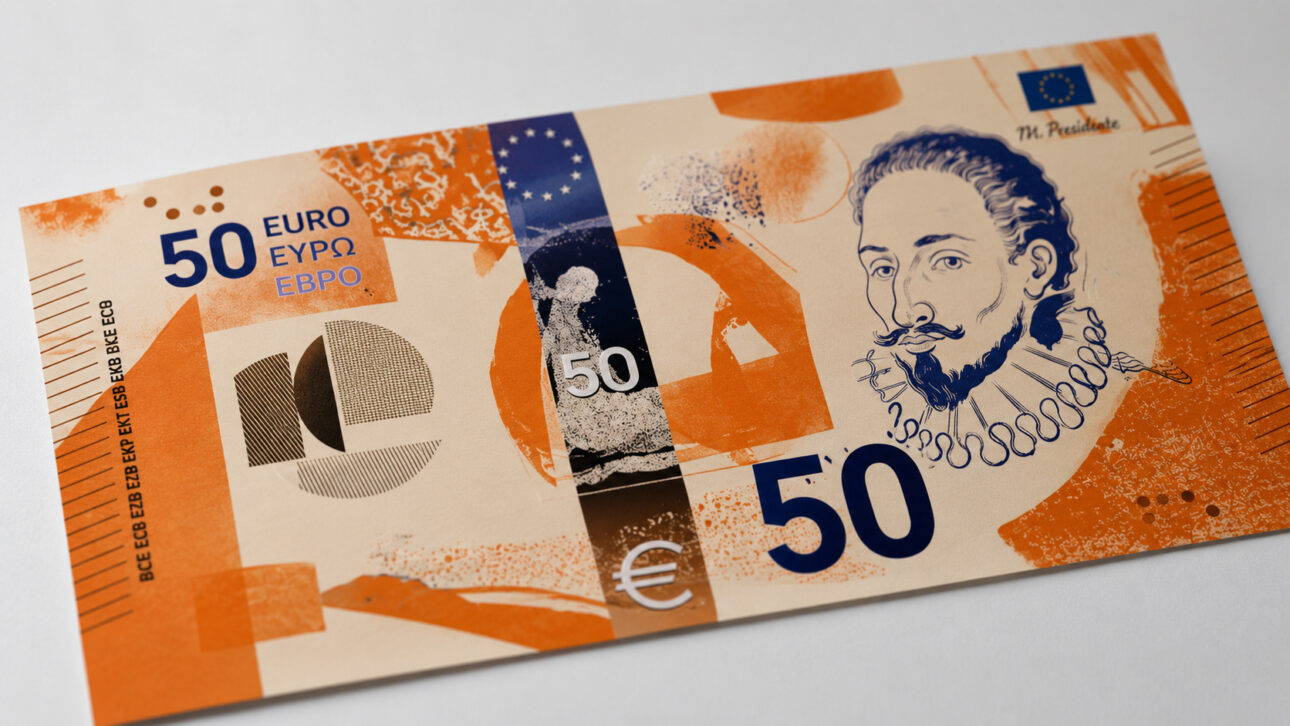
The theme “European Culture” features six historical personalities linked to music, science, literature, art, and peace advocacy.
The €5 note honors Maria Callas, while the €10 bill features Ludwig van Beethoven.
Marie Curie appears on the €20 note, while Miguel de Cervantes occupies the €50 bill.
Leonardo da Vinci was chosen for the €100 note.
Bertha von Suttner, Austrian writer and Nobel Peace Prize winner, appears on the €200 bill.
The reverse sides of the notes show contemporary cultural spaces frequented by people of different ages and backgrounds.
The ECB states that the portraits represent the collective ability to produce, share, and preserve European culture.
Birds and rivers highlight Europe’s biodiversity
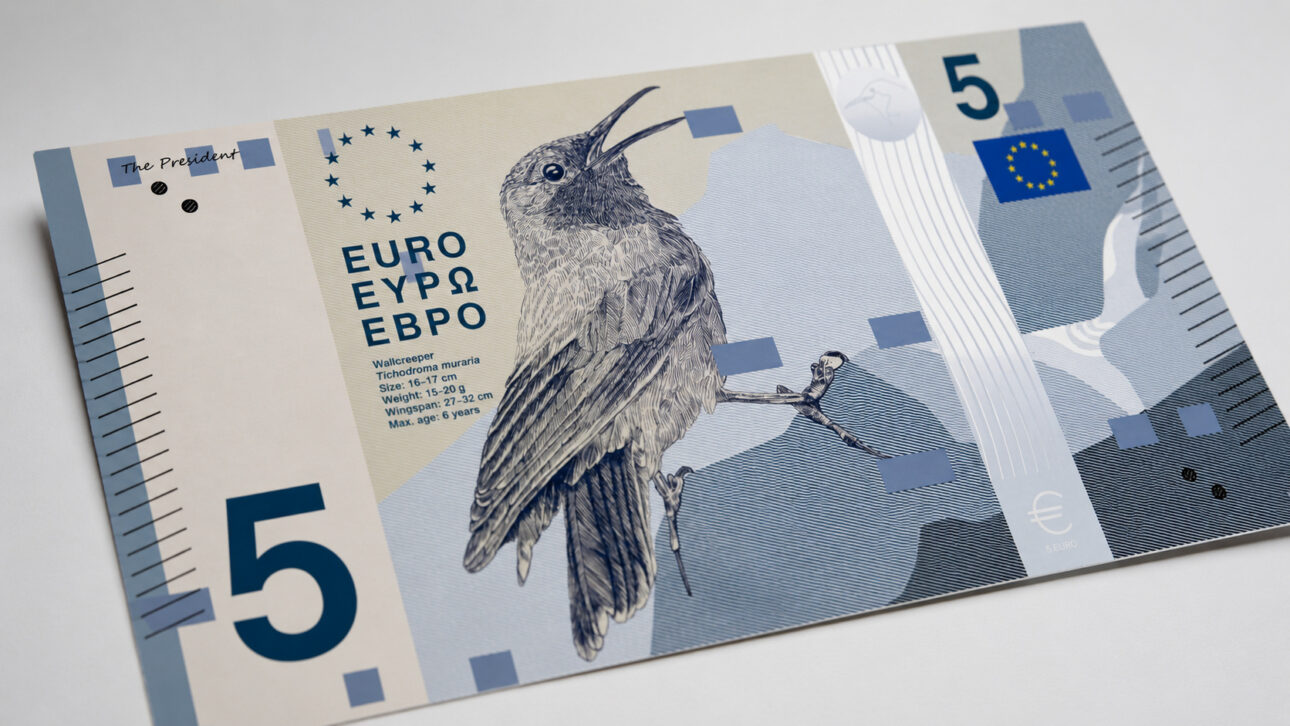
The theme “Rivers and Birds” follows the path of European waters, from mountainous regions to the ocean.
The €5 note features a wallcreeper at a mountain spring.
The €10 bill shows a kingfisher near a waterfall.
The €20 note displays bee-eaters in a river valley.
The €50 bill features a white stork over a winding river.
The €100 note shows an avocet in an estuary region.
The €200 value features a gannet flying over large ocean waves.
The birds appear alone on the front and gathered on the reverse of the notes.
The concept symbolizes the dialogue and interdependence between European societies and nature.
New notes will still take years to circulate
The European Central Bank Council will review the consultation results before choosing the final designs.
The final selection will not cause an immediate replacement of the current banknotes.
The processes of production, security testing, and issuance may take several years.
The notes currently in use will remain valid during the gradual introduction of the new models.
The renewal aims to keep physical money safe, recognizable, and relevant for future generations.
Which theme should win the vote?
The choice could determine whether future euro notes will highlight great cultural figures or the continent’s biodiversity.
The projects also show how the European Central Bank intends to modernize the banknotes without abandoning historical and natural symbols.
Which option would you choose for the new euro notes: Beethoven, Marie Curie, and Leonardo da Vinci or colorful birds and European rivers? Share your opinion!


