





 Portuguese
  English
  Spanish
  4 min of reading
  0 comments


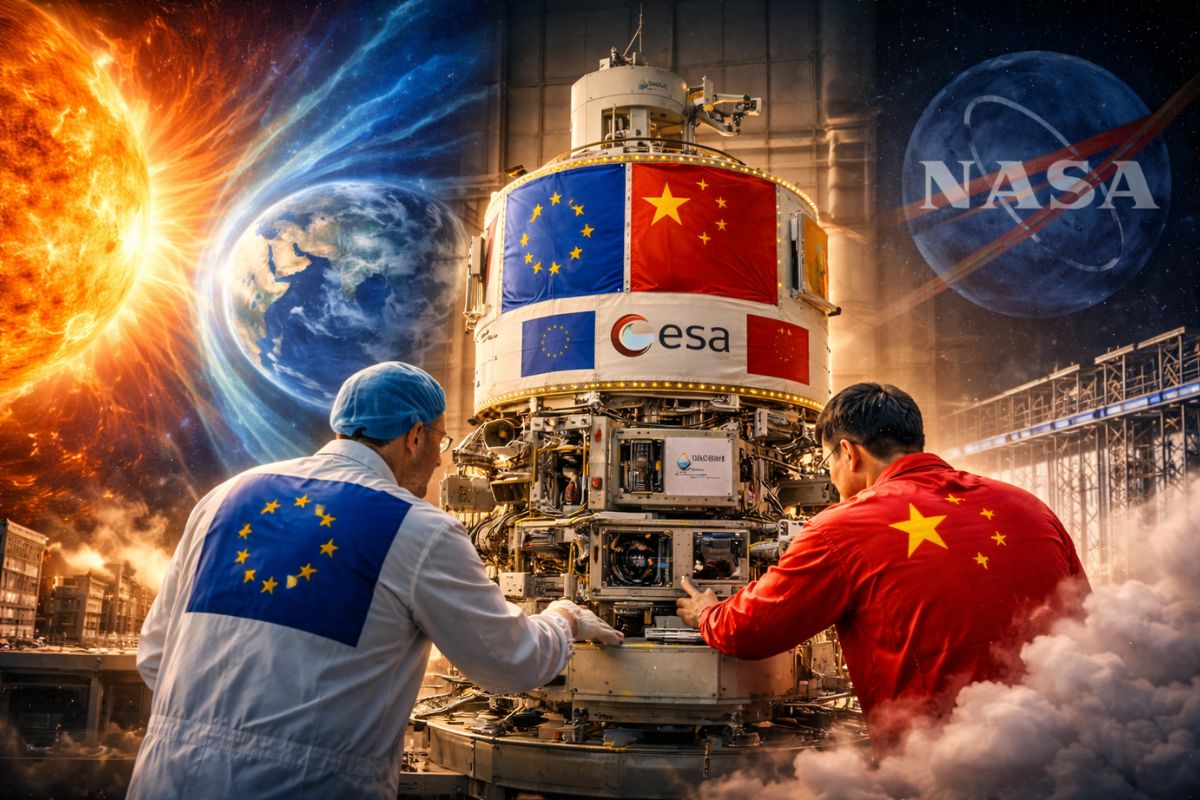
Europe and China join forces to study the Earth’s “shield” against the Sun and improve solar storm forecasting, while the European contribution to Artemis II remains little remembered
Europe has decided to take bolder steps in its space strategy by strengthening partnerships outside the traditional axis with the United States. Together with China, Europe has joined the SMILE mission to investigate how the Earth protects itself from the Sun, in a project that also aims to improve the ability to predict solar storms.
At the same time, discomfort grows over the unequal recognition in crewed missions. Even having delivered crucial technology for Artemis II, Europe has seen public attention focus on other partners, reigniting the discussion about what it means to be a “partner” in the era of modern space exploration.
What is the SMILE mission and why does it matter
The SMILE mission, a result of cooperation between the European Space Agency (ESA) and the Chinese Academy of Sciences (CAS), was designed to study the interaction between solar winds and the magnetosphere, the system that acts as a natural shield for the Earth against particles and radiation from the Sun.
-
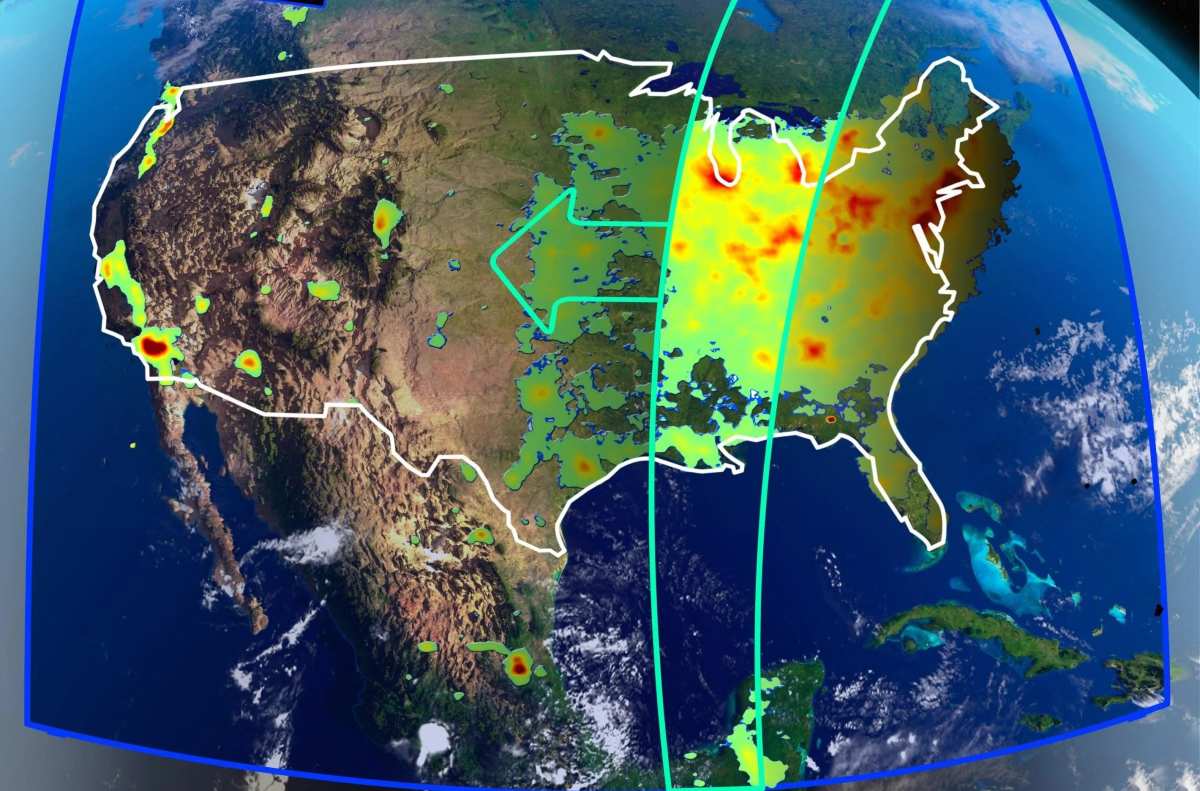
NASA’s satellite now shows where air pollution truly begins, locating roads, factories, and ports in almost real-time, and also adjusts NO₂ measurements with a margin of error between 10% and 20%.
-
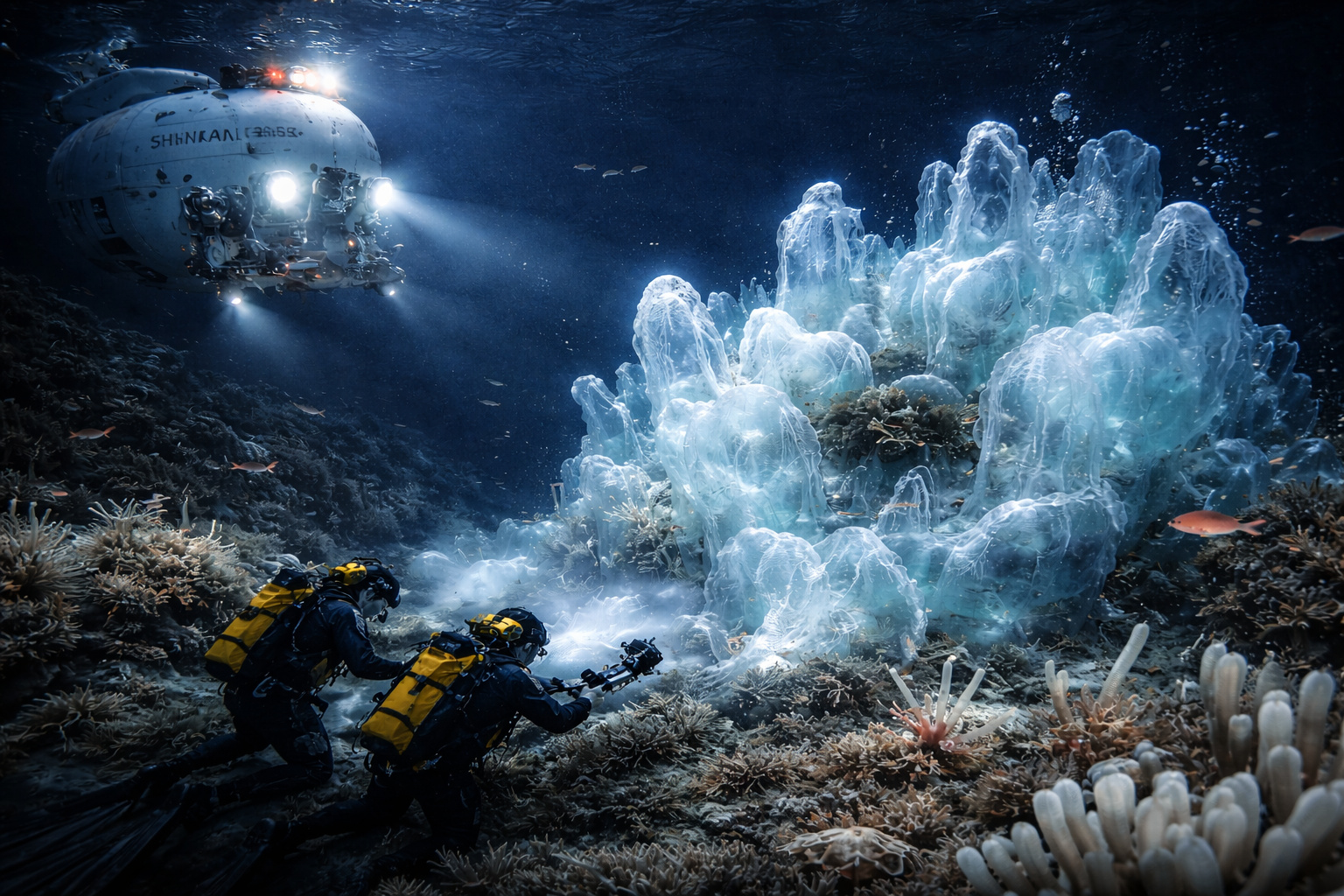
Explorers found a colossal underwater mountain hidden in the Pacific, taller than Mount Olympus and nearly four times the Burj Khalifa, and what emerged around it seemed straight out of science fiction, with rare squids, ghost octopuses, and the so-called “flying spaghetti monsters.”

-
The total solar eclipse in August 2026 will transform the day into “night” for 1 to 2 minutes in the path of totality, when the Moon completely covers the Sun and the perfect alignment creates a rare and highly anticipated spectacle for observers around the world.

-
Scientists want to sink giant concrete balls in the sea to transform the ocean floor into a renewable energy storage system that looks like science fiction, using the pressure of the depths as a battery in a kind of invisible power plant underwater.

The launch was scheduled for April 9 but was postponed due to a minor technical issue, with no new date set. The delay is a temporary setback, but it does not change the strategic weight of the mission, which reinforces Europe’s willingness to diversify alliances in an increasingly competitive space scenario.
The “solar shield” of the Earth and the promise of predicting solar storms
The magnetosphere protects the planet, but many of the mechanisms behind this defense are still not fully understood. The goal of SMILE is to observe more clearly where and how the solar wind presses against this shield, mapping boundaries and responses of the system.
In addition to the scientific gain, there is a practical objective. Improving data analysis can enhance the accuracy of solar storm predictions, which is crucial because these events affect communications, navigation, power grids, and sensitive systems on Earth and in orbit.
Four instruments to observe a complex phenomenon
SMILE carries four instruments, each with a specific function:
- SXI, a soft X-ray imager to capture images of the magnetosphere’s boundaries
- LIA, a light ion analyzer to measure ionized particles related to the effects of solar storms
- DPA, a detector plane set with mechanical and thermal support to maintain temperature stability
- UVI, an ultraviolet imager to record auroras associated with peaks of solar activity
The combination of images and particle measurements helps link cause and effect between solar wind, magnetosphere, and ionosphere, creating a more complete picture of the planet’s protection system.
Division Europe China and participation of Spain
The mission was built with a complementary division. Europe contributed the SXI and DPA instruments and also the Vega rocket, responsible for launching the satellite and its systems. China developed the UVI and LIA instruments and the satellite platform that integrates the entire set.
An important detail is that Spain participates directly through INTA, which developed the DPA, reinforcing the weight of European institutions within the SMILE architecture.
The European discomfort with Artemis II
Tension rises when the comparison reaches the Artemis program. Canada received a seat in the Orion capsule for the Artemis II mission. Europe, on the other hand, provided the propulsion system that propelled the four astronauts toward the Moon, but saw this contribution receive little visibility.
The criticism is not about excluding partners, but about the imbalance of recognition, especially when the European technical delivery is pointed out as decisive for the mission.
Why China has become a strategic bet

China has ceased to be an “emerging” space power and has consolidated its presence in the sector. The country operates the Tiangong station in low orbit, has advanced with uncrewed lunar missions from the Chang’e program, and has conducted exploration on Mars with the Zhurong rover. It also maintains the goal of sending taikonauts to the Moon by 2030.
In this context, Europe is approaching an actor capable of delivering scale, continuity, and ambition, making SMILE not just a scientific project but also a strategic movement in the space race.
Why diversifying partners may become a necessity
There is also a political backdrop: the possibility of drastic cuts in science funding in the United States, with the risk of impacting agencies and programs. For Europe, relying on a single partner becomes a vulnerability, and opening new fronts can protect long-term projects.
This does not mean breaking with NASA. The message is pragmatic: cooperating with more than one pole can accelerate results and reduce risks in a sector that requires consistency for decades.
And you: is Europe right to seek China to gain autonomy in space, or does this create unnecessary risk for future partnerships with the US?








Seja o primeiro a reagir!