





 Portuguese
  English
  Spanish
  3 min of reading
  95 comments


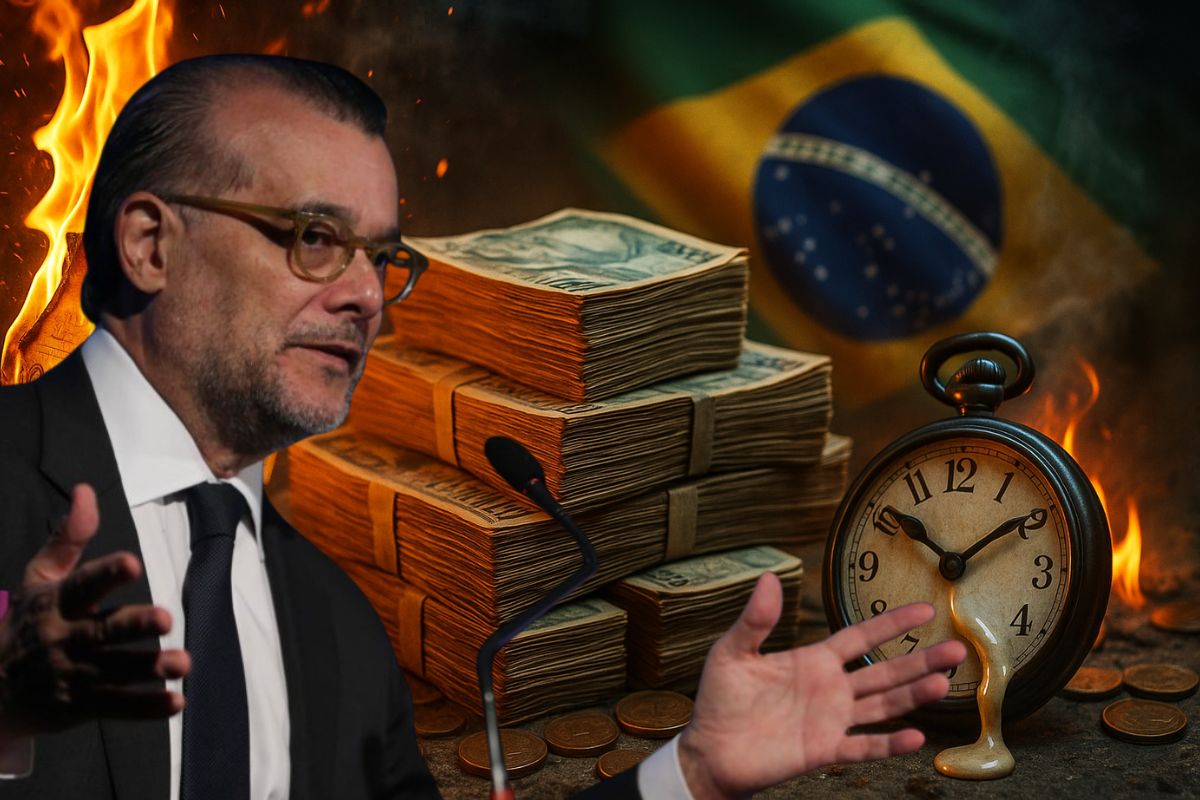


Between 1980 and 1994, Brazil lived through the longest hyperinflation ever recorded on the planet: there were 15 consecutive years with rates above 100% per year, something that neither Germany nor Hungary — classic symbols of the theme — experienced.
Brazil experienced the longest episode of hyperinflation ever recorded in contemporary history. Between 1980 and 1994, there were 15 consecutive years with annual rates exceeding 100%, even surpassing 1,000% in some periods, according to studies cited by Gustavo Franco, former president of the Central Bank. This scenario put the country ahead of even classic episodes like Germany in 1923 and Hungary in 1946, which, despite their intensity, lasted just over a year.
Hyperinflation eroded salaries, destroyed purchasing power, and disrupted the national economy. While countries facing similar crises were able to stabilize their currencies quickly, Brazil went over a decade without control, making the case a global landmark of prolonged economic instability.
Why Inflation Got Out of Control
Brazilian hyperinflation was the result of a set of fiscal and monetary imbalances. Successive governments resorted to money printing to cover budget deficits, without backing from fiscal adjustment policies. Additionally, measures like price freezes and controls provided immediate relief but soon led to shortages and crises of confidence.
-
A new Brazilian shopping center worth R$ 400 million will be built in an area equivalent to more than 4 football fields, featuring 90 stores, 5 cinemas, a supermarket, a college, and parking for 1,700 cars, potentially generating 3,000 jobs.

-
Larger than entire cities in Brazil: BYD is building a 4.6 km² complex in Bahia with a capacity for 600,000 vehicles per year, but the discovery of 163 workers in conditions analogous to slavery has shaken the entire project.

-
With an investment of R$ 612 million, a capacity to process 1.2 million liters of milk per day, Piracanjuba inaugurates a mega cheese factory that increases national production, reduces dependence on imports, and repositions Brazil on the global dairy map.

-
Brazilian city gains industrial hub for 85 companies that is equivalent to 55 football fields.

Between 1986 and 1994, there were eight failed stabilization plans, including the Cruzado Plan, the Bresser Plan, and the Collor Plan. The latter, in 1990, was marked by the confiscation of savings, a measure that generated social unrest and political instability without curbing inflation. In March of that year, the monthly rate reached 82%, one of the highest figures ever recorded.
The Impact on the Daily Lives of the Population
Hyperinflation directly affected the lives of Brazilian families. Salaries lost value the same day they were received, forcing workers and housewives to rush to the supermarket as soon as the money hit their accounts. Small merchants struggled to adjust prices, while larger companies tried to protect themselves with automatic increases.
This environment led to the collapse of numerous businesses and the formation of a collective trauma. The culture of “race against time” to preserve purchasing power shaped the financial behavior of an entire generation, consolidating immediate consumption habits and distrust towards the national currency.
The Turnaround with the Real Plan
The end of hyperinflation only occurred in 1994, with the implementation of the Real Plan, which reconstructed the country’s monetary foundations. The plan created the Real Value Unit (URV), a mechanism that prepared the transition to the new currency, the real. Additionally, it strengthened institutional defenses, such as the operational independence of the Central Bank and the separation between fiscal and monetary policy.
These changes, according to Gustavo Franco and other economists, were essential to break the inflationary spiral and restore confidence in the currency. From then on, Brazil entered a cycle of greater stability, although inflation remains a structural risk and a constant challenge for economic policy.
Lessons from an Economic Trauma
The experience of Brazilian hyperinflation is considered one of the greatest economic disasters in the modern world, not only because of the numbers but also due to its unusual duration. Experts say that the episode left a legacy: the awareness that fiscal and monetary policies must go hand in hand to preserve stability.
Today, although the country is more protected against similar crises, the inflationary risk remains latent. External shocks, fiscal mismanagement, or errors in economic policy can reignite price pressures, reminding us that the past still serves as a warning for the present and future.
Did you live through the years of hyperinflation in Brazil? How did that experience mark your daily life and the way you deal with money even today? Share in the comments — we want to hear from those who felt it firsthand.









Lula giverna a 20 anos e até hoje não acerto esse país.E um incompetente mesmo pior é quem vota,os cara não tem plano de governo aqui nos Estados Unidos a chapa quê ganha ja vêm com o plano de governo tudo arrumado,ja no Brasil os cara vai na fé e seja o quê o Cão quiser kkkkk.
Vivemos momentos de muita incerteza. Recebíamos muito dinheiro que pouco valia. Inflação galopante. Qdo olho minha carteira de trabalho não consigo calcular (trazendo para os valores de hj) qto eu ganhava na época. Eram tantos dígitos! E as mudanças de planos dos governos! Não conseguíamos acompanhar a Eu trabalhava como operadora de caixa e tinha que fazer os cálculos de conversão da moeda. Confundíamos os nomes das moedas. Ora era cruzeiro, ora era cruzado, cruzado real…URV…uma loucura!
EDUCAÇÃO Monetária, seria ótimo termos nas Escolas Públicas do PAÍS.