





 Portuguese
  English
  Spanish
  3 min of reading
  0 comments


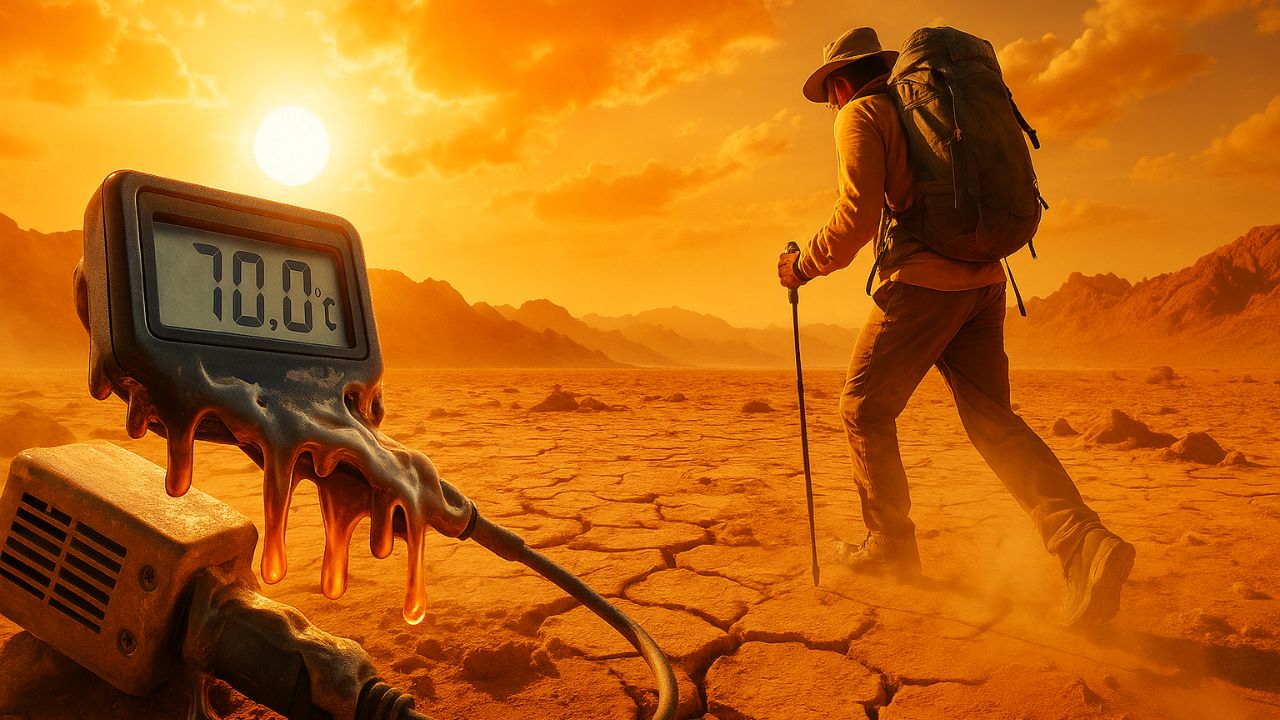
An Unprecedented Expedition Confirmed Extreme Temperatures and Unbearable Heat in the Lut Desert, Recognized as the Hottest Desert on the Planet.
We headed towards a location that is practically inaccessible and prohibitive for most living beings due to the scorching temperatures. The Lut Desert in Iran holds the title of hottest desert on the planet, and a recent expedition showed that the reality on the ground is even more terrifying than satellite data suggests. The area known as Gandom Beryan is a vast plateau of dark volcanic rocks that absorb solar radiation and function like a pot on the stove.
NASA had already recorded through the Aqua satellite that the ground surface in this region reached an incredible 70.7°C in 2005. However, experiencing this in person revealed extreme physical challenges. The lack of water and exposure to the sun turns the journey into a struggle for survival where the air burns the throats and the ground destroys the shoes of the explorers who dare to challenge this geological hell.
A Journey to the Center of the Furnace
The trip begins in Shudad, the last oasis city before the arid expanse. As you move towards the heart of the hottest desert on the planet, the landscape changes drastically. The terrain features the Kaluts, which are natural sand castles shaped by wind erosion and can reach heights of 150 meters. The wind that should bring relief works against you. Opening the vehicle window, the air that enters hits your face with the sensation of a hairdryer on full blast, making it hard to breathe and instantly drying your mouth.
-
He started running at 66 years old, broke records at 82, and is now a subject of study for having a metabolic age comparable to that of a 20-year-old, in a case that is intriguing scientists and inspiring the world.

-
Oldest tree on the planet reappears after 130 years of searches: Wattieza, 385 million years old, was 10 meters tall and had no leaves or seeds; Gilboa fossils in New York solved the mystery in 2007.

-
A 48-square-meter house assembled in hours with 4,000 bricks made of recycled plastic that does not absorb moisture, has natural thermal insulation, and costs less than 90,000 reais in a complete kit.

-
Luciano Hang revealed that Havan’s air fleet has already accumulated more than 20,000 landings, 10,000 flight hours, and 6 million kilometers traveled, and he says that without the planes, the company would never have grown so quickly.


The extreme weather conditions deceive the senses and human physiology. The air temperature in the shade hovers around 48.5°C, but under direct sunlight, it jumps to over 54°C. The thermal sensation is oppressive and causes intense headaches, body tremors, and an increased heart rate. Dehydration is a constant threat, even when drinking water all the time, as the heat drains vital energy and thirst is never fully quenched.
The Collapse of Technology and Equipment
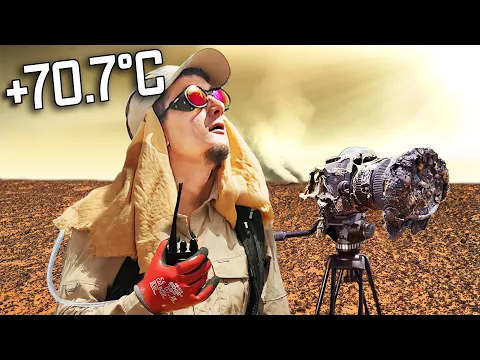

Trying to collect data in the hottest desert on the planet proved to be an almost impossible task for modern technology. During the expedition, various equipment failed under the brutal heat. Laser thermometers displayed error messages after just a few minutes of exposure. Immersion thermometers broke, and even the glue that holds together smartphone parts melted, temporarily disabling the devices.
The ground covered in black basalt rocks retains so much heat that it is impossible to touch it for more than a few seconds. Manual measurements indicated ground temperatures ranging from 66°C to 69.2°C, values very close to NASA’s historical records. The heat is so intense that the soles of the team members’ shoes began to melt and detach, forcing them to walk cautiously over the scorching surface.
Legends, Life, and a Steak Cooked on the Stone
The region of Gandom Beryan carries a name that means roasted wheat. The local legend tells that a caravan abandoned its load of wheat there, and when returning days later, found the grains roasted by the sun. To test this legend in practice, the team placed a piece of meat directly on a rock. In about two hours, the meat was cooked with the smell of barbecue, proving that the ground acts as a natural griddle.
Despite many believing that no creature lives in Gandom Beryan, the expedition made surprising discoveries in the hottest desert on the planet. Although they found dead migratory birds that made the mistake of landing there in search of water, they also spotted resilient life. A subspecies of praying mantis and remains of grasshoppers showed that nature finds ways even in the most lethal environments on Earth, challenging the notion that the place is completely sterile.
Would you have the courage to stay 10 minutes exposed to the sun in this place knowing that your shoes could melt?







Seja o primeiro a reagir!