





 Portuguese
  English
  Spanish
  4 min of reading
  0 comments


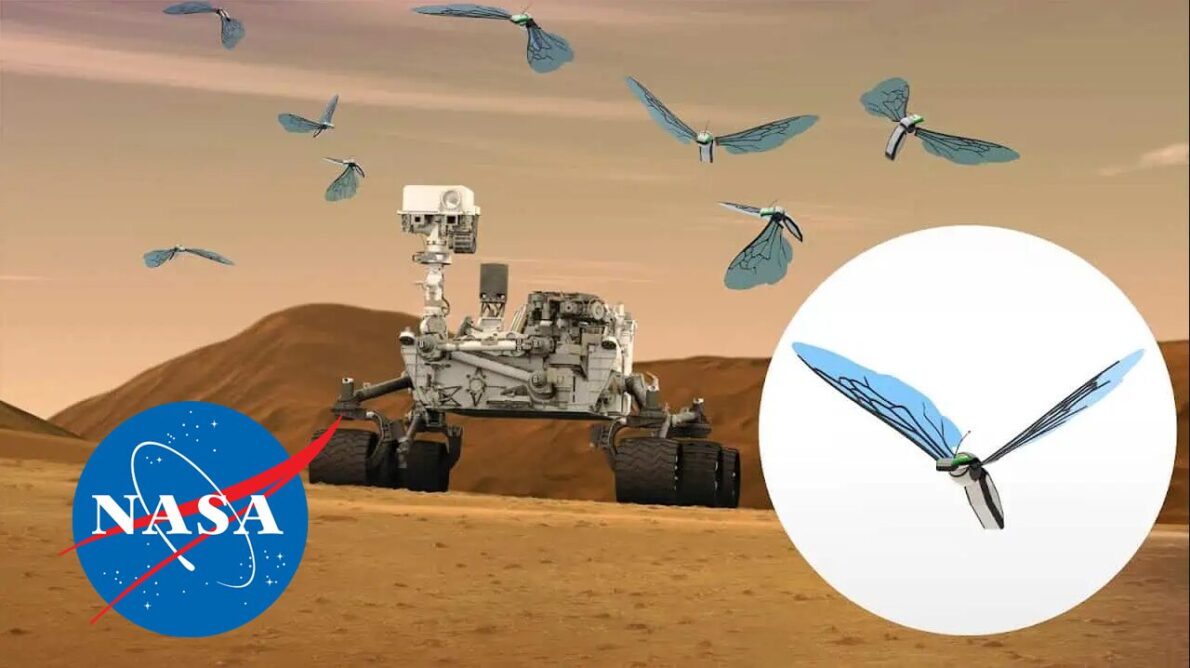
The Future of Space Exploration: NASA Reveals Bold Plan to Send Swarm of Flying Robots, Inspired by Bees, to Unearth and Reveal the Hidden Secrets of Mars
The exploration of Mars by NASA is about to gain a new and innovative tool: flying robots inspired by bees, which will be able to buzz across the surface of the red planet, collecting crucial data for science.
This concept, dubbed “Marsbees,” is being developed by the Institute for Advanced Concepts (NIAC) of NASA and represents a promising solution to the challenges posed by Mars’ inhospitable environment.
The Concept of the Marsbees
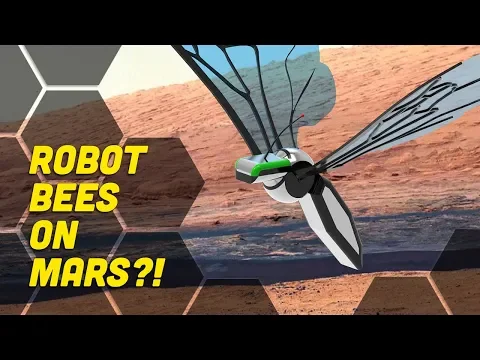
The Marsbees are bio-inspired aerial robots with flexible wings that beat efficiently, resembling the flight of insects and migratory birds, such as monarch butterflies and wandering albatrosses. These animals are known for their long migration journeys despite their relatively small size.
-
Remains with battle wounds of over 100 soldiers from the Roman Empire are found beneath a football field in Vienna, leaving everyone surprised.

-
Elon Musk notes Brazil and lowers the price of his internet, Starlink, promising to connect all corners of the country with affordable plans, 10,000 satellites, and 1 million active users in the national territory!

-
Man creates an infinite source of FREE electricity at home with a PVC wind turbine using a repurposed motor.
-
An aquatic seed consumed for centuries in Asia is going viral in the West after studies highlighted its antioxidant compounds and potential anti-inflammatory properties. It pops like popcorn, has low fat content, and is already being called the new functional snack.


Monarch butterflies, for example, can fly up to 4,000 kilometers, while wandering albatrosses can cover impressive distances of 12,000 kilometers in a single flight. The aerodynamic efficiency of these animals is being studied to enhance the design of the Marsbees, which will be able to fly long distances with minimal energy, even in Mars’ thin atmosphere.
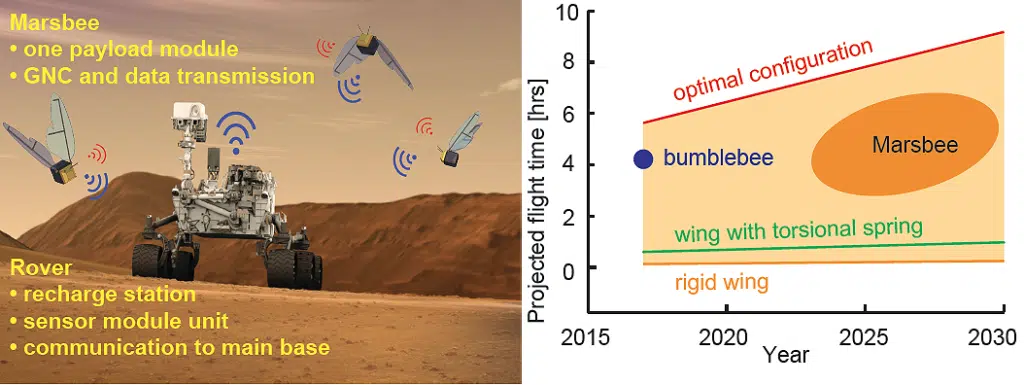
With lightweight and flexible wings, the Marsbees will be able to sustain their flight efficiently, adapting to the harsh atmospheric conditions of Mars. They will be equipped with stereo color cameras, navigation sensors, inclinometers, and other high-precision instruments, along with communication systems that will allow data exchange between the robots and the operating bases.
Mission and Capabilities of the Marsbees
The mission of the Marsbees is to complement and expand the capabilities of the rovers already participating in the exploration of Mars. Currently, ground vehicles like Perseverance and Curiosity move slowly across the planet’s surface, facing limitations in terms of range and mobility.
With the addition of the Marsbees, NASA hopes to add a “third dimension” to exploration capabilities, allowing the flying robots to construct detailed three-dimensional topographic maps of the Martian surface.
These small robots can also be used for specific tasks, such as atmospheric sampling, carrying pressure and temperature sensors, or spectral analyzers, which will be able to identify minerals on the surface of Mars.
In this context, the rover would act as a recharging station and a data collection point, allowing the Marsbees to return after completing their missions and prepare for new explorations.

Challenges and Aerodynamic Solutions
Flying on Mars is not a simple task. Although the planet’s gravity is about 38% of Earth’s, Mars’ atmosphere has only 1.3% of the density of air on Earth, making it extremely difficult to generate enough lift to keep an object in the air.
The Ingenuity helicopter, which is part of the Mars 2020 mission, has demonstrated that flying on Mars is possible by spinning its blades at a speed of 2,700 revolutions per minute – five times faster than Earth’s helicopters. However, this type of flight consumes a lot of energy, resulting in short flight times, such as the three minutes that Ingenuity can fly on a single mission.
The Marsbees, on the other hand, will be designed for longer and more efficient flights. With a flight autonomy of 80 minutes and a range of 2.5 kilometers, they will be able to cover much larger areas than Ingenuity, using less energy and providing greater flexibility to NASA’s missions.
This will be essential for future human exploration missions, which are in the plans of both the agency and private companies like SpaceX and Boeing.
The Future of Martian Exploration
The use of a swarm of flying robots could transform how we explore Mars. In addition to increasing exploration capability, the presence of multiple Marsbees flying in formation will allow missions to be resilient to failures of individual components. If one robot encounters problems, others can continue the mission, ensuring ongoing data collection.
One of NASA’s main objectives is to determine the habitability of Mars, perform detailed weather measurements, and prepare the ground for future crewed missions.
The development of the Marsbees could be a crucial piece in this puzzle, providing a robust, efficient exploration system that adapts to the extreme conditions of the planet.
Since the first Mars missions in the 1960s, humanity has made significant strides in exploring the red planet. With the Marsbees, NASA hopes to continue this trajectory, opening new possibilities for science and, eventually, for human presence on Mars.





Seja o primeiro a reagir!