





 Portuguese
  English
  Spanish
  5 min of reading
  0 comments


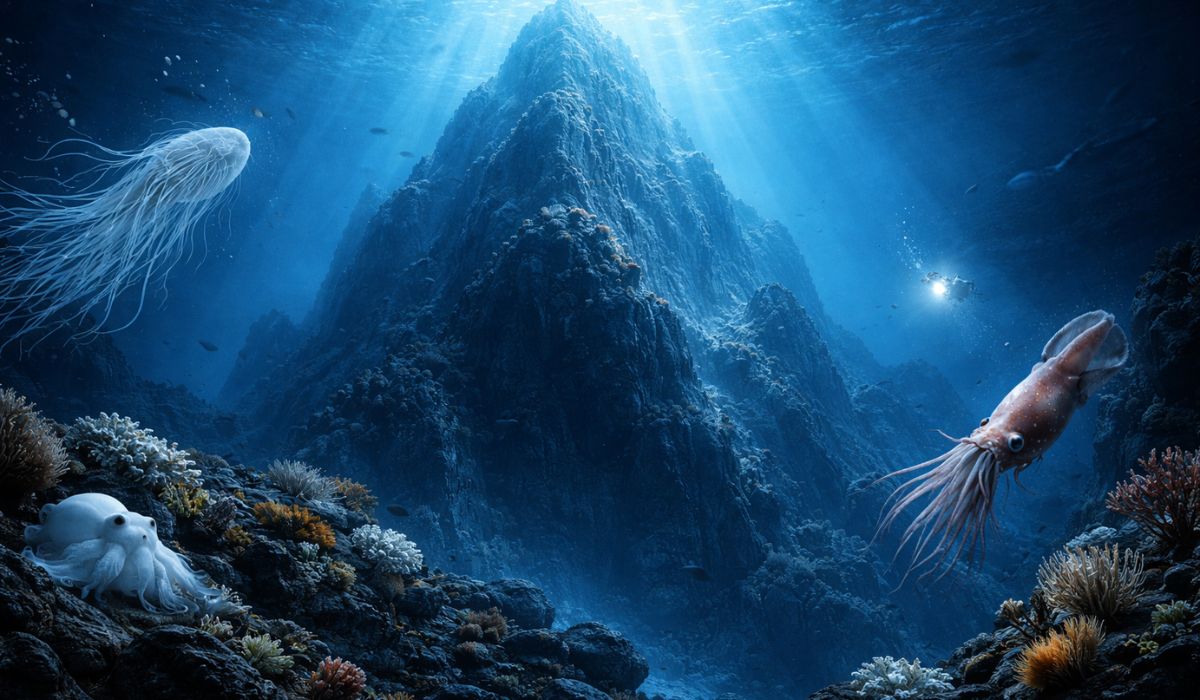
An expedition in the South Pacific crossed extreme relief, rare fauna, and areas still little known of the seabed, in a sequence of records that increases scientific interest in one of the most isolated regions of the ocean.
A scientific expedition in the South Pacific identified a seamount 3,109 meters high on the Nazca Ridge, in international waters west of Chile, and recorded in the same region some of the rarest creatures ever observed in that stretch of the deep ocean.
The mission, led by the Schmidt Ocean Institute aboard the vessel Falkor (too), also documented coral and sponge gardens, located about 20 species suspected to be new to science, and reinforced a recurring fact in oceanography: only a fraction of the seabed has been mapped with the level of detail employed in this type of survey.
Seamount on the Nazca Ridge
The formation was located during a 28-day campaign dedicated to exploring the Nazca Ridge, a chain of submerged mountains known for harboring deep-sea habitats.
-
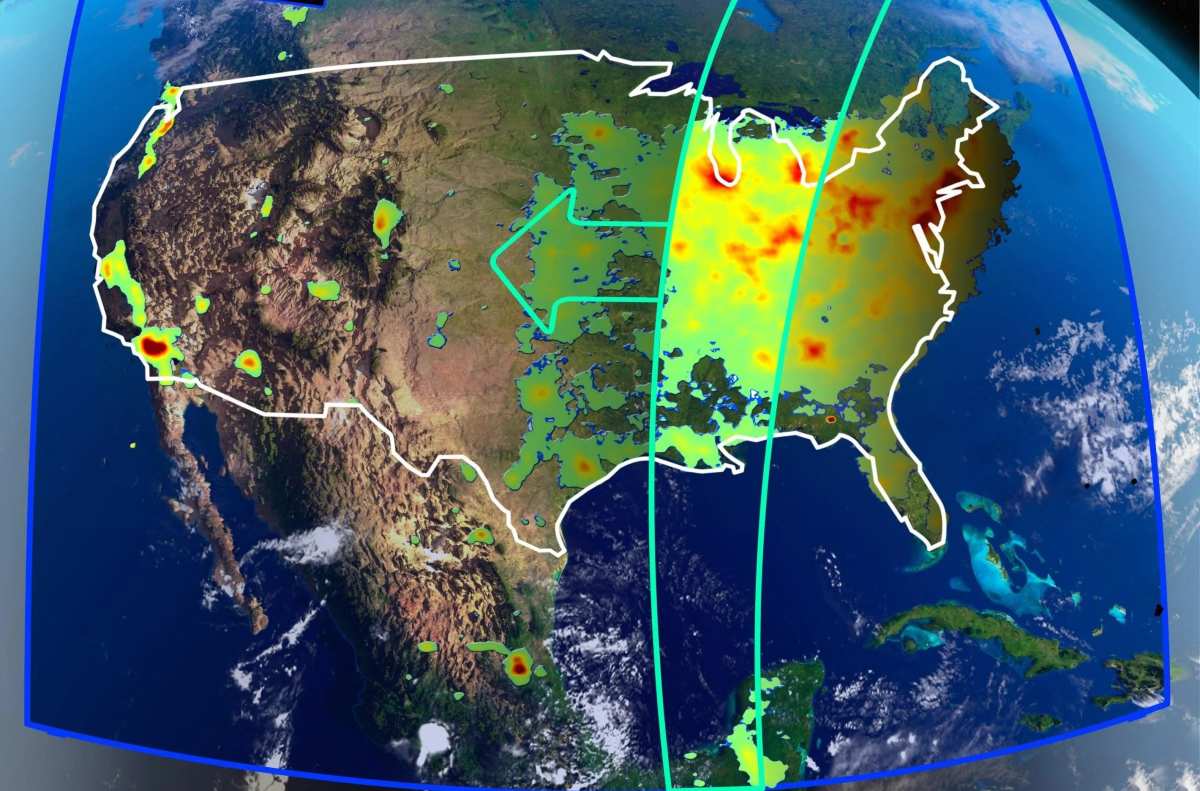
NASA’s satellite now shows where air pollution truly begins, locating roads, factories, and ports in almost real-time, and also adjusts NO₂ measurements with a margin of error between 10% and 20%.
-
The total solar eclipse in August 2026 will transform the day into “night” for 1 to 2 minutes in the path of totality, when the Moon completely covers the Sun and the perfect alignment creates a rare and highly anticipated spectacle for observers around the world.

-
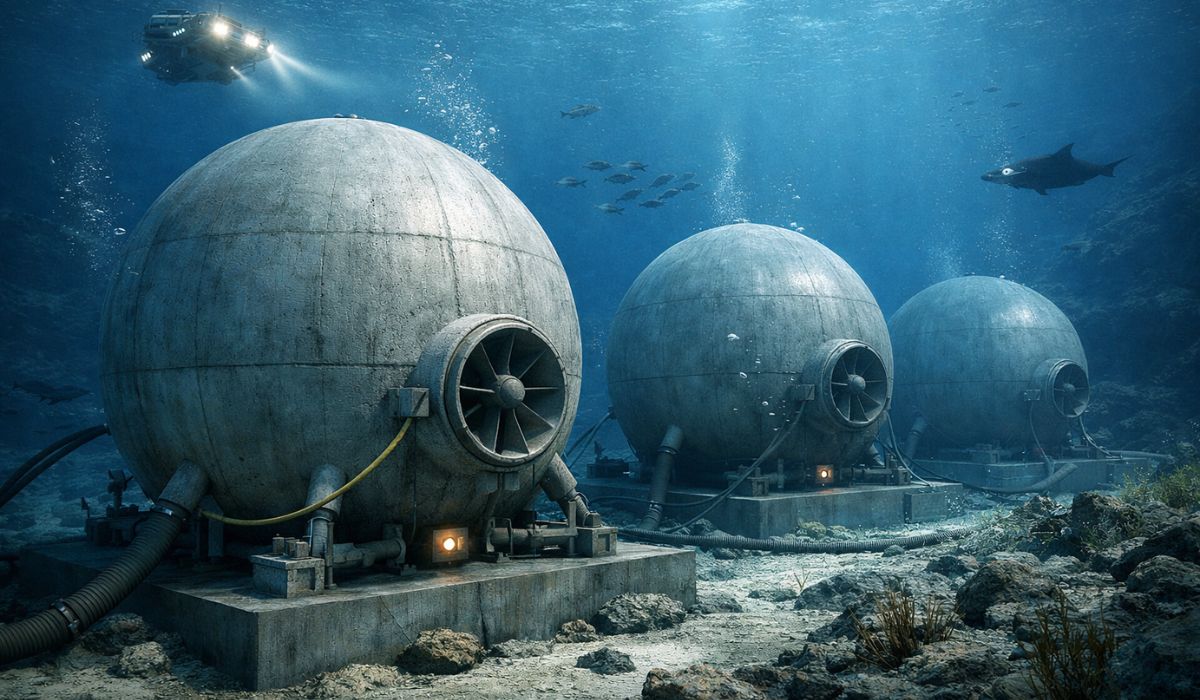
Scientists want to sink giant concrete balls in the sea to transform the ocean floor into a renewable energy storage system that looks like science fiction, using the pressure of the depths as a battery in a kind of invisible power plant underwater.
-
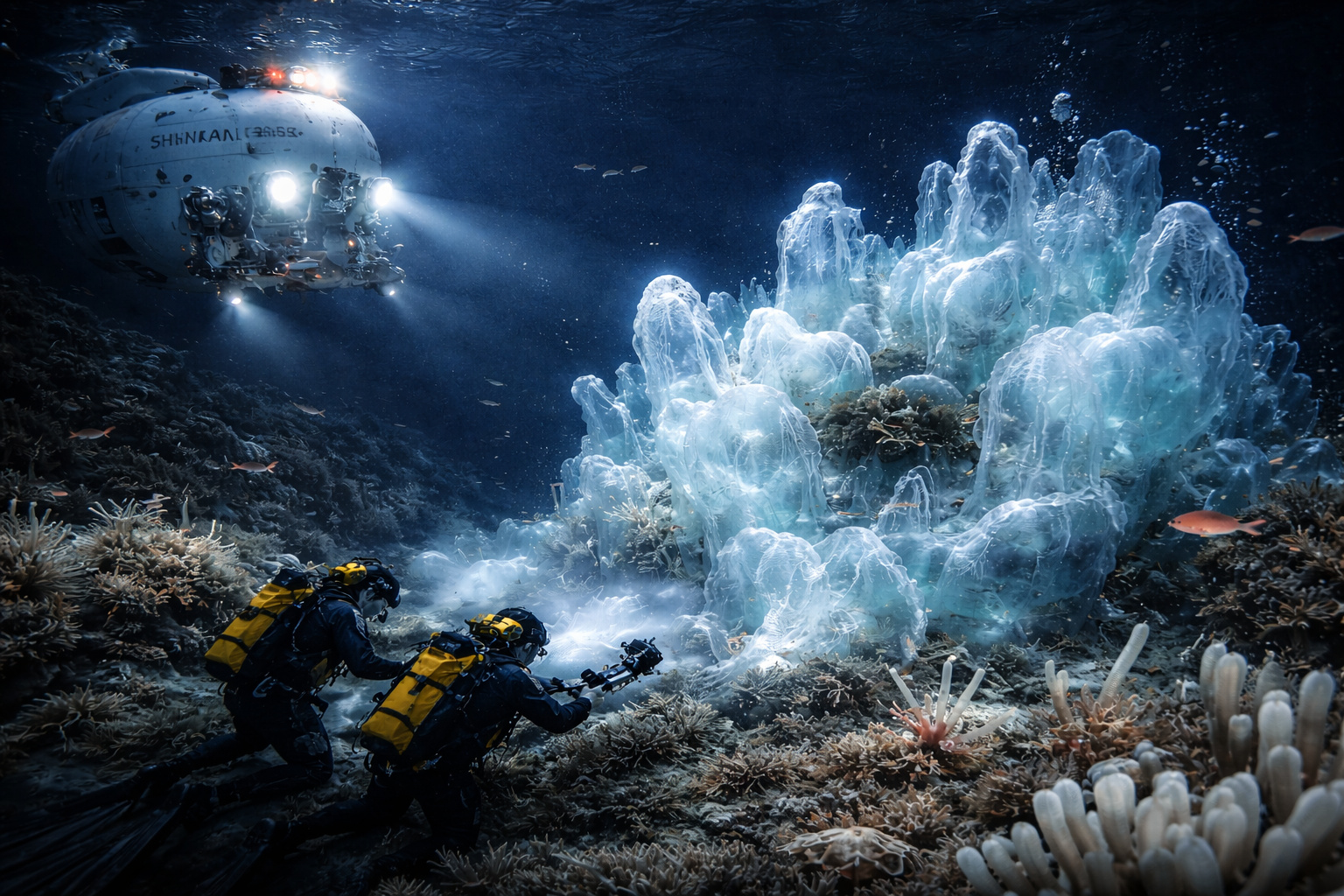
Researchers dive nearly 5,000 meters deep in Japan, discovering a rare “glass castle” inhabited by unknown species and demonstrating that the oceans remain one of the greatest mysteries of the planet.
According to the Schmidt Ocean Institute, the newly mapped seamount occupies about 70 square kilometers.
The top is 994 meters from the surface, while the base is at 4,103 meters, which illustrates the scale of the structure in relation to the surrounding relief.
According to researchers, the seamount exceeds 200 meters higher than Olympus Mons in Greece when considering the prominence criterion adopted in the expedition.

The team located the formation with a multibeam echosounder installed on the hull of the ship, equipment that uses sound pulses to measure depth and digitally reconstruct the topography of the seabed.
From this system, scientists transformed a still poorly detailed area into a map with slopes, ridges, and unevenness that served as a basis for the subsequent stages of the investigation.
The mapping was the first step of a work aimed not only at describing the relief but also at identifying the organisms associated with it.
Rare fauna in deep sea
After detecting the seamount, researchers sent the underwater robot SuBastian to examine one of the ridges of the structure.
The images revealed gardens of ancient sponges and corals, formations that serve as shelter for different organisms of the seabed.
At another point in the same submarine chain, the mission recorded a depth coral garden of approximately 800 square meters, an area equivalent, according to the team, to three tennis courts.
It was in this environment that some of the most relevant records of the trip emerged.
One of them was the first video ever obtained of a live squid of the genus Promachoteuthis.
Until then, this group was known from a few specimens collected dead in nets, some of them since the late 19th century.
The video record, according to researchers, increases the possibility of observing this animal in its natural habitat and provides new information about its appearance and occurrence at depth.
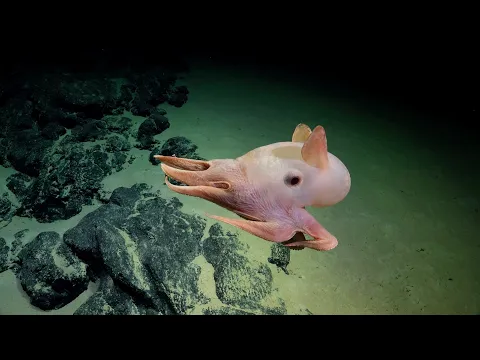
The expedition also found the so-called Casper octopus in the South Pacific, in a record noted by the institute as the first confirmed in this portion of the ocean.
Additionally, the team filmed two rare siphonophores of the genus Bathyphysa, informally known as “flying spaghetti monsters” due to their elongated appearance and thin tentacles.
The nickname had already circulated among observers and researchers, but the record gained prominence for occurring in a still little-studied area and for bringing together, in the same campaign, animals rarely documented.

Expeditions in the Nazca and Salas y Gómez ridges
The discovery of the seamount was part of the third expedition conducted by the institute in 2024, in the Nazca and Salas y Gómez ridges.
In the two previous campaigns, in January and February of that year, the surveys had already documented more than 150 species previously unknown to science, in addition to expansions of the occurrence area of animals that were not known in that portion of the Pacific.
Before this set of trips, just over a thousand species were recorded in the region.
After the three expeditions, the number exceeded 1,300, according to the Schmidt Ocean Institute.
The most recent stage added another relevant fact: 20 species suspected to be new were collected and sent for analysis as part of the Ocean Census, an international initiative aimed at identifying and cataloging marine life.
Scientists treat the collected material as part of a broader effort to understand the biodiversity of deep waters and the connectivity between seamounts.
In this type of environment, the distance between one formation and another can influence the dispersion of organisms, the composition of biological communities, and the dynamics of habitats.
Biodiversity and conservation in seamounts
Seamounts concentrate scientific interest because they can alter currents, provide hard substrate for the attachment of corals and sponges, and create shelter areas in depth.
In practice, these formations are treated by researchers as hotspots of biodiversity in remote regions of the ocean.
At the same time, marine conservation specialists point out that these environments can be vulnerable to human impacts, especially in areas still little studied.
The Nazca Ridge and the Salas y Gómez Ridge, for example, appear in international discussions about marine protection in the high seas, precisely because of the diversity recorded and the still limited volume of available information.
In this context, the scientific director of the Ocean Census, Alex David Rogers, stated that “the seamounts of the Southeast Pacific harbor remarkable biological diversity”.
Co-lead researcher Tomer Ketter declared that the results highlight both the richness of these ecosystems and the existing gaps regarding their connection.
The two statements help to situate the scope of the expedition.
For the researchers involved, the progress in mapping and documenting the fauna can support future studies and discussions on conservation measures in ocean areas outside national jurisdiction.

High-resolution seabed mapping
The discovery also draws attention due to the context in which it was made.
Although the seabed occupies most of the planet’s surface, only a fraction of it has been mapped with modern high-resolution standards.
In 2024, international bathymetry initiatives indicated coverage of around 26.1% of the global ocean floor at this level of quality.
This data helps explain why large structures can still remain off detailed maps for long periods.
It also shows why each newly mapped area has scientific weight: in addition to revealing the relief, it allows locating habitats, guiding dives with remote vehicles, and expanding the database used in studies on biodiversity and conservation.
In the case of the Nazca Ridge, the combination of mapping and direct observation allowed gathering, in the same mission, information about geology, distribution of organisms, and characteristics of the deep environment.
The result was the identification of a large underwater formation and the recording of rare species in a region that continues to be investigated by international scientific institutions.







Seja o primeiro a reagir!