





 Portuguese
  English
  Spanish
 6 min of reading
  3 comments


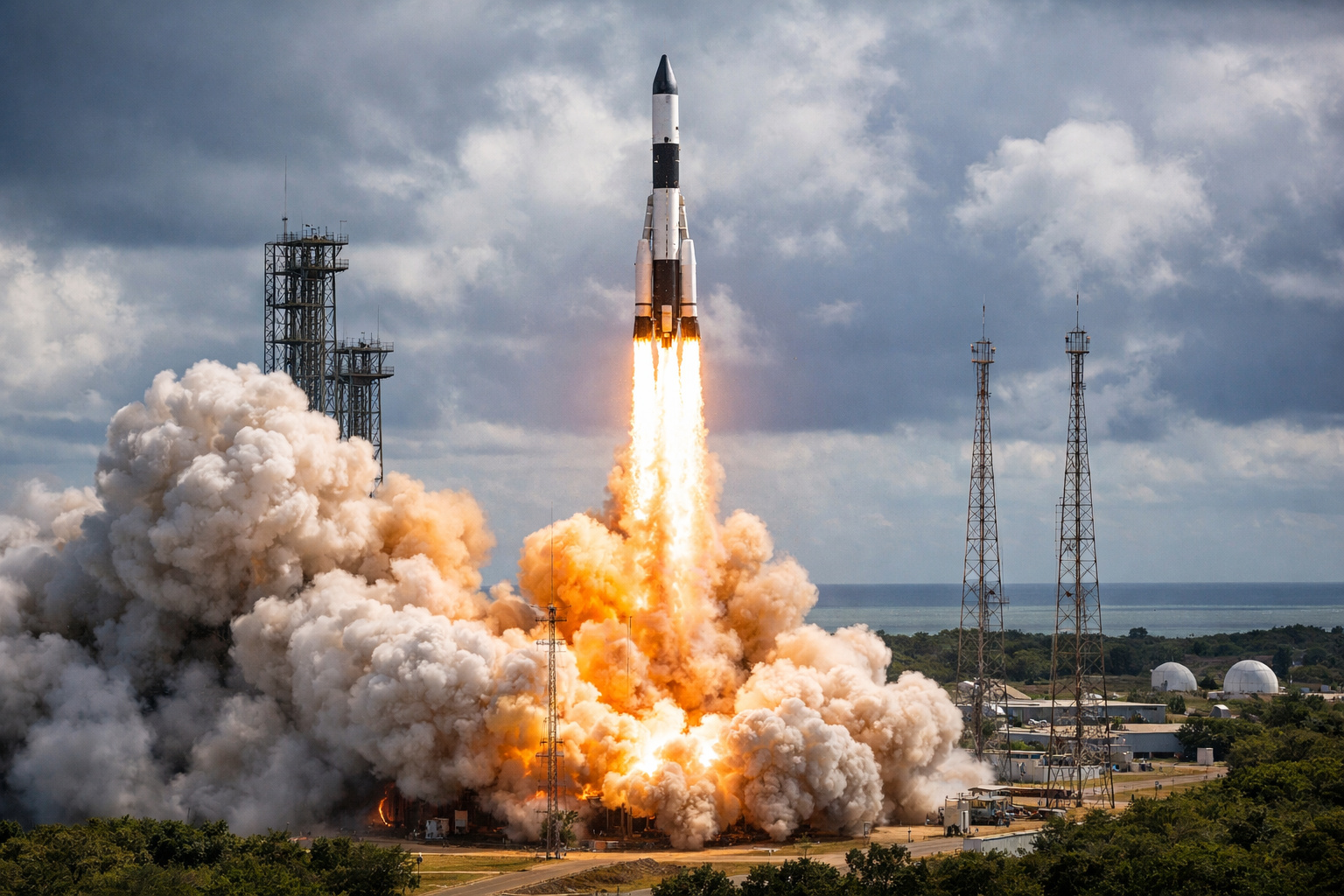


Technical Failures in Launches in Brazil and Abroad Generate Scientific Losses, Expose Dependence on International Partners, and Reignite the Debate on Sovereignty, Continuous Funding, and Coordination of the National Aerospace Sector
For the Brazilian Space Program, the year 2026 began similarly to the close of 2025: marked by technical failures, significant material losses, and scientific impacts that have yet to be fully measured. In a span of just over three weeks, two launches involving Brazilian equipment ended in failure, reigniting questions about the country’s ability to continuously sustain a robust and autonomous space strategy.
Twenty-two days after an anomaly caused the explosion of the HANBIT-Nano rocket at the Alcântara Launch Center in Maranhão, the Brazilian Space Agency (AEB) confirmed, on January 12, the loss of another launch vehicle, this time during a mission conducted at the Satish Dhawan Space Centre in India. Although, in both incidents, the failures were attributed to international partners, the losses primarily fell upon Brazil, with the destruction of satellites, scientific experiments, and years of academic work.
The information was reported by the magazine CartaCapital, according to a report published in edition nº 1396, on January 21, 2026, which detailed the technical, political, and strategic impacts of the recent accidents involving the Brazilian space program.
-
With a cost per shot close to zero, the DragonFire laser could change naval warfare in 2027 and provide British ships with nearly unlimited defense against drones.

-
A British startup creates tires that generate electricity in electric vehicles when passing over potholes, speed bumps, and cracks.

-
Scientists have created robots made with living cells that have their own nervous system, swim on their own, explore the environment, and self-organize without any genetic engineering, and now they want to do the same with human cells.

-
Students create a solar-powered ambulance that operates without a plug, without fuel, and still keeps medical equipment running in remote areas.

Loss of Brazilian Satellites in International Missions Increases Scientific Losses
In the most recent episode, the PSLV-C62 rocket, operated by the Indian state-owned company NewSpace India Limited (NSIL), failed to reach the intended orbit. In an official statement, the company reported that an anomaly in the third propulsion stage forced operators to abort the mission, resulting in the destruction of 16 satellites carried by the vehicle.
Among the lost equipment was the Brazilian nanosatellite Aldebaran-I, developed by the Federal University of Maranhão (UFMA), along with four other national devices onboard the mission. The loss extends beyond the financial value of the satellites; it also encompasses the interruption of scientific projects, loss of experimental data, and delays in strategic research for the country.
This type of dependence on foreign launchers, according to experts, exposes one of the main bottlenecks of the Brazilian space sector: the lack of full autonomy in orbital launches, which subjects the national program to technological and operational risks beyond the direct control of the Brazilian state.
Explosion at Alcântara Reignites Memories of Tragedies and Pressures the Base’s Image
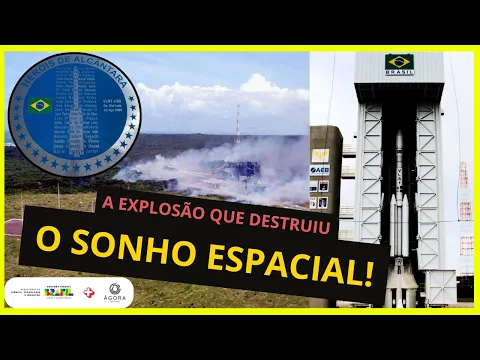

A few days before the accident in India, another episode had shaken the sector. Three days before Christmas, the HANBIT-Nano rocket, from the South Korean company Innospace, exploded about 30 seconds after takeoff at the Alcântara Launch Center. An error in the vehicle’s inclination during the orbital insertion attempt led the company to opt, for safety reasons, for controlled self-destruction still in the first stage.
In an official statement, Innospace apologized “deeply” to those involved and stated that it would thoroughly analyze the causes of the accident. The rocket was carrying five satellites and three scientific experiments developed by UFMA and the Federal University of Santa Catarina (UFSC), increasing the academic impact of the mission’s failure.
Despite the incident, the AEB sought to reinforce the reliability of Brazilian infrastructure. According to the agency’s director, Rodrigo Leonardi, over 500 training and sounding rocket launches have been carried out from Alcântara, with a success rate of approximately 97%. According to him, all systems under Brazilian responsibility—including ground infrastructure, operational protocols, and safety regulations—functioned as planned.
Continuity of Policies and Institutional Coordination Remain Obstacles
Nonetheless, analysts point out that the problems of the Brazilian Space Program go beyond point failures. For Celso Pansera, former Minister of Science and Technology and former president of Finep, the main historical obstacle of the sector is the lack of continuity in public policies and long-term funding.
Currently at the helm of the Maricá Development Company (Codemar), Pansera advocates that Brazil maintain regular public orders for satellites, focusing on strategic areas such as climate monitoring, agribusiness, data transmission, and security. According to him, the country was making progress up until 2015 but remained for about seven years without significant investments, which compromised staff development and technological consolidation.
In the assessment of Deputy Carlos Zarattini (PT), a member of the Foreign Relations and Defense Commissions of the Chamber, another significant obstacle is the fragmentation of governance in the sector. The Alcântara base is operated by the Brazilian Air Force, while research is concentrated at the Aeronautics Technological Institute (ITA) in São José dos Campos, and several programs are maintained by the Ministry of Science and Technology, without centralized coordination.
Creation of Alada Emerges as an Attempt to Strengthen Sovereignty and Sustainability
In this context, experts highlight the creation of the Aerospace Projects Company of Brazil S.A. (Alada), established in January 2025, as a structural advancement. Subordinate to the Ministry of Defense, the state-owned company received an initial investment of 85 million reais to develop research, development, and commercialization projects in the aerospace sector over the first five years.
The expectation is that Alada will utilize resources from commercial launches in Alcântara to generate a continuous funding source for the space program. For Zarattini, if these operations multiply, Brazil could reduce budgetary dependence and strengthen its presence in a market that generates billions of dollars annually.
Leonardi states that the creation of the company occurs at a strategic moment to ensure financial sustainability for the sector. According to him, it is not about seeking profit, but ensuring that the Brazilian space program has the means to maintain constant investments, generate skilled jobs, and develop civil and strategic applications.
History of Accidents Reinforces the Need for Technological Maturity
Although experts emphasize that failures in launches are statistically within the norm in space programs, any accident in Alcântara brings to mind the tragedy of 2003, when the explosion of the VLS-1 rocket killed 21 scientists during preparations for launch. The episode caused a significant setback, both due to the loss of lives and the exodus of highly qualified professionals.
According to Professor Ronaldo Carmona, from the Superior War School and collaborator at UFMA, satellite launch vehicles are extremely complex systems, with up to 90% of their mass composed of energetic and propulsion systems. Failures, especially in initial launches, are inherent to the technological development process and have also occurred in advanced programs, such as that of the United States, from Apollo 1 to more recent accidents.
Recent Investments and Future Challenges of the Brazilian Space Sector
In the last three years, Brazil has experienced a more significant cycle of investments, driven by the unblocking of the National Fund for Scientific and Technological Development (FNDCT). Among the ongoing projects are the ML-BR, a small launch vehicle expected to debut in the second semester, the Rocket Assisted Take-Off (Rato), which will support the hypersonic vehicle 14-X, and the VLM-AT, the successor to the VLS as a microsatellite launcher.
The next major challenge, according to Carmona, will be to achieve autonomy in imaging and communication satellites, reducing dependence on foreign systems like Starlink. For this, Brazil will need to utilize the state’s purchasing power, estimated at hundreds of millions of reais per year, to establish a national constellation launched by its own vehicles and infrastructures, with Alcântara as a central piece of this strategy.
As of the publication of this edition, the Brazilian Air Force had not commented on the progress of the investigation related to the accident that occurred in December.






O que eu posso dizer? Kkkkkkkkkkkk…
Como sempre, o Brasil tem um povo cuja a maioria é de analfabetos funcionais, um povo escravizado pelo prazer, e constantemente governados por ****. Cinto muito, mas o Brasil não vai a nenhum lugar, muito menos o espaço!
Acredito que é o próprio Estado Brasileiro, o primeiro que sabota o Programa Espacial, a partir do momento que realiza desinvestimento massivo e consequentemente o sucateamento deste setor que é crucial e estratégico para a nossa Soberania Tecnológica, precisamos formar mais cientistas, pois perdemos 21 guerreiros que faziam mágica com baixíssimos orçamentos disponíveis antes do acidente de Alcântara que ceifou suas vidas! Acorda Brasil! 🇧🇷
Coloco em órbita a mais garantida forma e vantagem custo benefício e start da tecnologia de lançadores e de orbitador próprio vdtil órbitas até 400 km ou 36000