





 Portuguese
  English
  Spanish
  6 min of reading
  0 comments


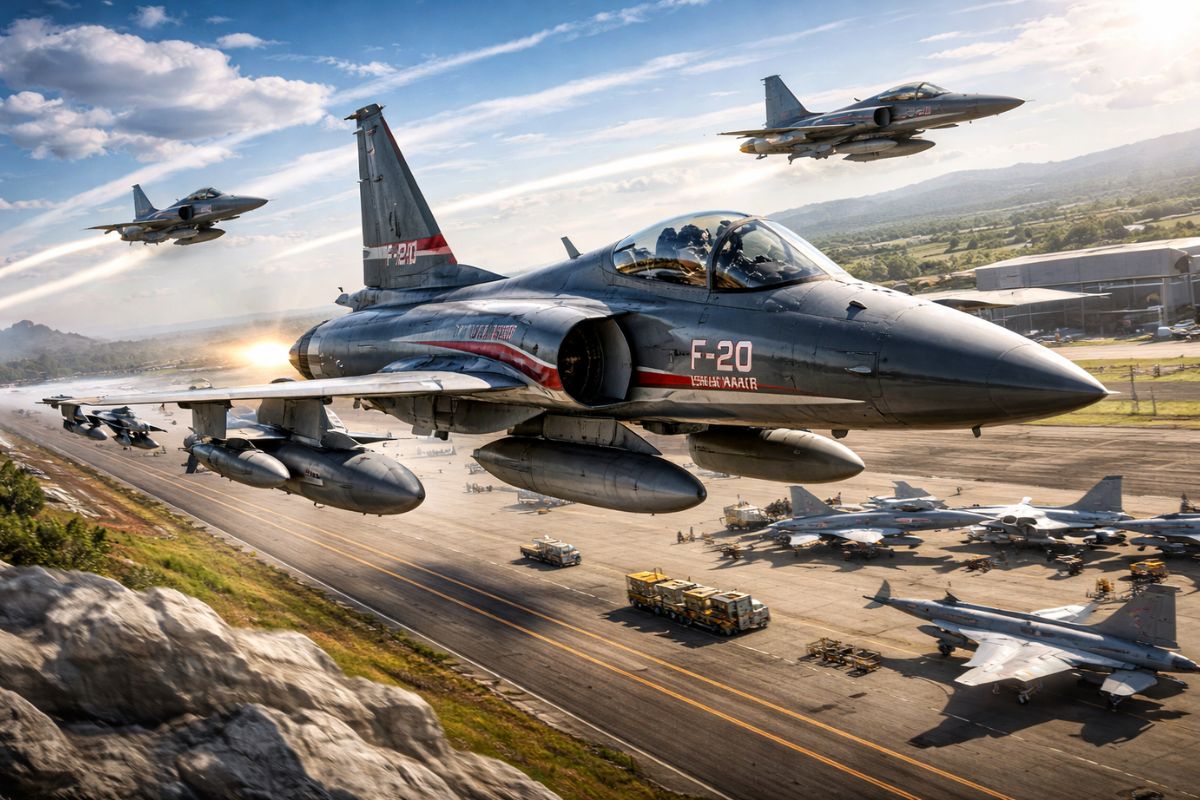
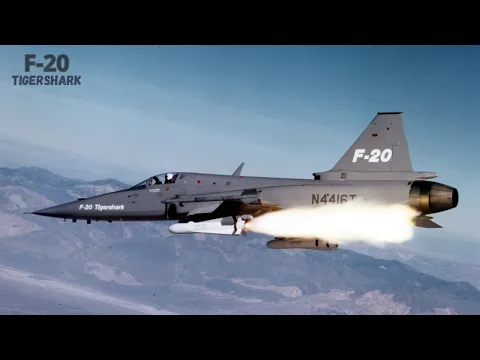
Even though it is a more modern light fighter than the F-5 and has lower operational costs, the F-20 became a symbol of a program that failed due to strategic decisions, not technical failures.
The F-20 Tiger Shark made it onto the list of the most praised projects that never entered active service, and this says a lot about how a light fighter can be decided outside of engineering. It was born to be the ideal successor to the F-5, with competitive performance enough to match and even surpass the F-16 in specific areas, but it ended up stalled by politics and market changes.
The most curious thing is that, on paper, the F-20 offered exactly what many countries were looking for: simplicity, reliability, and lower operational costs, without relying on the more advanced systems of the main line of the United States Air Force. Still, it ended up without contracts, with only prototypes and a legacy of “almost.”
A light fighter designed for export, but with elite ambition

Northrop came from a solid experience with the F-5E Tiger II, a light fighter that was simple, cheap, and easy to operate, created to face aircraft like the MiG-21 and therefore very attractive for export. However, the F-5 began to show limitations with the technological evolution of more modern fighters.
-
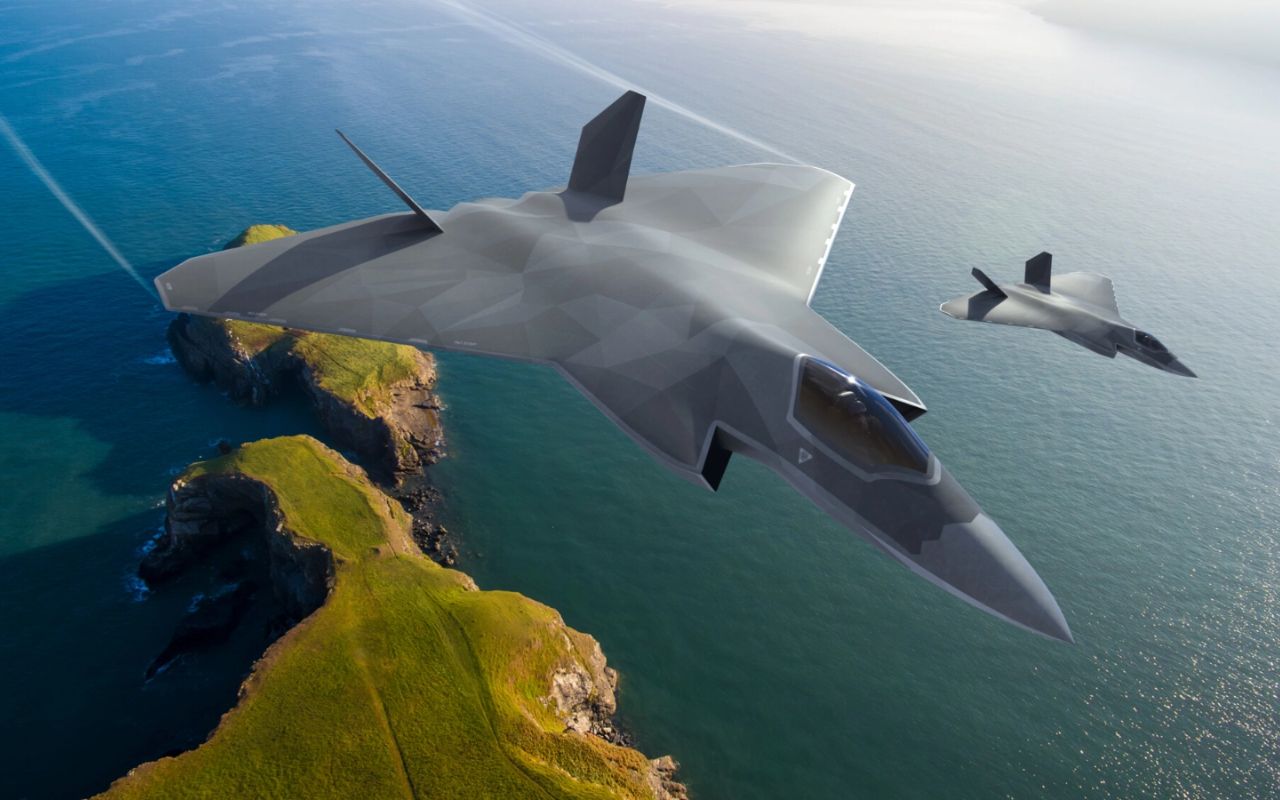
£686 million military project unites Europe and Asia to create one of the world’s most advanced fighter jets.
-
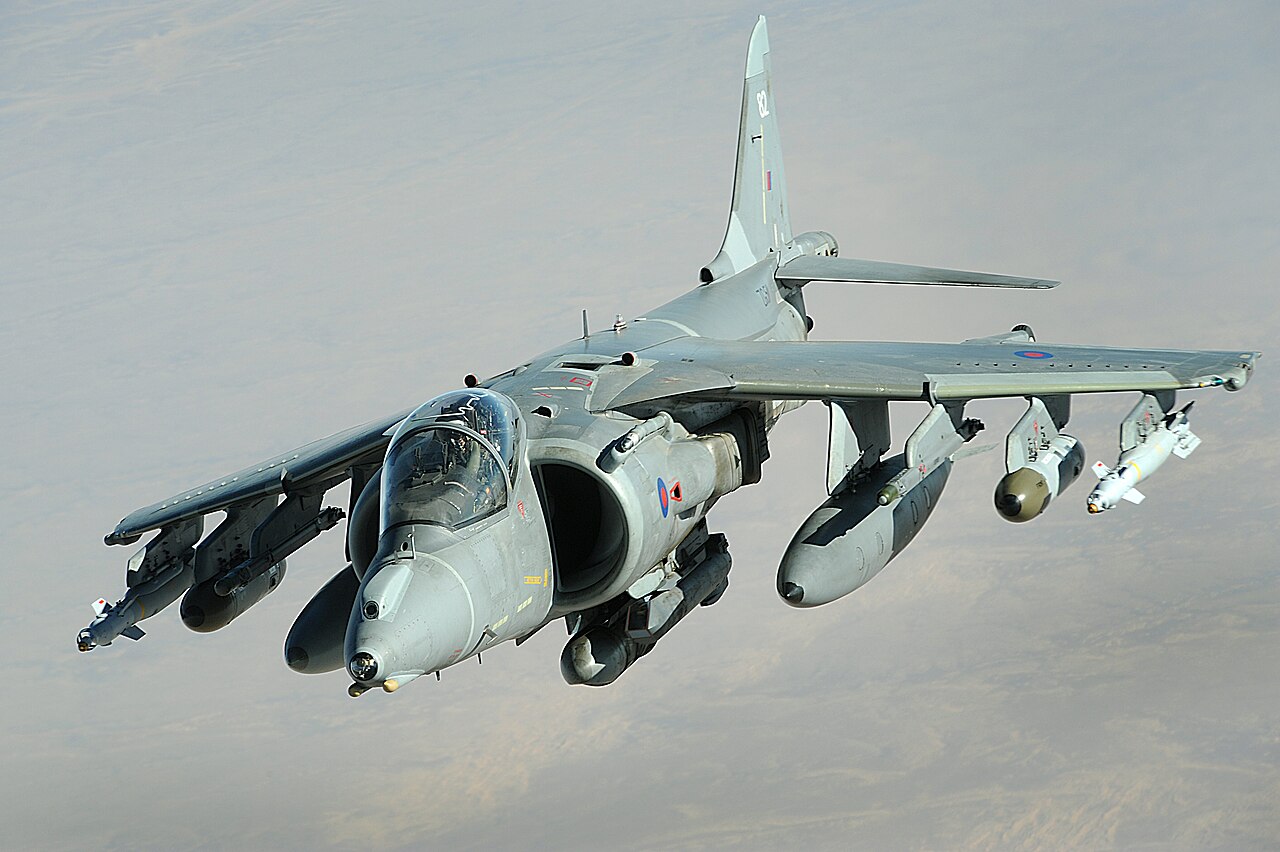
Capable of slowing down from 925 km/h to almost zero in seconds using the thrust of its jets, the Harrier performs the VIFF maneuver, causing enemy fighters to overshoot the target without reaction. This extreme test even threw the pilot against the cockpit due to the brutal deceleration.
-
The Army requests R$ 456 billion to defend Brazil, but an expert says that the figure is only alarming on paper and remains small compared to the military shortfall accumulated by the country: “just one foreign aircraft carrier arriving here and they will have an air force larger than ours.”
-
With 7,000 tons and 107 meters, the first drone carrier in Europe was launched into the sea and will be operated by the Portuguese Navy after the testing phase; meet the NRP D. João II.
In this scenario, the idea was clear: to create a replacement that maintained the philosophy of the F-5 but elevated the level of performance and modernization.
Thus, the F-20 Tiger Shark was born, conceived outside the main line of the United States Air Force but with the intention of competing at a high level.
The FX program and the contradiction that shaped the project

The F-20 emerges in a specific political context. During Jimmy Carter’s administration, the United States maintained a restrictive policy on arms exports, trying to reduce the proliferation of advanced weapons. This prevented the sale of cutting-edge fighters to many countries.
At the same time, the Soviet Union continued selling aircraft to allies, which pressured American influence in some regions.
In 1980, the FX program appeared with an objective proposal: to create a new fighter that would replace the F-5, be superior in almost everything, but without using the most advanced systems of the top-tier U.S. fighters.
The contradiction was inevitable. The project needed to deliver more performance with technological limitations imposed by strategy and diplomacy. Even so, the F-20 advanced quickly.
The performance leap: F404 engine, aerodynamics, and fly-by-wire
The main change of the F-20 was in the engine. Instead of two smaller engines like in the F-5, it adopted a single General Electric F404, already used in modern aircraft, which brought a clear leap in power.
The base indicates that the F-20 delivered about 70% more thrust compared to the F-5. This impacted speed and performance: the maximum speed approached Mach 2, the operational ceiling exceeded 16,700 m, and the rate of climb increased significantly.
The structure was also refined. The horizontal stabilizer was enlarged, and the wings received modifications, including extensions at the leading edge to improve lift and aerodynamic efficiency.
And a decisive point was added to the package: fly-by-wire control, which increased precision and response speed, helping to enhance turn rate and agility, even at supersonic speeds.
Modern cockpit, reliability, and operational cost as an argument
The F-20 received a cockpit modernization with a head-up display and the HOTAS concept, which allows controlling important functions without taking hands off the stick and throttle. The promise was simple: reduce reaction time and increase efficiency in combat.
In terms of armament, it maintained two 20 mm M39 cannons in the nose, had seven external hardpoints, and a total payload capacity of around 4 tons, allowing combinations of bombs and air-to-ground and air-to-air missiles. This made it a versatile light fighter for attack and air defense.
Reliability was also a central argument. The F404 engine had fewer components than more complex engines, reducing failure rates.
In practice, this meant less maintenance, lower operational costs, and greater availability. Northrop even claimed that the F-20 could go from alert to takeoff in just one minute, something valuable in air defense missions.
Tests, international interest, and the shadow of the F-16

In the tests, Northrop sought to demonstrate acceleration at different altitudes, climb, turn rates, use of armaments, and complete mission profiles.
The results were described as consistent, with performance comparable to and, in some cases, superior to that of the F-16, its main competitor.
However, there were nuances. The F-16 carried more armament, had greater range, and was part of the main line of the United States Air Force, with greater potential for evolution.
Even so, the F-20 stood out for simpler maintenance, greater reliability, and significantly lower total life cycle cost.
Interest existed. At least 10 nations evaluated the aircraft, Bahrain advanced as a potential customer, and South Korea considered local production. Foreign pilots tested the plane, and the initial response was positive.
Two accidents, changing politics, and the project losing ground
During the tests, two serious accidents occurred that resulted in the deaths of chief pilot Daryl Cornell and test pilot Dave Barnes.
The cited investigations concluded that there were no system failures or structural defects and did not require design changes. Even so, the program’s image was affected, and this weighs heavily when an aircraft needs confidence to sell.
Shortly after, the political landscape changed. With Ronald Reagan, the U.S. relaxed the sale of more advanced weapons to allies, including packages that offered the F-16.
This changed the market: countries that would have previously accepted an intermediate light fighter began to demand cutting-edge aircraft. The F-20 started to be seen as a second-tier option, even with competitive performance.
The logic of the FX weakened because it depended on political restrictions that were being abandoned. The product became misaligned with the context.
Without government support, without contracts, without a future

Another blow was structural. The development of the F-20 was almost entirely privately funded, with an investment of about 1 billion dollars.
However, under the FX rules, the U.S. government promoted international sales through the State Department. In practice, Northrop depended on political will to sell.
This support never came effectively. In congressional hearings, Air Force officials admitted that there was no active effort to sell the aircraft. Without signed contracts, the project could not sustain itself financially.
The absence of internal use also became an obstacle. The United States Air Force did not show real interest in operating the F-20.
Without domestic adoption, the aircraft did not receive the same continuous development cycle, and this affected the perception of future evolution.
Meanwhile, countries like Turkey, Greece, and Venezuela directed demands toward the F-16. Taiwan, which was an important candidate, took another path and began developing its own fighter, the F-CK-1. Other buyers sought alternatives with different suppliers, such as France with the Mirage 2000.
The end in 1986 and the legacy of “the best that never entered”
With accumulated costs, no confirmed buyers, and no consistent political support, Northrop ended the program in 1986.
There was no series production and no export to any country. The project ended with only three prototypes built, two lost, and one preserved, now displayed at the California Science Center.
In the end, the F-20 became a classic case: a technically solid, efficient, and cheap-to-operate light fighter that did not find the right environment to exist. It delivered what it promised in technical requirements but fell into a strategic problem.
If you could choose, what would weigh more in a country’s decision: the performance and cost of a light fighter like the F-20 or the “seal” of being in the main line and having political support like the F-16?







Seja o primeiro a reagir!