Portuguese
  Spanish


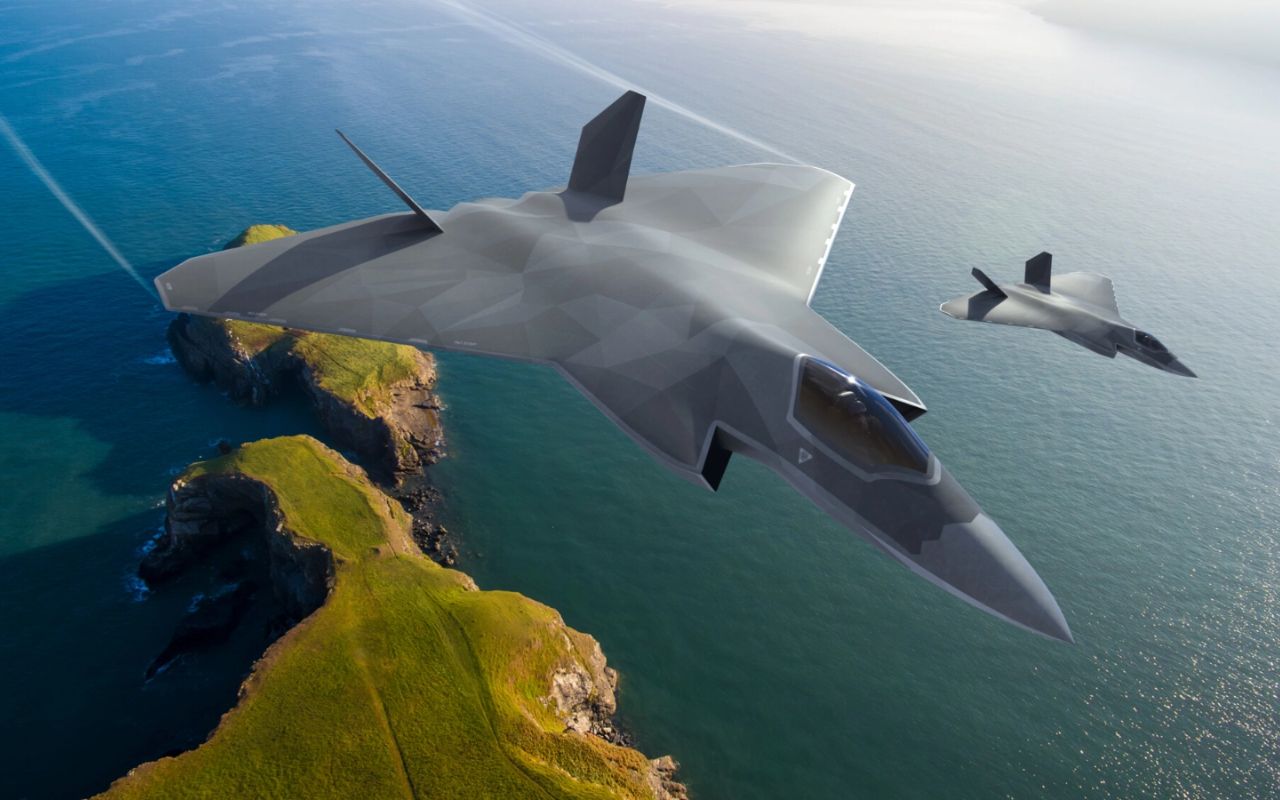

GCAP advances in the next generation fighter program with international contract of £686 million.
The Global Combat Air Programme (GCAP) took a decisive step this week by signing its first unified international contract, consolidating the development of the fighter of the next generation.
The agreement, valued at £686 million (approximately US$ 905 million), formalizes the partnership with the joint venture Edgewing, created to lead the project and ensure the integration of efforts between the United Kingdom, Italy, and Japan.
Until now, each country financed the program separately, with independent national contracts, which created duplication of efforts and administrative complexity.
-
Brazilian Navy Demonstrates Strength in Naval Exercise with Over 20 Nations, Deploys Frigate Independência in Anti-Submarine and Air Defense Scenarios, and Joins Historic Formation with 26 Ships from 14 Allied Navies off the U.S. Coast

-
BAE Systems to Supply New Bofors 40Mk4 Cannons to the Brazilian Navy
-
Ukraine Bets on Swedish Gripen E Jets to Counter Russia, But 16 Fighters Won’t Arrive Until Late 2020s; Kiev to Use C/D Models for Pilot Training and Operations Amid Ongoing Missile and Drone Threats
-
End of an Era: US Navy’s C-2A Greyhound Makes Final Catapult Launch Before Retiring to Arizona Desert; Aircraft Supported Carriers in Wars and Humanitarian Missions for Nearly 60 Years


With the unified contract, the program will operate under an international structure, allowing for greater efficiency and standardization in the engineering, certification, and airworthiness processes of the future fighter.
Canada monitors program and goals for 2035
Canada is closely following the GCAP and is evaluating joining as an observer nation. This would allow access to confidential information about the fighter, as well as open up opportunities for potential future acquisitions.
The GCAP has been structured as a “system of systems,” in which the central crewed aircraft will function as a command node, coordinating wingman drones and other air, land, sea, space, and cyber systems.
The entry into service of the fighter is expected in 2035, when it will replace the Eurofighter Typhoon in the United Kingdom and Italy, and the F-2 in Japan, representing a global technological advancement.

Unified contract replaces parallel funding
Before the signing, each country maintained separate funding and contracts, creating management challenges and delays in the development of the fighter.
The new contract consolidates all activities under Edgewing, which becomes the central authority for engineering, integration, certification, and airworthiness.
Masami Oka, CEO of the GCAP Agency, highlighted the significance of the moment:
“This contract is an important moment for the GCAP, as activities previously conducted under contracts of three nations will now be carried out as part of a fully developed international program.”
This centralization aims to reduce duplication of efforts and accelerate critical decisions, ensuring that the fighter is developed in a coordinated and efficient manner.
Edgewing: the multinational force behind the next generation fighter
The development of the sixth generation fighter of the GCAP is in the hands of Edgewing, a joint venture formed by BAE Systems (United Kingdom), Leonardo (Italy), and Japan Aircraft Industrial Enhancement Co. Ltd. (JAIEC).
Based in the United Kingdom and with operations distributed across the three countries, the company centralizes all design and integration activities of the program, ensuring technical standardization and coordination among international partners.
Edgewing will be responsible for the planning, development, and engineering oversight of the fighter throughout its lifecycle.
This centralized approach seeks to avoid the fragmentation issues that have historically plagued multinational programs, bringing together efforts and consolidating critical decisions under a single authority.
Additionally, the production and final assembly of the aircraft will be carried out jointly by BAE Systems, Leonardo, and Mitsubishi Heavy Industries, leveraging local supply chains.
This strategy not only strengthens the industrial capability of each country but also maintains centralized technical control, promoting greater efficiency and safety in the fighter’s design.
Temporary contract and financing issues
The currently signed contract covers activities until June 30, 2026, reflecting that there are still challenges related to long-term financing, especially in the United Kingdom.
The signing was initially scheduled for the end of 2025 but was delayed due to the postponement of the publication of the United Kingdom’s Defence Investment Plan, which outlines the resources allocated to defense over the next ten years.
The short duration of the contract indicates that additional financial negotiations are still necessary to ensure the continuity of the program and the production of the fighter.
Impact and strategic importance of the contract
The signing of the contract symbolizes more than financial resources: it represents the consolidation of an international partnership capable of uniting technology, industrial efficiency, and the preservation of the sovereignty of each participating country.
With Edgewing at the helm, the GCAP enters a decisive phase, designing the next generation fighter as a global benchmark in operational capability, technological innovation, and multinational cooperation in defense.
The program demonstrates how unified structures can overcome historical challenges of fragmented management in high-complexity projects.
Source: Poder Aéreo