





 Portuguese
  English
  Spanish
  4 min of reading
  0 comments


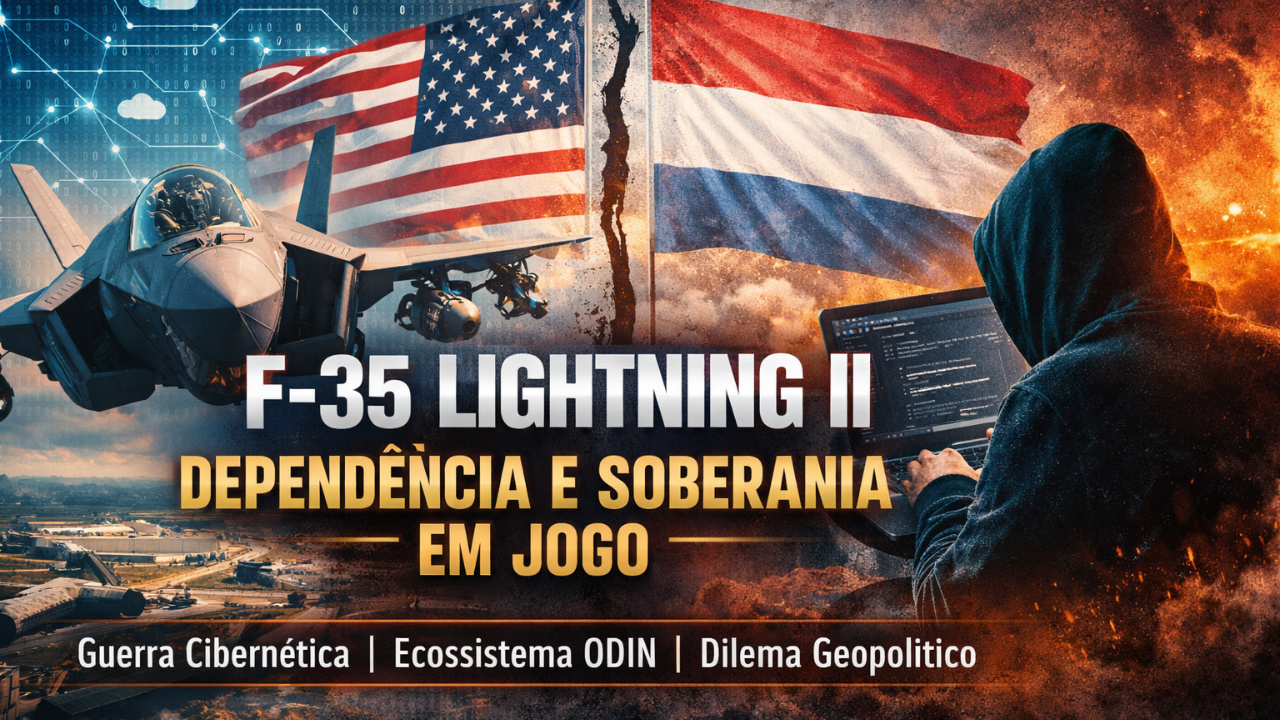
Debate On The F-35 Lightning II Exposes The Limits Of Operational Sovereignty And Reinforces Concerns About Strategic Dependence On The U.S.
The statement by the Dutch Minister of Defense about the possibility of “unlocking” the F-35 Lightning II as if it were an iPhone reignited a sensitive debate among U.S. allies.
The remark was made by Gijs Tuinman during his participation in the podcast “Boekestijn en de Wijk” on BNR Nieuwsradio, and quickly gained international attention.
The reason is clear: by suggesting that the fighter could accept external upgrades, the minister touched on the central point of technological dependence involved in the program.
-
USA and China compete for Brazil over resources that could be worth trillions — rare earths put the country at the center of a global dispute

-
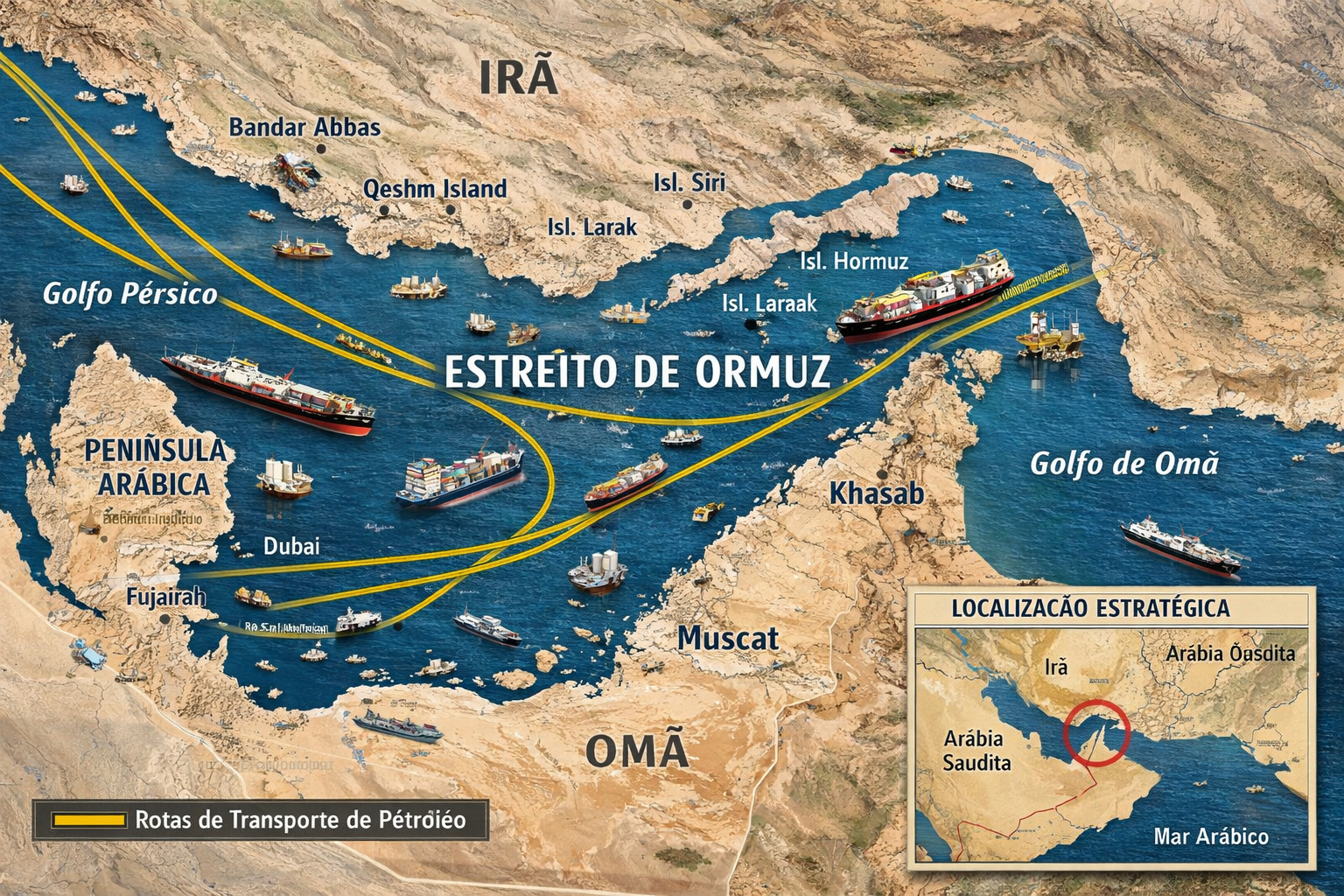
Global summit with over 40 countries pressures Iran for a blockade in the Strait of Hormuz and warns of direct impact on oil, food, and the global economy.
-
Russia has broken the U.S. maritime blockade to send oil to Cuba and is now loading a second ship while Trump says that “Cuba is next” in a possible military action against the island.

-
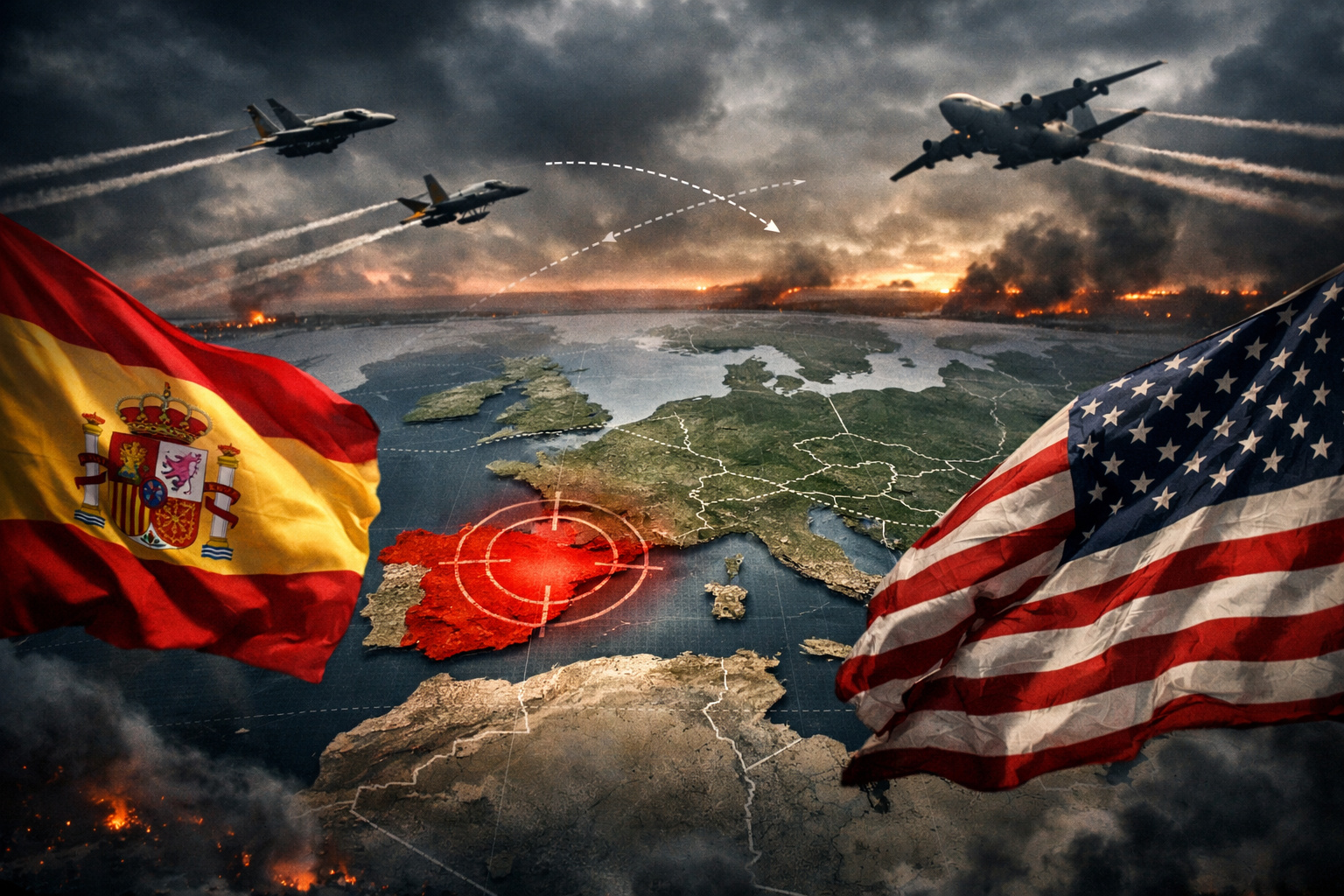
Spain challenges the USA and closes its airspace for operations against Iran, raising global tension and provoking the threat of a trade rupture.

In a context of increasing cyber warfare and geopolitical tensions, the comment exposed doubts about operational sovereignty and strategic dependence within NATO.
“If, despite everything, they still want to update, I’ll say something I should never say, but I’ll say it anyway: it’s possible to jailbreak an F-35 the same way you jailbreak an iPhone,” Tuinman stated.
The direct comparison to a smartphone was not only provocative.
It brought to the fore an old discussion about who really controls the most advanced systems in the Western military world.
F-35 Lightning II: Much More Than A Fighter
The F-35 Lightning II is not just a combat aircraft.
It functions as an integrated system, connected to a wide digital network that involves software, mission databases, remote maintenance, and global logistics chains.
In practice, this means that the fighter’s performance depends on constant updates and an infrastructure that goes far beyond the hangar.
The so-called ODIN Ecosystem – successor to the old ALIS – is responsible for managing operational data, technical diagnostics, and mission packages essential for the aircraft’s full operation.
Therefore, talking about “unlocking” is not limited to a technical modification.
It involves questioning the strategic dependence framework that underpins the program.
Strategic Dependence And Operational Sovereignty At Stake
Since the Cold War, the United States has exported not only armaments but also models of control over how these systems are used.
In the past, this control occurred through maintenance contracts, parts supply, and licensing agreements.
Today, however, the scenario has changed.
With the evolution of cyber warfare, control is embedded in the very software of military platforms.
Thus, the operational sovereignty of purchasing countries becomes conditioned by continuous access to updates and technical support provided by the U.S.
If this flow is interrupted, the F-35 Lightning II might continue to fly, but it would gradually lose its strategic effectiveness.
ODIN Ecosystem: The Digital Heart Of The F-35 Lightning II
The ODIN Ecosystem acts as the logistical and operational brain of the F-35 Lightning II.
It sends software updates, integrates intelligence data, and provides critical information for mission planning.
These packages include calculated routes, enemy threat identification, and sensor fusion – technology that allows the pilot to see the battlefield in an integrated way.
Without this, the fighter ceases to operate at its full capacity.
For this reason, experts warn that any potential “unlocking” could mean the disconnection from this vital network. Instead of enhancing autonomy, it could lead to operational isolation.
The Political Dilemma Behind The F-35 Lightning II
Therefore, for Washington, allowing an ally to operate outside the official ecosystem poses a risk to technological security.
After all, access to the code and internal systems could expose sensitive information.
On the other hand, for European allies, strategic dependence is an increasingly delicate issue.
In this context, the discussion becomes no longer purely technical.
It transforms into a political debate about trust and international alignment.
Israel: The Exception That Confirms The Rule
Among all operators of the F-35 Lightning II, Israel occupies a unique position.
The country managed to negotiate the integration of its own software and maintains greater industrial autonomy over its fleet.
This condition, however, is the result of decades of strategic cooperation with the United States.
It is not a model easily replicable by other nations.
For countries like the Netherlands, any real attempt to break away from the system would imply immediate consequences for the supply of parts and maintenance.
The result could be paradoxical: a fighter theoretically “liberated,” but logistically immobilized.
The Myth Of The “Off Switch” And The New Cyber Warfare
The controversy also revives an old fear: the existence of a supposed “button” that would allow the U.S. to remotely disable aircraft.
It is not a secret switch.
Therefore, the real power lies in the digital architecture that sustains the system.
Without continuous access to the ODIN Ecosystem, certified maintenance, and software updates, the military value of the F-35 Lightning II deteriorates progressively.
In times of cyber warfare, control is not visible but structural.
Strategic Dependence: The Debate That Goes Beyond Technology
The resurgence of this debate occurs at a time of increasing geopolitical tension.
Thus, the F-35 Lightning II continues to be considered one of the most advanced fighters in the world.
However, its superiority is tied to the acceptance of a profound strategic dependence.
When this dependence starts to be questioned, the problem is no longer just technological.
It reflects the fragilities and uncertainties of the current international order itself.
See more at: The Netherlands Just Caused Panic Among U.S. Allies: F-35 Could Be “Unlocked” Like An iPhone








Seja o primeiro a reagir!