





 Portuguese
  English
  Spanish
  4 min of reading
  2 comments


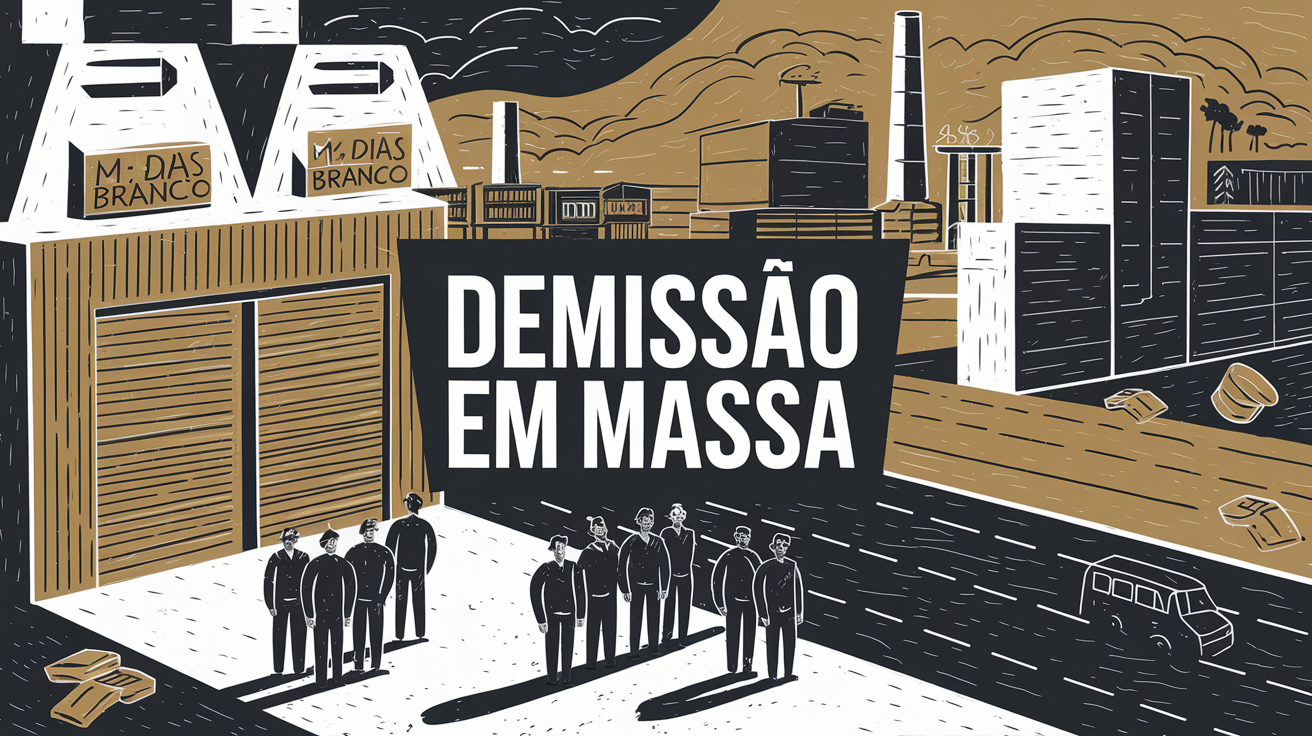


Leader In Pasta And Cookies Surprises By Closing Its Factory And Dismissing 480 Workers. The Measure, Part Of A Restructuring To Reduce Costs And Improve Efficiency, Has A Profound Impact On The Local Community, Creating Uncertainty About The Future Of Workers And The Region.
In an unexpected move that surprised the food sector and workers in the Lençóis Paulista (SP) region, M. Dias Branco, the largest national manufacturer of pasta and cookies, announced the closure of its cookie factory in the city.
The immediate impact was the dismissal of 480 employees, generating concern both among workers and the local community.
The decision, confirmed last Monday (20), is part of a broader strategy by the company to optimize costs and increase operational efficiency.
-
Larger than entire cities in Brazil: BYD is building a 4.6 km² complex in Bahia with a capacity for 600,000 vehicles per year, but the discovery of 163 workers in conditions analogous to slavery has shaken the entire project.

-
With an investment of R$ 612 million, a capacity to process 1.2 million liters of milk per day, Piracanjuba inaugurates a mega cheese factory that increases national production, reduces dependence on imports, and repositions Brazil on the global dairy map.

-
Brazilian city gains industrial hub for 85 companies that is equivalent to 55 football fields.

-
Peugeot and Citroën factory in Argentina cuts production by half and opens a layoff program for more than 2,000 employees after Brazil drastically reduced purchases of Argentine vehicles.


According to an official statement from M. Dias Branco, production will be transferred to other units in the country.
This measure also aims to improve the agility in product delivery and strengthen the company’s competitiveness in the market.
A Giant Of The Brazilian Food Industry
Founded in 1953, M. Dias Branco is a reference in the food sector, known for well-established brands like Adria, Piraquê, and Richester.
Currently, the company operates 22 factories or industrial complexes and has 29 distribution centers spread across Brazil, allowing its presence throughout the national territory and exports to over 40 countries.
With a diversified portfolio, the company does not only produce pasta and cookies.
Among its products are flours, cake mixes, margarines, ready-made cakes, toast, peanut butter, and chocolates.
Additionally, the company invested in 2021 in the health food segment, sauces, and condiments, further diversifying its operations.
This strategy reflects the continuous pursuit of innovation and adaptation to consumer market demands.
Social Impacts And Mitigating Measures
The closure of the unit in Lençóis Paulista does not merely represent a corporate strategy, but also a blow to the local community.
The 480 dismissed workers represent a significant loss of jobs in the region, which is expected to generate economic and social consequences for many families.
According to information from Estadão and the newspaper O Globo, M. Dias Branco stated it is committed to reducing the impacts caused by the restructuring.
After negotiations with the worker’s union, the company committed to offering professional training programs to help workers re-enter the job market.
The efforts include the offering of vocational courses and partnerships with local companies, an attempt to minimize the immediate effects of the factory closure.
Nonetheless, the community faces challenges regarding the absorption of the workforce in other activities.
Growth And Acquisitions
The trajectory of M. Dias Branco is marked by growth and important acquisitions.
In 2018, the company acquired the brand Piraquê for R$ 1.55 billion, strengthening its presence in market niches such as premium cookies and regional products.
This investment allowed the company to expand its presence in strategic markets, diversifying its operations and consolidating its name among the largest food industries in Brazil.
This history of expansion highlights the company’s strategy to consolidate its leadership in the Brazilian food sector and compete in international markets.
The transfer of production from Lençóis Paulista to other units is part of this optimization and operational adjustment plan, although it has generated significant impacts.
The Relevance Of Lençóis Paulista
Lençóis Paulista, known as “the city of the book” for its literary tradition, also has a considerable dependence on large industries for its economic development.
The decision by M. Dias Branco to end local operations reflects a common challenge in cities with economies concentrated in specific sectors.
The impact of the layoffs affects not only the workers directly linked to the factory but also local commerce and services that depend on the purchasing power of these employees.
It is estimated that each industrial job creates three additional indirect jobs, further increasing the scale of social consequences.
The Food Sector In Brazil
Brazil is one of the largest food producers in the world, with industries that play a crucial role in generating employment and exports.
Companies like M. Dias Branco face the challenge of balancing productive efficiency, technological innovation, and social responsibility in a context of rising global competitiveness.
According to industry experts, restructuring measures are common in large companies trying to adapt to economic changes and market demands.
However, these strategies often raise the need for public policies that encourage economic diversification and the protection of workers during transitional periods.
Affected Community
Although the company is adopting measures to reduce the impacts of its decision, the local community still faces a period of uncertainties.
The mass layoffs highlight the economic challenges faced by many cities dependent on large industries.
The restructuring of M. Dias Branco also raises questions about the importance of diversifying the local economy to minimize the effects of corporate decisions like this.
The city of Lençóis Paulista now finds itself facing the need to seek solutions to foster the generation of new jobs.
What To Expect For The Future?
M. Dias Branco remains one of the largest players in the food sector, but its restructuring movement reflects the challenges faced by large corporations in an environment of rising costs and high competitiveness.
The transfer of operations to other factories should allow the company to maintain its market leadership, but it also highlights the dilemmas between corporate efficiency and social impact.
As the company projects new horizons, the lingering question is: how can large industries balance operational efficiency and social responsibility without compromising their community foundations? Please leave your opinion in the comments.






Eu não compro mais nada dessa empresa se depender de mim vai falir
Lamentávelmente é assim mesmo, no início a direção vem aquela historinha esdrúxula de que ” AQUI NESSA EMPRESA SOMOS UMA Grande família ” o funcionário veste de fato a camiseta e, depois é brindado com 3 sapatos, dois no pé e um na ****. Eu em particular, boicoto esse tipo de empresa que não honra a ” FAMÍLIA”……ainda faço propaganda boca a boca para mais pessoas tbm fazerem.