





 Portuguese
  English
  Spanish
  5 min of reading
  0 comments


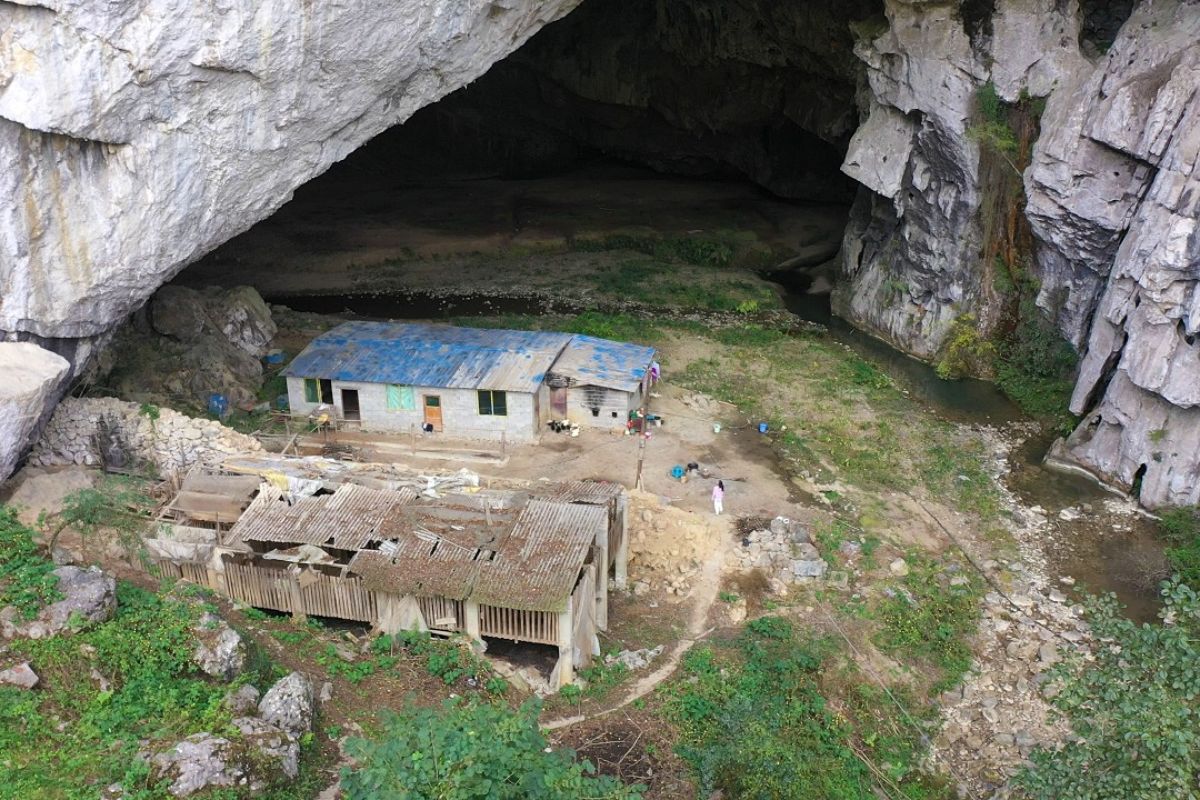
With A House Built Inside The Rock, Surrounded By Mountains, A Subterranean River Of Crystal Clear Water And A Lively Backyard With Chickens, Ducks And Beehives, A Family In Guizhou Transforms An Isolated Cave Into A Refuge That Seems Out Of This World
The image is so improbable that it almost looks like a movie scene: inside Meitan County, in Guizhou, a family lives in a house built inside the rock, nestled within a giant cave hidden among steep mountains. Outside, fences, crops and animals; inside, a monumental space, irregular stalactites and a subterranean river of transparent water that emerges from the cave’s depths.
Access is difficult, the road is narrow, the final stretch is so steep that many cars cannot even make it up, and only one family occupies the entire area. For this reason, the set of house built inside the rock, vertical cliffs, flowing water and fertile land has been described as a “secret paradise,” almost a self-sufficient refuge where time seems to run at a different pace, far from the noise of cities and urban routines.
The Arrival At The Hidden Valley In Meitan
The journey to the family begins still on the main road, when the landscape of Guizhou is dominated by mountains that rise and fall in sequence, forming a natural corridor of stone and vegetation.
-
These living root bridges and ladders are over 700 years old and help indigenous people survive in one of the rainiest regions in the world.

-
From sertanejo star to international investor: Ana Castela invests millions in a mansion in the USA, creates a themed accommodation in Orlando, and shows that the “boiadeira” also wants to grow away from the stage.

-
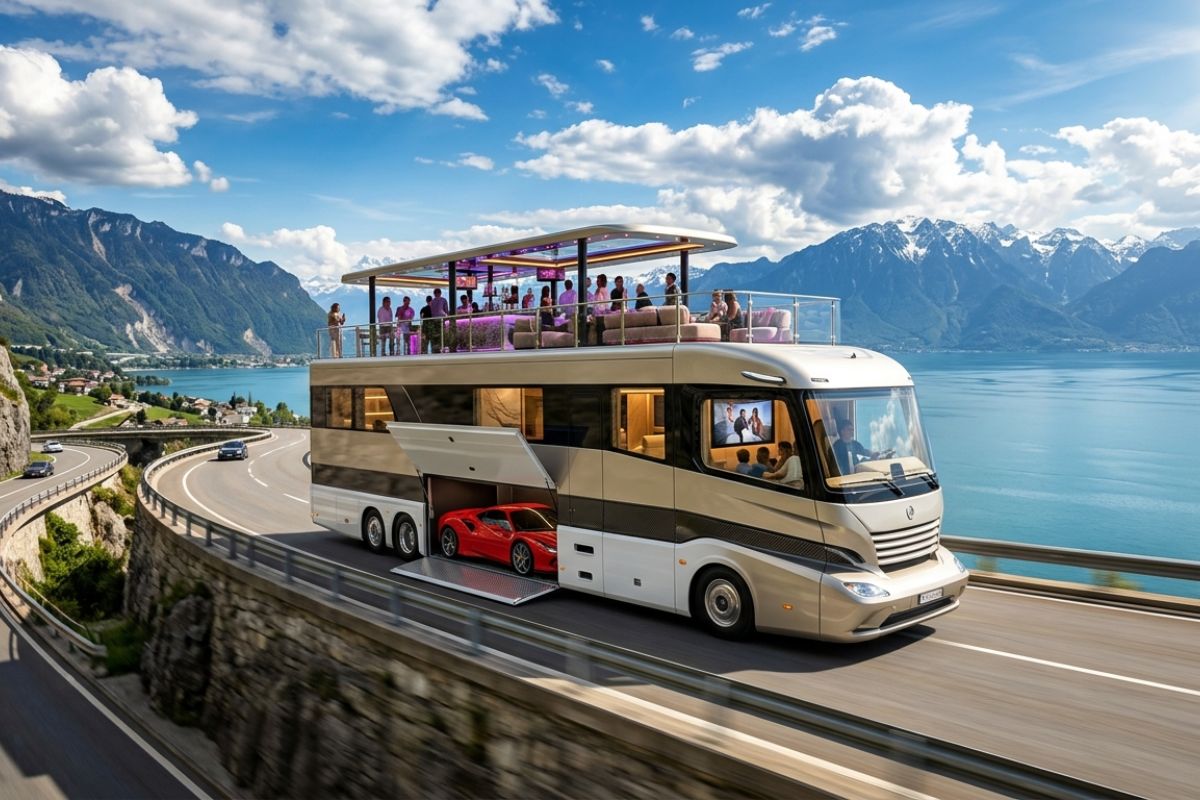
The 10 most stunning motorhomes in the world: a $3 million trailer with a rooftop nightclub and garage for a Ferrari, “palaces on wheels” with Italian marble, private cinema, and five-star hotel luxury for billionaires.
-
Trump wanted to spend $400 million on the White House, but the courts prohibited the million-dollar construction.


The final stretch is marked by a fork that leads to a narrower path, where the team decides to continue on foot due to the combination of steep incline and tight track, where practically only a motorcycle can pass safely.
Along the way, the feeling is of leaving the city behind with each step.
Along the path, slopes covered with red wild fruits, beehives in wooden boxes lined along the cliff, and small structures indicate long-standing rural management.
Everything points to a remote place, away from the county seat, where daily life demands planning, physical resilience and a degree of isolation that few would be willing to face.
The House Built Inside The Rock And The Family’s Routine
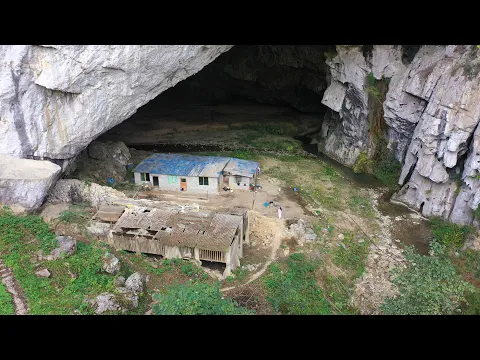

After the steep descent, the scene unfolds in layers: first the rock wall, then the huge mouth of the cave, and nestled there, the house built inside the rock, structured with bricks and adapted to the natural curvature of the cave.
In front, an old earthen and stone wall, partially collapsed, reveals the long use of that space, long before the recent renovation that raised the current masonry dwelling.
In the immediate surroundings, rows of fences delimit areas that have already housed cattle and other animals.
Chickens roam the yard, ducks feed on the ground, and part of what appears in the backyard, like the red wild fruits, might have been collected on the slopes to supplement the birds’ diet.
It is a type of rural organization where every square meter of ground is utilized, from the simple stove structure to the crops planted in strategic points of the land.
The Giant Cave And The Crystal Clear Subterranean River
Behind the house built inside the rock, the scale changes completely.
The interior of the cave, narrow at the entrance and spacious inside, resembles the size of a football field.
The ceiling is covered with irregular stalactites, which reinforce the raw appearance that is still little touched by human intervention.
The visual transition is abrupt: from the brick facade and domestic routine, the gaze shifts to an almost cavernous environment fit for a martial arts romance setting.
At the back of the cave, hidden in the dim light, runs a subterranean river that feeds the crystal clear stream seen at the cave’s exit.
The water emerges clear even during dry periods, suggesting a much larger volume during rainy seasons.
A piping system channels this water to a tap already outside, showing how the family transformed the natural flow into basic infrastructure for daily use.
Between rock, water, and elevations, the environment combines stunning natural beauty with practical solutions for survival.
Minimal Infrastructure: Electricity, Water And Terrain Adaptation
Although the location is remote, the family does not live completely disconnected.
A post installed near the house built inside the rock indicates access to the power grid, allowing for lighting and the use of basic equipment.
The combination of energy, piped water from the cave, and cultivable area ensures an important level of functional comfort, even in a radically different setting from urban areas.
The terrain, however, imposes constant challenges.
The narrow and steep road limits the movement of larger vehicles, making any relocation more complex, whether to buy groceries or to access public services in the county seat.
The balance between the “secret paradise” and practical reality lies in the family’s ability to adapt the house built inside the rock to the rhythm of the mountains, the rainy and dry periods, and the need to stock food and supplies.
A “Secret Paradise” Among Mountains, Water And Silence
Seen from the outside, the set of mountains, giant cave, house built inside the rock, free-roaming animals in the yard, beehives, and subterranean crystal clear river compose a scene reminiscent of classic descriptions of idealized refuges: enough land to plant, abundant water, available energy, and no neighbor in sight.
For those seeking self-sufficiency and direct contact with nature, there are the essential elements of a simple yet structured life.
At the same time, isolation in Guizhou comes at a price in terms of access, emergencies, and broader social interaction.
The story of this family who stays off the radar in a habitable cave reinforces the contrast between urban daily life and this extreme model of rural life in a shelter carved in the rock.
Amid the fascination with the scenery and the harshness of routine, the place becomes a symbol of a radical choice for distance, silence, and autonomy.
Could you live in a house built inside the rock, in such an isolated place as this cave in Guizhou, or does city life still speak louder to you?







-

-

-

-

-

-

48 pessoas reagiram a isso.