





 Portuguese
  English
  Spanish
  6 min of reading
  21 comments


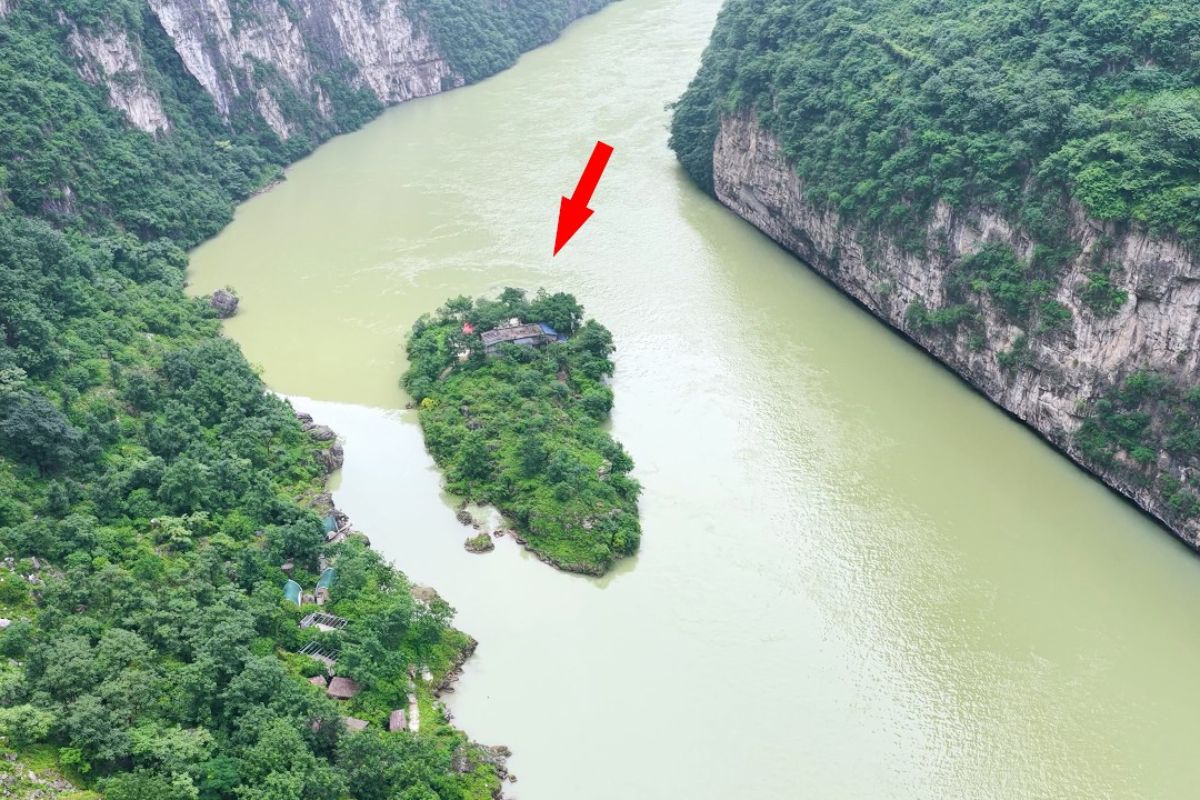


Family Lives Isolated on an Island in the Jinkou River Surrounded by Cliffs, Turbulent River, Butterflies and Preserved Forest, Where Silence and Self-Sufficiency Replace Urban Life and Show How a Family Unit Settled on a Reef in the Middle of the Canyon by Choice.
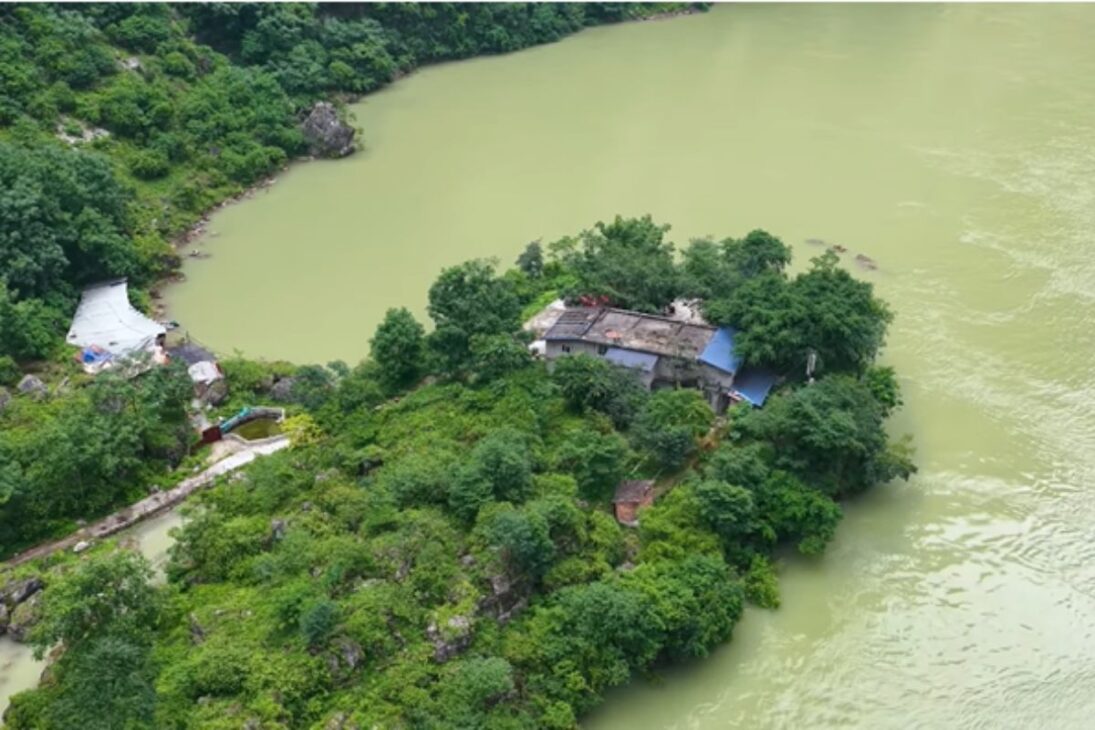
A family has lived isolated on an island in the Jinkou River for over two decades and transformed a rocky point in the middle of the canyon into a permanent home, even surrounded by tall mountains, strong currents, and limited access. Family lives isolated on an island in the Jinkou River and manages to maintain a stable routine because the location has gradually been structured with a house, power, a path carved into the rock, and spring water collection.
The setting is in the Grand Canyon of the Jinkou River, in Sichuan, a region described as one of the most beautiful in China, with steep cliffs and dense vegetation. Even so, the choice for permanence was not touristy, but a real occupation of the space. The family lives isolated on an island because they found there a combination of security, nature, and autonomy, even in a spot where the river is deep and the landscape gives the impression of permanent isolation.
How the Family Decided to Live Isolated on an Island
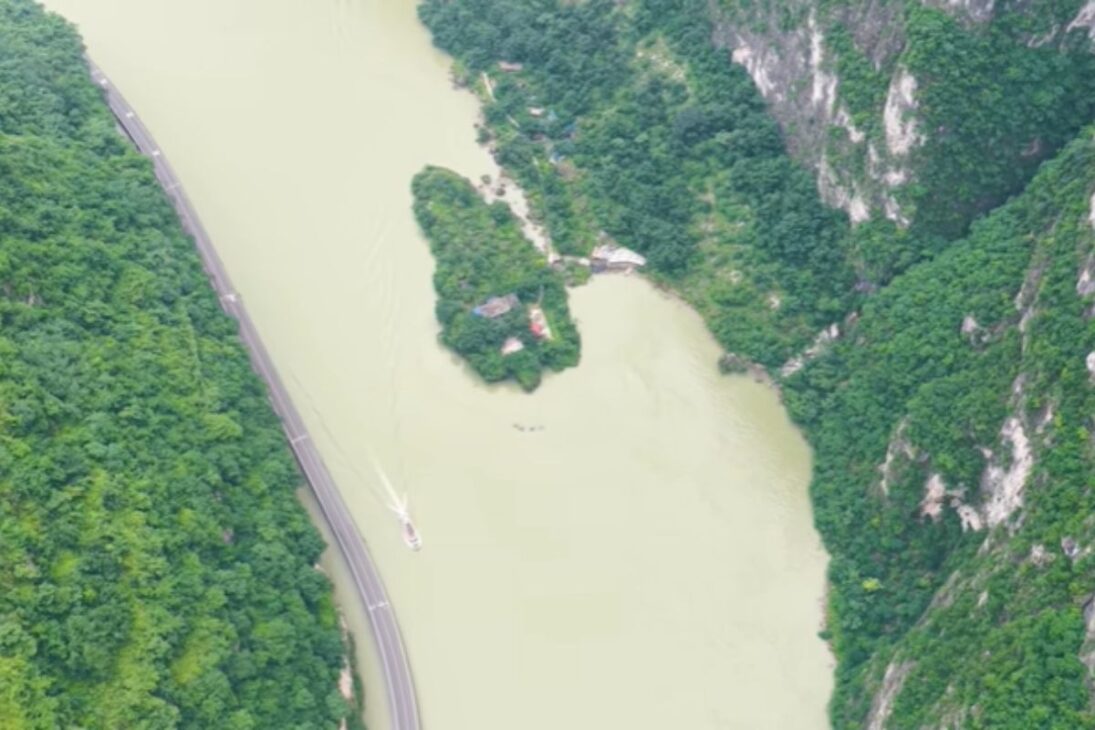
The initial point of the story shows that there was only a reef in the middle of the river and, even so, someone built a house there.
-
With over 14 million baskets of earth moved, an ancient North American metropolis built a monumental pyramid of 30 meters and established a city with 20,000 inhabitants nearly a thousand years ago.
-
A 1,900-year-old treasure emerges from a Roman house destroyed by fire and sealed since antiquity in Romania, with coins and metals fused among the ashes.
-
The Brazilian colonial city that stopped in time and shares territory with a rocket launch base.
-
79-year-old woman challenges limits, visits 193 countries in the world after 56 years of planning and reveals the behind-the-scenes of a global journey that few have managed to accomplish.

The obvious question is why a family would remain in such a remote location, surrounded by sharp cliffs and a muddy river during the rainy season.
According to the resident, the occupation began because the place was already used by the family for planting and hunting, and, over time, their stay became permanent. The family lives isolated on an island by choice and not by lack of options.
Before the current road, transportation was done via a cable and a simple sliding structure used to cross from one bank to the other.
Access was slower and more dangerous, and any trip to the market required leaving early and often sleeping in the city to have the strength to return the next day.
After the power plant in the region opened a path and installed poles, the journey became feasible for tricycles and improved the supply logistics without altering the isolation.
Physical Structure of the Island and Access Through the Canyon
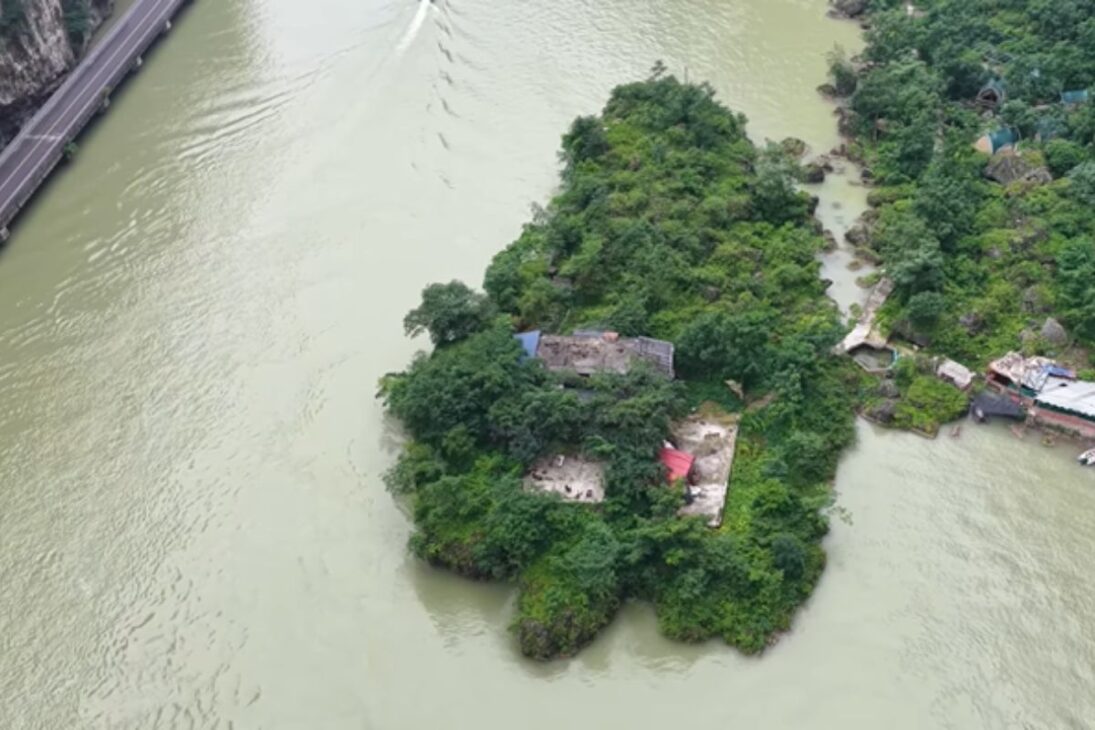
The current access goes through a large-span iron chain bridge and a road carved into the rock face.
The path shows that isolation does not mean abandonment. There are signaling towers, poles, and signs that the place has gained electricity.
The family lives isolated on an island, but with minimal infrastructure installed over the years.
The concern about flooding was also clarified by the resident. Even during the flood season, the river level does not reach the point where the house is built.
The resident explains that the dam below is lower and that the house sits above the flood line. This ensures hydrological safety for the residence and allows the maintenance of plantings and yard around.
The relief of the canyon, while intimidating, is made up of hard rocks that have not given way even during recorded earthquakes in the region, which reinforces the stability of the location.
Routine, Self-Sufficiency, and Adaptation to the Environment
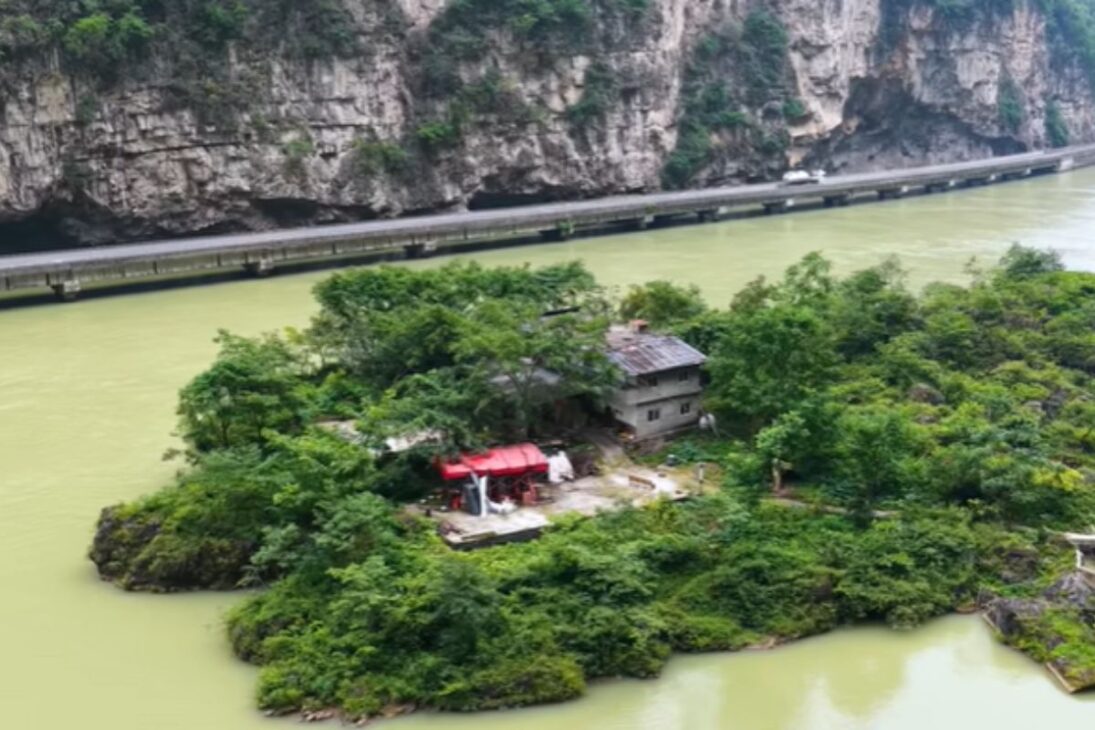
The house is made up of constructions built at different times. Part of the material was brought by zip line and part in lots, bags, and blocks carried manually. There is an outdoor living area with a table and TV, indicating that despite the remote location, there is electrical connection and some connectivity.
The family lives isolated on an island, but maintains a domestic routine similar to that of rural areas with access to electricity.
The water used comes from a spring on the hillside and has been channeled to the inhabited area through pipes. The water is clean and continuous, eliminating one of the main bottlenecks for those living far from urban centers.
Surrounding the house are gardens and subsistence crops with pumpkin, tomato, pepper, and fruit trees. A poisonous flower, the datura, was strategically planted to repel mosquitoes, showing attention to environmental management.
It is a logic of adaptation to the location and integrated use of nature without depending daily on the city.
Rich Nature, Butterflies, and Favorable Climate
A recurring aspect in the description of the place is the number of butterflies. At the entrance of the power station and along the path, there are many black and colorful butterflies, probably attracted by the humidity and the plants in the region.
The family lives isolated on an island surrounded by butterflies, walnut trees, and vibrant forest, in a microenvironment that reinforces the idea of a natural refuge.
The climate also favors permanence. The resident reports that the location is warmer in winter and cooler in summer compared to the top of the mountain. This means less thermal stress for older individuals and greater comfort throughout the year.
The shade provided by large trees in front of the house allows the use of outdoor space as a living area, something common in rural communities that have a wide yard and a view of the river.
Safety, Belonging, and Permanence in the Place
Another essential point is the history of occupancy. The resident claims that older relatives already used the place and that the territory was contracted and cultivated previously. Thus, the decision to live there was not random but a sequence of land use.
The family lives isolated on an island because they already had a practical relationship with the space and because the spot offered water, land, and a privileged view.
Even with the arrival of some infrastructure, the place has not become a tourist traffic area. What can be seen is a private property, with a dog at the gate, a two-story house, a large yard, and household materials laid out in the open.
The isolation is real, but it is also organized. The family balances the distance from the city with minimal access to services, especially after the road was opened by the power plant.
The permanence of over 20 years shows that the lifestyle adopted has been tested in practice and approved by the resident.
The family lives isolated on an island in the Jinkou River because the location offers autonomy, direct contact with nature, flood safety, and a suitable routine for aging in peace.
In a scenario of noisy cities and long commutes, the choice for silence, butterflies, and the river surrounding them gains strength and serves as a counterpoint to urban life.
Would you be willing to live this way, in a beautiful but isolated spot, depending on the road carved into the rock and spring water, for over 20 years?








Que maravilha,tudo que eu queria hj,não ter vizinho escutando funk
E quando da enchente?Como fica?
Eu pensei a mesma coisa … mas pelo que parece tem uma barragem de hidreletrica que controla o fluxo de agua
Eu pensei a mesma coisa … mas pelo que parece que tem uma barragem de hidreletrica que controla o fluxo de agua
Realmente, as fotos não têm conformidade, numa está afastada e noutra bem próxima à encosta.
Pode ser que a primeira foto está em época de cheia então alaga parte da lateral e em outra está baixo nível da água deixando maia espaço de terra e árvores.