





 Portuguese
  English
  Spanish
 6 min of reading
  25 comments


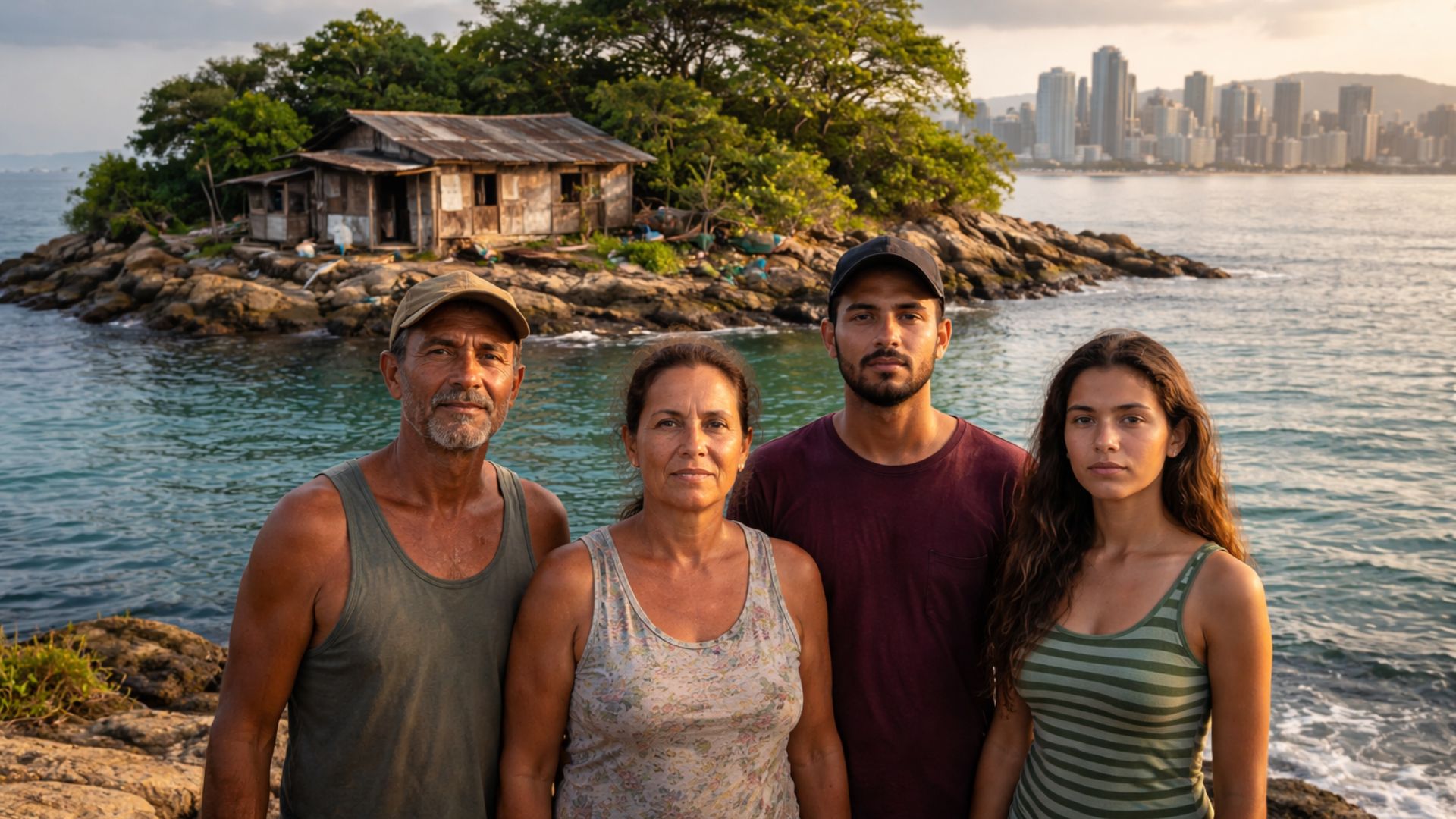


Routine Marked by the Sea and Isolation on an Island Visible from the Coast of Vitória Draws Attention for the Contrast Between the Urban Landscape and the Absence of Basic Services, Such as Running Water and Electricity, Maintained by a Family That Has Lived There for Nearly Five Decades.
A few meters from one of the most famous stretches of the coast of Vitória, in Espírito Santo, a family maintains a routine marked by silence, the influence of the tides, and a practical distance from the city, despite their geographical proximity.
On Ilha do Fato, near Praia de Camburi, the residents have lived for about 47 years without running water and without regular access to the electricity grid, even though they are facing an urban landscape that, seen from the mainland, suggests ease of infrastructure and public services.
This contrast stands out precisely because it combines constant visibility and structural isolation, creating a reality little perceived by those who observe the island only from the shoreline.
-
How an innovative city combines high technology, well-being, and sustainability to become the largest reference in clean energy on the planet.
-
Couple buys 1846 church in ruins for R$ 660,000, invests R$ 3.2 million in renovations, transforms it into a millionaire mansion, and even preserved a historic cemetery with over 300 graves.
-
He started running at 66 years old, broke records at 82, and is now a subject of study for having a metabolic age comparable to that of a 20-year-old, in a case that is intriguing scientists and inspiring the world.

-
Oldest tree on the planet reappears after 130 years of searches: Wattieza, 385 million years old, was 10 meters tall and had no leaves or seeds; Gilboa fossils in New York solved the mystery in 2007.


Visible to beachgoers, the location reveals, up close, a small house amid the vegetation, where daily life depends on fishing, traveling by boat, and improvised solutions to ensure subsistence.
Responsible for taking care of the area, the resident identified as a caretaker reports that food comes from what the sea offers and what can be produced on the property, while trips to the city are limited to essential commitments, such as health care, banking issues, and religious activities.

Life on Ilha do Fato and the Routine Far from the City
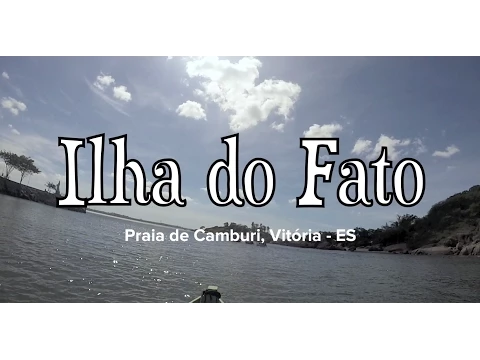
Situated in front of Píer de Iemanjá, in Camburi, Ilha do Fato is described as a patch of land with abundant vegetation and only one visible residential nucleus amidst palm trees, contrasting with the urban surroundings.
The house, consisting of four rooms, integrates with the natural landscape and has no direct connection to supply networks, such as those serving nearby neighborhoods in the capital, which requires constant adaptations in the family routine.
Without running water, daily life is organized around strict economy and continuous planning, paying attention to the use of every available resource.
The absence of fixed electricity, in turn, limits the use of appliances and imposes a different dynamic from that experienced on the mainland, altering common urban life habits.
Permanence Linked to Work and Adaptation to Isolation
The family’s permanence on the island is directly related to a work and living arrangement established decades ago, which has shaped a unique way of life.
According to journalistic accounts, the change occurred after financial difficulties, when the opportunity arose to occupy the location as caretakers, consolidating a permanence that has continued for nearly five decades.
Since then, all travel has depended exclusively on boating, redefining the relationship with the city and with the services available outside the island.
In this context, the sea assumes an ambiguous role, as it provides food and, occasionally, some income, but it also serves as a physical barrier for services and appointments that, in other areas of the capital, would be resolved by land transport.
Domestic Routine Without a Refrigerator and With Limited Electricity
The day on the island starts early and follows a unique organization, adapted to the limitations imposed by isolation and lack of infrastructure.
Still at dawn, the caretaker begins household tasks and looking after the animals kept on the property, structuring the routine according to what can be done in that environment.
Without a refrigerator, the storage of food needs to be carefully planned for quick consumption or immediate preparation, avoiding waste.
The presence of technology is minimal and restricted to what is essential, reflecting a routine far from urban standards.

Devices like television and DVD only work when a generator is started, which is not continuous, while cell phone use occurs in a limited manner, making the availability of electricity determine the pace of daily activities.
Fishing, Shellfish, and Dependence on Natural Conditions
The relationship with the sea also defines the family’s means of subsistence, which maintains a direct connection with the surrounding environment.
Fishing and shellfish gathering serve as the foundation of their diet and as an alternative source of income when there is demand, supplementing the family’s earnings.
This connection reduces some costs common in urban life, but, conversely, creates a constant dependency on weather conditions and tides to travel and conduct activities outside the island.
When the need to go to the mainland arises, the crossing is seen as an obligation, rather than part of a simple daily commute.
Tranquility as a Choice and Contrast with the City
Besides survival, isolation is described as a choice associated with tranquility and a sense of security.
The resident compares life on the island with the reality of denser areas of the city, where the fear of violence and economic difficulties tend to weigh heavily on daily life.
This perspective intermingles with memories from the early days of their stay, when the fear of the sea turned even the simplest outings into a challenge.
The period when the children needed to be taken to the mainland daily for schooling also remains a part of their memory, necessitating frequent and careful crossings.
Privileged View and Urban Discrepancy

From Ilha do Fato, the view of Vitória is vast and privileged, allowing a perspective of the city from an uncommon angle.
On clear days, it is possible to see the coastline of Camburi, stretches of beaches, and urban landmarks that contrast with the simplicity of the location.
The landscape brings together nature and city in the same frame, highlighting the dissonance between the two worlds.
While the capital has undergone urban transformations, with renovations and expansions in the area, life on the island has maintained its own pace, described as “stopped in time.”
This contrast helps to explain why the story sparks interest even outside the country, showing that, just a few meters from busy buildings and roads, a reality similar to that of isolated communities persists.
Isolation Even Within the Capital
The case illustrates how the notion of access can be relative, even in areas considered central.
Being close, in a straight line, does not mean being connected to the urban infrastructure available in the surroundings.
Water and electricity networks do not automatically reach certain geographical points when legal, environmental, or logistical limitations prevent service expansion.
In practice, what defines the routine is the means of arrival and departure, in addition to the availability of public services compatible with local realities, making transportation a central part of daily life.
Nearly Half a Century Between the Sea and the City
The permanence of a family for nearly half a century in a piece of land surrounded by water within the area of a capital raises reflections on housing, work, and belonging in urban spaces.
The caretaking, pointed out as the initial reason for the move, intertwines with building connections and adapting to a daily life where the city is always visible but not always accessible.
Between the tourist landscape and domestic life, Ilha do Fato continues to be an unusual address, contrasting with the urban surroundings.
A space that exposes a type of isolation that does not depend on kilometers of distance, but on actual conditions for access to basic services.
What does a place like this reveal about the invisible boundaries of access to water, electricity, and basic services in areas considered central and touristic?






Num demora algum famozim vai perturbar a paz deles querendo comprar a ilha
Eu, se soubesse sobreviver nestas condições,aceitaria morar numa ilha,me isolar com a mãe natureza,viver como nossos antepassados,parabéns a essa família.
Qual o sentido de colocar uma foto gerada por IA na chamada da matéria?