





 Portuguese
  English
  Spanish
  3 min of reading
  0 comments


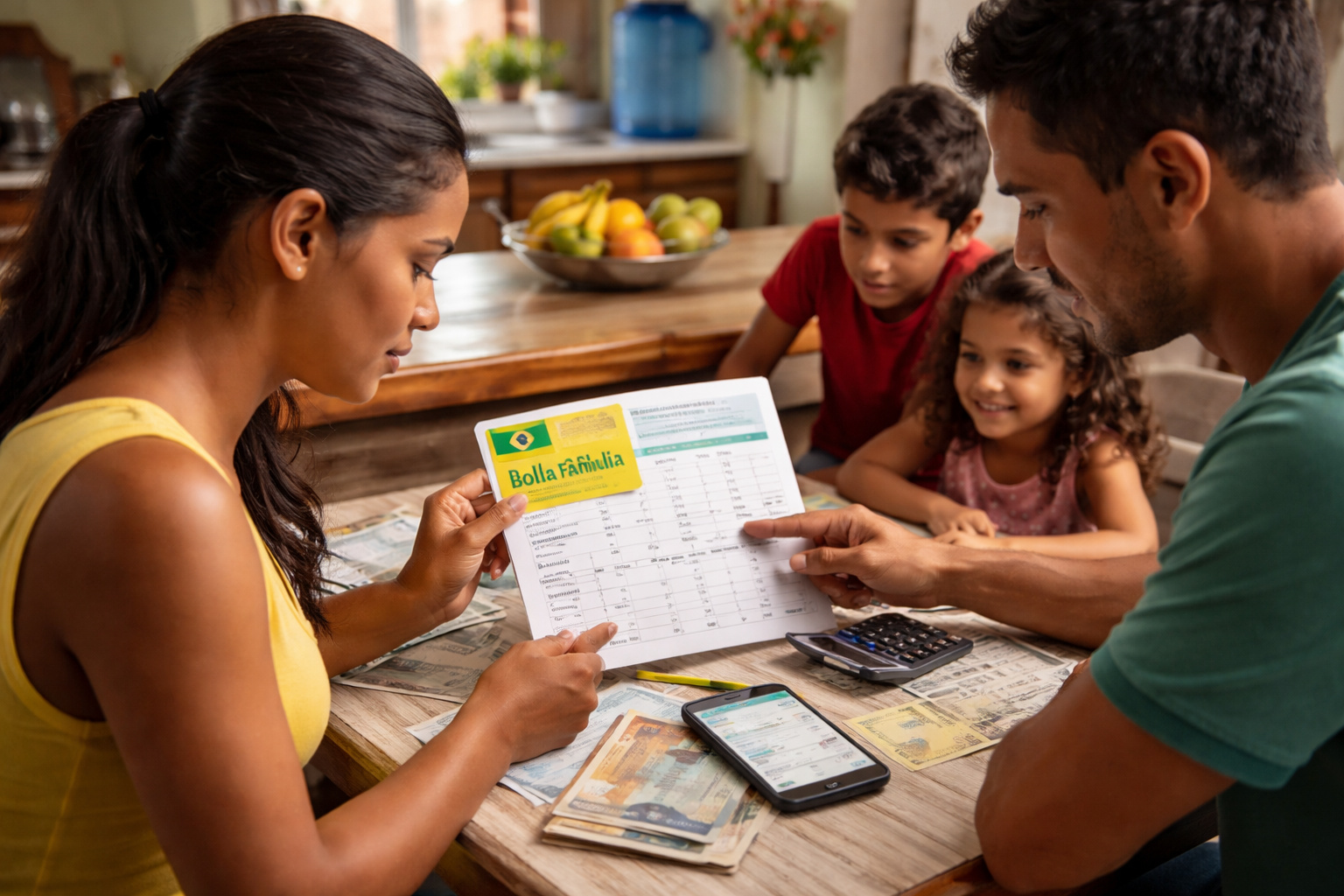
Government Confirms Dates, Criteria, and Rules of the Social Program That Serves Millions of Families in Early 2026
An administrative definition of great social impact was communicated in advance by the federal government, drawing the attention of beneficiaries across Brazil.
The payments of Bolsa Família referring to January 2026 officially begin on January 19, following the traditional model adopted over the past few years.
The release of funds occurs in a staggered manner, according to the final digit of the Social Identification Number (NIS), a mechanism used to organize the payment flow and avoid overload on banking systems.
This organization reinforces the program’s predictability and allows families to better plan the use of the benefit right in the first month of the year.
Official Schedule Organizes Transfers Throughout the Month
The calendar for January 2026 maintains the logic of the last ten business days of the month, starting with beneficiaries whose NIS ends with 1 and concluding with NIS ending in 0.
Thus, the government ensures that deposits are made in an orderly and continuous manner.
The confirmed dates are: January 19 for NIS ending with 1, 20 for ending with 2, 21 for ending with 3, 22 for ending with 4, 23 for ending with 5, 26 for ending with 6, 27 for ending with 7, 28 for ending with 8, 29 for ending with 9, and January 30 for ending with 0.
This schedule was disclosed by the Ministry of Development and Social Assistance, Family, and Hunger Combat, responsible for managing the Bolsa Família.
Unified Payment Ensures Speed in Exceptional Situations
In addition to the regular calendar, the government maintains a specific rule for municipalities in a state of emergency or public calamity, provided there is official federal recognition.
In these cases, the payment of Bolsa Família is unified, occurring on the first day of the calendar, regardless of the ending of the NIS.
This measure aims to ensure quick access to funds, especially in scenarios of extreme weather events or local crises that directly affect the families served.
-
The institute that trained the greatest aerospace engineers in Brazil has just opened its first campus outside São Paulo after 75 years: ITA Ceará will have R$ 445 million, new courses in energy and systems, and classes are expected to start in 2027.

-
Luciano Hang, owner of Havan, goes to Juiz de Fora after the tragedy in February, brings R$ 1 million, hands out R$ 2,000 cards, and donates up to R$ 15,000 to victims in the region.

-
The Brazilian passport allows legal residence in dozens of countries without the need for a prior visa, and most Brazilians are unaware that they can apply for residency directly upon arriving in nations in South America, Africa, and even Europe.

-
Petrobras sends a message to Brazilian truck drivers after fuel collapse and reveals plan to have 100% domestic diesel.


NIS Consultation Guides Beneficiaries on the Correct Date
To correctly identify the payment day, the Social Identification Number can be consulted through different official channels.
The NIS is available on the Citizen Card, in the physical Work Card, in the Digital Work Card, on the Meu INSS website and app, and also through in-person service at Caixa Econômica Federal agencies.
This diversity of channels reduces doubts and facilitates access to essential information about the program.
Income Criteria Define Who Is Entitled to the Benefit
Currently, access to Bolsa Família requires active and updated registration in the Unified Registry for Federal Government Social Programs (CadÚnico).
In addition, the monthly per capita family income must be up to R$ 218, according to the current rules disclosed by the government.
As a practical example, a family with seven people and only one minimum wage of R$ 1,518 as total income qualifies for the program, since the income per person reaches R$ 216.85, which is below the established limit.
Families’ Planning in Early 2026
With the calendar defined in advance, beneficiaries can organize essential expenses right at the beginning of the year.
The predictable schedule reduces financial uncertainties.
This factor becomes relevant during a period of adjustments and reorganization of the household budget.
Thus, Bolsa Família remains a central instrument of social protection, offering continuous support to low-income families.
In light of this scenario, is the predictability of the calendar sufficient to meet families’ needs, or should the program adopt new strategies at the beginning of each year?










-

Uma pessoa reagiu a isso.