





 Portuguese
  English
  Spanish
  3 min of reading
  0 comments


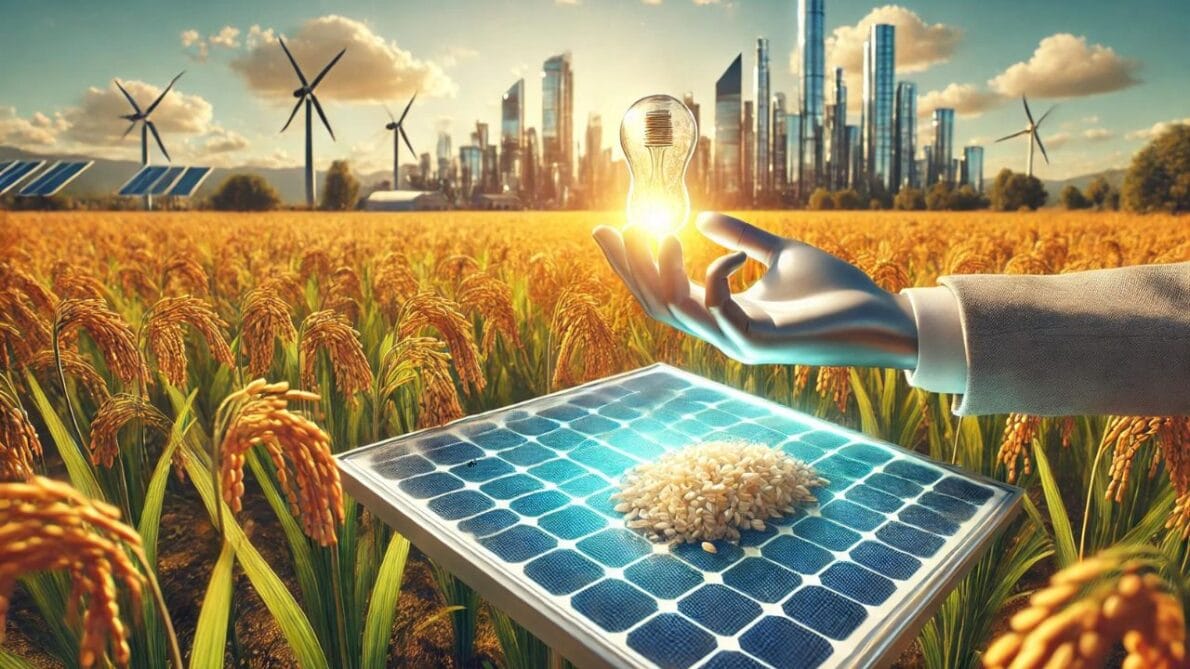
The New Solar Panel Made with Rice Seeds Promises to Revolutionize Photovoltaic Solar Energy.
Can you imagine that something as common in our cuisine as rice could be the key to revolutionizing energy generation? It sounds crazy, but the truth is that rice grains could be the major players in creating a new solar panel that is even more efficient and accessible than the current ones. And no, this news is not some crazy scientific invention.
Rice, with its unique properties, can revolutionize the market for our solar panels. Want to know more about this somewhat intriguing news?
Rice Energy for the Future of Solar Energy

Rice feeds more than half of the world’s population, serving as a rich source of energy for the human body. But this time, rice promises to revolutionize the photovoltaic solar energy sector, improving the energy output of solar modules. How? By making perovskite solar cells more stable and efficient at a cost much lower than traditional panels.
-
Seagri’s headquarters invests in solar energy with Neoenergia Coelba and promises to cut electricity costs, highlighting a strategic advance in sustainability and energy efficiency within state public administration.
-
Solar Pyramid draws attention by converting solar energy into million-dollar savings and repositioning the City Hall of Curitiba as an example of innovation, sustainability, and intelligent use of public resources.
-
Europe records strong euro economy with solar energy in March and sparks curiosity about which country leads growth that redefines the energy market and reduces costs.

-
Piauí reaches a historic milestone in energy transition: State records nearly 160,000 households powered by solar energy and leads growth in the Northeast.
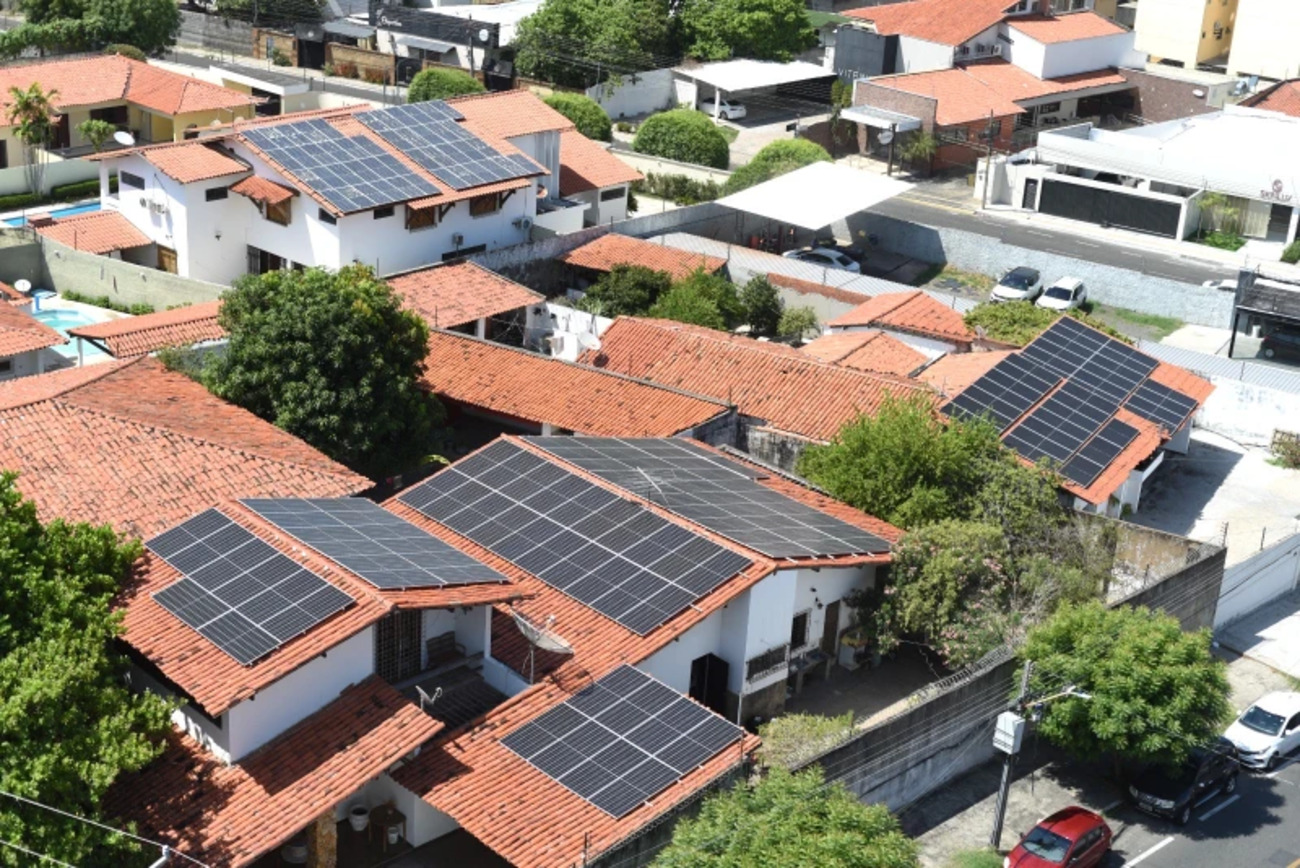

The Magic of Solar Light
Before we start talking about the rice panel, let’s better understand some details of sunlight that make all the difference in electricity generation. Sunlight is a form of electromagnetic energy with a wide range of nuances, from ultraviolet rays to infrared. Currently, the efficiency of traditional solar panels does not exceed 23%, because these photovoltaic cells only capture a small portion of the solar light spectrum. But what if I told you there is a new technology with the potential to capture much more energy?
The Revolution of Perovskite Cells
There is a very promising technology known as perovskite solar cells, which are capable of absorbing sunlight over a much broader range. However, despite their efficiency, these cells are very unstable, degrading rapidly when exposed to the environment. Researchers face the challenge of making the lifespan of these cells technically viable. That’s where the big idea comes in: rice seeds.
Rice in the Solar Panel: How Does It Work?
Engineers at the University of Houston, Texas, discovered a self-assembly method to produce solar cells from thin films of rice seeds. The process involves the slow, controlled growth of a uniform 2D crystal that is then ground down to form a kind of rice seed powder. This powder is dissolved in a solvent, and the resulting solution is spin-coated onto discs, evaporated, and finally crystallized. The result is a homogeneous and uniform surface that makes the method much more efficient.
The Big Advantage of the New Solar Panel Lies in Stability
Although the efficiency of the seeded growth method is slightly lower than other methods (reaching 17% compared to 26.1% in traditional perovskite cells), the significant advantage lies in stability. The photovoltaic films grown from rice seeds retained more than 97% of their maximum efficiency after 800 hours of continuous illumination, simulating sunlight without any thermal management. This is an impressive advancement.
A Lot of Work Ahead
Of course, turning this discovery into a commercially viable product still requires a lot of work. More development, testing, validation, patenting, scaling up production, certification, and regulatory approval are needed before we see these rice solar panels on the market. However, the use of rice seeds in the production of perovskite solar cells not only represents a promising technological advancement but also raises questions about the future of solar energy.
Imagine rice fields not only growing food but also producing raw materials for photovoltaic solar energy. While there are challenges to overcome, this technology is paving the way for a sustainable and energetic future. The new solar panel made with rice seeds has the potential to change everything, making solar energy more efficient, stable, and accessible. Let’s keep an eye on this innovation that could transform the way we produce and consume energy!










Seja o primeiro a reagir!