





 Portuguese
  English
  Spanish
  3 min of reading
  0 comments


Fed Starts Cuts As Early As 2025 While Copom Holds Selic At 15% Until Next Year
This week, global markets closely monitored monetary policy decisions. Projections indicated a divergent movement between the United States and Brazil. While the Federal Reserve (Fed) is expected to cut the benchmark interest rate as early as September 2025, the Monetary Policy Committee (Copom) is expected to keep the Selic at 15% per year until early 2026. This scenario widens the interest rate differential between the two economies.
Fed Decision Reflects Weakening Labor Market
According to the latest data from the Bureau of Labor Statistics (BLS), more than 900,000 job openings were revised downward in August 2025. This data confirmed signs of economic slowdown. Although inflation measured by the CPI rose 0.4% in August, totaling an increase of 2.9% over 12 months, weakness in the labor market weighed more heavily on expectations.
The Fed’s dilemma is balancing the risk of cutting rates too early with the risk of waiting too long. Such a wait could deepen the slowdown. Banks like Bank of America, Morgan Stanley, and Deutsche Bank project successive cuts of 0.25 percentage points, with a possibility of a total reduction of 75 basis points by December 2025.
-
Global trade hit a record and surpassed $35 trillion in 2025, but one-third of the growth came from a single sector that did not exist on a large scale five years ago, and the countries that profited the most were not the United States or China, but Taiwan, South Korea, and Southeast Asia, which have become the heart of the AI revolution supply chain.

-
Retirees receive double after error that left employees without salary.

-
It may seem like an exaggeration, but it’s not: your financial life can remain weak even with a high income if you don’t cut expensive debts, invest half of the increase for 12 months, and turn R$ 2,000 or R$ 3,000 monthly into assets.

-
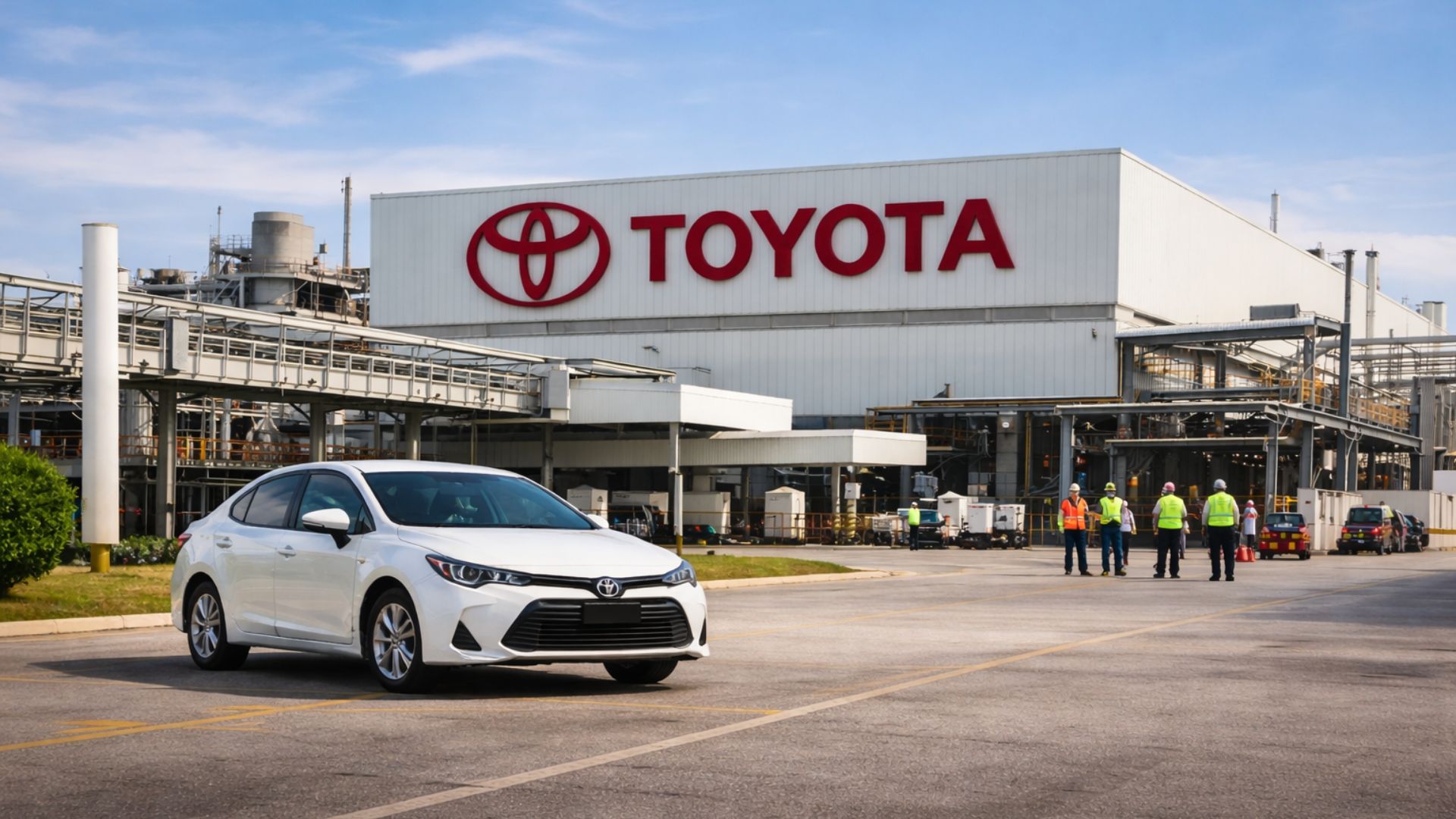
Toyota confirms the end of an era with the closure of a historic factory after nearly 30 years, transfers Corolla production, maintains 1,500 jobs, opens 500 positions, and announces an investment of R$ 11 billion by 2030 in a new phase in Brazil.
Projections For Gradual Cuts Until 2026 In The U.S.
Estimates indicate that the Fed could implement cuts in all three remaining meetings of 2025, according to reports from institutions like Deutsche Bank. Meanwhile, Morgan Stanley predicts four consecutive cuts of 25 basis points, starting in September and continuing until January 2026. Additional reductions are projected for April and July. The Fed Chairman, Jerome Powell, had already signaled this possibility in August 2025. He emphasized growing risks in employment.
Consequently, the expectation is that U.S. interest rates will end 2025 between 4% and 4.25% per year. This marks a monetary easing cycle faster than initially projected at the beginning of the year.
Brazil Expected To Keep Selic Stable Until Early 2026
In Brazil, however, the scenario is one of prolonged stability. The Copom has ended the Selic rate hike cycle at 15% per year and signaled that the rate will remain high. The justification is the presence of external uncertainties and resilience of domestic activity. According to Itaú Unibanco, cuts are expected to occur only in the first quarter of 2026, with a projected rate of 12.75% by the end of the year.
The C6 Bank also reinforced this perspective. The bank noted that inflation projections from the Boletim Focus have fallen to 4.8% in 2025 and 4.3% in 2026. Even so, the projections remain above the target. Despite the improvement, analysts advocate for maintaining a contractionary monetary policy. Only more solid signs of disinflation would justify changes.
Difference In Strategy Widens Interest Rate Differential
As a result, the differential between the American and Brazilian rates is expected to grow in 2025 and 2026. This difference reflects distinct strategies adopted by the central banks. While the U.S. responds to the loss of steam in employment, Brazil keeps rates elevated. The goal is to contain inflationary expectations and fiscal risks. Reuters highlighted that this disparity could impact capital flows and exchange rates. This requires greater caution in conducting domestic monetary policy.
Thus, the Fed’s cuts in 2025 contrast directly with the conservative stance of the Copom. The Selic is only expected to be eased starting in 2026. This scenario marks a significant difference in the management of the two largest economies in the Americas. This divergence is likely to resonate in the global market. After all, how will investors react to such opposing policies?








Seja o primeiro a reagir!