





 Portuguese
  English
  Spanish
 6 min of reading
  10 comments


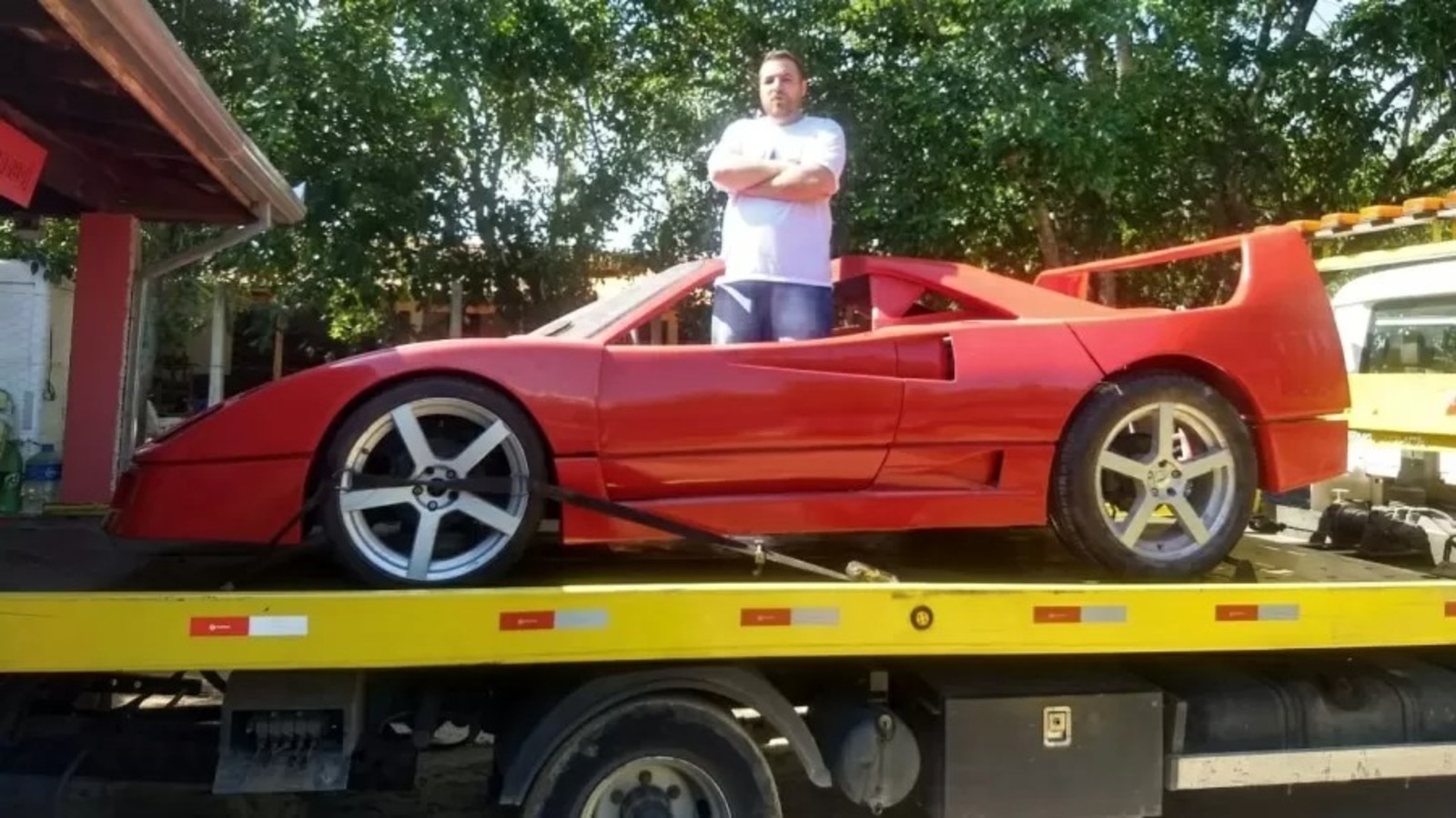


Decision Upholds Conviction for Plagiarism in Cachoeira Paulista, Recognizes Violation of Industrial Property Law, but Halts Collection Due to Absence of Seizable Assets from the Defendant During Officially Established Judicial Period
The lawsuit filed by Ferrari against dentist Vitor Estevan for a replica of the F40 in Cachoeira Paulista (SP) was suspended for one year after a court decision recognized plagiarism, set compensation at R$ 42.3 thousand, and established the current absence of seizable assets.
The latest ruling maintains the victory of the Italian automaker but temporarily halts execution, awaiting the possible location of the defendant’s assets throughout the established judicial period.
If no asset is identified by the end of the period, Ferrari may not receive any amount, despite the formal recognition of the violation and the financial penalty defined.
-
The noise law will no longer be in effect at 10 PM starting in June with a new rule valid during the 2026 World Cup.

-
The Chamber opens a debate on driver’s licenses at 16 years old as part of a reform that includes around 270 proposals to change the Brazilian Traffic Code and may redesign rules for licensing, enforcement, and circulation in the country.

-
The new Civil Code could revolutionize marriages in Brazil with “express divorce” and changes that could exclude spouses from inheritance.
-
Banco do Brasil sues famous influencer for million-dollar debt and intensifies debate on delinquency, risks of seizure, and direct impact on Gkay’s credibility.


The case involves a handmade replica of the F40 model, advertised online, which led the Justice system to characterize it as a violation of the Industrial Property Law.
Court Decision Recognized Plagiarism and Ordered Destruction of the Replica
In the judgment held in 2020, Judge Rita de Cássia da Silva Junqueira Magalhães from the 2nd Court of Cachoeira Paulista (SP) concluded that the vehicle constituted plagiarism.
The magistrate ordered the destruction of the replica in April 2020, in addition to prohibiting the defendant from manufacturing, promoting, or selling vehicles that imitated Ferrari models.
The request for compensation for lost profits and material damages was also granted, totaling R$ 42.3 thousand as set in the ruling.
Since then, however, no sufficient assets have been located in the dentist’s name to guarantee the financial fulfillment of the conviction.
Action Originated from Sales Advertisement for R$ 80 Thousand in 2018
The episode gained attention before the pandemic when, in 2018, Ferrari identified an online advertisement offering the replica of the F40 for R$ 80 thousand.
Although the advertisement was removed during that period, the automaker lodged a complaint with the Civil Police and initiated legal measures.
In 2019, the company hired a lawyer in Brazil and filed a lawsuit for patent infringement, requesting the seizure of the vehicle.
The investigation conducted by the Civil Police supported the judicial conclusion that it involved unauthorized reproduction of a protected model.
Replica Was Built from Scratch in a Residence in the Interior of São Paulo
According to the case documents, the project was fully executed by Vitor himself, motivated by his admiration for the Italian supercar brand.
The materials used included metals acquired from hardware stores and building supply stores in the region.
The metal sheets were cut in a laboratory set up by the dentist inside his own home in Cachoeira Paulista (SP).
However, the handmade construction did not negate the judicial understanding of infringement, particularly due to the incorporation of symbols and registered trademarks.
Dentist Tried to Reverse the Case with a Request for R$ 100 Thousand for Moral Damages
During the legal dispute, the defendant filed a lawsuit against Ferrari requesting R$ 100 thousand for moral damages.
He claimed to have suffered professional and psychological harm as a result of the exposure of the case and the seizure of the replica.
The request was denied by the Justice system, which did not recognize the automaker’s responsibility for the impacts alleged by the dentist.
The magistrate understood that there was insufficient evidence of compensable moral damage resulting from the company’s actions.
Interview with UOL Cars Revealed Defendant’s Financial Difficulties
In a conversation with UOL Cars in 2019, Vitor stated that he had been harmed in his professional career as a dentist.
According to him, the negative repercussions had affected his image and caused significant financial difficulties during that time.
The dentist declared that the decision to sell the vehicle sought to recoup the costs involved in building the replica.
The statements were attached to the case context but did not alter the legal understanding of the infringement.
Defense Claimed Absence of Commercial Intent and Amateur Work
The lawyer João Guilherme Cardoso de Oliveira, who represented the dentist at the time, argued that the amateur nature would distance any commercial intent.
According to the defense, a Ferrari customer would not seek a vehicle produced in an artisanal manner without industrial standards.
The lawyer asserted that the conduct attributed to the defendant did not align with the profile of the original brand’s consumers.
Nevertheless, the Justice system considered that the sale offer indicated a relevant commercial purpose for the judgment.
Ferrari’s Request for Moral Damages Denied by the Magistrate
Despite the main victory, Ferrari did not obtain compensation for moral damages in the case.
The judge understood that an internationally recognized brand would not have its image harmed by an isolated case of this nature.
According to the decision, the episode did not compromise the credibility or symbolic value of the brand among consumers.
Thus, the conviction was limited to material damages and lost profits recognized in the ruling.
Case Enters a New Phase After More Than 5 Years of Litigation
The one-year suspension marks a new stage in the case, which has already extended for more than 5 years in the Judiciary.
The aim of the measure is to allow for the eventual identification of assets from the defendant that would enable payment of the compensation.
Without such identification, the execution may be closed without any effective financial return to the Italian automaker.
The situation reinforces practical limits of judicial enforcement, even in cases with a definitive favorable ruling.
Expert Explains Legal Criteria for the Condemnation of the Replica
To clarify the outcome, the case was analyzed by Rodrigo Malheiros, a professor and legal consultant.
According to him, the judge recognized a violation of the Industrial Property Law due to the reproduction of registered design and symbols.
The use of trademarks like the prancing horse was considered a central element to characterize the violation.
The decisive factor, however, was the offer of the vehicle for sale, indicating a clear commercial purpose, the expert asserts.
Sale and Use of Trademarks Amplify the Severity of the Violation
Malheiros explains that trademark protection encompasses names, logos, and emblems, whose use without authorization is prohibited.
In cases of well-known brands, such as Ferrari, legal protection is even broader.
Even without the use of the logo, the total replication of the design may constitute a violation when it eliminates visual distinction from the original.
Commercialization worsens the offense, making the conduct subject to more severe civil sanctions.
Personal Use Without Profit Reduces Risk but Does Not Eliminate Infringement
The lawyer emphasizes that replicas for strictly personal use, without profit and devoid of trademarks, may present a lower legal risk.
Nonetheless, the mere use of original logos can characterize infringement, even without any sale involved.
The distinction between inspiration and total copying is crucial for legal evaluation of the project.
According to Malheiros, the law protects the originality and visual differentiation of registered trademarks.
Ferrari Maintains History of Stringent Actions in Brand Defense
The Brazilian case adds to other episodes involving Ferrari’s firm actions to protect its institutional image.
The automaker has already initiated lawsuits and taken measures against what it considers improper uses of its names and symbols.
These initiatives include disputes for exclusivity of names, image control, and restrictions on unauthorized customizations.
The strategy reflects a consistent policy of defending the commercial and symbolic value of the brand.
Disputes Involved Pages, Customizations, and Promotional Use
In previous episodes, Ferrari contested unauthorized use of its brand on social networks and commercial products.
It also demanded the reversal of customizations on vehicles that altered the original visual identity.
In some cases, the response resulted in the severing of commercial relationships with vehicle owners.
These actions demonstrate a pattern of conduct that prioritizes stringent control over public associations with the brand.
Closure Depends on Non-Existent Assets and Future Decision
In Brazil, the dentist’s case now enters a waiting game, contingent upon the identification of executable assets.
Without assets, the compensation of R$ 42.3 thousand may remain merely on paper, despite Ferrari’s formal victory.
The episode illustrates tensions between individual creativity, admiration for iconic brands, and legal limits imposed by industrial property.
It also highlights how such disputes can drag on for years, with uncertain financial outcomes and lasting repercussions, even for those acting out of personal passion.
With information from UOL.









Ferrari é uma piada, se doendo por causa do disso? Tá tão ruim das pernas que precisa de 40 conto? Vão se lascar!
Já fui vítima de roubo de propriedade e sei o que isso significa. Anos de dedicação, trabalho e investimento para um desclassificado copiar e vender com intensão de lucrar. Não aprecio a gestão da Ferrari, mas em relação a proteção dos seus direitos está correta.
É realmente um automóvel criado artesanalmente e único, exatamente como aquele que a Merdari diz que faz, mas não faz, mas todo mundo finge que acredita na mentira da Merdari.
A fato de alguém realmente fazer o que a indústria mente que faz, por um milhonesimo do preço, demostra o quanto estes canalhas nos roubam diariamente.
Que tal alguém plagiar, copiar, replicar algum invento seu? A Ferrari tem nome e imagem a zelar. Também por isso é a marca de veículos mais icônica do mundo.
Se vc acha a Ferrari uma ****, é só não comprar. Daí usar isso como justificativa pra plágio e falsificações, já é demais
Sempre tem o **** pra retrucar.
Falou tudo