





 English
  Francês
  Alemão
  Italiano
  Japonês
  Norueguês
  Portuguese
  Spanish
 3 min of reading
  8 comments


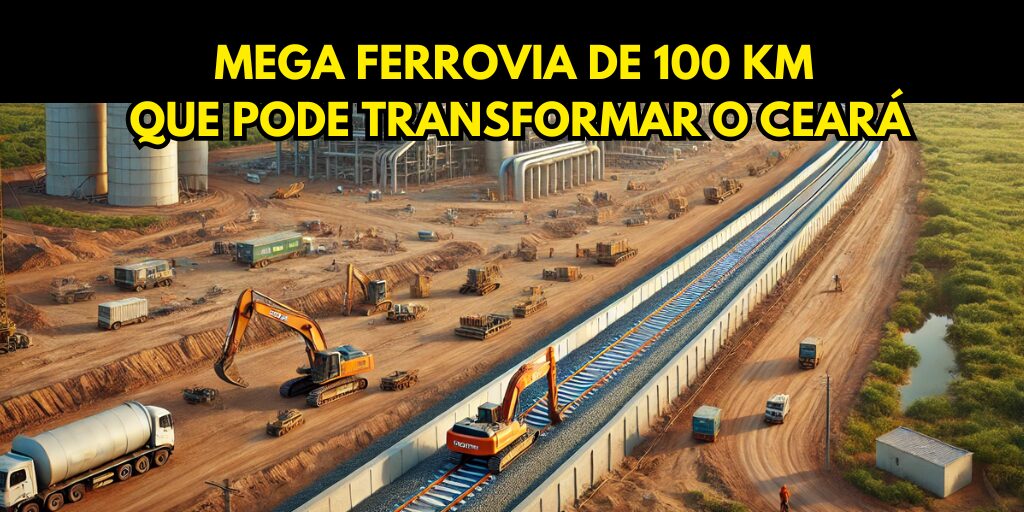

Discover How a 100-Km Mega Railway and an Investment of Nearly 2 Billion Reais Can Transform Ceará! Connecting the Uranium Plant to the Pecém Port, This Project Promises to Revolutionize Local Infrastructure and Economy.
In a move that could change the economic destiny of Ceará, a massive infrastructure project is about to be launched, involving astronomical investments and strategic planning that surprise experts and local residents. Details about this revealing initiative are beginning to emerge, promising significant transformations in the region.
Billion-Dollar Investment According to the National Confederation of Industry (CNI), the project to build a railway branch that will connect the Itataia plant in Santa Quitéria to the Transnordestina Railway is estimated at R$ 1.5 billion. With a length of approximately 100 kilometers, the average cost of R$ 15 million per kilometer reinforces the magnitude of this venture.
Strategic Objectives According to Heitor Studart, coordinator of the Infrastructure Nucleus at the Federation of Industries of the State of Ceará (Fiec), this railway is a fundamental structure for the flow of production from the Itataia phosphate mine. The connection will facilitate the transportation of material to the Pecém Port, boosting logistics and sector efficiency.
-
Chinese giant worth nearly R$ 4 billion that manufactures cables for electric cars, solar energy, and robotics wants to open a factory in SC.
-
Many employers do not know, but the law guarantees domestic workers a 25% increase in salary during trips, 50% for overtime, 20% for night shifts, and 17 additional benefits that can lead to labor lawsuits if not paid.

-
Gasoline prices soar and the question arises: is ethanol more advantageous? The 70% rule reveals the limit with gasoline.

-
The government has made a decision and is starting a test with more ethanol in gasoline, anticipating a mixture of up to 35%, diesel with 25% biodiesel, and a study to assess the impacts on engines.


Location and Planning
As studied, the intersection point between the new branch and the Transnordestina will be in an intermodal yard located between Acarape and Pacatuba. However, Studart highlights that the exact location is still being evaluated to ensure the best possible operational conditions.
In addition to the railway, there is the option of using the BR-020, a highway that already has significant heavy cargo traffic. However, this alternative would require adjustments and additional works, making the railway branch a more cost-effective and productive choice, as argued by Studart.
Deadline and Feasibility
The forecast is that the work will be completed in approximately one and a half years. This deadline is considered optimistic by some experts, but it is feasible due to the existence of an old branch of the Transnordestina Logistics Railway (FTL), which avoids the need for property expropriations and new environmental licenses. “These prerequisites are already met, accelerating the start of the project,” explains Studart.
Railway Regulation and Concession
For the operation of the branch, a concession authorization from the National Land Transport Agency (ANTT) is required. According to Studart, “this is done through a public hearing, where all interested parties can qualify”. This process ensures transparency and participation of the stakeholders involved.
Position of Transnordestina Transnordestina Logistics, through its press office, stated that “nothing prevents the possibility from being evaluated in the near future”. The company supports any initiative aimed at expanding complementary infrastructure, which could increase the potential uses of the Transnordestina railway.
Economic Impacts
The construction of the railway promises not only to improve the logistics of the phosphate industry but also to generate jobs and stimulate regional development. With the integration between the uranium plant and the Pecém Port, a significant increase in cargo movement is expected, strengthening the local economy and attracting new investments.
For experts, this 100-km railway represents a milestone in Ceará’s infrastructure, aligning with the goals of sustainable growth and innovation. The project, if executed as planned, could serve as a model for future development initiatives in Northeast Brazil.
Do you believe that this billion-dollar investment will truly bring the promised benefits to Ceará? Share your opinion in the comments!







Com certeza, isso está atrasado desde o 2° desgoverno.
Apenas em ano eleitoral tem esses assuntos aqui em Santa Quitéria,só eu tenho 36 anos que ouço isso, é dois mega açudes,a liberação da mina e agora mais essa de ferrovia🤣🤣
É só conversa pra **** dormir, tem mais de 50 anos essa conversa, e quando chega a campanha política por falta de assunto ela volta a ser lembrada, depois das eleições vai em esquecimento novamente.