





 Portuguese
  English
  Spanish
  5 min of reading
  1 comment


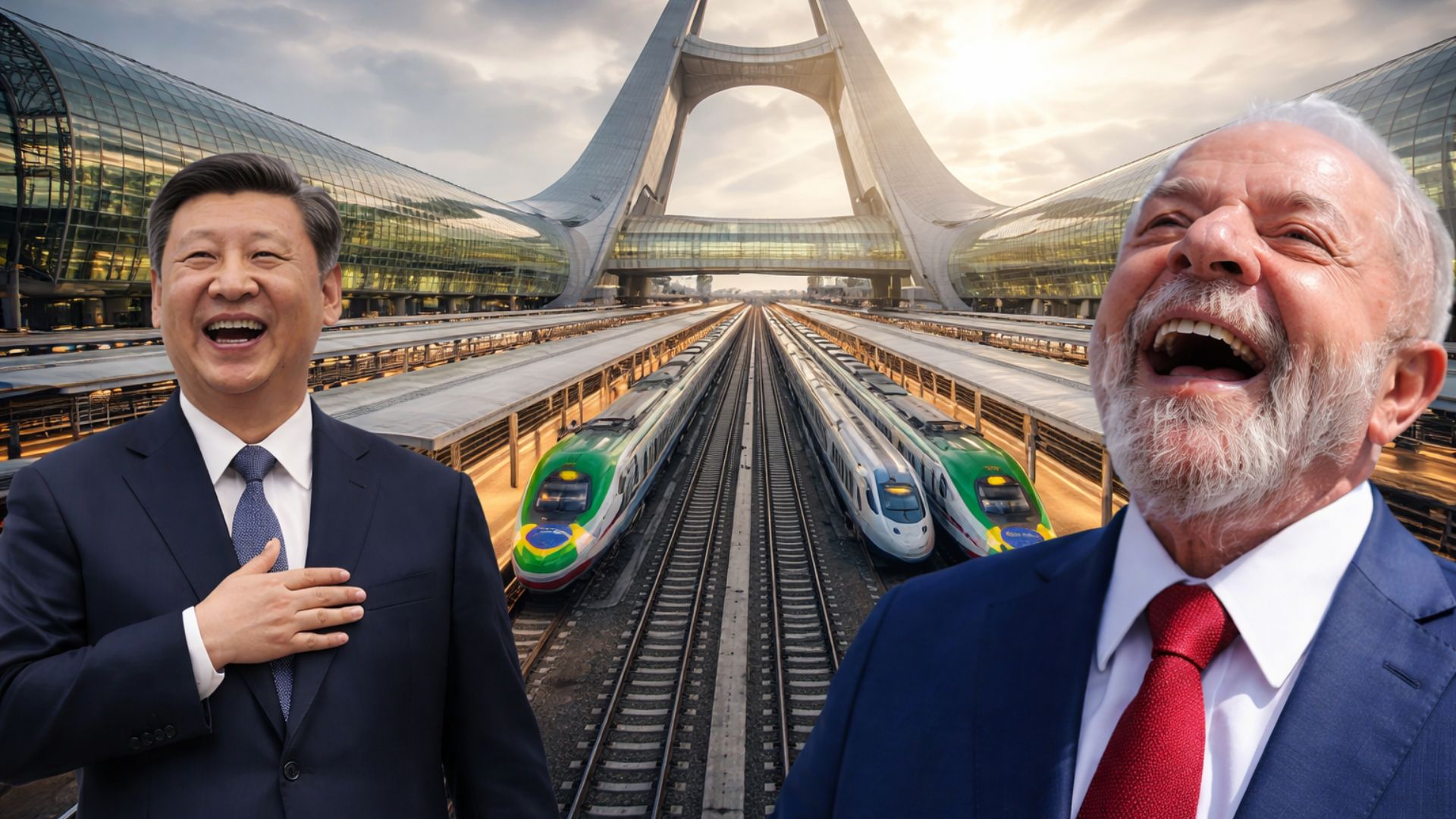


Rail Corridor Between Atlantic and Pacific Mobilizes Brazil, Peru, and China, Involves Billions in Investments, Crosses Amazon and Andes, and Could Reduce Export Time to Asia, Altering Historical Trade Routes and Expanding Geopolitical Disputes in South America.
The project of a railway linking the Atlantic to the Pacific has returned to the center of negotiations among Brazil, Peru, and China and is already mobilizing technical teams tasked with assessing routing, costs, and environmental impacts.
The proposal envisages a rail corridor capable of traversing the South American continent and creating a new export route to Asia.
The initiative, known as the Brazil–Peru Transoceanic Railway, aims to integrate railway sections under construction in Brazilian territory with an international connection to the Peruvian coast.
-
American Airlines starts selling trips as if they were flights, with check-in and baggage check at the airport, but on short routes, passengers board luxury buses connecting cities to major hubs in the U.S.
-
São Paulo surprises the world with a colossal railway network project that promises over 1,000 km of tracks, R$ 194 billion in investments, and 40 projects connecting the capital to the interior with fast and sustainable trains.
-
The world’s largest escalator, measuring 905 meters in China, reduces urban travel time from 1 hour to about 20 minutes and transforms mobility in mountainous regions with an engineering solution adapted to the terrain.
-
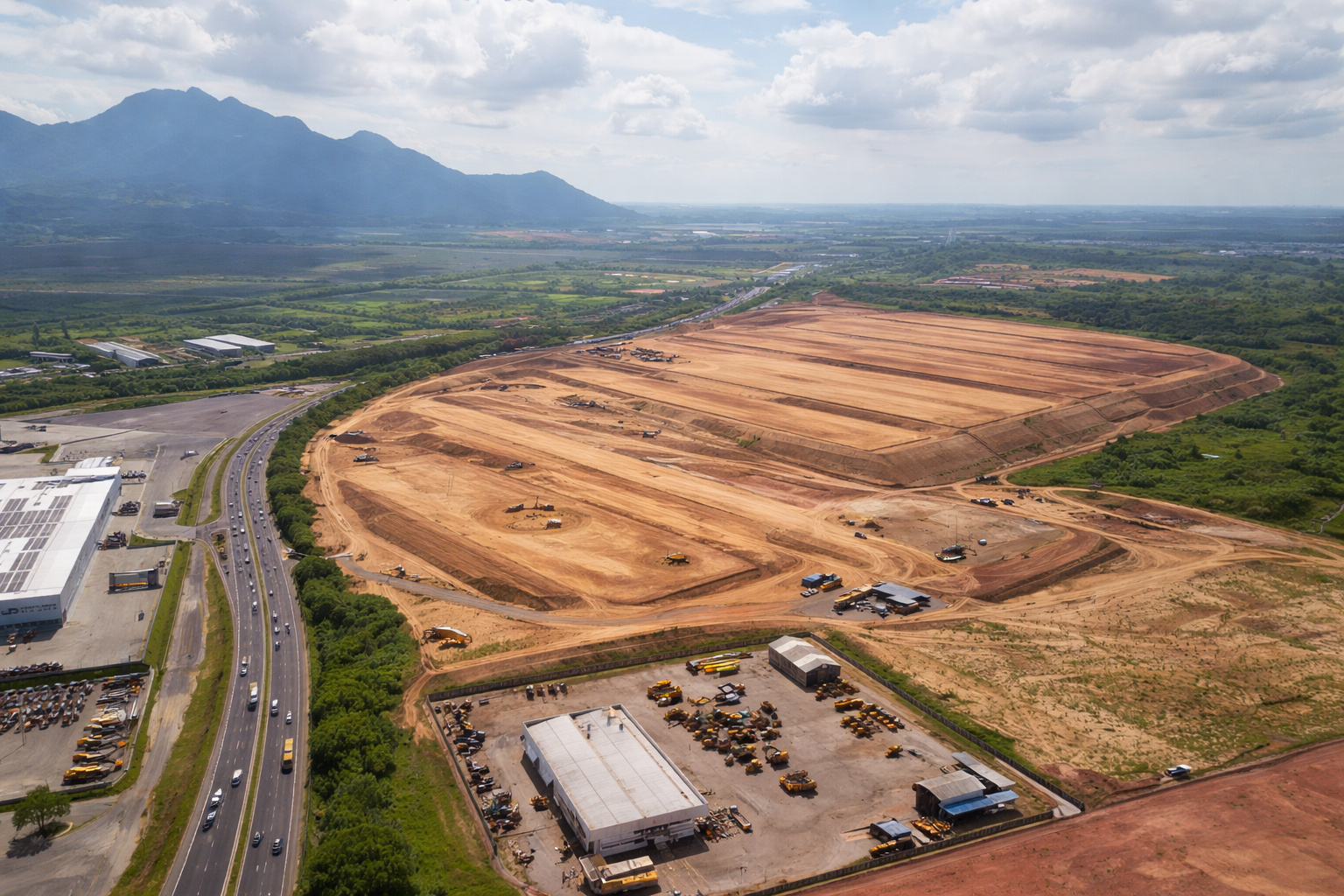
A R$ 300 million logistics giant is taking shape in Serra with over 100,000 m² and raises a question: how can this transform e-commerce and distribution in the state?

If confirmed, it could shorten the transportation time of Brazilian commodities to China by up to two weeks, depending on the point of origin of the cargo.
The formalization of the studies occurred in July 2025, when Brazil and China signed a memorandum of understanding to analyze the technical, economic, and socio-environmental viability of the project.
The agreement established a initial deadline of five years for detailed surveys and defining the financing model.
On the Brazilian side, the management of the studies is the responsibility of Infra S.A., a state-owned company linked to the Ministry of Transport.
The Chinese side is led by an institute affiliated with China’s state railway group, responsible for large-scale projects both domestically and internationally.
Routing of the Bioceanic Railway and Integration with National Network

The preliminary design envisions a connection to the North-South Railway and the Midwest Integration Railway, as well as the West-East Integration Railway, creating a continuous axis up to the border with Peru.
From there, the route would proceed towards the Pacific coast, with expected arrival at the port of Chancay.
The proposal is based on leveraging already planned sections in Brazil, reducing the need for entirely new works in some segments.
Nevertheless, the total extension could reach approximately 5,400 kilometers, depending on the path chosen after technical studies.
If the corridor is consolidated, cargo produced in the Midwest could travel by rail to the Pacific, bypassing the traditional route through the Atlantic and the Panama Canal.
This change would alter the historical logic of Brazilian foreign trade, which is currently heavily concentrated in ports in the South and Southeast.
How Much Could the Railway Between Brazil and Peru Cost
Investment estimates vary according to the route and engineering solutions adopted.
Projections discussed in academic analyses and preliminary reports indicate values between US$ 50 billion and US$ 80 billion, potentially exceeding this range if the route requires more complex constructions.
The cost per kilometer tends to increase significantly in areas of dense forest or mountainous regions, where extensive tunnels and large bridges would be necessary.
For this reason, the figures released so far are considered indicative rather than definitive.
The signed memorandum does not establish a financing model nor define the exact participation of each country in the investments.
The financial structure will depend on the results of the studies and future negotiations, including possible public-private partnerships or international credit lines.
Amazon, Indigenous Lands, and Crossing the Andes

The proposed routing traverses environmentally sensitive areas in the Brazilian Amazon, which imposes stringent licensing requirements.
Legislation requires in-depth environmental impact studies and consultations with potentially affected communities, including indigenous peoples.
Experts warn that large logistics corridors can lead to disorderly occupation, pressure on forests, and fragmentation of ecosystems if consistent land planning is not implemented.
In addition to the direct impact of the construction, there is concern about the indirect effect on land use along the railway.
In the international segment, crossing the Andes poses additional technical obstacles.
Operating trains at altitudes exceeding 4,000 meters requires specific engineering adaptations, as well as solutions for unstable terrains and areas susceptible to seismic activity.
These factors increase the risk of rising costs and delays, especially in a project that may take over a decade between planning, licensing, and execution.
Chinese experience in large-scale construction is often cited as a technical advantage, but it does not eliminate local challenges.
Reduction in Export Time to China
One of the main economic arguments presented by proponents of the railway is the reduction in transportation time to Asia.
Currently, loads shipped from the Southeast travel a long maritime route, often passing through the Panama Canal or around the southern tip of the continent.
With the bioceanic corridor, part of the route would be overland, allowing for direct shipping in the Pacific.
Estimates suggest a reduction of up to 14 days in certain logistics flows, although the gains vary depending on the origin of the goods and the efficiency of the integrated operation.
China is the main destination for Brazilian soybeans and ranks among the largest buyers of iron ore.
Thus, any reduction in transit time can represent significant savings in freight, insurance, and financial costs associated with capital immobilized during transportation.
Geopolitical Dispute Between China and the United States
The project is also part of a broader geopolitical context, marked by the expansion of Chinese investments in infrastructure in Latin America.


The construction of the port of Chancay with Chinese participation has reinforced Beijing’s presence on the South American Pacific coast.
U.S. authorities closely monitor the progress of logistics initiatives funded by China in the region, considering that new trade routes may alter strategic flows and reduce dependency on traditional bottlenecks.
In this context, the railway transcends the economic dimension and acquires diplomatic weight.
For Brazil, the discussion involves balancing commercial opportunities and preserving decision-making autonomy.
The expansion of the railway network is a long-standing demand from the productive sector, but the international scale of the project requires lasting political coordination among different governments.
Ongoing Studies and Long-Term Decisions
So far, the railway remains in the technical studies phase, with no construction timeline defined.
The next steps include detailed topographic surveys, consolidated cost estimates, analysis of environmental impacts, and financing negotiations.
Only after this phase will it be possible to determine whether the bioceanic corridor will proceed to execution or remain as a strategic project under evaluation.
The technical and institutional complexity suggests that any definitive decision will depend on internal and external consensuses over the coming years.
If confirmed, the connection between the two oceans could reshape trade routes, strengthen export chains, and deepen regional integration.
At the same time, it will require transparency, regulatory predictability, and environmental rigor compatible with the scale of the project.
With potentially significant benefits and equally relevant obstacles, public debate is likely to intensify as studies progress and figures become more concrete.
Will the construction of this railway represent a strategic logistical transformation or a risky long-term commitment for the country?









Se os países da América Latina forem espertos vão entender que Unidos Somos Mais Fortes… #AcordaBrasil