





 Portuguese
  English
  Spanish
  4 min of reading
  0 comments



With Middle East War, Petrobras Fertilizers Gain Strength and Help Stabilize the Brazilian Market.
The resumption of Petrobras fertilizer production is already starting to directly impact the Brazilian agricultural market.
The state-owned company has resumed operating factories in the Northeast, increasing the supply of urea in Brazil at a critical moment, marked by the escalation of the Middle East war, which affects global supply chains.
The initiative involves units located in Bahia and Sergipe, which have restarted operations in recent months.
-
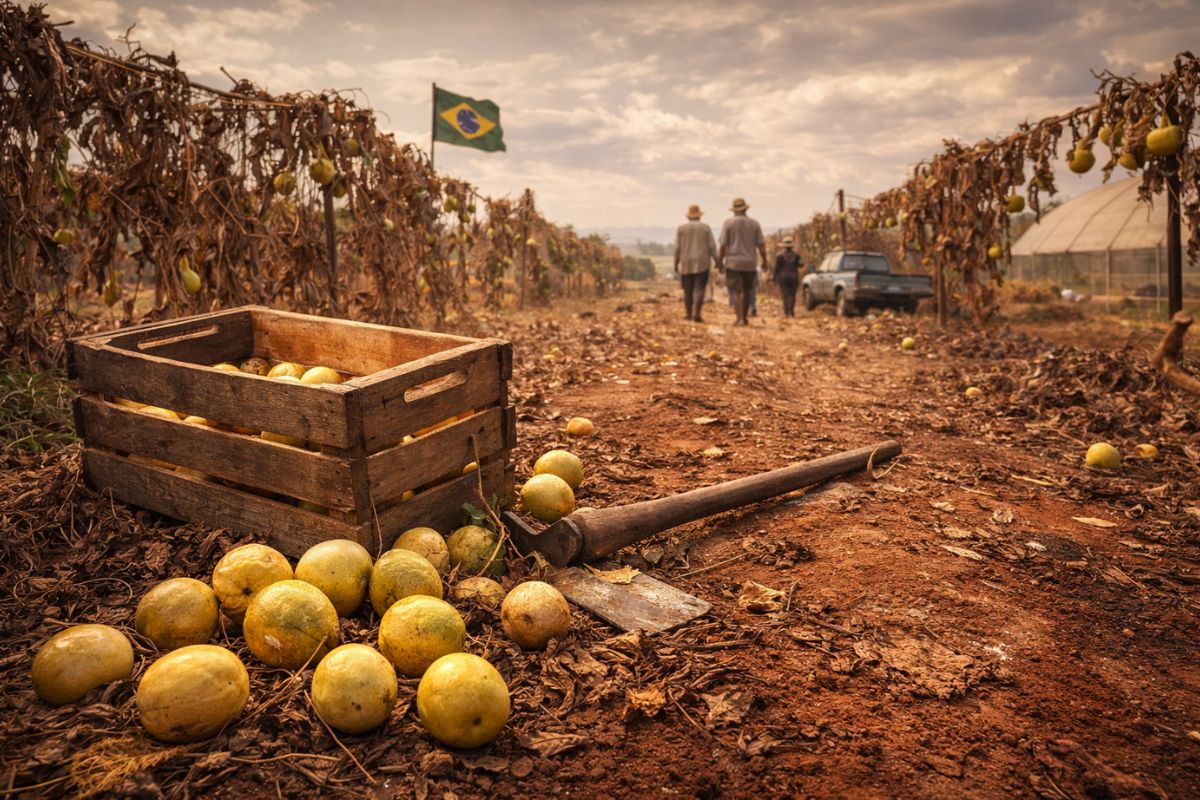
From 130 producers in the year 2000 to just 15 today: the dramatic decline of passion fruit in Araguari shows how the lack of labor in the Brazilian countryside is killing a decades-old agricultural tradition, even with Brazil being the largest producer in the world.
-
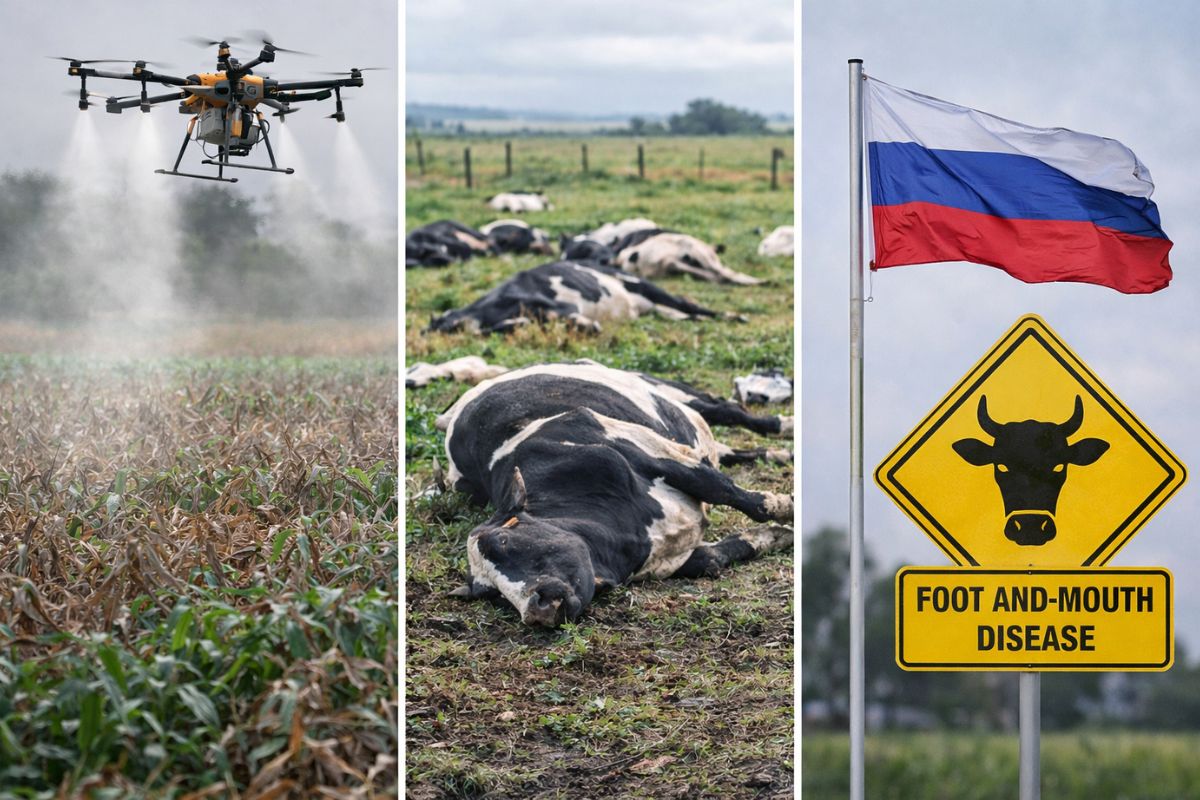
Agricultural drone sprayed poison into the air and destroyed the neighbor’s crops, causing 1 million in damages; 48 cows died from nitrite poisoning in the pasture, and Russia is hiding a possible outbreak of foot-and-mouth disease: the week was brutal for the rural sector.
-
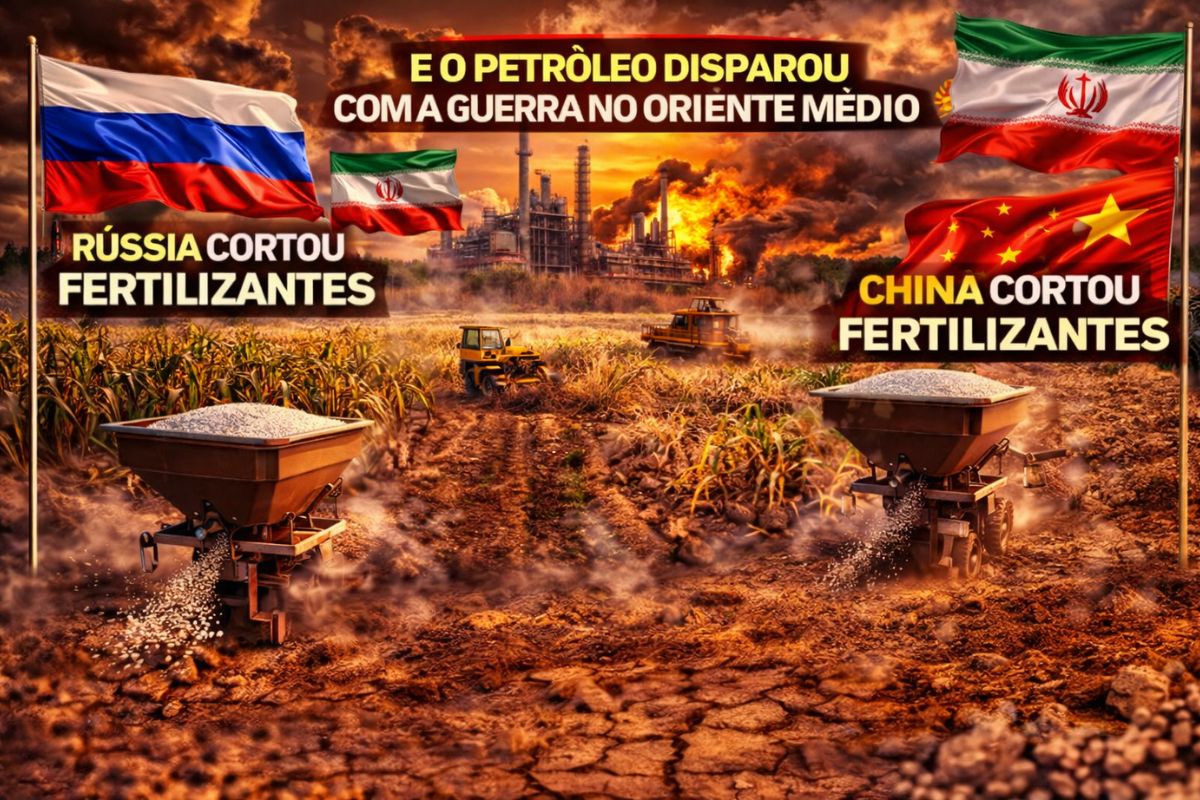
Russia cut fertilizers, China cut fertilizers, and oil prices soared with the war in the Middle East: sugarcane producers in the interior of São Paulo are seeing costs explode from all sides and warn that the effects will take months to be absorbed.
-
It does not come from flowers, is produced only every two years, and more than 90% goes straight to Europe: meet the bracatinga honeydew honey from Santa Catarina, considered one of the rarest in the world and overlooked by Brazil itself.


Together, these plants are now operating at about 90% of their capacity, helping to reduce the risks associated with fertilizer imports, especially amid international tensions.
This resumption occurs in a strategic context.
In 2025, about 35% of Brazil’s external urea demand originated in the Middle East, a region directly impacted by recent geopolitical conflicts.
National Distribution Expands the Reach of Urea in Brazil
The production of Petrobras fertilizers is already being distributed to several states.
The sale of urea in Brazil occurs both in bulk and in “big bags,” serving important markets such as Bahia, Goiás, Mato Grosso, Minas Gerais, Espírito Santo, and São Paulo.
Additionally, the production of nitrogenous fertilizers also includes ammonia, primarily directed to the petrochemical hub in Camaçari, Bahia.
This not only strengthens the agribusiness but also the regional chemical industry.
Meanwhile, the increase in domestic supply helps to ease pressure on supply.
Nonetheless, Brazil still relies heavily on fertilizer imports to meet its demand.
Nitrogenous Production Helps Reduce External Vulnerability
Experts point out that the advancement of nitrogenous production in the country is an important step to reduce international dependency.
Still, the scenario requires caution.
“The increase in urea production in Brazil can help soften external shocks and reduce some of the uncertainties that exist in the nitrogen market, given our reliance on imports,” said StoneX market intelligence analyst Tomás Pernias to Reuters.
On the other hand, he emphasizes that Brazil will remain exposed to external factors.
In other words, fertilizer imports will still be decisive for price formation in the country.
Middle East War Pressures the Global Fertilizer Market
The recent intensification of the Middle East war has raised the level of uncertainty in the international market.
Attacks involving the United States, Israel, and Iran have directly impacted the global flow of fertilizers.
Although only about 2% of the urea imported by Brazil in 2024 came from Iran, the weight of the Middle East as a whole is significant.
Countries such as Oman, Qatar, Saudi Arabia, and the United Arab Emirates account for a relevant share of Brazilian purchases.
In total, Brazil imported about 7.7 million tons of urea last year.
Of this volume, approximately 2.7 million tons came from the Middle East region.
Rural Producers Face a More Challenging Scenario
Despite the increase in supply through Petrobras fertilizers, the scenario for rural producers remains delicate.
The terms of trade between agricultural commodities and inputs remain unfavorable.
“The purchasing power of the producer was already not good before all of this. Now, the doubts have increased,” said Jeferson Souza, an analyst at Agrinvest Commodities.
According to him, the current context is more complex than what was observed in 2022.
At that time, despite the war in Ukraine, agricultural prices were higher, and credit was more accessible.
Production Capacity Grows in the Northeast
The numbers from the resumption show consistent progress.
In Sergipe, the plant produces about 1,250 tons of ammonia and 1,800 tons of urea daily.
In Bahia, nitrogenous production has surpassed 95% of capacity, with approximately 1,300 tons per day of urea.
These results reflect a clear strategy of the federal government.
The reactivation of the factories was encouraged by President Luiz Inácio Lula da Silva as a way to reduce external dependence.
Plans Expand Petrobras’ Market Participation
Petrobras intends to further expand its operations in the sector.
The goal is to achieve 20% of the national urea demand with the resumption of Araucária Nitrogenados (Ansa) in Paraná.
In addition, the company plans to reach up to 35% of national production with the completion of UFN-3 in Três Lagoas (MS) in the coming years.
Ansa has already started a hiring process with 126 open positions.
The unit has the capacity to produce 720,000 tons of urea and 475,000 tons of ammonia per year.
Meanwhile, the UFN-3 project is advancing in the hiring phase.
The expectation is that investments will be approved by the first half of 2026, allowing the resumption of construction.
Petrobras Fertilizers Gain Strategic Role in Agribusiness
With the combination of increased nitrogenous production and external uncertainties, Petrobras fertilizers are assuming an increasingly strategic role.
Although they do not eliminate dependence on fertilizer imports, they help reduce vulnerabilities in times of international crisis.
Thus, Brazil gains more predictability in supply, even in scenarios like the Middle East war.
This movement reinforces the importance of investing in domestic production, especially in a country with a strong agricultural vocation and high demand for essential inputs such as urea in Brazil.
See more at: Petrobras Sells Fertilizers to Several States and Mitigates Risks with War









-

Uma pessoa reagiu a isso.