





 Portuguese
  English
  Spanish
  4 min of reading
  0 comments


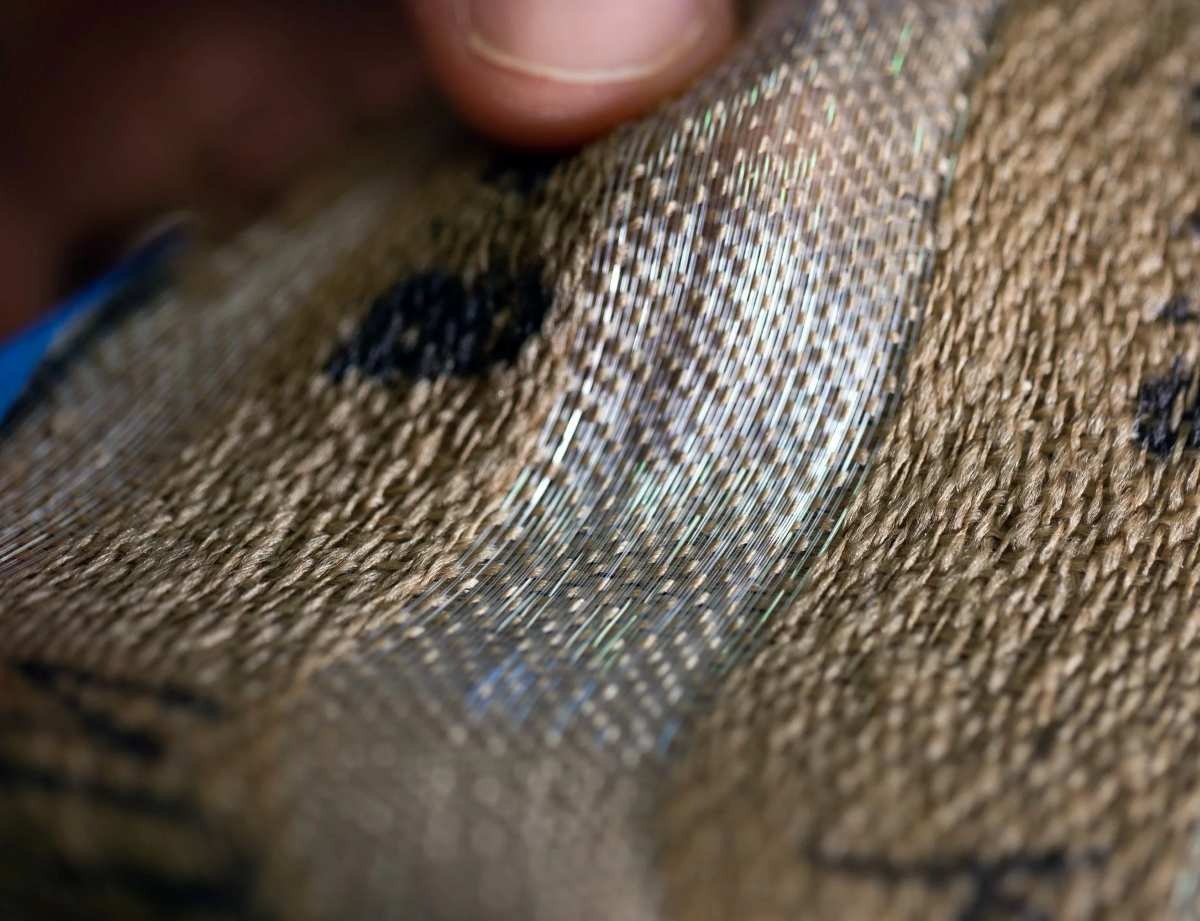
With New Technology Created by Researchers at the University of Michigan, Startup Fibarcode Develops Invisible Photonic Fibers That Act as Permanent Barcodes Integrated Directly Into the Fabric to Identify Origin, Composition, and Authenticity of Clothing
The startup Fibarcode, born at the University of Michigan, has developed an innovative technology that can completely transform the way clothing and fabrics are identified and recycled. Unlike traditional tags, which can be cut, worn, or lost, the new solution proposes to integrate information directly into the fibers of the fabric, creating an invisible and impossible-to-remove barcode.
These “invisible tags” remain integrated into the material and withstand time, allowing for precise identification of the type of fabric, country of origin, suppliers, and even manufacturing details. The goal is clear: to improve recycling, facilitate repairs, and combat counterfeiting, issues that still hinder the advancement of sustainable fashion.
The Problem of Removable Tags
Every year, more than 92 million tons of textiles are discarded worldwide. Less than 15% go through some sort of recycling. One of the main obstacles lies in the lack of reliable information about the material composition of clothing. Without this information, recyclers cannot properly separate synthetic, mixed, or natural fabrics, making the process expensive and inefficient.
-
How the terraforming of Mars can transform the planet: artificial aerosols can increase the temperature by up to 35°C in 15 years, creating conditions for liquid water.

-
Scientists drilled nearly 8,000 meters into the ocean floor above the fault that caused the 2011 tsunami in Japan and discovered that a layer of clay 130 million years old was responsible for making the wave much worse than any model had predicted.

-
Thousands of years after causing the largest eruption of the Holocene, one of the world’s largest supervolcanoes is rebuilding itself beneath the sea south of Japan, receiving new magma and alarming scientists with its transformation.

-
China has activated a magnet 700,000 times more powerful than the Earth’s magnetic field that operates for over 200 consecutive hours while consuming little energy, and now the world wants to know what Beijing plans to do with this technology in 2026.


The majority of conventional tags are ultimately cut off by consumers or wear out with use, making it impossible to trace the exact composition of the items. The solution proposed by Fibarcode eliminates this problem by embedding a kind of “optical fingerprint” into the fabric itself, creating a label that cannot be separated or counterfeited.
The Power of Photonic Fibers
Fibarcode’s innovation comes from the use of photonic fibers, developed by Brian Iezzi’s team. These fibers do not rely on pigments or electronic circuits but rather on microscopic structures made of acrylic and polycarbonate that manipulate light in a way similar to butterfly wings or hummingbird feathers.
Instead of reflecting color through pigmentation, these structures generate colors and optical patterns through their own composition. This allows each fiber to be encoded with a unique combination of wavelengths — ranging from ultraviolet to infrared.
The result is a unique optical signal that identifies each piece of clothing, production batch, or material used.
When scanned with specific instruments, the fabric reveals its complete identity: material composition, country of origin, supplier, and even dyeing processes. This information can help verify brand authenticity, optimize sorting in recycling centers, and make clothing repairs much more precise.
A Jump to the Circular Economy
Current textile recycling still relies on manual and costly sorting, and often unidentified material ends up being incinerated or thrown away. With photonic fibers, sorting becomes automatic and reliable, allowing for quick separation of fabrics and repurposing of quality raw materials.
The project has already received $1.6 million in funding from the National Science Foundation (NSF) and operates in partnership with Oak Ridge National Laboratory, one of the most advanced innovation hubs in the United States.
Currently in the pilot phase, Fibarcode is seeking partners from the textile industry and recycling centers willing to integrate the technology from the design stage of clothing, without altering texture, color, or appearance. The goal is to build a new foundation of real, accessible, and sustainable traceability for the sector.
Authenticity and Smart Repair
The application of photonic fibers is not limited to recycling. The technology also brings direct benefits to brands and consumers in a market filled with counterfeiting. Clothing with “optical DNA” allows for precise verification of an item’s authenticity, without the need for external tags.
Additionally, sewing workshops and second-hand stores can scan fabrics to discover exactly what materials they are made of, facilitating repair and reuse. This reduces waste and extends the life of clothing, a crucial practice for transitioning toward circular fashion.
The integration of this invisible information transforms the concept of transparency: it is not about slogans or green marketing but about verifiable data incorporated directly into the product.
A Powerful Tool for a Sustainable Future
Fibarcode advocates that photonic fibers are not an isolated solution but an essential component of a structural change in the sector. Among the expected impacts are:
- Reduction of textile waste, allowing for high-quality recycling.
- Eco-friendly design, with clothing made to last and be repurposed.
- Promotion of repairability, with clear information about materials and origin.
- Combating greenwashing, through verifiable environmental data.
- Support for traceability legislation, like those being debated in the European Union and Canada.
With growing pressure for transparency and sustainability, the large-scale adoption of this technology depends on the joint engagement of brands, recyclers, and governments. The challenge will be to incorporate it as a standard, and not as a luxury differentiator.
Clothing With Its Own Identity
If Fibarcode’s technology is widely adopted, each piece of clothing could carry its own story, woven into its structure. This completely changes the logic of disposal: what was once waste becomes a recoverable resource, with proven value and traceability.
Amid the climate crisis and the growth of the fashion industry, initiatives like this demonstrate that innovation and sustainability can go hand in hand. Smart clothing, that communicate their origin and composition, could mark the beginning of a new era — one where dressing also means actively participating in a more transparent and responsible production cycle.










Seja o primeiro a reagir!