





 Português
  Inglês
  Espanhol
  3 min de leitura
  2 comentários


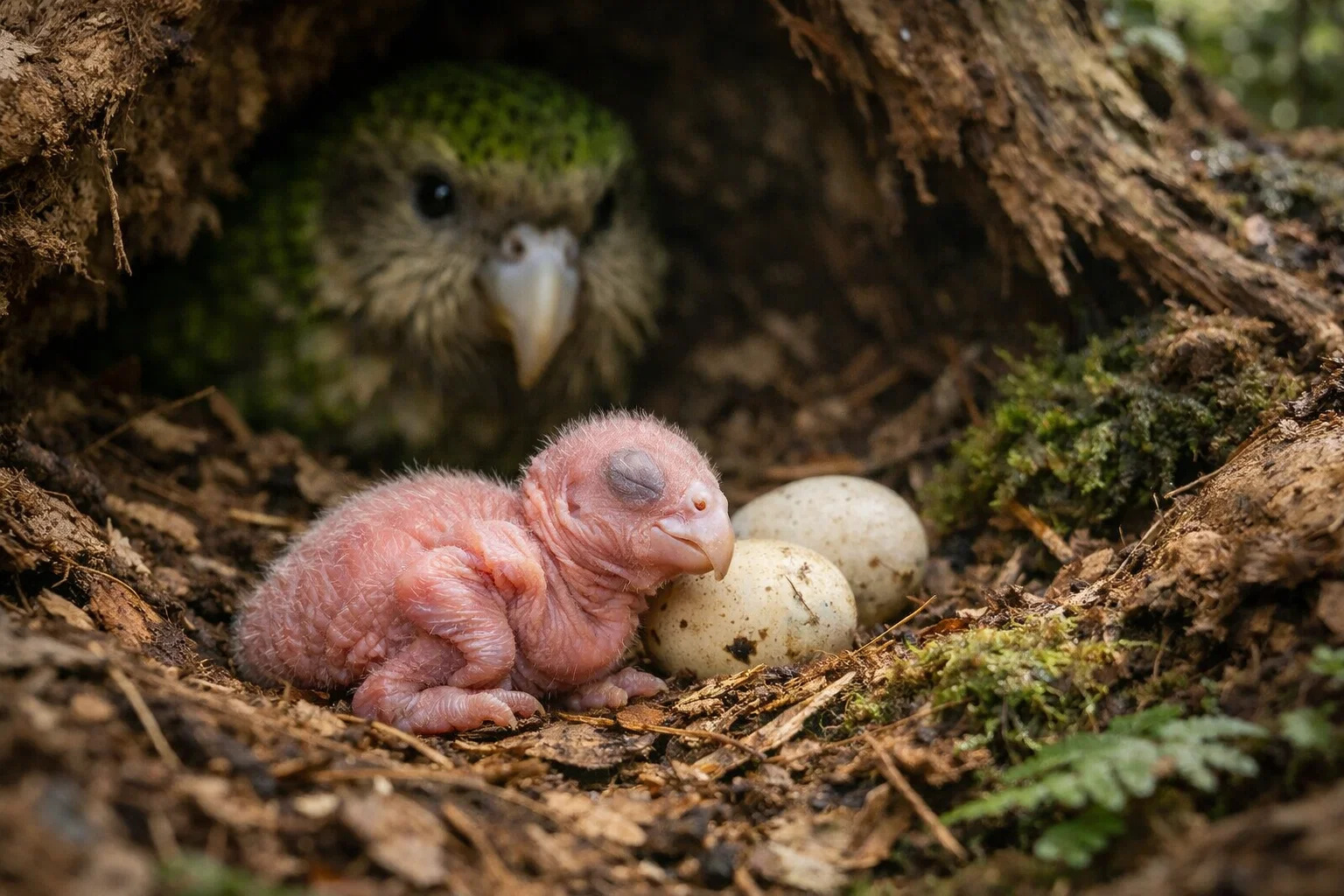


Tiwhiri’s Birth in New Zealand Ignites Hope for Kakapo Conservation, A Species That Had Only 50 Individuals in the 1970s and Today Numbers About 230 Birds
After four years without any new breeding records, a rare event brought excitement to scientists and environmentalists in New Zealand. The birth of a kakapo chick, one of the rarest birds on the planet, marked an important moment for international conservation programs for the species.
The little chick was named Tiwhiri and was born on February 14, a date when the country celebrates Valentine’s Day. For this reason, the birth was seen as a symbolic moment in a long effort to prevent the extinction of the kakapo.
The information was reported by UOL, based on data from the Department of Conservation of New Zealand, responsible for monitoring the population of this rare bird and coordinating the species recovery program.
-
Omoda & Jaecoo and AiMOGA Robotics advance in industrial artificial intelligence with a strategic debut in Thailand and a focus on advanced automation.

-
In a scenario of rising fuel prices, Omoda & Jaecoo enhance value for consumers with a range of up to 1,200 km, energy efficiency, and a new concept of worry-free mobility.

-
Cement battery inspired by chemistry used since Ancient Rome resurfaces as a rechargeable thermal solution and enters the competition for the future of industrial heat.

-
Scientists have found in the dark depths of the North Sea giant marks from 18,000 years ago left by colossal icebergs, and the discovery could help predict the future of Antarctica.


The kakapo is a flightless nocturnal parrot, a rather unusual characteristic among birds. In addition, it has one of the slowest reproductive cycles in nature, making each birth an extremely significant event.
Rare Reproduction Depends on Native Tree Fruiting
One of the reasons that make the kakapo so vulnerable is its slow reproduction. Unlike other birds, this species usually reproduces only every two to four years.
This process only occurs when there is abundant rimu fruiting, a native tree of New Zealand that provides essential nutrients for females during reproduction.
Therefore, when the fruit production is insufficient, kakapos simply do not enter the breeding period that year.
Currently, the number of individuals is still extremely limited. According to the Department of Conservation of New Zealand, there are approximately 230 kakapos alive.
This number represents a considerable advancement compared to the critical situation recorded in the 1970s, when there were only about 50 documented birds.
Even so, population growth remains slow.
In this breeding season, for example, researchers found 187 eggs, of which only 74 were considered viable. Still, not all eggs are expected to hatch, and not all chicks survive to the fledging stage, a crucial step for survival.
Protected Refuges and Technology Help Save the Species
To protect kakapos and increase the chances of chick survival, scientists keep the species in highly monitored natural refuges.
One of the main conservation sites is Pukenui Anchor Island, where the chick Tiwhiri was born. The environment is free of introduced predators and receives constant monitoring by specialized teams.
Additionally, cameras installed in the nests allow real-time tracking of egg development and the birth of new chicks.
According to Tãne Davis, a representative of the Kakapo Recovery Group, this strategy also helps bring the public closer to the conservation project.
According to him, the so-called “Kakapo Camera” allows people from anywhere in the world to follow the births and contribute to funding the program.
“The Kakapo camera is a great way for people to see conservation in real-time and make their own contributions to nature from home, the office, or anywhere in the world,” he explained.
Thus, each new chick represents more than just a simple birth. It symbolizes an important step in the attempt to ensure the future of one of the most endangered species on the planet.
Source: UOL







Opa, tudo bom? Eu sou **ErisMar Antônio de Arajo Neto**. Sou um jovem e acredito que, para essa criatura ter uma vida mais longa e não entrar em extinção, o Brasil e várias outras nações do mundo deveriam aderir a esse **** como pet, sem tanta burocracia.
Isso poderia ajudar a espécie a prosperar. Vamos ver, por exemplo, o caso da **píton-******. Eu sei que é um **** que poderia mudar a fauna do local se fosse solto na natureza, mas essa ave não apresenta nenhum risco para o nosso mundo nem para a fauna de nenhum lugar.
É um **** simples de criar e bem dócil. Acho que minha **cacatua** é até bem mais perigosa que esse ****. Então, antes de comemorar e sair aplaudindo, todos nós podemos fazer a diferença e ajudar a mudar a vida dessa espécie.
Sou jovem posso estar errado totalmente
Muita propaganda junto com a matéria