






 Portuguese
  Spanish


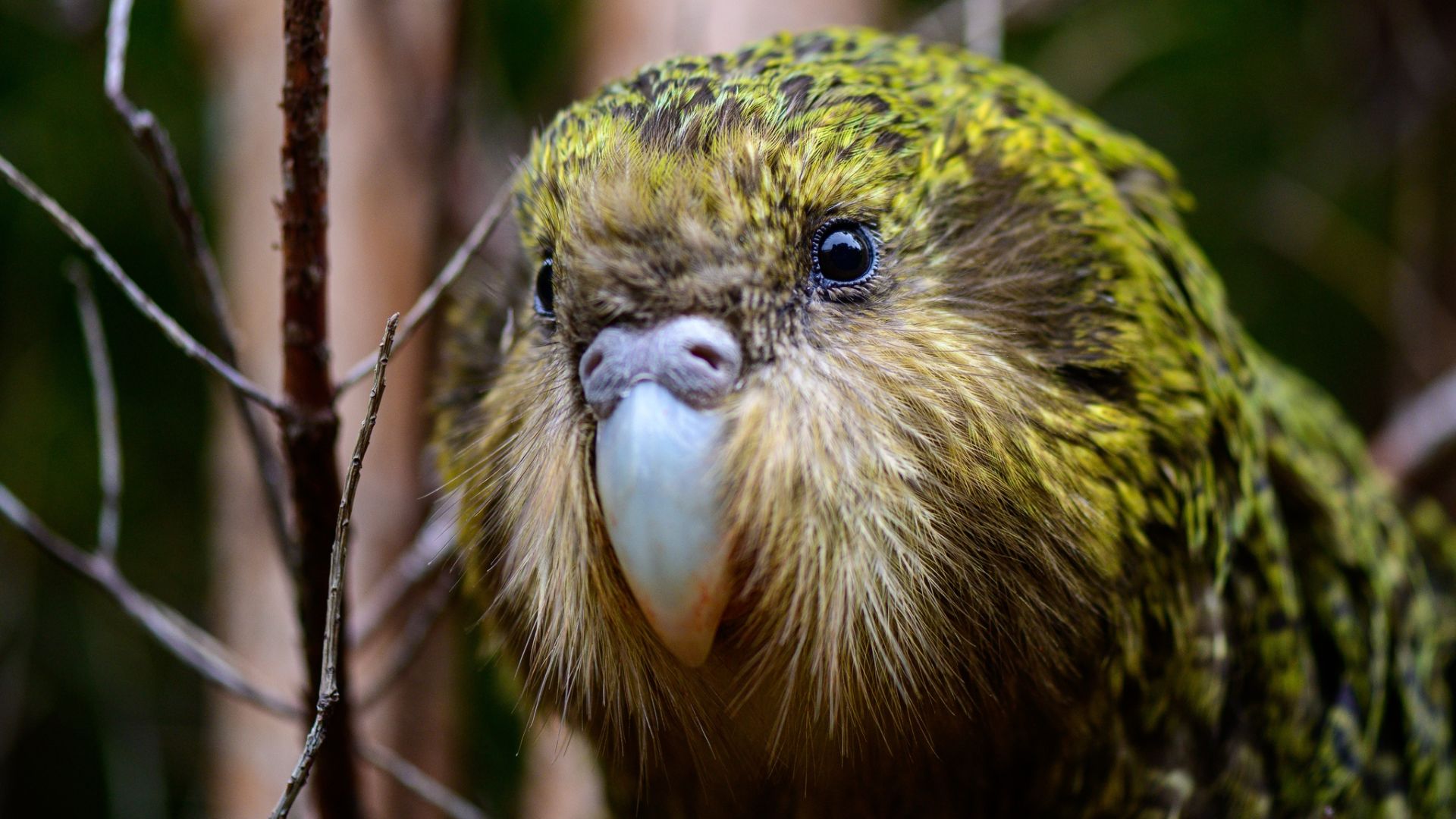
Ancestral Sounds Echo in the Forest of New Zealand as Rare Event Rekindles Hope for One of the Most Endangered Birds on the Planet, Which Depends on the Fruit Production of Native Trees to Reproduce and Faces Limits Imposed by Its Own Biology and Decades of Human Pressure.
The kākāpō, a nocturnal parrot and flightless, can live for decades and weigh up to 3.6 kilograms, making it the heaviest in the world.
With only 236 known living individuals in New Zealand, the species entered this year into a breeding season deemed critical by conservationists, following a rare event of mass fruiting of a native tree, the rimu, which acts as a trigger for mating.
Authorities expect that the abundance of the fruit, resembling small berries, will result in the birth of more than 50 chicks, the largest number ever anticipated in a single cycle.
-
Couple Sold Everything to Restore a 300-Year-Old Abandoned Mansion, Uncovering Ancient Books and Untouched Rooms

-
Couple Builds Sustainable Home from Straw Bales, Wood, and Clay in Brazil
-
At 64, Grandma Sônia Turned Homemade Recipes into a Family Business, Growing Casa de Bolos to Over 600 Locations and Expanding to Portugal

-
Brazilian Couple Builds Underground Bunker in Santa Catarina Amid Fears of Crises and Shortages, Spending $10,000 and Learning Construction from Scratch, Videos Go Viral


The announcement revitalizes a program that aims to steer the bird away from the risk of extinction, but progresses at the pace dictated by the animal’s own biology and the need to keep it away from introduced predators.
Kākāpō Reproduction Depends on Rare Forest Cycles
Unlike species that reproduce annually, the kākāpō relies on an irregular calendar.

Reproduction usually occurs when there is a large supply of food produced in cycles of intense fruiting, primarily from the rimu.
This means that in years of low production, even individuals of reproductive age may not breed.
Teams from the New Zealand Department of Conservation closely monitor the availability of fruits and the birds’ responses.
The current harvest has been described as particularly abundant, which has increased confidence that there will be more nests, more eggs, and consequently, more chicks.
Andrew Digby, a biologist with the agency and a researcher of the species for over a decade, linked the increase in reproductive activity to the “feast” provided by the rimu.
“Technically, it’s a bird,” he said in a phone interview, comparing the animal to “a pile of moss” that moves slowly.
In the same conversation, Digby stated that in behavior and presence, the kākāpō resembles “the avian version of a badger.”
Unique Sound Ritual Marks the Mating Season
The announcement that reproduction has begun came after signs observed by conservationists, who monitor each individual.
Small transmitters help measure movements, health conditions, nesting status, and even information related to mating.
When the males enter the competition period, their behavior draws attention even from those familiar with New Zealand’s biodiversity.

The kākāpō is the only parrot in the world with lek breeding, a system where males gather in a communal area to display vocalizations and compete for the attention of females.
Before “going on stage,” they spend months preparing paths and clearings that facilitate sound propagation.
Then, they occupy depressions they clear in the ground, like small bowls, and vocalize at low frequencies.
“They puff up like a football and then make the boom,” Digby said. The deep call can be repeated for weeks, functioning as an announcement of presence over large areas of forest.
Evolution Without Predators Made the Species Vulnerable
The kākāpō evolved in New Zealand for millions of years in an environment without terrestrial mammalian predators.
In this context, it gained weight, adapted to the ground, and gradually lost the ability to fly.
Additionally, it developed nocturnal habits and a survival strategy that does not include quick escape from threats.
This set of characteristics became a problem when humans settled on the islands with new animals.
Hunting and habitat loss had already affected the population after the arrival of Polynesian colonists, around 700 years ago.
Later, European colonization accelerated the decline by deforesting areas and introducing food competitors, such as deer and possums, as well as predators like cats, weasels, and rats.
Rescue on Sanctuary Islands Prevented Extinction
In the mid-1970s, there was a period when authorities reported difficulty in locating even a single individual.
The situation changed after finding a population in the south of Rakiura, an island at the southern tip of the country.
The discovery laid the groundwork for a rescue and translocation operation that, between 1980 and 1997, relocated identifiable surviving individuals to sanctuary islands.

In these locations, non-native predators were gradually eradicated. Since then, the program has combined physical protection, individual monitoring, and management interventions.
The result was a slow, yet consistent increase from 51 individuals in 1995 to the current 236 kākāpōs, including dozens of females of reproductive age.
Growth Poses New Challenges to Conservation
With birds distributed across three main protected breeding areas and smaller test locations, the conservation team faces space limitations.
The search for new safe areas has become a central part of the plan, as the prospect of reintroducing them to mainland areas depends on predator-free environments.
<p“They used to be the fourth most common bird in New Zealand, they were absolutely everywhere,” Digby said. “And we want to bring them back.”
It is expected that the first chicks will start to hatch in February.
If the projection holds, the season could mark one of the most significant moments in the recent history of the species.





-

-

-

-

-

-

121 people reacted to this.