





 Portuguese
  English
  Spanish
  3 min of reading
  32 comments


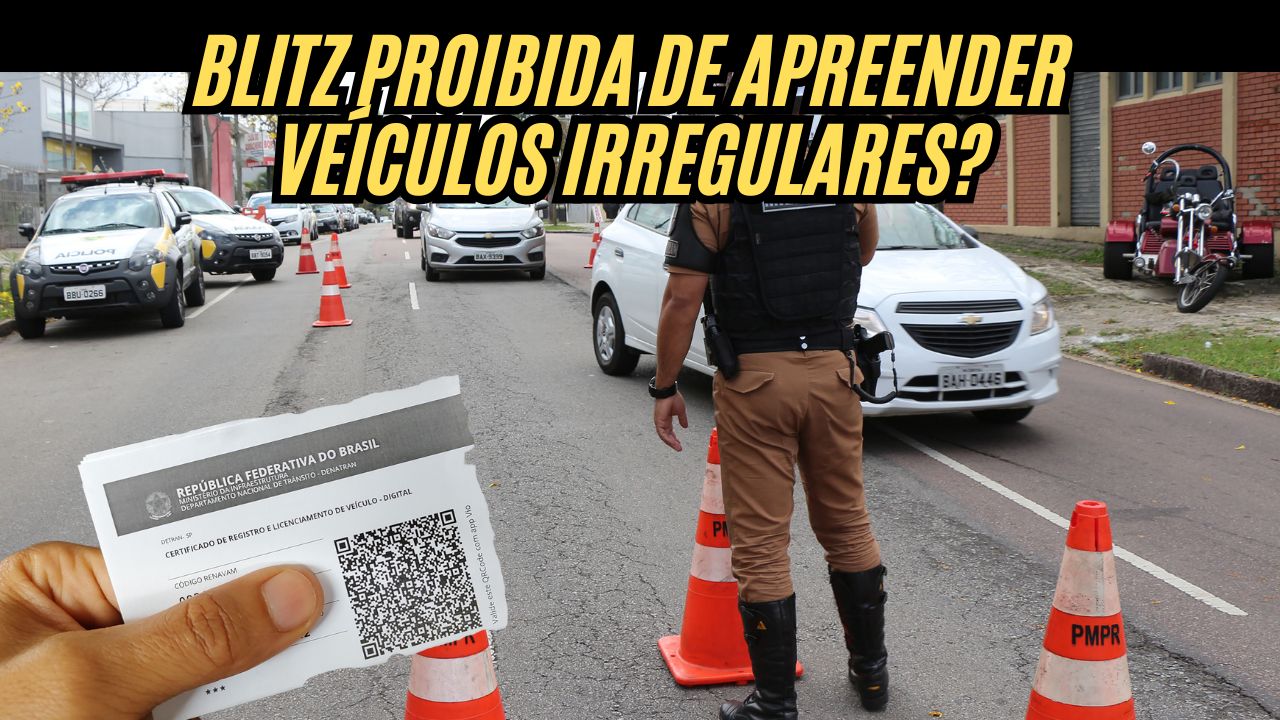

The Seizure of Vehicles During Traffic Blitzes Is No Longer a Concern for Drivers Since the Enactment of Law No. 13.281/2016. This Legislation Modified the Brazilian Traffic Code (CTB) and Eliminated the Penalty of Seizure of Irregular Vehicles, Bringing Important Changes in the Approach of Traffic Authorities.
Before the change in blitz, the CTB provided for seizure as a penalty, which meant that irregular vehicles could be held for up to 30 days, without the right to prior defense. However, this practice was revoked by the new legislation. Currently, seizure has been replaced by removal, an administrative measure that is applied immediately, but with the possibility of quick regularization.
Even with these changes, many drivers still confuse removal and seizure. In the current context, removal is applied at the time of the blitz, but the vehicle can be released as soon as the owner resolves the pending issues,such as payment of fines, licensing, or other irregularities.
Removal Is Not Seizure in the Blitz
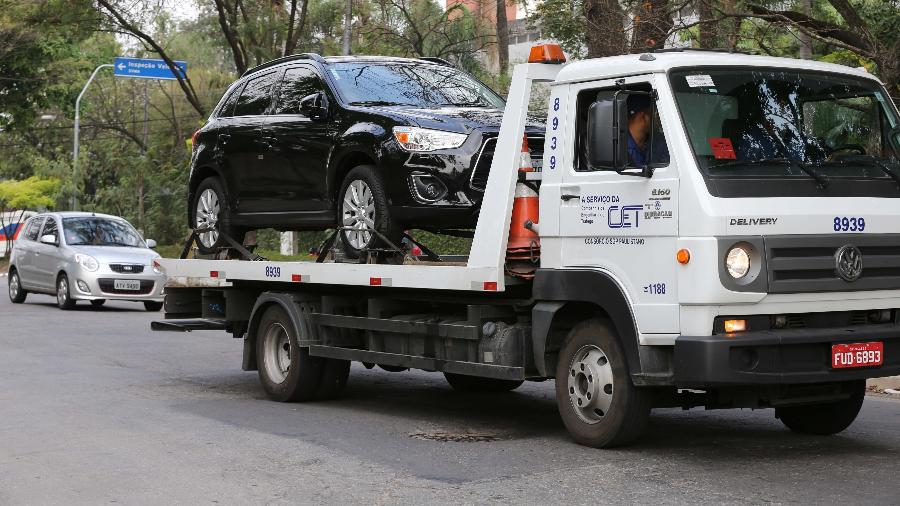
The difference between removal and seizure is significant. While the old seizure was a temporary penalty, provided for in Article 262 of the CTB, removal is an administrative measure that allows for vehicle regularization without the hassles of the previous system. In other words, if the vehicle is irregular during a blitz, it will be removed but released as soon as the situation is resolved.
-
Brazilian city bets on the business environment to generate jobs and attract investments in the energy sector — secretary reveals strategy at Macaé Energy 2026.

-
50 viaducts, 4 tunnels, 28 bridges, and 40 kilometers of bike paths: BR-262 in Espírito Santo will receive 8.6 billion reais for the largest engineering project in the state’s history, inspired by the Immigrant Highway in São Paulo.

-
Brazil produces too much clean energy and doesn’t know what to do with it: over 20% of solar and wind capacity was wasted in 2025 while investors flee and 509 renewable generation projects were abandoned in the last year.

-
Piauí will produce a new fuel that replaces diesel without needing to change anything in the truck’s engine and reduces pollutant gas emissions by half: truck drivers from all over the Northeast are already celebrating the news that will arrive later this decade.


Serious infractions, such as driving under the influence of alcohol or with a suspended driver’s license, require the presence of a licensed driver to retrieve the vehicle from the location. The vehicle’s retention remains until all legal conditions are met.
How to Regularize Irregular Vehicles?
If the vehicle is removed during a blitz, it is important to act quickly. The driver must check for outstanding fines, IPVA, or licensing and arrange for payment. Irregular vehicles are only released after all debts are settled and the situation is regularized.
Additionally, in cases such as driving under the influence of alcohol, the release of the vehicle requires the presentation of a licensed driver, as determined by the CTB. Thus, keeping documentation up-to-date and adhering to traffic rules prevents greater complications.
Blitz Without Seizure: A Smoother Traffic Flow
The revocation of seizure aims to simplify procedures and reduce inconveniences for drivers and authorities. However, this does not mean that irregular vehicles are free from consequences. Removal and retention remain effective tools to ensure safety on the roads and the regularity of vehicles.
Keeping documentation current and avoiding serious infractions is the best way to prevent problems during a blitz. The changes in the law have brought more practicality, but continue to require drivers’ attention to their legal obligations.








E uma grande sacanagem: exemplo: vc compra um veículo de 60 mil e por alguns motivos seja ele pessoal o financeiro, vc não consegue pagar o licenciamento de 1 mil reais para o estado. Vc é parado em uma blitz e seu veículo e rebocado até um pátio particular na qual vc deverá pagar pelo reboque, diárias e etc . caso contrário vc tem seu veículo leiloado em 90 dias. E o estado não irá lhe relbolssar com na nada $$$, ou seja venderam o que não era deles. E vc ficou no prejuízo. Isso acontece todos os meses aqui em meu estado Piauí. Infelizmente
O problema é a incompetência do Detran em liberar o veículo, pois existe um cartel formado pelo Detran e os pátios, onde dificultam o máximo para conseguir a liberação do veículo, afinal, quanto mais tempo o carro ficar no pátio, mais dinheiro eles faturam. E ainda o pagamento só pode ser em dinheiro, nada de cartão ou pix.
O GRANDE problema é do carro ir parar no pátio e ser saqueado os seus componentes e peças, pois aqui no lisarB é o que mais acontece.