





 Portuguese
  English
  Spanish
  4 min of reading
  47 comments


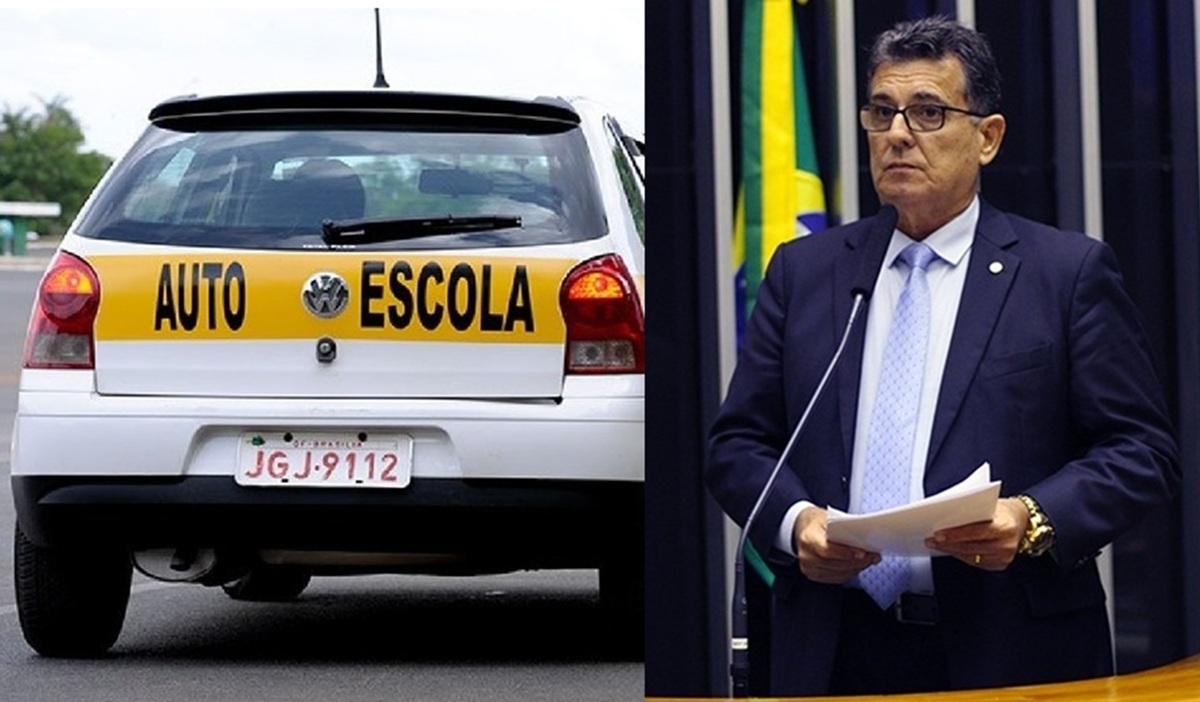


End Of Auto School Mandatory Requirement May Not Be Implemented: Deputy Tries To Block Change — “A Crime Against Traffic Safety”
The federal government’s proposal to remove the requirement of attending driving schools for obtaining the National Driver’s License (CNH) has provoked a strong reaction in the National Congress.
In a speech in the Chamber of Deputies on Wednesday (15), federal deputy Coronel Meira (PL-PE) classified the measure as “a crime against traffic safety” and stated that its approval could result in serious social and economic consequences, including the dismissal of about 300,000 workers in the sector throughout Brazil.
The government intends to change the rules for driver’s education to allow future drivers to prepare without the need to enroll in driver training centers (CFCs), more commonly known as driving schools.
-
Mothers and daughters come together, create an ‘express’ beauty salon and turn the idea into a network with 21 units, revenue of R$ 16.7 million and 12,000 subscribers.

-
End of the 6×1 schedule: how the reduction of hours can affect service companies, industry, and agribusiness.

-
Brazil Ignores Trump’s threats to BRICS, Buys 42 tons of gold and reduces the Dollar’s share by 6.45% in international reserves.

-
Havan buys historic football land in Blumenau for a million-dollar amount protected by a confidentiality clause and is already planning to change even the layout of streets to build a megastore in half-timbered style costing 80 million reais.


The idea is that theoretical classes can be conducted through distance learning (EAD) and that practical training is carried out with independent instructors, outside the traditional environment of driving schools.
For the Pernambucan parliamentarian, the change represents a dangerous setback and puts lives at risk on the roads. “We are talking about a job that saves lives. We already have roads that are unsafe and a Federal Highway Police with only 13,000 agents. Now the government wants to remove technical and practical training from drivers. This is absurd,” he declared.
“Total Downgrading Of The Sector,” Says Deputy
Coronel Meira was even harsher in evaluating the impact of the proposal on professionals involved in driver education.
According to him, the initiative represents a “total downgrading” of the service provided by driving schools and instructors, who play a fundamental role in reducing accidents and educating for traffic.
“They want to allow anyone to be an instructor, with no criteria whatsoever, with classes in EAD and cars with no dual control. This is not modernization; it is precarization,” he criticized.
The parliamentarian reminded that driver training involves not only theoretical knowledge about legislation and defensive driving but also practical training in adapted vehicles supervised by qualified professionals.
The current legislation establishes a structured process for obtaining the CNH.
Including medical and psychological examinations, mandatory in-person theoretical classes with minimum required hours, legal tests, and supervised practical classes in vehicles with dual control, a requirement that allows the instructor to intervene in case of student error.
For Meira, relaxing these steps means putting unprepared drivers on the streets.
Government Ignored Sector Proposals
During his speech, the deputy revealed that representatives from the sector had been dialoguing with the government about ways to reduce the cost of the CNH — often cited as one of the main obstacles for candidates, especially those from low-income backgrounds — without compromising road safety.
Among the suggestions presented were the offering of free courses for those registered in the Unified Register (CadÚnico) and the partial reduction of theoretical and practical hours, while still maintaining the requirement for supervised training.
“The government ignored all suggestions and has already announced that the new model will take effect in November. The decision is political and has already been made,” Meira lamented.
According to the parliamentarian, the rush to implement changes demonstrates a disrespect for the legislative process and for the workers in the sector.
Legislative Decree Project Seeks To Block Changes
In light of the scenario, Coronel Meira announced the protocol of Legislative Decree Project (PDL) No. 800/2025, which aims to suspend the effects of the proposal from the National Traffic Secretariat (Senatran).
The parliamentarian also called on his colleagues to sign the text and advocated for the creation of a special commission in the Chamber to deepen the debate on the subject.
Social Consequences And Increase In Accidents
The parliamentarian highlighted that the measure could have a strong impact on the job market.
It is estimated that the driver education sector currently employs about 300,000 people, including instructors, attendants, examiners, and administrative professionals.
The removal of the requirement to attend driving schools could result in mass layoffs, affecting the economy of hundreds of municipalities where the CFCs are one of the main sources of income.
In addition to the economic impact, Meira warned of the possibility of an increase in the number of traffic accidents.
He noted that Brazil is already among the countries with the highest traffic mortality rates, and that any reduction in the quality of driver education tends to worsen this situation. “If they approve this change, lives will be lost. Only driving schools guarantee training and education in traffic. They are the first step toward employment and the safety of young Brazilians,” he concluded.
Debate Must Be Intensified In Congress
The government’s proposal, which intends to take effect in November, is expected to become one of the main topics of discussion in Congress in the coming weeks.
Opposition parliamentarians and representatives from the driving school sector are already mobilizing to block the measure, while the Executive defends that the flexibility modernizes the licensing process and expands access to the CNH for millions of Brazilians.
With the introduction of PDL No. 800/2025 and the growing support from deputies for its passage, the final decision on the future of driver education in Brazil could be made this year.
Until then, the debate promises to divide opinions and mobilize both the traffic sector and civil society around a theme that directly impacts the safety and everyday life of millions of Brazilians.










Deputado como sempre contra o povo. **** não vale 1 real
Olhem bem o nome e o rosto desses deputados que complica a situação do povo. Para que na próxima eleição eles não voltem novamente a prejudicar o povo.
Engraçado conheço vários amigos que dirige até mesmo para outros estados sem a carteira de abilitação porque não tem condições financeiras para pagar para tirar abilitação.
E essas pessoas que dirige na linguagem popular dirige bêbada matas as pessoas e não vão presas principalmente as que têm condições financeiras alta que dirige seus carros de luxo, outro absurdo das autos escolas é se você não for aprovado tem que pagar tudo de novo acho justo amas com um valor bem mas baixo do que foi cobrado na primeira avaliação.
Se no Estados Unidos tem esse tipo de modelo que o governo quer implementar e pelo que eu entendi as auto escolas não vão acabar vai ter a opção das pessoas de baixa renda tirar abilitação.
Tinha que ter um critério maior em pessoas analfabetas. Obs. Tem muitos deputados que deve ser donos de auto escolas e não estão nem aí paras as pessoas pobres como sempre só visa o bolso deles.