





 Portuguese
  English
  Spanish
  5 min of reading
  0 comments


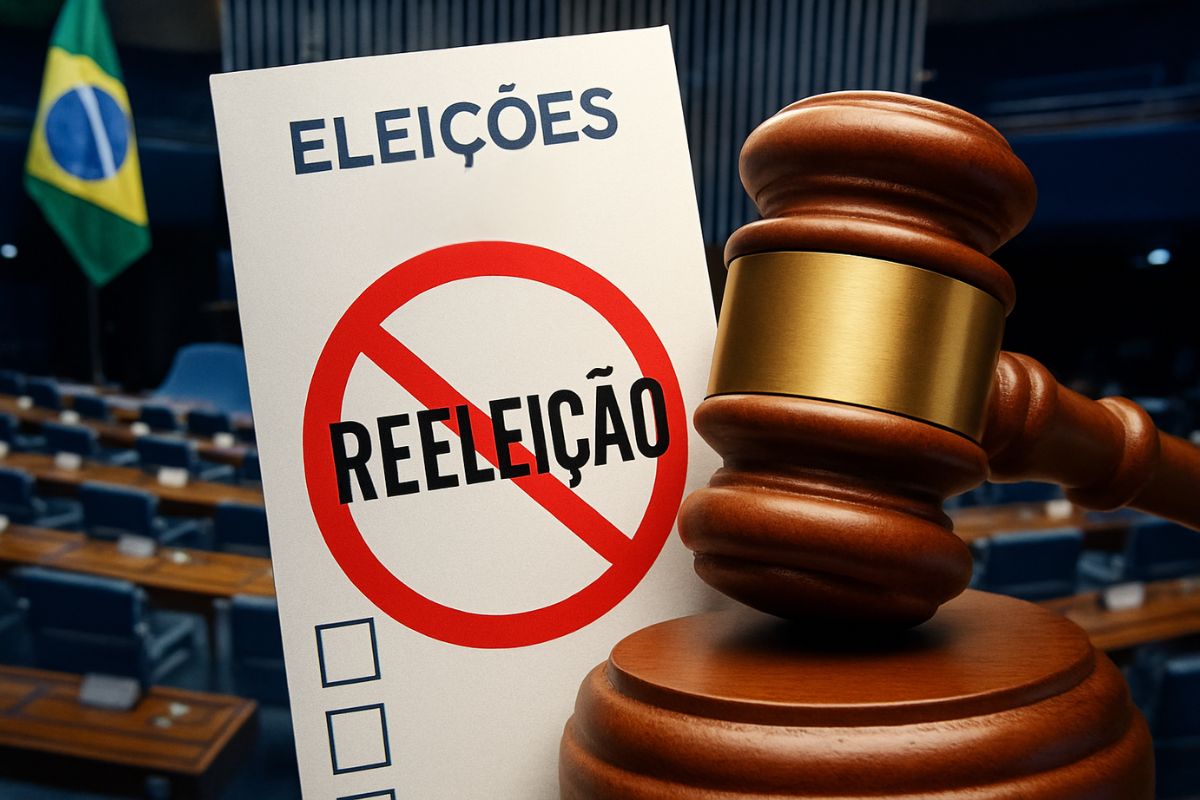
New Articulation in the Senate Rescues PEC 12/2022, Which Discusses Ending Reelection and Alters the Terms of Presidents and Other Executive Positions, with Direct Impact on the Electoral Calendar, Regional Power Struggles, and Brazilian Parties’ Strategies for Possible Future Alliances and Parliamentary Renewal.
The end of reelection has returned to the center of the political arena in Brasília after the rapporteur Marcelo Castro discussed PEC 12/2022 with the Senate President, Davi Alcolumbre, in a series of conversations that stretched from the weekend to the Tuesday of November 25. The reading among lawmakers is that the Senate is trying to reorganize the debate on terms and succession before the official start of the 2026 electoral discussions.
Expectations are that PEC 12/2022 will return in the coming weeks to the Constitution and Justice Committee for new evaluation, in a move that could unlock not only the debate on ending reelection for presidents, governors, and mayors, but also the redefinition of terms for Executive and Legislative positions. If it progresses, the proposal puts the Senate back at the center of the country’s major political-institutional reforms.
How the Senate Reintroduced Ending Reelection on the Agenda
The starting point of the offensive was Marcelo Castro’s decision to resume direct talks with Davi Alcolumbre about PEC 12/2022.
-
The Senate approves a bill that criminalizes misogyny, hatred, or aversion towards women, and includes the crime in the Racism Law with a penalty of up to 5 years.

-
Chamber Approves Bill That Allows Pepper Spray for Women Over 16 and Imposes Strict Rules for Purchase, Possession, and Use as Self-Defense

-
Chamber Approves Law to Combat Leucaena, Fast-Growing Plant That Dominates Land and Threatens Native Species in Various Regions of the Country

-
Asset Division: Know What Cannot Be Divided in Case of Divorce


According to reports, the two resumed discussions about the text in recent meetings and started building the environment for the Senate to focus again on ending reelection and the new design of terms.
In practice, the goal is to test the level of real support for the change in the Senate floor before exposing the topic to a public defeat.
The idea of bringing PEC 12/2022 back to the Constitution and Justice Committee serves as a political thermometer: it allows for drafting adjustments, negotiating amendments, and measuring the impact of ending reelection for presidents, governors, and mayors without yet bringing it to a final vote.
What PEC 12/2022 Changes in Terms and Duration of Power
The text of PEC 12/2022 goes beyond ending reelection for presidents, governors, and mayors.
The proposal redesigns the length of tenure in key positions.
One of the central changes is the provision for a five-year term for the head of the Executive at all levels, as well as five years for deputies and councilors.
In the case of the Senate, PEC 12/2022 extends the term to ten years, profoundly changing the pace of renewal in the House.
While the end of reelection limits presidents, governors, and mayors to a single cycle, the proposal maintains unlimited reelections for the Legislative, which could consolidate long careers for lawmakers.
This combination of a longer term for senators and the possibility of multiple reelections is seen by critics as a counterbalance to the loss of continuity in the Executive.
Arguments For and Against Ending Reelection
The political debate around ending reelection is organized into two main blocks.
On one side, supporters of PEC 12/2022 argue that a single five-year term for presidents, governors, and mayors favors power alternation and reduces incentives to use public machinery in reelection campaigns.
For this group, the current rule encourages governments focused on their own electoral survival.
On the other side, critics of ending reelection argue that a single term is insufficient to implement complex projects, especially in areas such as infrastructure, education, and health.
They argue that presidents and other heads of the Executive may have their agendas interrupted just when they enter the maturation phase.
In this scenario, the extension of the term would not compensate, in these groups’ view, for the impossibility of democratic renewal of well-rated governments.
The Proposed Exception for Mayors and the Controversy in Congress
Among the most sensitive points of PEC 12/2022 is the amendment proposed by Senator Ciro Nogueira, which creates an exception for mayors elected in 2024, allowing them to run for a third term.
In practice, the end of reelection would be applied asymmetrically, generating differentiated treatment within the political system itself.
This exception is criticized by part of the political class and analysts for appearing to privilege a specific group of municipal managers.
Reporters and Senate leaders already feel the pressure from local groups interested in maintaining the possibility of continuity in strategic cities, which increases the wear around the coherence of the text.
The discussion about mayors’ terms, in this context, becomes a bargaining chip in the general advancement of PEC 12/2022.
Impact on Current Presidents and Future Elections
One of the points that reduces the immediate resistance of some actors is the fact that PEC 12/2022 does not change the possibility of reelection for the current president in 2026.
The text itself stipulates that the end of reelection for presidents and other heads of the Executive will apply to future elections, preserving the current rules for the next national cycle.
Still, the change is likely to reshape the political calculations of those planning to run for the Palácio do Planalto and state governments after the new rule takes effect.
Without the prospect of reelection, presidents and governors would have to concentrate efforts on a single term, possibly prioritizing short-term deliveries and broader alliance formations.
This could alter the tone of campaigns, the design of coalitions, and the way the parliamentary base organizes around the Executive.
Next Steps for PEC 12/2022 in the Senate and Chamber
From a formal standpoint, the next step is the return of PEC 12/2022 to the Senate’s Constitution and Justice Committee, where Marcelo Castro’s report must be reevaluated in light of the amendments and regional pressures.
This stage is where decisive adjustments can be made to the wording regarding the end of reelection, duration of terms, and treatment of mayors in 2024.
Once the CCJ stage is passed, the proposal needs to be analyzed by the Senate floor before it goes to the Chamber of Deputies.
There, the debate is likely to be repeated, focusing on the impacts for presidents, governors, mayors, and senators, as well as on the implications for parties with a strong municipal presence.
At all phases, the processing requires intense lobbying to build a majority around constitutional changes that directly affect the future of voters and those who govern.
What Citizens Can Follow from Now On
The discussion about ending reelection, PEC 12/2022, terms, and the role of the Senate is not just an internal game in Brasília: it defines how presidents and other leaders will be able to plan public policies over the coming years.
Understanding the design of this reform helps interpret why certain sectors support or resist changes so strongly.
For those who follow politics, a concrete step is to observe how each senator and each deputy positions themselves on the end of reelection and the new term model.
Participation can range from pressuring representatives on social media and in their regional offices to following official votes and reports.
In a scenario where electoral rules shape the type of leadership that comes to power, closely following the progress of PEC 12/2022 is a direct way to influence the institutional course of the country.










-

-

2 pessoas reagiram a isso.