





 Portuguese
  English
  Spanish
  4 min of reading
  2 comments


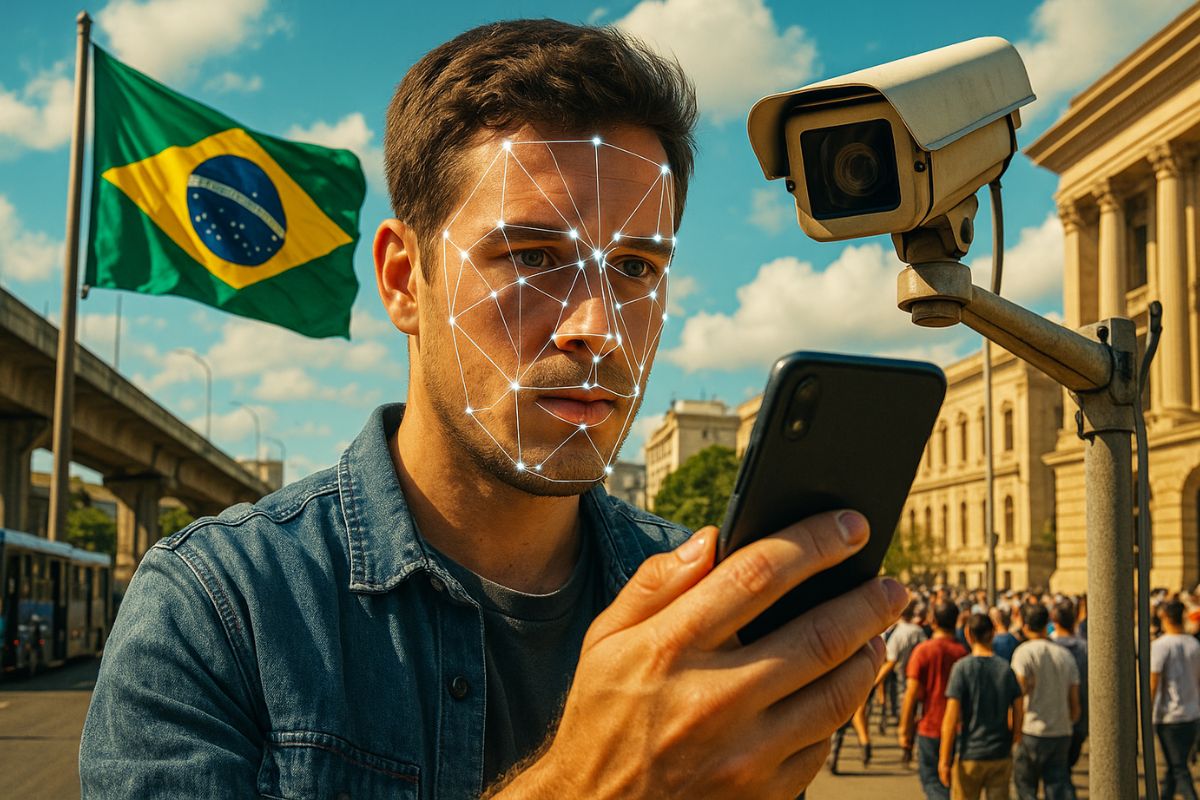


Project Proposes Unified Biometric Verification Through App Stores; Measure Promises More Security but Revives Debate on Privacy and Anonymity.
Brazil may be facing the end of digital anonymity. The Communication Commission of the Chamber of Deputies approved a bill that makes facial recognition mandatory to access social networks. The proposal, reported by Deputy Alex Manente (Cidadania-SP), aims to reduce fraud, combat fake profiles, and strengthen account security, but also raises concerns about privacy and the concentration of biometric data.
According to the portal Metrópoles, facial validation will be performed by the operating systems of devices such as Android and iOS, and not directly by platforms like Instagram or Facebook. The idea is to create a unique authentication standard, reducing the multiplication of sensitive databases and, at the same time, facilitating parental control in apps aimed at minors.
How Facial Recognition Will Work on Social Networks
The project defines that facial recognition will be required before granting access to social networks and other apps that involve public communication or content exposure. The verification process must occur directly on devices, through integration with app stores.
-
The Senate approves a bill that criminalizes misogyny, hatred, or aversion towards women, and includes the crime in the Racism Law with a penalty of up to 5 years.

-
Chamber Approves Bill That Allows Pepper Spray for Women Over 16 and Imposes Strict Rules for Purchase, Possession, and Use as Self-Defense

-
Chamber Approves Law to Combat Leucaena, Fast-Growing Plant That Dominates Land and Threatens Native Species in Various Regions of the Country

-
Asset Division: Know What Cannot Be Divided in Case of Divorce


In practice, the operating system will send only a encrypted signal (via API) to social networks, confirming the user’s identity and age without transferring complete biometric data. This structure, according to the rapporteur, “brings efficiency, less bureaucracy, and more privacy,” as it prevents each social network from maintaining its own database of faces and documents.
The proposal also includes specific rules for minors, requiring active parental control and time limit on usage, with clear transparency notices. The centralization of authentication, the text argues, aims to protect children and teenagers from scams, harassment, and access to inappropriate content.
If approved, the measure radically changes the access model to social networks in Brazil. Authentication by facial recognition would become a mandatory step in the installation and login of social apps. Users would need to confirm their identity on the phone’s system, and the app would only be released after age validation.
For the platforms, this means relying on the Android and iOS systems to validate profiles. The model unifies the security standard and eliminates direct document collection by private companies, which, in the view of the project’s supporters, reduces the risk of data leaks.
On the other hand, critics point out that the measure expands the power of the big techs controlling the operating systems, concentrating even more sensitive information under few global companies. Moreover, the lack of a broad public debate on biometric security revives concerns about monitoring and digital tracking.
Privacy, Control, and the Dilemma of “Responsible Anonymity”
Facial recognition touches on a sensitive point: the balance between security and freedom. For the rapporteur, the goal is to “provide security with privacy”, replacing multiple biometric registrations with standardized authentication. The model, according to him, “complies with the General Data Protection Law (LGPD)” and reinforces parental control over what children access online.
But the debate goes beyond the technical. Digital law and data protection experts warn that anonymity on the internet is also a fundamental right, especially in contexts of freedom of expression and reporting. The requirement to show one’s face to participate in social networks may generate side effects on political participation, activism, and public debate — areas that depend on a certain degree of privacy to exist safely.
After approval in the Communication Commission, the project goes to other thematic committees before reaching the Chamber’s plenary. If approved, it will still need to pass through the Senate and receive presidential sanction to come into effect.
Meanwhile, the technology sector and digital platforms are watching cautiously. There is anticipation of pressure from big techs and digital rights advocacy organizations for adjustments to the text, especially concerning data governance and transparency in the authentication process.
The debate on facial recognition on social networks is more than technical: it is social, ethical, and political.
Do you think this measure increases digital security or threatens individual freedom?
How to balance protection against fraud and the right to online anonymity? Leave your opinion in the comments your experience and views help understand the real impact of this change on the daily digital lives of Brazilians.










Quem quiser anonimato, que vá viver em uma caverna. Todas as plataformas deveriam ter kyc com endereço dos usuários.
Chega de crimes na internet.
Chegaremos ao ponto em que o Estado vai bloquear as contas bancárias de pessoas que o criticam na Internet por conta de pessoas que postam e defendem comentários como esse.