





 Portuguese
  English
  Spanish
  6 min of reading
  67 comments





Innovative Device From Chinese Company Aims to Replace Smartphones, Joining Mark Zuckerberg’s Initiatives for the Future of Technology
Mark Zuckerberg, one of the biggest figures in technology and owner of companies like Facebook, Instagram, and WhatsApp, made a bold statement recently: the end of smartphones may be near. He claims that a new innovative technology is about to emerge, ready to replace smartphones as we know them and radically transforming the way we connect and interact with the world.
The possibility of replacing smartphones as the primary personal communication device is moving from a mere futuristic idea to a relevant discussion, driven by the development of smart glasses from Meta and Baidu.
-
Something was orbiting Earth before any human launched a satellite into space: scientists have found thousands of unexplained flashes in old photos of the sky, and a NASA researcher says the evidence points to non-human intelligence.

-
There is a gap of hundreds of kilometers between weather observation points in the United States, and now drones flying at 6,000 meters altitude in strong winds are filling this gap to predict tornadoes before they kill.

-
The most famous volcano in the world could paralyze one of the largest metropolises on the planet: Japan accelerates emergency plans for the eruption of Mount Fuji, which could bury Tokyo in ash for over two consecutive weeks.

-
The United States has a serious problem with its F-35s: China is already producing fighters at a pace that exceeds American capacity and could manufacture up to 300 aircraft per year before the end of the decade, shifting the global military balance.

Technology leaders, like Mark Zuckerberg, CEO of Meta, and Robin Li, CEO of Baidu, are massively investing in augmented reality (AR) and artificial intelligence (AI) devices, envisioning a future where smart glasses become the next big leap in personal technology.

But could these smart glasses actually replace smartphones in the near future?
Meta and Mark Zuckerberg’s Orion Project
Meta, formerly known as Facebook, has been leading the development of social connectivity technologies for over two decades. However, the company has never ventured into the smartphone market. With the Orion Project, the augmented reality glasses developed by Meta, Mark Zuckerberg believes the company will finally find its place in hardware.
During the annual Meta Connect event, he unveiled the prototype of the Orion glasses, a device that promises to revolutionize the way we interact with the digital world, placing the main functionalities of a smartphone directly in the user’s field of vision.
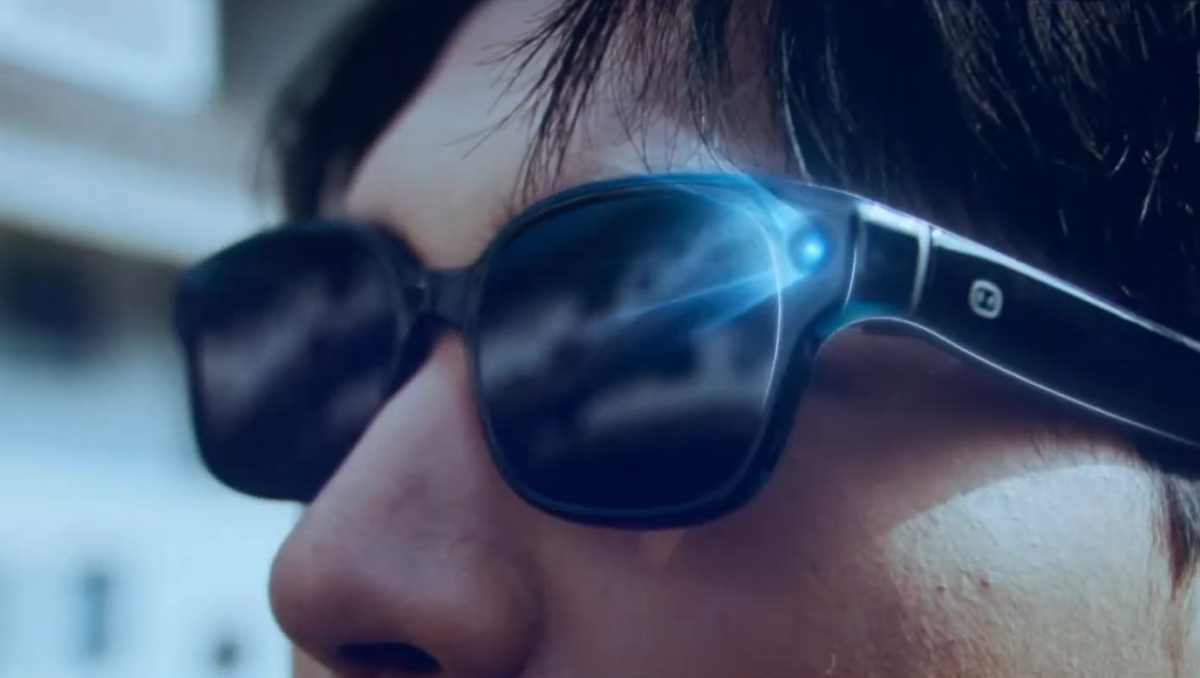
Orion: More Than Just Smart Glasses
The Orion glasses have been described by Mark Zuckerberg as more than just a simple wearable device. Equipped with an advanced holographic display and AR technology, they allow users to access multiple virtual displays, send messages, conduct video conferences, and even play games, all without the need for a phone. Interaction with the device occurs through voice commands, gestures, and even eye movement, promoting an intuitive and revolutionary experience.


However, one of the challenges that Meta still faces is making the device attractive and functional for the mass market. According to Andrew Bosworth, Meta’s CTO, the Orion still requires improvements in design and aesthetics.
Nevertheless, Mark Zuckerberg’s Meta maintains a long-term vision and continues to invest to overcome these barriers, with the expectation that the glasses can be launched in the coming years at a competitive price.
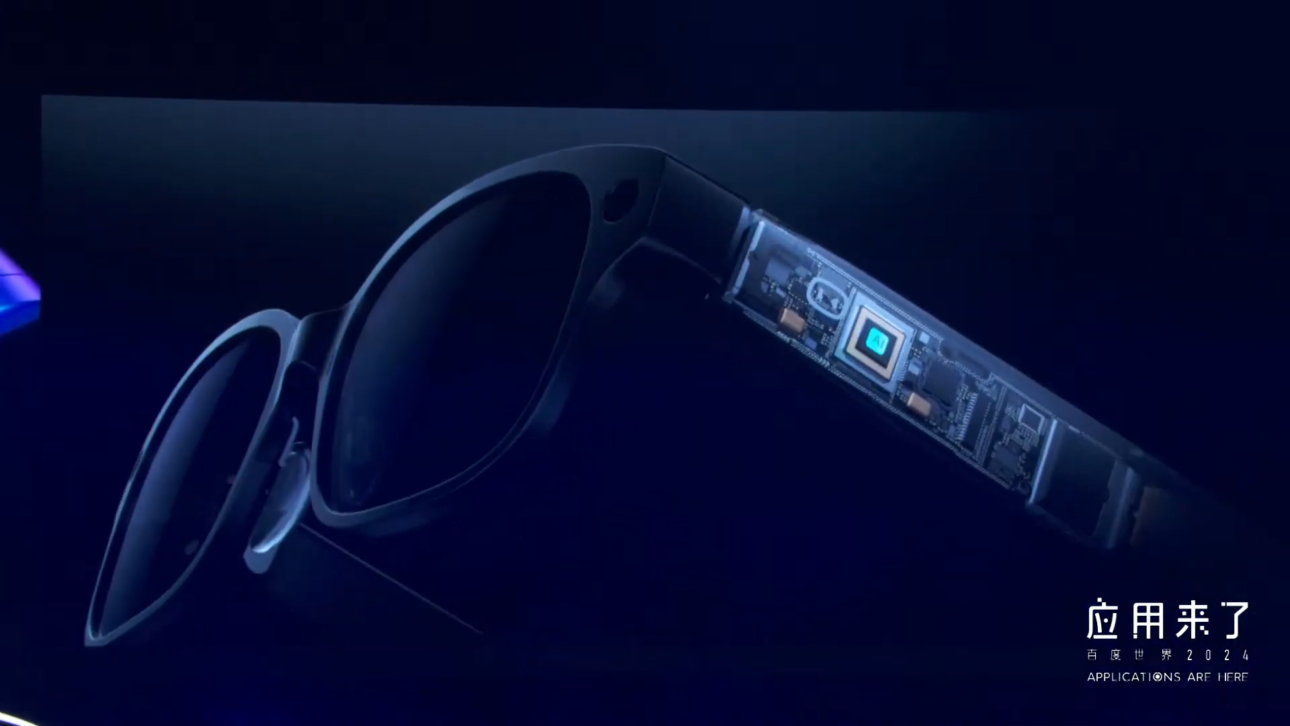
Baidu and Ernie: Smart Glasses with AI for Everyday Use
Baidu, the Chinese technology giant, recently announced its own model of smart glasses, equipped with the Ernie language model developed by the company itself.
Unlike Meta, which initially focuses on augmented reality for digital interaction, Baidu’s glasses are aimed at personal assistant functions with artificial intelligence, targeting practical daily tasks such as calorie tracking, quick environmental queries, and entertainment.
Baidu’s Differentiator: Artificial Intelligence for Mass Consumption
According to Li Ying, head of Xiaodu (Baidu’s hardware brand), the company’s smart glasses aim to be more than just a simple communication device, taking on the role of an AI-powered personal assistant.
Integrated with the Ernie language model, the glasses can perform tasks that include health monitoring, music playback, video recording, and even answering contextual questions.
Despite China’s limitations regarding large-scale language models, experts believe that Baidu can compete in this sector due to its strong consumer electronics market.
Baidu stands out by integrating the Ernie Bot, which is the market leader among virtual assistants in China, with other devices, such as a virtual panel to monitor elderly relatives. The expectation is that Baidu’s smart glasses will be available in the Chinese market next year, marking the beginning of a new phase of competition in the AI hardware sector.
Meta vs. Baidu: Competitions and Partnerships
Meta and Baidu not only directly compete for dominance in the smart glasses market but also stand out for their strategic partnerships and how they leverage their technology.
For instance, Meta has partnered with Ray-Ban to launch a line of smart glasses that feature elements like cameras and speakers. Meanwhile, Baidu, focused on the Chinese audience, leverages China’s strong AI and hardware infrastructure to create competitive and affordable products.
While Meta aims for international markets, Baidu focuses on China, where the demand for integrated AI technology is rising.
The entry of both into the smart glasses market suggests that this sector is promising and may define the next major technological revolution, especially as companies seek to offer devices with more features and less dependency on smartphones.
The Potential of Smart Glasses in Replacing Smartphones
The idea of replacing smartphones with smart glasses brings several practical considerations to light. First, the issue of design is a central concern. Smart glasses still face difficulties in merging advanced functionality with an appearance that is appealing and discreet for the average user.
Both Meta and Baidu are heavily investing in research and development to improve this aspect, but there is still a long way to go before the general public accepts smart glasses as an alternative to smartphones.
Another crucial point is the interaction interface. For glasses to truly replace phones, they need to offer an intuitive user experience, something Meta is trying to achieve with voice commands and gestures. Baidu, on the other hand, is betting on AI to personalize the experience according to user needs.
Despite the barriers, advancements in AI and AR technology make this possibility increasingly real. As these devices become more accessible and capable of performing the main functions of smartphones, consumers may start to see smart glasses as a viable alternative, especially in situations where convenience and hands-free freedom are desired.
Perspectives for the Future
As mentioned by Mark Zuckerberg, the journey to replace smartphones with smart glasses will not be quick. There are a number of technical challenges, such as battery durability, device weight, and compatibility with software platforms.
For smart glasses to be widely adopted, an ecosystem of applications and functionalities that go beyond what smartphones currently offer will be necessary.
In addition, there is the challenge of convincing the average consumer to adopt this new technology. Historically, previous attempts to introduce smart glasses to the market, such as Google Glass, did not have the expected impact.
Thus, both Meta and Baidu need to exceed user expectations and ensure their devices provide an experience that current smartphones cannot offer.
Still, both Meta and Baidu demonstrate a significant commitment to creating the future of AR and AI technology. With Meta leading the Western market and Baidu in the Chinese market, it is likely we will see fierce and innovative competition that benefits consumers around the world.
The Future of Digital Connectivity with Mark Zuckerberg’s Leadership
The smart glasses from Mark Zuckerberg and Baidu represent the beginning of a new era in digital connectivity, challenging the predominance of smartphones.
While the path to completely replacing cell phones is still long, the innovations from both companies demonstrate a commitment to a future where technology is even more integrated into our daily lives, in an invisible and intuitive manner.
If these devices manage to overcome technical barriers and offer an appealing design, we might be on the brink of the beginning of the end of the smartphone era. As the smart glasses market evolves, consumers are likely to have more options and functionalities, turning the debate about replacing phones into a question of “when,” not “if.”








Creio eu, q isso é mas uma prova dos fins do tempo, são apenas provas ditas em base de livros bíblicos
Seu ****
Muito bom essa informação vai direto ao ponto das informações mais objetivas e novas