





 Portuguese
  English
  Spanish
  5 min of reading
  16 comments


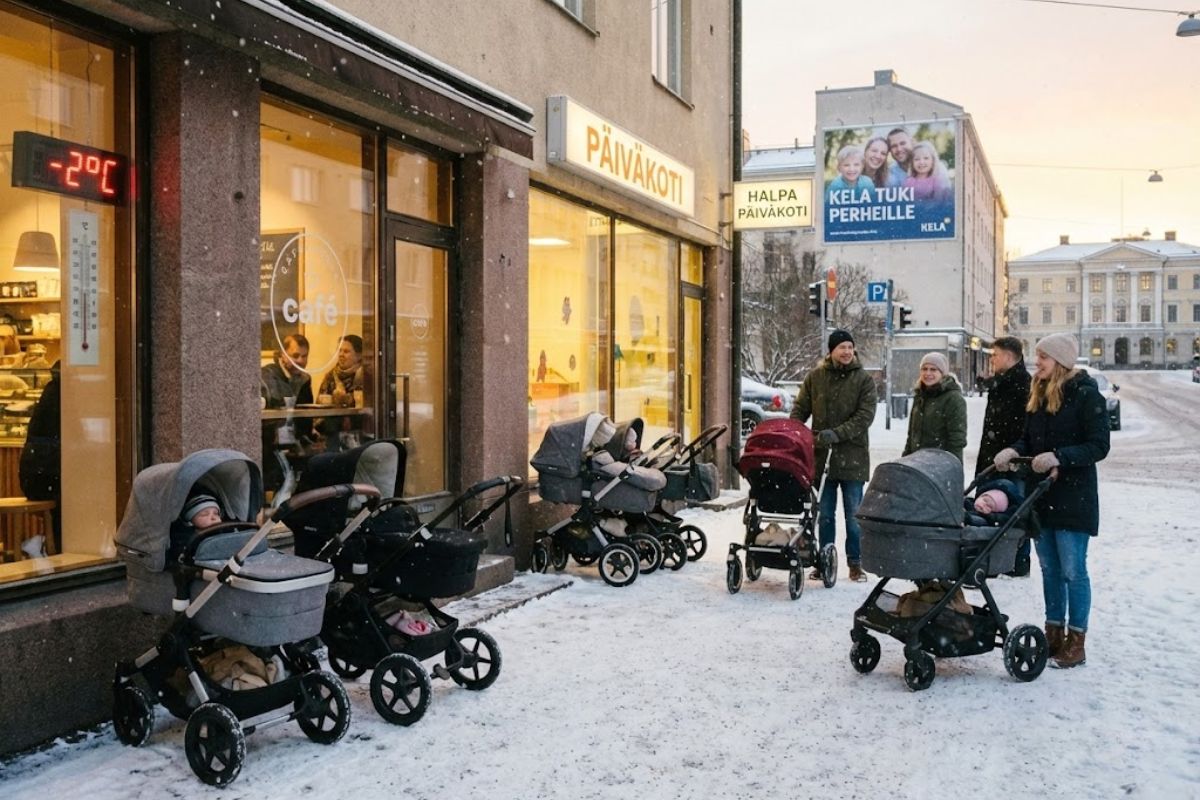


In Cities Like Porvoo and Helsinki, the Scene of Babies Sleeping Alone on the Street, in Strollers at Two Degrees Below Zero, Relies on High Social Trust, Accessible Daycare, Paid Parental Leave, Child Allowance and Government Financial Support That Enable Stable, Fearless Family Routines
Shortly before eight in the morning, in Porvoo, 45 minutes from Helsinki, it is common to see strollers with babies sleeping alone on the street while parents enter supermarkets, cafes, or return to work. By noon, even with thermometers reading two degrees below zero, the babies remain outside, monitored by electronic babysitters that measure body temperature and sound alerts if something deviates from the norm.
This daily routine occurs in a country that, for the eighth consecutive time, appears in the World Happiness Report as the happiest on the planet, with 5.6 million inhabitants, a low birth rate and strong state support for families. Long parental leave, partially maintained salary, accessible daycare and child allowance help explain why parents say they can raise children calmly, with time and trust in the community.
Babies Sleeping Alone on the Street as Part of the Family Routine

For filmmaker Ronja and hotelier Erkka, leaving their daughter Elmi outside while they shop or have lunch is a natural extension of a coexistence model based on safety and predictability.
-
Italian researchers have detected what appears to be a second Sphinx buried under the sands of Egypt, and satellite scans reveal a gigantic underground megastructure hidden beneath the Giza Plateau for over 3,000 years.

-
There are 4,223 drums and 1,343 metal boxes concreted with 50-centimeter walls that store the radioactive waste from Cesium-137 in the worst radiological accident in Brazil, just 23 kilometers from Goiânia, with environmental monitoring every three months.

-
Giant Roman treasure found at the bottom of Lake Neuchâtel in Switzerland reveals an advanced trade system, circulation of goods, and armed escort in the Roman Empire about two thousand years ago.

-
He buried 1,200 old tires in the walls to build his own self-sufficient house in the mountains with glass bottles, rainwater, and an integrated greenhouse.

They share the responsibility for providing and raising their child, recounting the habit of seeing babies sleeping alone on the street “in front of a restaurant, supermarket, or at home” without alarm.
According to the couple, the child sleeps better outdoors, even when the temperature drops to minus two degrees Celsius.
The care is not improvised: the baby is dressed in appropriate thermal clothing, placed in a well-protected stroller, and monitored by an electronic babysitter that records body temperature and alerts if she wakes up or shows any changes.
In practice, what would sound like neglect in many countries is, in Finland, an indicator of collective trust and a stable urban environment, where neighbors feel co-responsible and attentive to what happens in the street.
Thus, the image of babies sleeping alone on the street summarizes a culture that associates children’s autonomy, diffuse vigilance, and robust public policy.
Social Trust, Neighborhood, and Streets Seen as Extension of Home
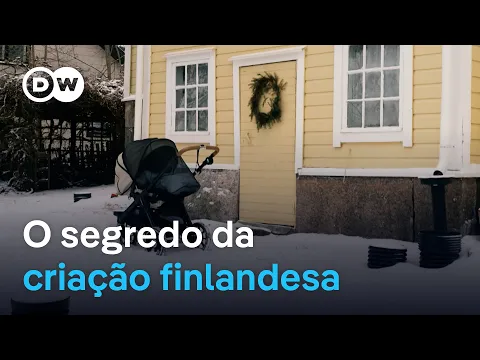

The naturalness with which parents leave babies sleeping alone on the street is partly explained by a heightened perception of safety.
The street, in these neighborhoods, is treated almost as an extension of the home and daycare, with limited traffic, a strong presence of local residents, and low social tolerance for risky behaviors.
For Ronja, the central point is the combination of tranquility and trust: she claims to rely on the spontaneous watchfulness of others over the stroller while she is inside establishments.
This diffuse vigilance, coupled with organized urban infrastructure, reduces the feeling of threat and allows the time the baby spends outdoors to be seen as healthy, rather than exposure to danger.
The same logic applies at the daycare attended by Elmi since she was one year old, where outdoor activities are the rule and not the exception.
In Finnish early childhood education, playing outside, interaction with nature, and gradual autonomy are central components, reinforcing the idea that the child can safely be in open spaces, even to sleep.
Parental Leave, Salary, and Allowance That Sustain Calm in Everyday Life
The behavior of leaving babies sleeping alone on the street is not explained solely by culture or abstract trust.
It relies on a social protection system that alleviates immediate financial pressures and gives parents time to adapt to the new routine.
After birth, each parent is entitled to about 160 days of leave, with payment of approximately 70% of their previous salary for middle-income families.
This structure allows both parents to actively participate in caring for the child during the first year of life, without a complete rupture of the household budget.
There is also a child allowance, around 100 euros per month for each of the first two children, a modest amount that helps offset expenses for food, clothing, and basic items.
In the view of parents like Ronja and Erkka, this predictability of income and free time reduces the typical post-partum stress seen in other countries.
With less economic insecurity, there is more room for stable routines, where the baby’s intervals of rest outdoors are planned and incorporated into daily life, reinforcing the habit of babies sleeping alone on the street under indirect supervision.
Affordable Daycare, Guaranteed Spots, and 24-Hour Service
Another pillar that supports this model is universal access to early childhood education.
All babies from nine months old have a guaranteed spot in public or subsidized daycare, preventing chronic waiting lists and uncertainties about where to leave the child when parents return to work.
Elmi, for instance, has been attending daycare since she turned one, in a typical schedule from eight to four in the afternoon.
The cost is also regulated. The family pays a maximum of 311 euros monthly for the first child, an amount adjusted according to income.
In many cases, the monthly fee is below this cap, making daycare a financially viable option for most families.
There are also units that offer 24-hour service, aimed at parents who work shifts or travel frequently.
This flexibility reduces improvisation and lessens the need for precarious informal care networks.
Thus, when parents choose to leave babies sleeping alone on the street for a few minutes, they do so within a system where much of the child’s day is already structured by professionals and public services.
Happiness, Nature, and Small Routines Outdoors
The scene of babies sleeping alone on the street, in strollers parked in gardens, balconies, or quiet sidewalks, also connects to the Finns’ relationship with nature.
Spending time outdoors, even in negative temperatures, is seen as part of a healthy childhood.
At daycare, playing outdoors helps develop autonomy, interaction with other children, and the ability to handle temporary separations from parents.
At home, this pattern repeats. Ronja and Erkka take advantage of afternoons for family activities, but they maintain the habit of putting their daughter to sleep in the garden, using the electronic babysitter only as an additional layer of control.
They associate this lifestyle with their own sense of well-being, stating that happiness is linked to simple routines, honesty, and modesty in material expectations.
For the eighth time, the Finns topped the global happiness ranking, and the combination of strong state support, high social trust, and streets viewed as shared space helps explain why images of babies sleeping alone on the street have become a symbol of normalcy and not neglect.
For you living in Brazil, would leaving babies sleeping alone on the street under the indirect care of neighbors be a sign of safety and trust, or does it seem completely unfeasible in your reality?










Muitos políticos e empresários brasileiros são contrários ao Bolsa Família, um programa social criado para evitar que as pessoas morram de fome. Se a moradia, o transporte, a educação e a saúde de qualidade fossem direitos cidadãos assegurados pelo Estado, inclusive para quem está desempregado, a elite do país faria uma revolta.
Melhor que no bostil, que ja nasce ****, **** e ****, bando de hipócrita.
Eu não deixaria meu bebê do lado de fora de jeito nenhum!!! Mesmo sendo confiável